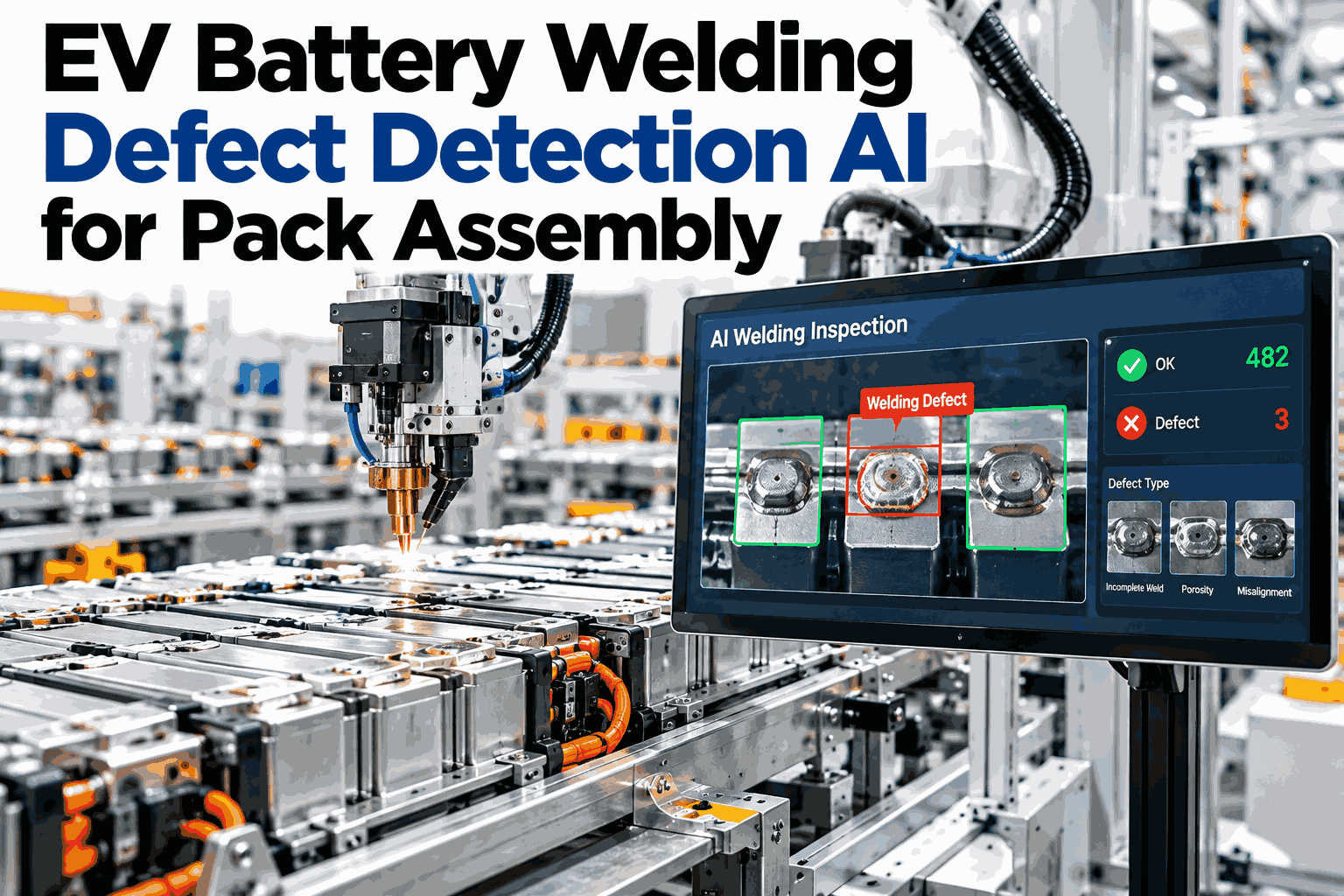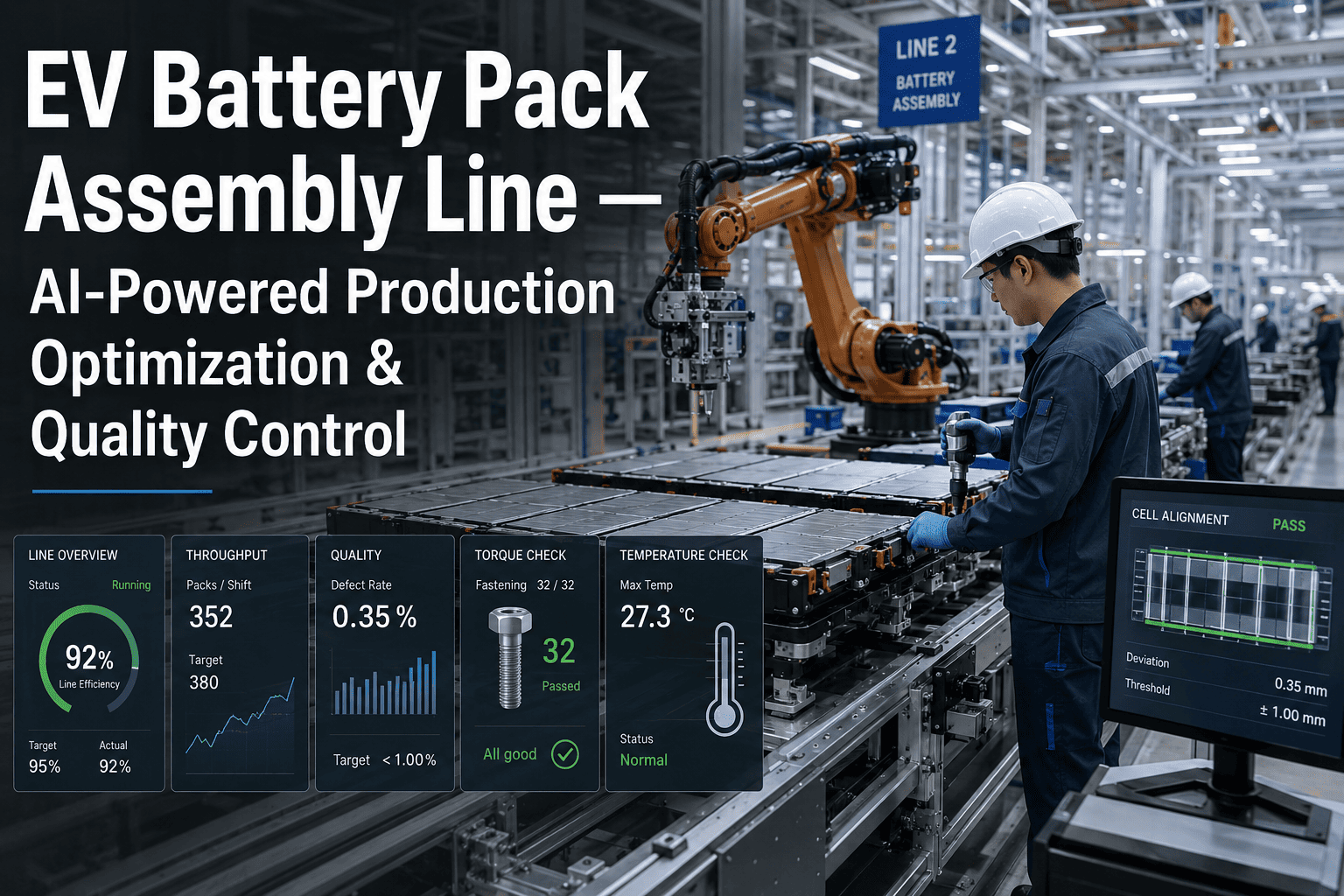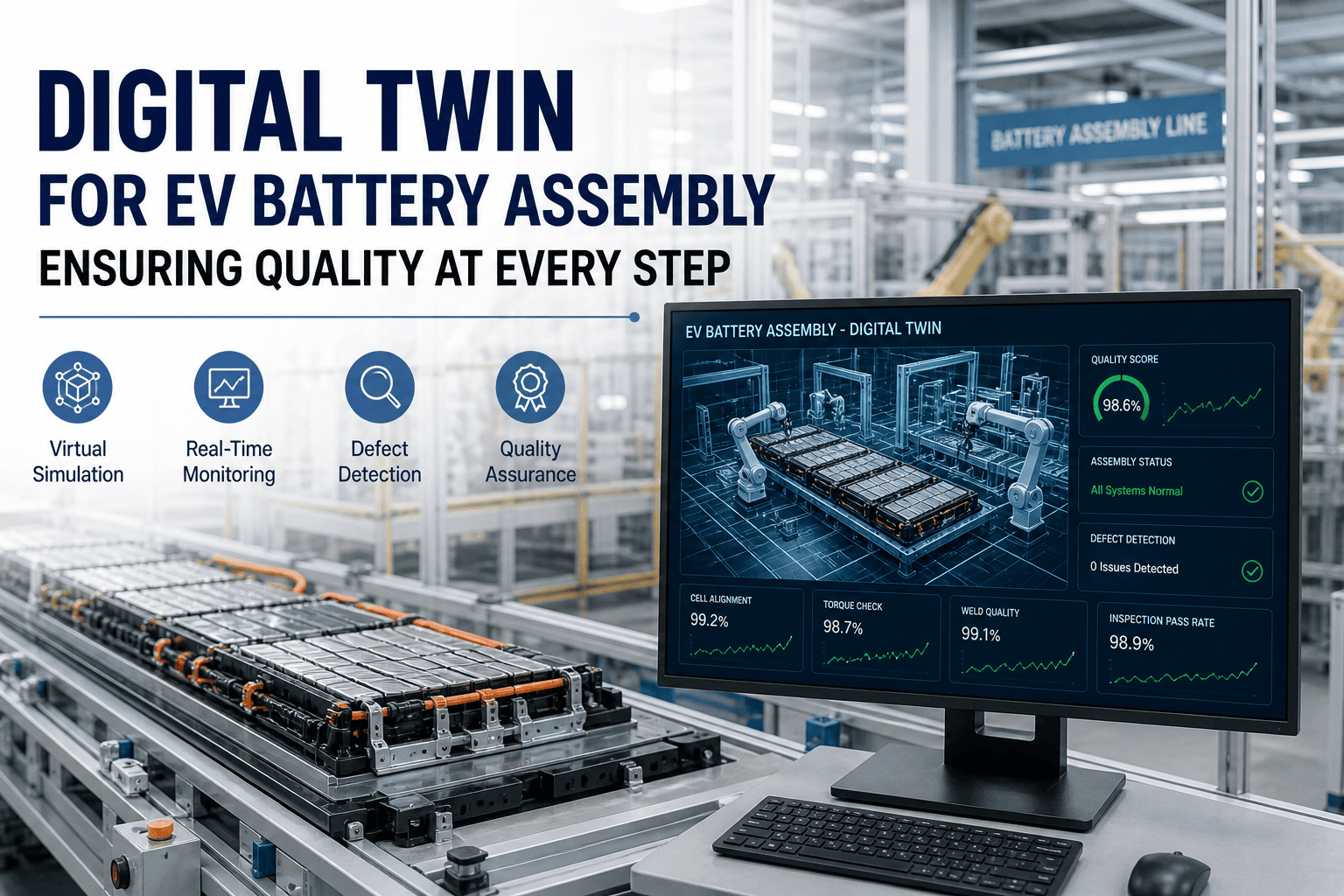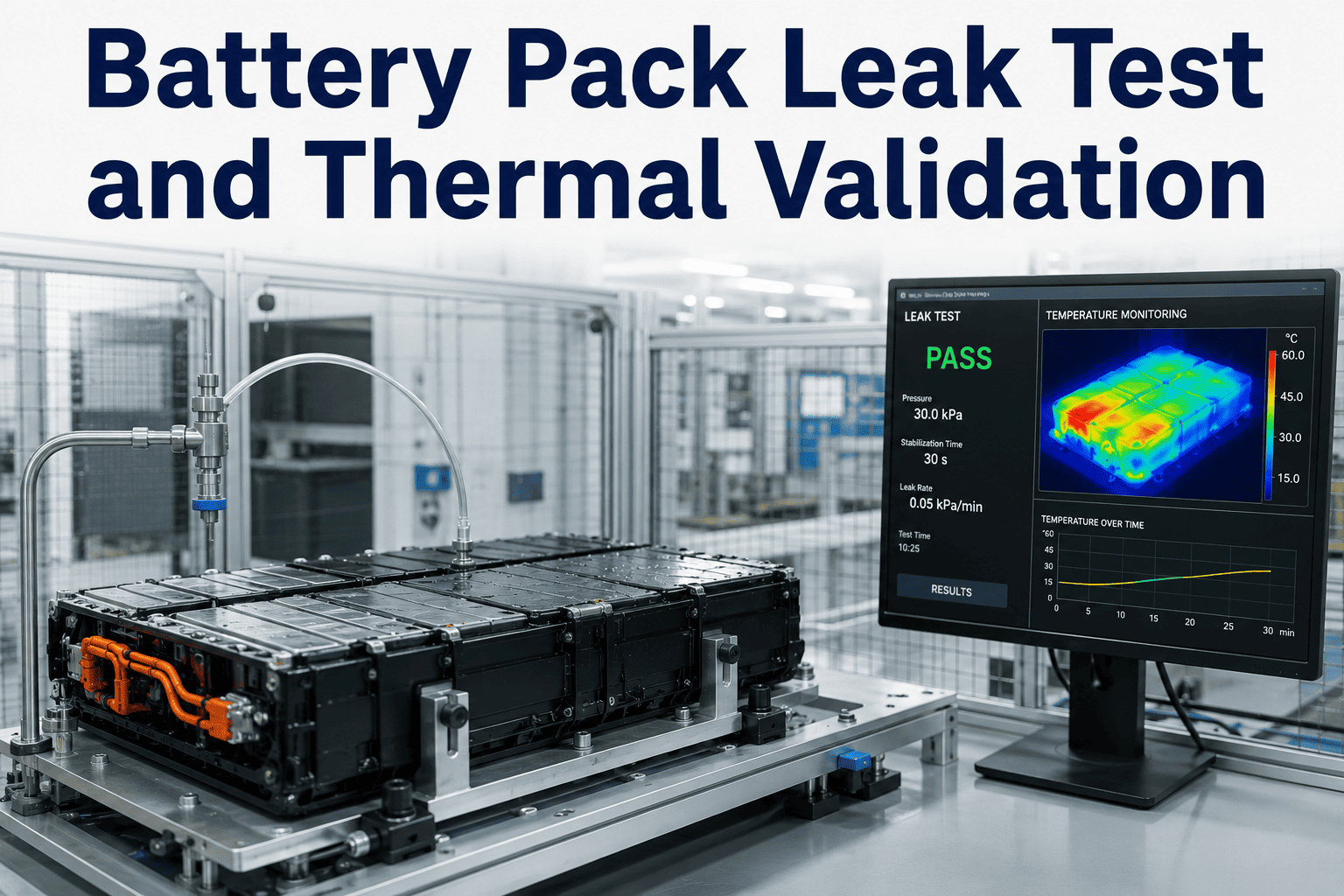
In the relentless pursuit of electrification, the battery pack stands as the single most critical and complex assembly within any electric vehicle. Its integrity is not merely a quality metric; it is the foundational pillar of safety, performance, and longevity. A single micro-leak in the pack housing can lead to catastrophic coolant ingress, short circuits, and thermal runaway, while inadequate thermal validation can accelerate cell degradation, reduce range, and void warranties. Traditional quality assurance methods, often reliant on periodic sampling and manual data review, are no longer sufficient to meet the demands of high-volume, zero-defect manufacturing. At iFactory, we have pioneered a new paradigm: continuous, AI-driven analysis of every leak test and thermal validation data point from every pack produced. This approach transforms raw test data into actionable intelligence, enabling pack assembly leads to preempt failures, optimize processes, and deliver packs that are not just compliant but truly robust. To see how this technology can be deployed on your line, Book a Demo and explore the future of battery pack quality.
Validate Every Pack with AI Precision
Eliminate warranty risks and ensure thermal safety. Our AI analyzes every data point from your leak and thermal tests.
Zero-Defect Mandate
Modern EV production demands that every single battery pack be verified for hermetic sealing and thermal uniformity. AI-driven validation replaces statistical sampling with 100% inspection, catching outliers that human review might miss.
Data-Rich Assembly
Each pack generates thousands of data points from pressure decay curves, helium sniff tests, thermal imaging, and coolant flow sensors. Our platform fuses these streams into a single, coherent quality score.
Closed-Loop Feedback
AI does not just detect defects—it identifies root causes. By correlating leak test failures with upstream assembly parameters, we enable real-time process adjustments that prevent defects from recurring.
The Physics of Battery Pack Sealing
Battery pack sealing is a multi-faceted challenge. The pack must maintain an IP67 or higher rating against water and dust ingress over a 10+ year lifespan. Leak paths can occur at weld seams, gasket interfaces, vent valves, and connector penetrations. Traditional leak testing methods—such as pressure decay, mass flow, and tracer gas—each have distinct sensitivity and cycle time trade-offs. For instance, pressure decay testing can detect leaks as small as 10^-3 mbar·L/s but is sensitive to temperature fluctuations and part volume variations. Helium sniffing offers higher sensitivity (down to 10^-6 mbar·L/s) but requires a vacuum chamber and longer cycle times. AI models trained on historical test data can compensate for environmental variables, reducing false positives and false negatives. By analyzing the entire pressure decay curve, rather than just the final pressure drop, our algorithms detect subtle anomalies that indicate incipient seal degradation. This predictive capability allows pack assembly leads to intervene before a leak becomes a field failure.
Leak Test Method Comparison
| Method | Sensitivity (mbar·L/s) | Cycle Time | Cost per Pack | AI Enhancement |
|---|---|---|---|---|
| Pressure Decay | 10^-3 | 30-60 sec | Low | Temperature compensation, curve shape analysis |
| Mass Flow | 10^-4 | 20-40 sec | Medium | Flow rate pattern recognition |
| Helium Sniff | 10^-6 | 60-120 sec | High | Background noise filtering, leak localization |
| Vacuum Decay | 10^-5 | 40-80 sec | Medium | Volume variation correction |
Thermal Validation: Beyond Temperature Limits
Thermal validation of a battery pack involves verifying that the cooling system can maintain each cell within its optimal temperature window under worst-case operating conditions. This includes charge/discharge cycles, ambient temperature extremes, and partial failure scenarios. Traditional validation relies on a handful of thermocouples placed at strategic locations, but this sparse sampling can miss hotspots. AI-driven thermal validation uses physics-informed neural networks to reconstruct the full 3D temperature field from limited sensor data. By training on high-fidelity CFD simulations and production data, the model can predict temperatures at every cell and busbar, identifying potential thermal runaway triggers. Moreover, the AI correlates thermal data with leak test results: a pack with a minor coolant leak will exhibit asymmetric cooling, which manifests as a temperature gradient. Our platform flags these packs for rework before they reach the vehicle. This integrated approach ensures that thermal validation is not a standalone check but a continuous, data-driven process that feeds back into assembly line adjustments.
Our AI reconstructs a high-resolution thermal map of the entire pack using sparse sensor data, enabling early detection of coolant flow blockages or cold plates.
By merging thermal and leak test data, the AI identifies packs where a minor seal defect is causing thermal imbalance, preventing costly field failures.
Thermal history during validation is used to estimate pack aging and capacity fade, providing a digital twin that predicts end-of-life performance.
AI Validation Workflow
Data Ingestion
Leak test and thermal data are streamed from PLCs and sensors in real time, normalized, and stored in a time-series database.
Feature Extraction
AI extracts key features: pressure decay slope, temperature rise rate, spatial gradients, and cycle-to-cycle variations.
Anomaly Detection
Unsupervised models (autoencoders) detect deviations from normal pack behavior, flagging packs that require deeper investigation.
Root Cause Analysis
Supervised models correlate anomalies with upstream parameters (weld current, torque, sealant thickness) to pinpoint root causes.
Closed-Loop Control
Insights are sent back to the assembly line via MES, automatically adjusting process parameters to prevent recurrence.
Transform Your Pack Assembly Line
Move from reactive quality checks to proactive, AI-driven validation. Reduce scrap, rework, and warranty costs.
Key Metrics for Pack Validation
Leak Rate: Ensure final leak rate is below 10^-4 mbar·L/s for coolant circuits and 10^-3 for enclosure.
Thermal Gradient: Maximum temperature difference across cells should not exceed 5°C under steady-state operation.
Coolant Flow: Flow rate must be within 5% of nominal design value for each cooling channel.
Insulation Resistance: Between HV bus and chassis must exceed 1 MΩ after 30-second soak at 500V.
Pressure Hold: Pack must maintain 95% of test pressure after 60-second hold period.
AI Model Training and Deployment
Building a robust AI model for pack validation requires careful curation of training data. We recommend collecting at least 10,000 production cycles covering normal operation, known defects, and edge cases. The dataset should include raw sensor streams (pressure, temperature, flow) as well as pass/fail labels from traditional methods. We use a hybrid architecture: a convolutional neural network (CNN) for time-series feature extraction, followed by a gradient-boosted tree for classification. The model is trained to output a confidence score for pack integrity, along with an explanation of which features contributed most to the decision. Deployment is done via Docker containers on edge gateways connected to the test stand PLCs, ensuring real-time inference with latency under 50 ms. The model is continuously retrained using active learning, where uncertain predictions are flagged for human review and then added to the training set. This ensures the AI improves over time as new defect modes emerge. For a deeper dive into our AI methodology, contact our support team.
Frequently Asked Questions
How does AI improve leak test accuracy compared to traditional threshold-based methods?
Traditional methods set a fixed threshold for pressure drop, which can lead to false positives due to temperature fluctuations or part volume variations. AI analyzes the entire pressure decay curve, extracting features like settling time, slope changes, and curvature. It also incorporates contextual data such as ambient temperature, part temperature, and previous test results. This multivariate approach reduces false positives by up to 45% and catches subtle leaks that would otherwise be missed. For more details on implementation, visit our support page.
Can AI thermal validation detect coolant blockages in real time?
Yes. By reconstructing the full 3D temperature field from sparse thermocouple data, the AI can identify cold spots or hot spots that indicate a blocked cooling channel. The model is trained on CFD simulations of various blockage scenarios and can pinpoint the location of the blockage within 10 cm. This allows operators to inspect and clear the blockage before the pack is assembled into a vehicle. The real-time inference takes less than 100 ms, so it can be integrated directly into the end-of-line test station. To see this in action, book a demo.
What is the ROI of implementing AI-driven pack validation?
Our customers typically see a 30% reduction in scrap and rework costs within the first six months, along with a 50% reduction in warranty claims related to leaks or thermal issues. The system pays for itself within 12 months for a production line running 100,000 packs per year. Additional benefits include reduced cycle time (due to fewer retests) and improved traceability for regulatory compliance. For a customized ROI analysis, book a demo with our team.
How does the system handle different pack sizes and chemistries?
The AI models are designed to be transferable across pack variants. We use domain adaptation techniques that learn a common representation of leak and thermal behavior, while allowing for pack-specific parameters (volume, cell count, coolant type). When a new pack variant is introduced, the model can be fine-tuned with as few as 500 cycles, dramatically reducing the time to deployment. The platform also supports multi-variant production, where different pack types are interleaved on the same line. For guidance on integrating new variants, contact our support team.
What data infrastructure is required to support AI validation?
You need a data pipeline that can capture test station data (pressure, temperature, flow) at a sampling rate of at least 10 Hz and stream it to a time-series database (e.g., InfluxDB or TimescaleDB). An edge gateway with a GPU (e.g., NVIDIA Jetson or Intel NUC) is recommended for real-time inference. Our software is deployed as Docker containers and integrates with common MES and SCADA systems via REST APIs or OPC UA. No cloud connectivity is required, though optional cloud dashboards are available for remote monitoring. For a detailed infrastructure guide, visit our support page.
Secure Your Pack Quality Today
Stop relying on sampling and manual review. Deploy AI that validates every pack, every time, with unmatched accuracy.