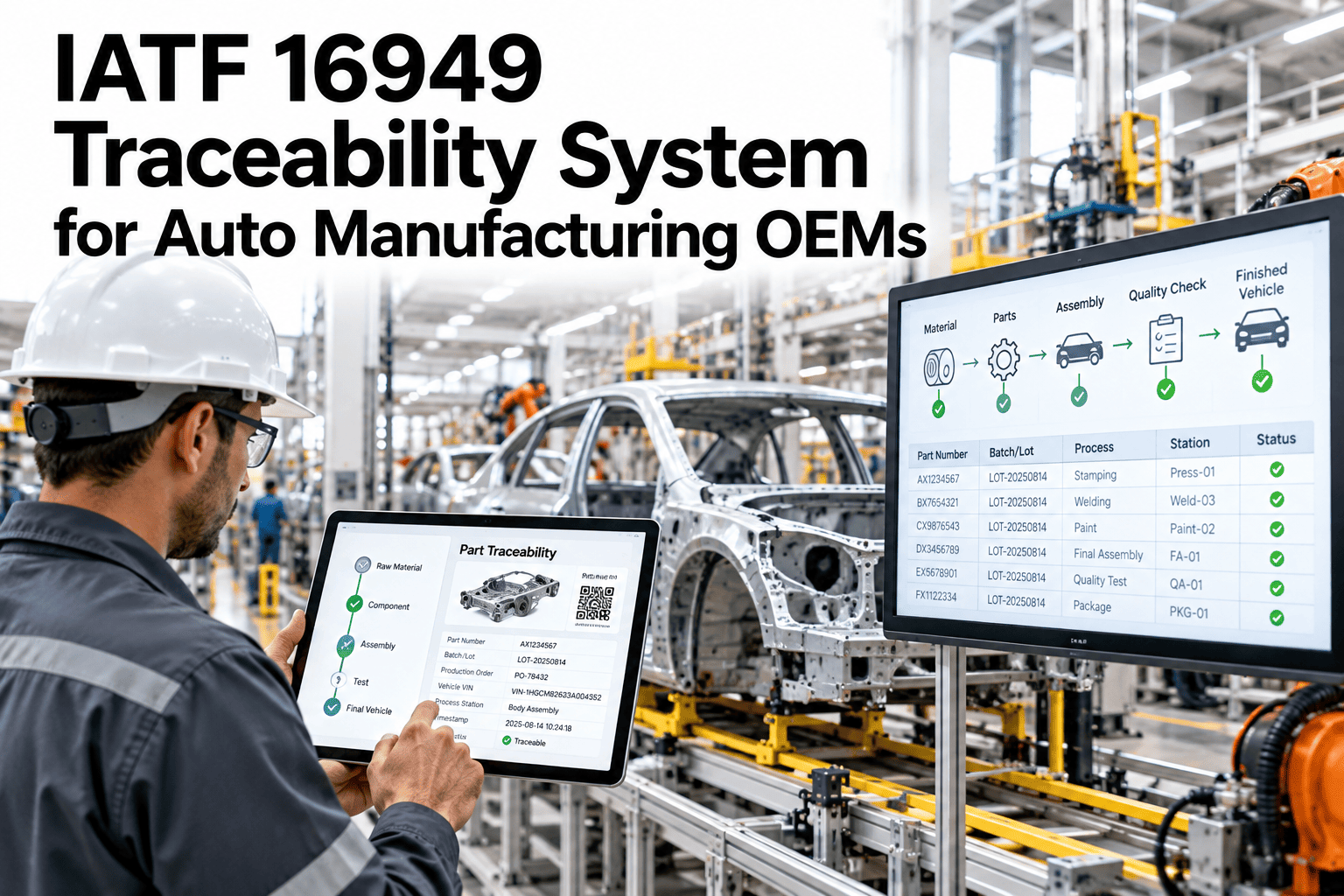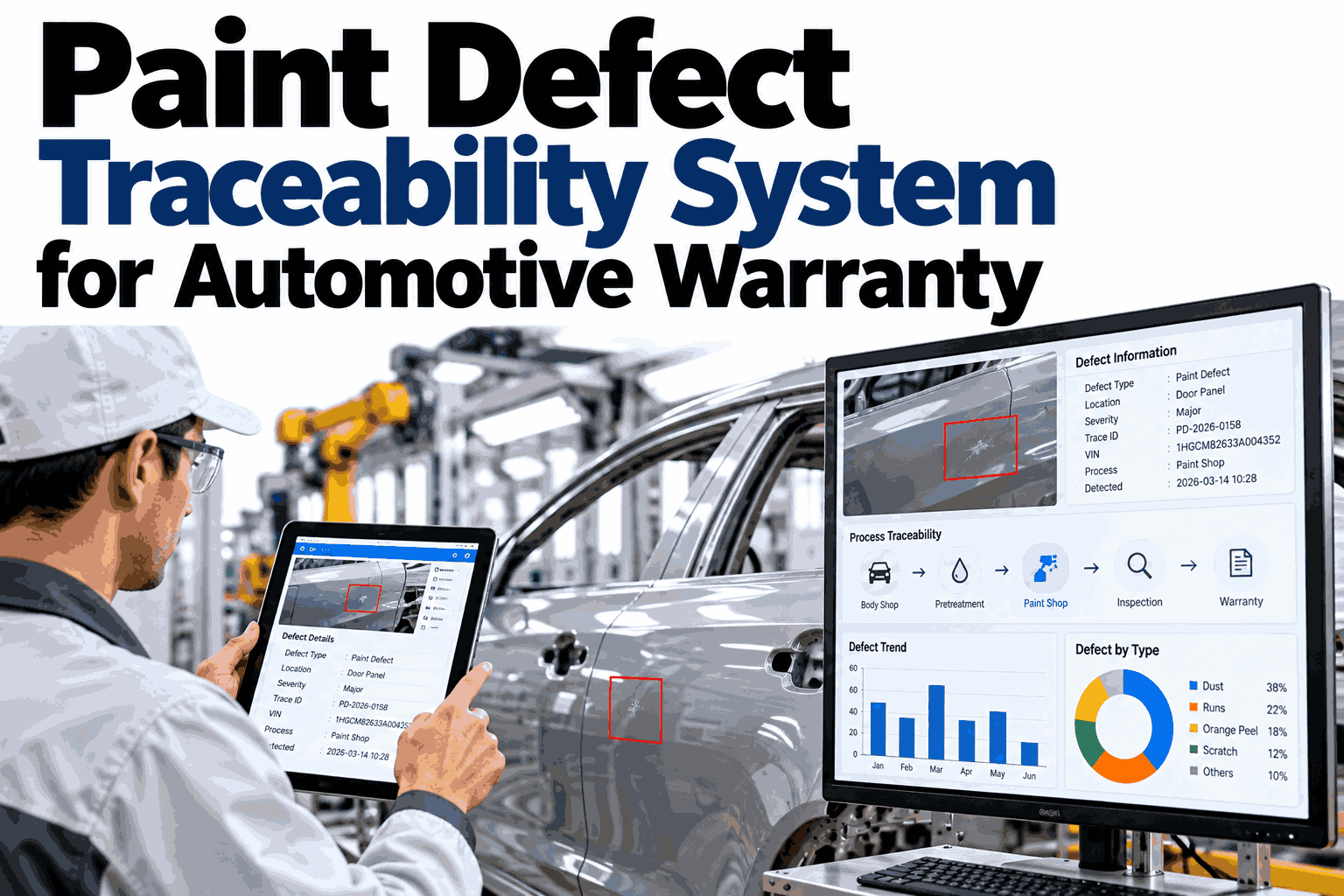
When a tooling wear issue was caught through statistical process control at one plant, its traceability system identified all eight hundred and forty-seven affected parts in under four minutes. The same containment exercise, done through manual log review before that system existed, had previously taken two full days. That difference — four minutes versus two days — is the entire business case for production genealogy in one comparison, and it scales directly with recall exposure: a manufacturer that can isolate exactly which parts carry a defect can issue a targeted containment instead of a wide, expensive, brand-damaging recall. Book a demo to see what that four-minute lookup looks like on your own production data.
Production Genealogy & Traceability in Automotive Manufacturing
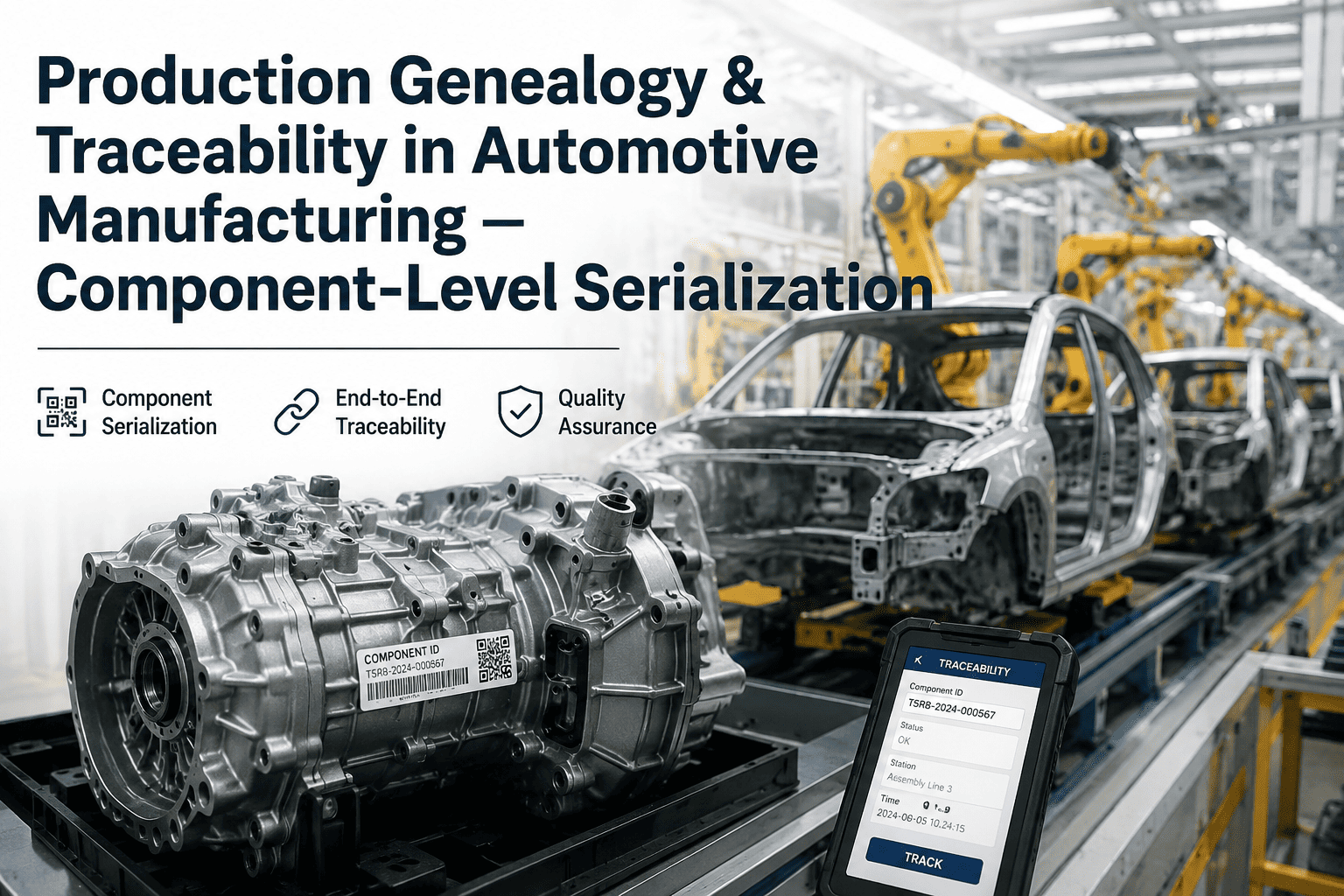
Every part that goes into a vehicle can carry a documented identity from raw material to VIN. This guide covers how component-level serialization, RFID and barcode capture, and genealogy records work together — and why the payoff shows up fastest during a containment event.
From Part Number to Documented Identity
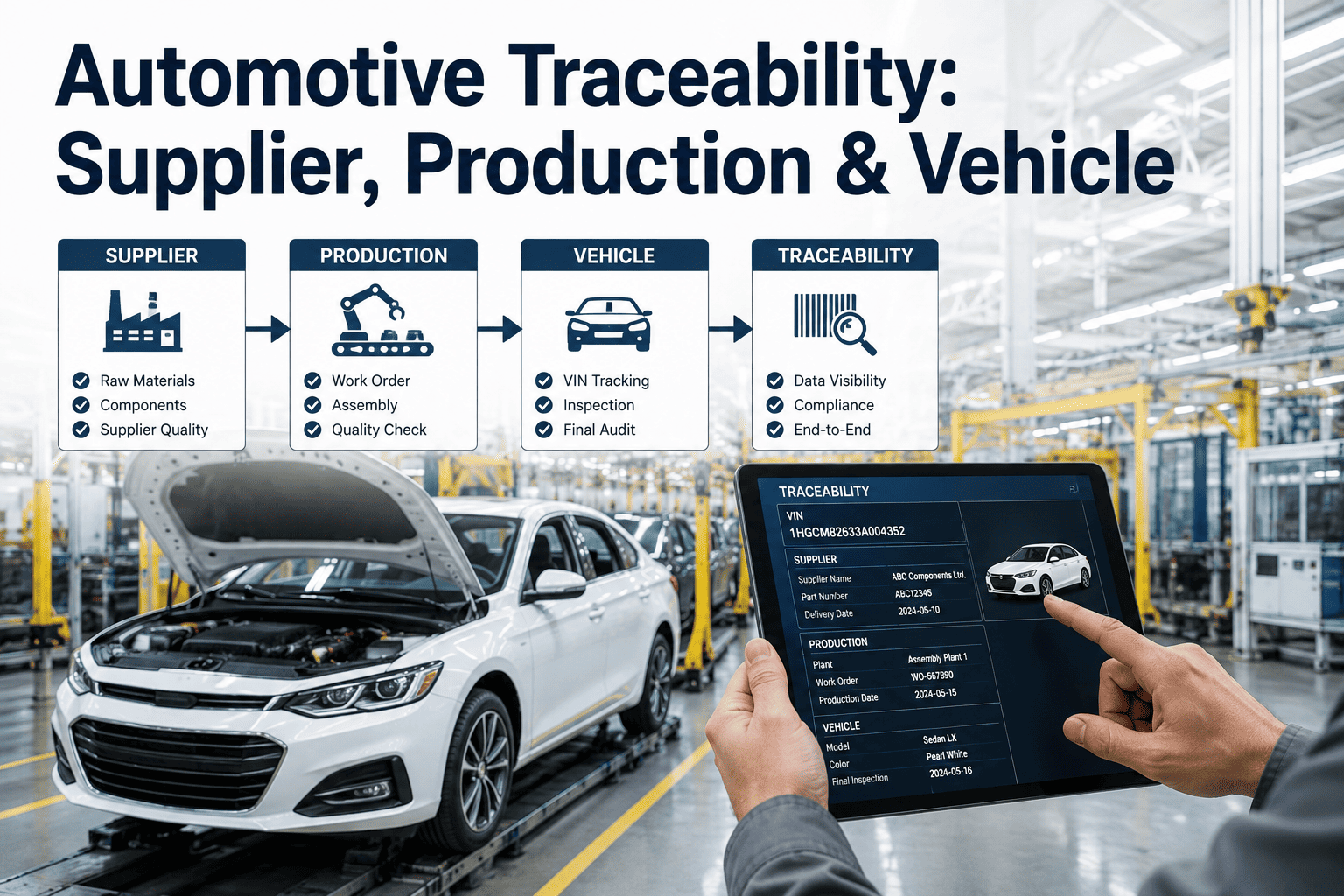
Traceability gives each component a documented identity that may include a part number, lot number, serial number, production date, supplier code, material batch, inspection result, or machine record. Genealogy is what emerges when that identity is captured at every stage — process and inspection data recording which machines, tools, parameters, and quality checks a part passed through, and assembly mapping recording which specific serials were installed into which sub-assembly and ultimately which vehicle, forming what's often described as a bill of materials by VIN.
This matters because automotive production rarely happens in one place. A wiring harness, sensor, bracket, or fastener typically passes through several suppliers before reaching final assembly, crossing company lines, state lines, and often national borders along the way. Genealogy is what lets a manufacturer maintain control and answer specific questions — which supplier lot, which machine, which shift — even when the physical production process is distributed across a long, multi-tier supply chain.
Building a Genealogy Record Layer by Layer
Raw Material & Component Identity
Material batch, supplier lot, and certificate of conformance captured at receipt, tied to a serial or lot identifier before the part enters production.
Process & Inspection History
Machine, tool, torque values, process parameters, and inspection results recorded at each manufacturing step, linked to the part's serial number as it moves through the line.
Assembly Mapping
As parts are assembled into modules and sub-systems, the system records which specific serials were installed where — building the genealogy tree from component up to sub-assembly.
Vehicle-Level Genealogy
Sub-assembly records consolidate into a complete bill of materials by VIN, giving a full, queryable history of every component that went into a specific vehicle.
Logistics & Field Linkage
Shipment, dealer receipt, and eventually warranty or service data connect back to the same VIN, closing the loop from raw material to customer.
RFID tags and barcode scanning are the most common physical capture mechanisms at each layer — a tag or label read by fixed or handheld readers communicates serial number, specifications, and production date to a centralized system, typically over standard industrial protocols, so the genealogy record builds automatically as the part physically moves through the plant rather than depending on manual data entry at each station.
Build Genealogy That Answers Questions in Minutes, Not Days
iFactory AI links component serialization, process data, and assembly mapping into one queryable genealogy record — from raw material to VIN.
The Four Moments Traceability Pays for Itself
Fast, Precise Affected-Part Identification
When a defect surfaces — from SPC, from a supplier NCR, from a field report — genealogy narrows the affected population to exactly the right parts instead of a wide, precautionary hold.
Targeted Instead of Blanket Recalls
Precise traceability lets a manufacturer recall the specific vehicles that received an affected component, rather than a broader population defined by build date range alone.
Verifiable Production History on Demand
Regulatory and customer audits increasingly require verifiable production history rather than reconstructed logs — genealogy provides that record without a manual reconstruction effort under audit pressure.
Root Cause Correlation to Production
Field failures traced back through the genealogy record to a specific supplier lot, machine, or process window turn a vague warranty trend into an actionable, specific investigation.
Industry Perspective on Traceability Investment
Traceability is one of those investments that's genuinely hard to justify on paper until the first time you actually need it, and then it justifies itself instantly. I've sat in the room during a containment event with genealogy data and without it, and they are not the same conversation. Without it, you're guessing at a safe boundary and probably erring wide, which means scrapping or holding good parts along with bad ones. With it, you point at exactly the affected serials in minutes and let everything else keep moving. The ROI isn't in a monthly report, it's in the one week a year when something goes wrong and you need the answer immediately.
Common Questions About Traceability and Production Genealogy
Know Exactly Which Parts Are Affected, in Minutes
See how iFactory AI builds full production genealogy from raw material to VIN, so your next containment event takes minutes instead of days.