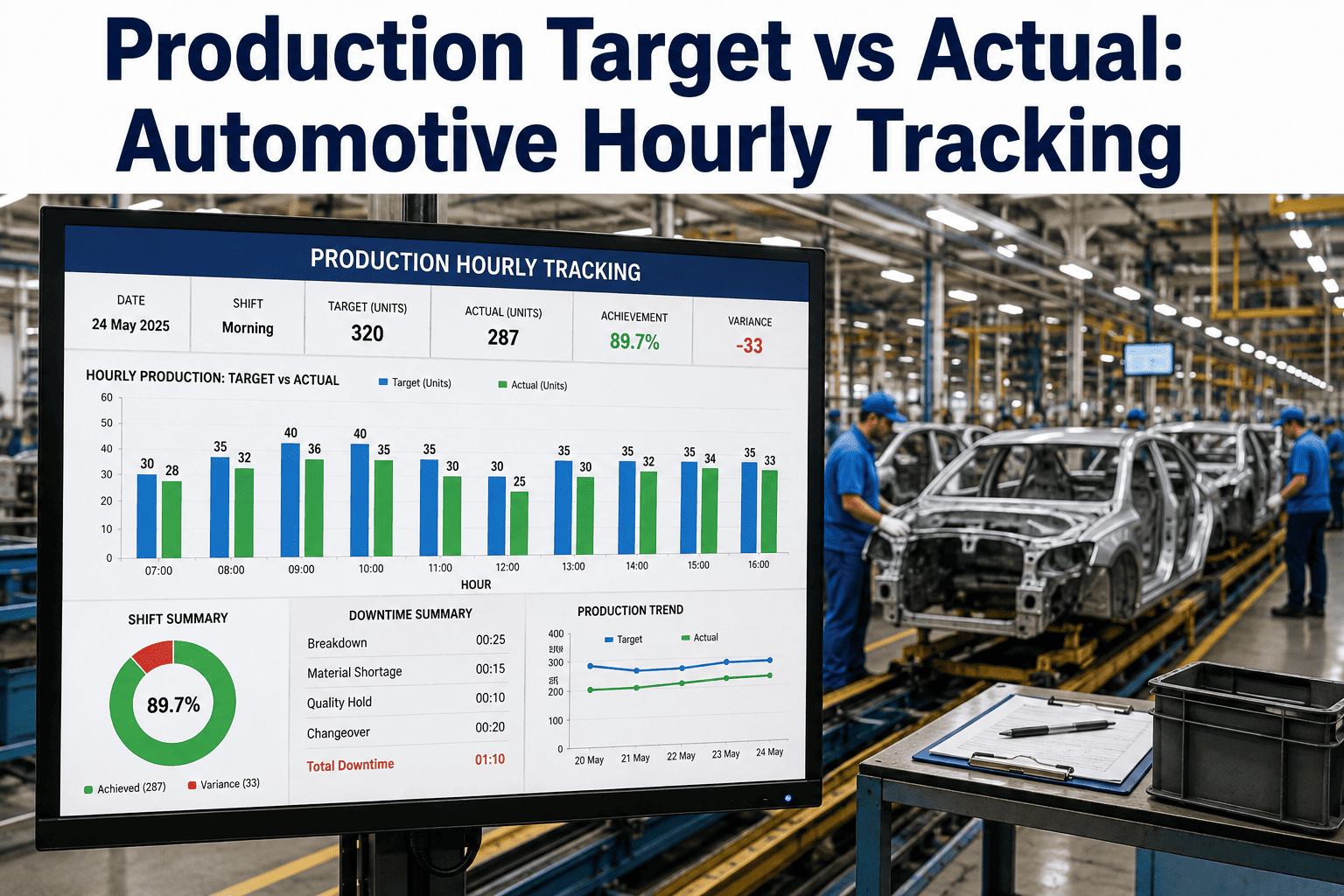
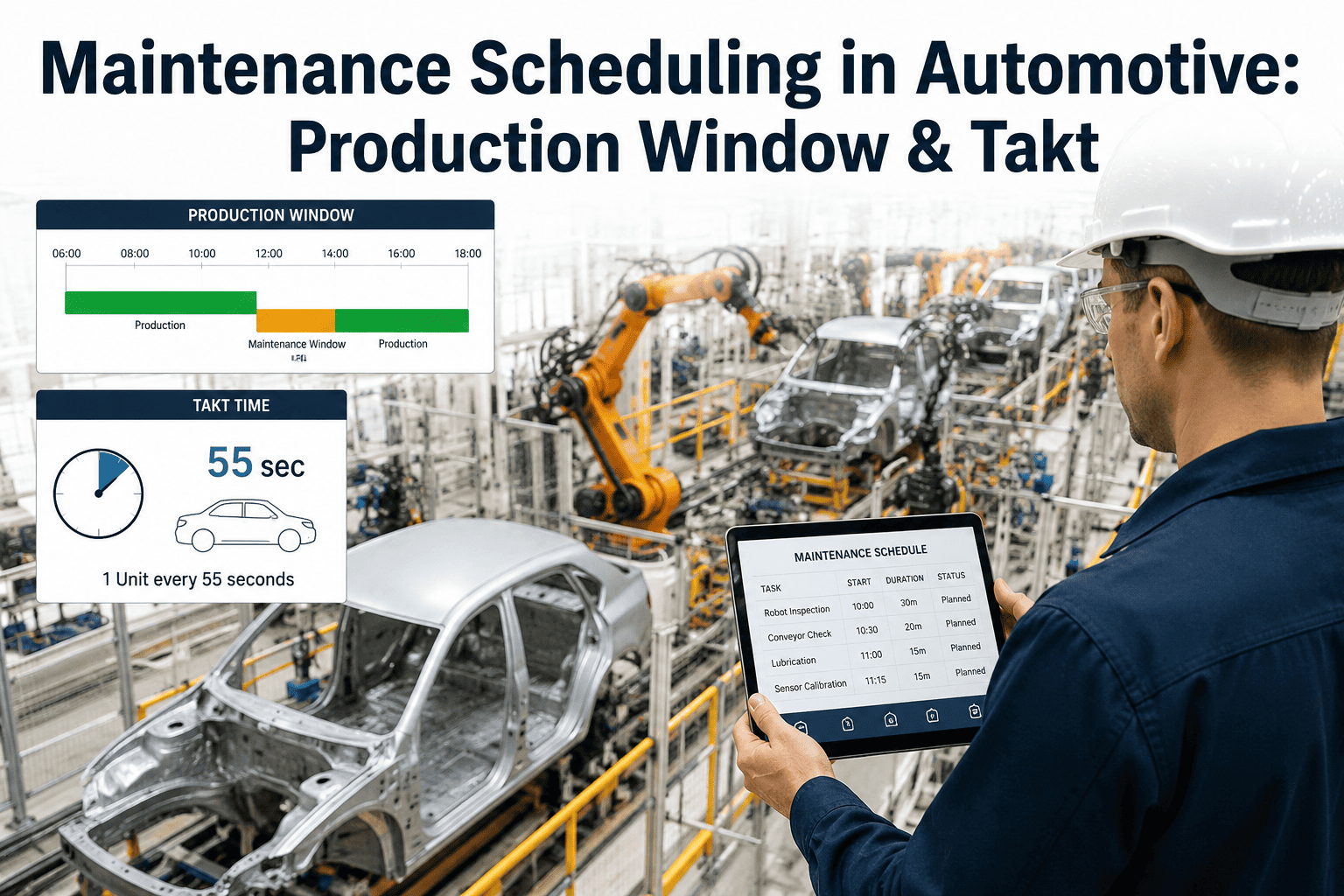
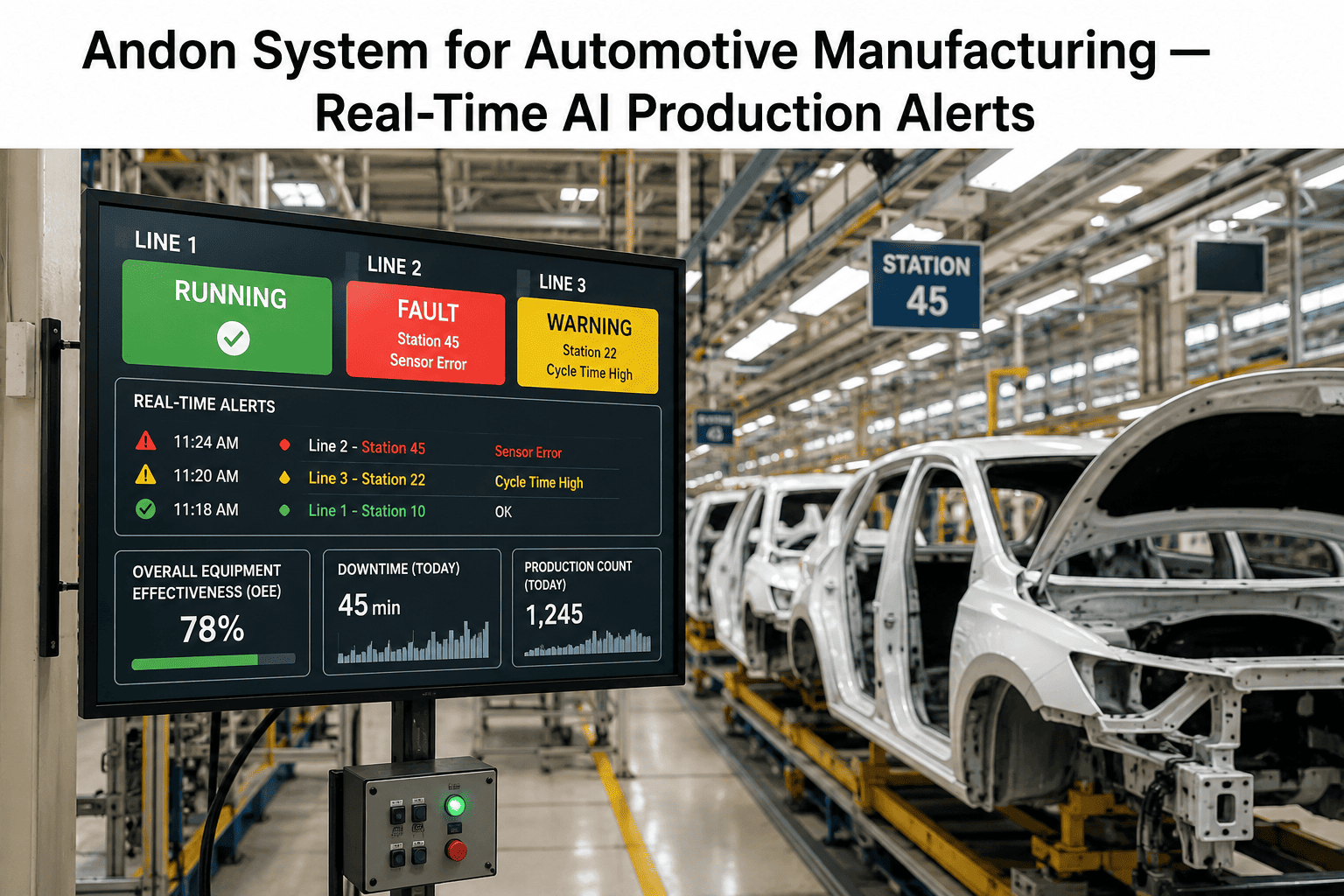
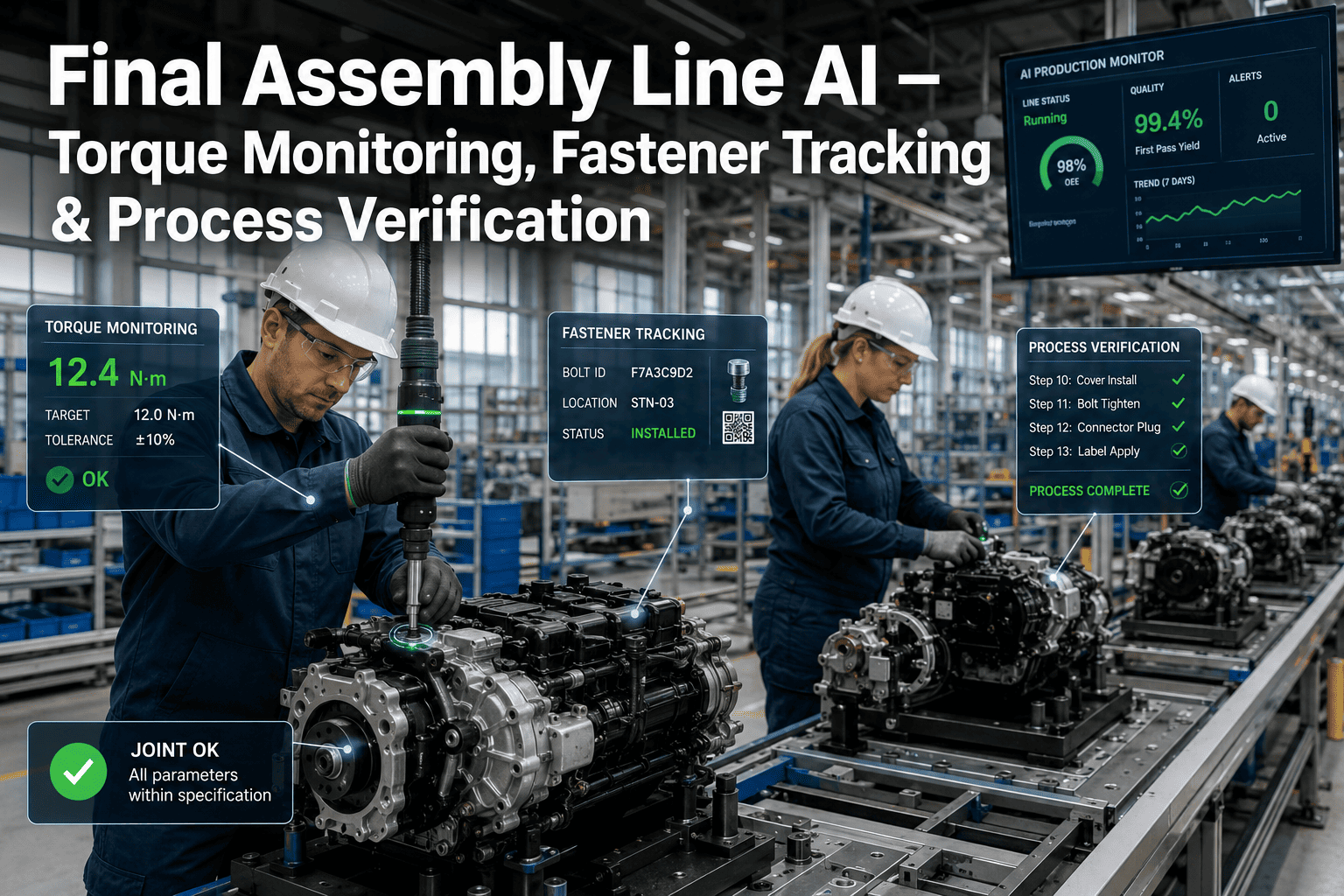
By the time a shift-end report shows a line finished the day short of target, the gap has already been baked in for hours, and nobody caught it early enough to actually recover any of the lost output. Most automotive plants still review production against target at the shift or daily level, which is exactly the reporting cadence too slow to catch a small hourly shortfall before it compounds into a shift-ending miss. Closing that gap starts with tracking target versus actual at the hour, not the shift. See how at ifactory support.
Hourly Production Tracking
A Shift Report Tells You the Line Missed Target. An Hourly View Tells You When It Started Slipping.
AI-based tracking compares production target against actual output every hour, flags variance as it develops, and gives supervisors a real recovery window instead of a shift-end explanation.
Hourly
The tracking cadence that actually allows recovery action
Cumulative
How shortfall needs to be viewed, not hour by hour in isolation
Too Late
What a shift-end report typically is for the shift it describes
Why Daily or Shift-Level Tracking Misses the Moment That Matters
A production line that finishes a shift five percent below target rarely fell behind all at once. More often, a single hour ran slow due to a changeover taking longer than planned, a quality hold, or a minor stoppage that did not seem significant in the moment, and that hour's shortfall simply carried forward uncorrected because nobody was watching the cumulative gap closely enough to notice it forming. By the time a shift report surfaces the total miss, the shift is over and there is nothing left to recover.
Tracking target versus actual hourly changes this dynamic entirely, not because it makes the line run faster, but because it gives a supervisor a live, actionable signal while there is still time in the shift to respond, whether that means adjusting staffing, addressing a bottleneck, or making a call on whether overtime is genuinely justified before the shift ends rather than after.
The Hourly Tracking Cycle
1
Set the Hourly Target
Takt time and planned run rate are translated into an expected output number for each hour of the shift, not just a single daily total.
2
Capture Actual Output in Real Time
Units completed are logged continuously from the line, not tallied manually at set checkpoints during the shift.
3
Compare and Flag Variance
Actual output is compared against the hourly target as it happens, with a variance alert triggered once the gap crosses a meaningful threshold.
4
Trigger Recovery Planning
A supervisor reviews the cause of the variance and decides on a specific recovery action while enough of the shift remains to make a difference.
5
Close Out Against Cumulative Target
End-of-shift performance is reviewed against the running cumulative target, not just the final hour, showing exactly where the shift gained or lost ground.
Tracking Methods Compared
How Target vs Actual Tracking Approaches Compare
Check Your Own Recovery Window
Find Out How Early Your Current Reporting Actually Flags a Shortfall
Bring your current shift reports and takt time targets to the call. We will walk through how hourly tracking would change your recovery window.
What a Recovery Plan Actually Looks Like Once Variance Is Flagged
Catching a shortfall early only helps if there is a clear next step once it is flagged, and the right response depends heavily on the cause behind the gap. A shortfall driven by a longer-than-planned changeover calls for a different response than one driven by a quality hold or an unplanned short stoppage, which is why a useful variance alert needs to carry some indication of probable cause, not just the size of the gap.
Staffing Reallocation
Shifting available labor to the constrained station for the remainder of the shift when the shortfall traces to a specific bottleneck.
Changeover Time Reduction
Addressing a changeover that consistently runs longer than planned, often the single largest recoverable source of hourly shortfall.
Targeted Overtime Decision
Making an informed overtime call based on actual cumulative gap and remaining shift time, rather than a reflexive response to a daily miss.
Escalation to Maintenance
Flagging a recurring short-stoppage pattern for maintenance attention before it repeats into the next shift as well.
Why Cumulative Tracking Matters More Than Any Single Hour
Looking at each hour in isolation can be misleading in both directions: a single strong hour can mask an accumulating deficit from earlier in the shift, and a single weak hour can look alarming even when the shift is still comfortably on pace overall. What actually determines whether a shift finishes on target is the running cumulative gap between planned and actual output, tracked continuously rather than reset each hour.
A cumulative view also changes how a variance alert should be interpreted. A small hourly miss that follows several strong hours may not warrant any intervention at all, while the same size miss following several already-weak hours might represent the last realistic point at which a recovery action could still close the gap before shift end. Reacting to hourly numbers without cumulative context risks both overreacting to noise and underreacting to a genuine trend.
Four Mistakes That Undermine Target Tracking
Reviewing Performance Only at Shift End
By the time a shift report is reviewed, there is no remaining time in that shift to act on what it shows.
Treating Every Hourly Miss the Same
A shortfall needs to be read against the cumulative shift position, not judged in isolation from the hours before it.
Flagging Variance Without a Likely Cause
An alert that only shows the size of the gap, without pointing toward a probable cause, slows down the decision on what to do next.
Relying on Manual Hourly Counts
Manual counting introduces delay and transcription error that can push a real-time problem into a delayed discovery.
Frequently Asked Questions
How much of a shift can realistically be recovered once an hourly shortfall is flagged?
This depends heavily on how much of the shift remains and what caused the shortfall, but the key point is that recovery is only possible at all if the gap is identified while time remains, which a shift-end report by definition cannot provide. Even a partial recovery captured through an early staffing or process adjustment is better than a full miss discovered after the shift has already ended.
Talk to our team about setting up hourly tracking on your lines.
Should every hourly variance trigger an alert, or only larger gaps?
Alerting on every minor fluctuation tends to create noise that supervisors eventually learn to ignore, which defeats the purpose of the system, so a meaningful threshold tied to cumulative shift position, not just the single hour, is usually the better approach. The goal is to surface gaps large enough or persistent enough to warrant an actual decision, not every small variation in output pace.
What is the difference between takt time and hourly production target?
Takt time is the rate at which a single unit needs to be produced to meet demand, while an hourly production target translates that rate into an expected unit count for each specific hour of the shift, accounting for planned breaks and changeovers. Tracking against the hourly target, rather than only the underlying takt time, is what makes variance visible at a resolution supervisors can actually act on.
Book a scoping call to see how this translates for your specific line.
Can hourly tracking help identify root causes, or does it only show that a shortfall happened?
On its own, hourly tracking shows the size and timing of a gap, but pairing it with cause data from the line, such as changeover duration, quality holds, or stoppage logs, is what turns a variance number into an actionable root cause finding. The tracking system is most valuable when it connects the "what" of the shortfall to the "why" automatically rather than leaving that connection to a manual review later.
Does hourly tracking replace the need for a shift-end review entirely?
No, a shift-end review still serves an important purpose in summarizing overall performance and informing longer-term planning, but it cannot substitute for real-time visibility when the goal is recovering lost output within the same shift. The two serve different purposes: hourly tracking enables in-shift action, while shift-end review supports broader trend analysis and planning.
Reach out to our team to discuss how the two fit together on your floor.
Stop Finding Out About the Miss After the Shift Ends.
Get Hourly Target vs Actual Tracking on Your Automotive Line
Bring your current takt time targets and reporting cadence to the call. We will walk through how hourly variance tracking would change your recovery window.