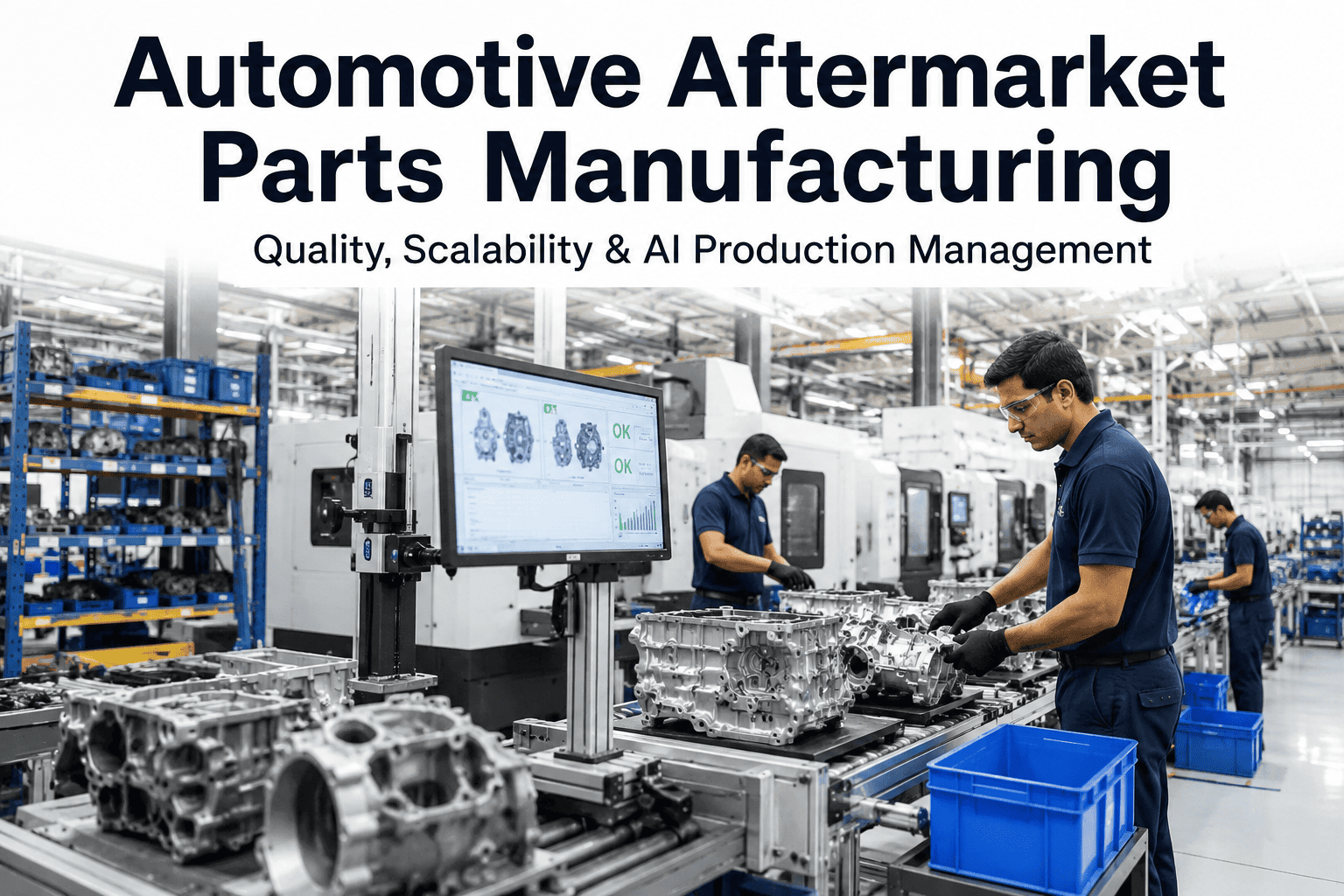
Automotive Aftermarket Parts Manufacturing — Quality, Scalability & AI Production Management

By James Smith on July 31, 2026

automotive-aftermarket-parts-manufacturing-quality-scalability

An aftermarket parts plant almost never runs one product for a full shift. It runs forty, or four hundred, switching between brake calipers, sensor housings, and trim clips in whatever order the order book demands that week, and every switch is a moment where quality can quietly slip. Operations directors in this corner of manufacturing are graded on a number that OEM-focused plants rarely have to worry about as closely: how many different part numbers can move through the same line, in the same week, without a single one of them drifting out of spec. This piece breaks down what actually drives cost and risk in high-mix, low-volume aftermarket production, where the scalability ceiling really sits, and what AI-based production management changes about the answer. A short walkthrough shows how that applies to your own SKU mix.

Aftermarket Auto Parts
Scaling Aftermarket Parts Manufacturing Without Losing Quality Control
High-mix, low-volume production doesn't have to mean unpredictable quality. See how AI production management keeps every changeover, every batch, and every part number in spec.

The Hidden Cost of High-Mix, Low-Volume Aftermarket Production

The global automotive aftermarket crossed roughly the $900 billion mark heading into 2026 and continues climbing at a mid-single-digit annual pace, driven by aging vehicle fleets, rising vehicle-ownership rates in emerging markets, and a growing catalog of electrified-vehicle replacement parts that didn't exist a decade ago. That growth sounds like good news for any manufacturer supplying the space, and it is — but it also means the SKU count keeps expanding faster than most plants' scheduling systems were ever designed to handle. A plant that produced 200 distinct part numbers five years ago is now often producing 500 or more, spread across a fleet mix that spans a decade or two of vehicle model years. Every one of those numbers carries its own tolerance, its own fixture, and its own risk of being the one that gets it wrong on a Tuesday afternoon changeover.

500+
active SKUs is now common in a single mid-size aftermarket plant, up from a couple hundred a decade ago
3.4–5.6%
CAGR range across current global aftermarket market forecasts through the early 2030s
51%
of the certified aftermarket parts segment is genuine/OE-quality product, where consistency is non-negotiable
35%
of global aftermarket revenue share sits in North America alone, the single largest regional market

The plants that struggle with this growth aren't necessarily under-equipped — many have modern presses, modern injection lines, modern CNC cells. What they lack is a system that can tell, in real time, whether a specific run of a specific part number is drifting before it becomes a full pallet of scrap. Manual quality checks, spaced every 30 or 60 minutes, were built for long runs of a handful of products. They were never designed for a schedule where the line might change parts four times in a single shift, and the gap between those two realities is exactly where aftermarket quality problems tend to originate.

Mapping Your Own SKU Complexity

Not every part number carries the same operational risk, and treating them all the same is one of the more common planning mistakes in this segment. A simple two-axis view — production volume against part complexity — tends to explain most of the friction on an aftermarket floor better than a spreadsheet of due dates ever will. High-volume, low-complexity parts can usually run on largely automated cycles with light supervision. It's the low-volume, high-complexity corner of that matrix, the safety-critical brake and steering components made in short runs, that consumes a disproportionate share of engineering and quality attention relative to the revenue they generate.

Low Complexity / High Volume
Filters, trim clips, standard gaskets. Automation-friendly, low changeover risk, the easiest segment to keep in spec.
High Complexity / High Volume
Sensor housings, lighting assemblies. Automation pays off fast here, but tolerance drift is expensive at this scale.
Low Complexity / Low Volume
Legacy trim and hardware for older model years. Low risk individually, but changeover time dominates the cost per part.
High Complexity / Low Volume
Brake calipers, steering components, EV battery connectors. The highest scrap risk and the segment where real-time monitoring earns back the most.

Plotting a plant's own catalog against this matrix usually reveals that a small slice of SKUs — often the safety-critical, low-volume corner — is responsible for a disproportionate share of quality holds and customer complaints. That's a useful starting point for where to focus a production monitoring rollout first, rather than trying to instrument every line for every part number on day one.

See Your SKU Risk Map
Find Out Which Part Numbers Are Actually Driving Your Scrap
A demo walks through your production mix and flags where quality risk is concentrated before you commit to a rollout plan.

Quality Consistency Across a Moving Target

Consistency is harder to hold onto in aftermarket production than in a dedicated OEM line, simply because the "target" keeps changing shape. An OEM line calibrated for one part can drift slowly and predictably over a long run, and operators learn its rhythm. An aftermarket line calibrated for forty parts a week never gets that luxury — every changeover resets the clock on process knowledge, and the first several parts off any new setup carry the highest defect risk of the entire run. That startup window is exactly where AI-driven vision inspection and process parameter tracking earn their keep, because they catch a miscalibrated fixture or an out-of-spec dimension on part three of a new run instead of part three hundred.

Manual spot-check quality control
Catches ~50-60% of startup defects before shipment
Fixed-interval statistical sampling
Catches ~70-75% of startup defects before shipment
Real-time AI vision + parameter monitoring
Catches 95%+ of startup defects before shipment

The difference matters most in the certified, genuine-parts segment, which now represents just over half of aftermarket revenue and carries warranty and traceability obligations that counterfeit or uncertified parts don't. A single missed defect that reaches a distributor in that segment doesn't just cost the scrapped part — it risks a recall-style traceability review across every unit from the same lot, which is a far more expensive event than the original defect ever was.

Cutting Changeover Time Without Cutting Corners

Changeover time is the other lever that defines aftermarket profitability, because in a high-mix environment it's pure non-production time repeated dozens of times a month. A plant running four changeovers a shift at 45 minutes each is losing three full hours of capacity a day before a single part gets made — time that, multiplied across a year, often exceeds the output of an entire extra shift. The instinct is usually to add labor to speed up the physical changeover, but the more durable fix is reducing how often changeovers go wrong the first time, since a botched setup means running it twice.

1
Digital setup sheets replace paper travelers
Operators pull the exact fixture, torque spec, and tolerance window for the next part number automatically, removing the guesswork that causes first-run defects.
2
First-piece verification runs in parallel, not in sequence
AI vision checks the first part against spec while the line ramps, instead of holding production until a manual gauge check clears.
3
Changeover time gets logged automatically by part-number pair
Over time this reveals which specific transitions run long, so SMED-style improvement work targets the true worst offenders instead of a guess.
4
Scheduling sequences part families to minimize tooling swaps
Grouping similar fixtures back to back, rather than running the order book in raw priority sequence, shaves changeovers off the week without touching due dates.

None of these four steps require new capital equipment. They're a scheduling and visibility problem more than a machinery problem, which is exactly why plants that add automation without adding this layer of process intelligence often see disappointing returns — the equipment gets faster, but the changeover count and the setup errors stay exactly where they were.

Where the Aftermarket Dollars Are Headed

Understanding where category growth is concentrated helps an operations team decide which SKU families deserve the first round of production monitoring investment. The table below reflects current market sizing and the segments analysts expect to grow fastest through the early 2030s.

SegmentApprox. 2026 Market SizeGrowth Outlook
Global automotive aftermarket (all parts)~$900B5.6% CAGR through 2035
North America aftermarket~$240B4.3% CAGR through 2035
Certified / genuine parts segment51% of total revenueSteady share, rising absolute volume
EV-specific aftermarket (batteries, inverters, connectors)Emerging categoryFastest-growing sub-segment industry-wide
Exhaust componentsEstablished categoryAbove-average growth through forecast period

The EV-specific row is the one worth watching most closely for scalability planning. High-voltage battery components, inverters, and connectors are new categories with no long production history, no legacy tooling, and tighter safety tolerances than most traditional mechanical parts — which means a plant adding these lines is effectively starting a brand-new high-complexity, low-volume product family from zero, at the exact moment its existing SKU count is already stretching internal capacity.

What AI Production Management Actually Does on the Floor

"AI production management" gets used as a catch-all term, but on an aftermarket floor it resolves into a specific, practical set of capabilities that map directly onto the problems above.

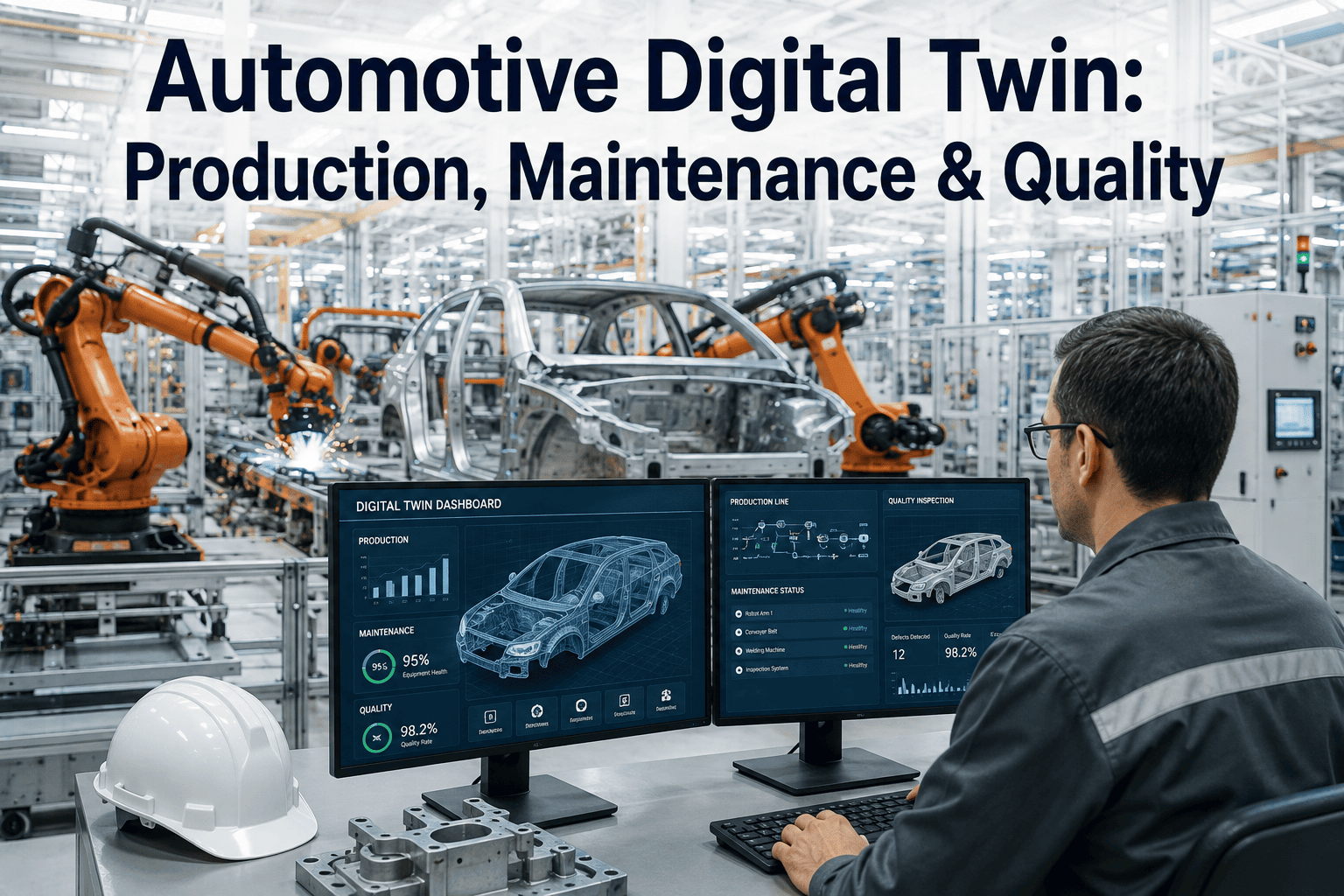
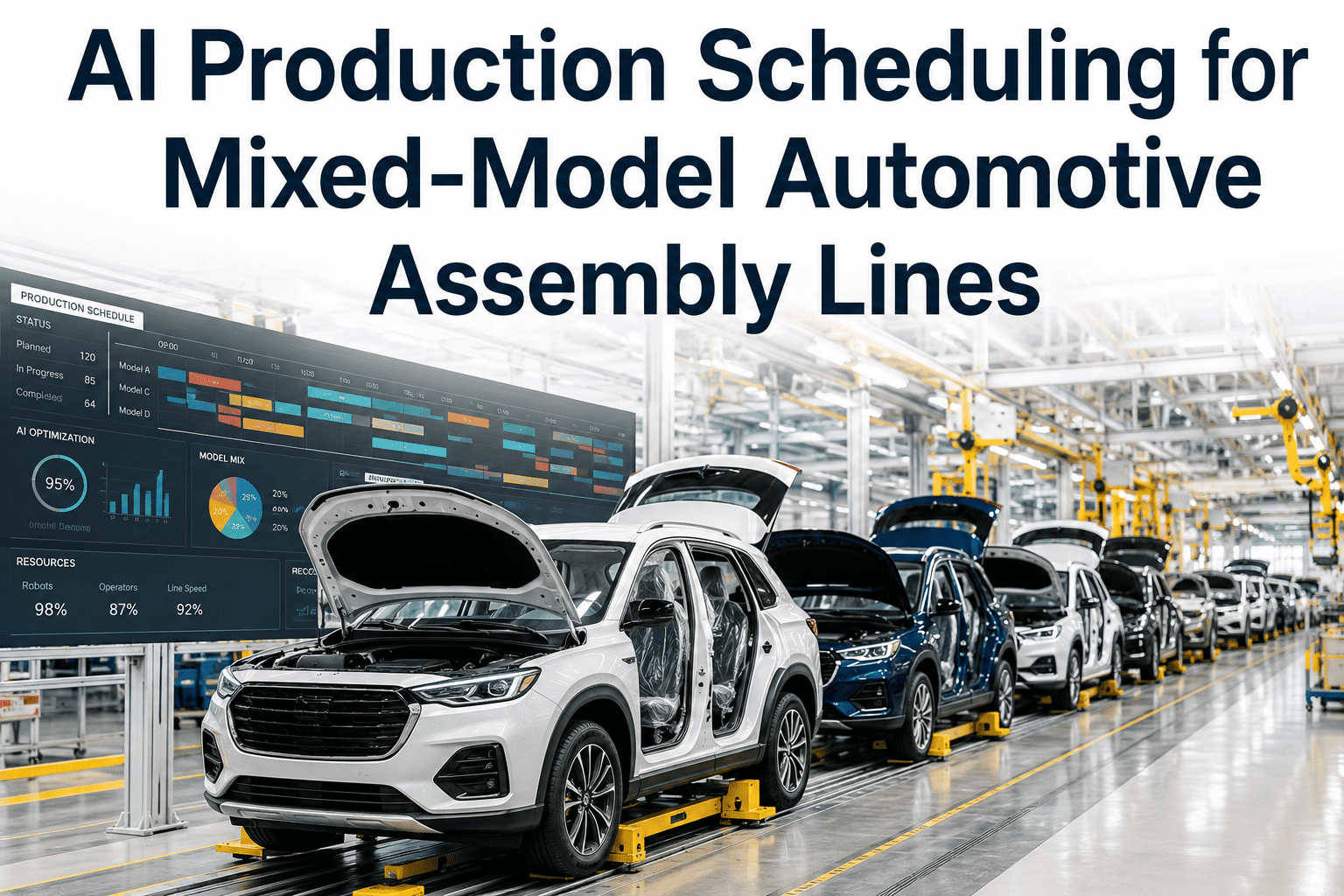
Dynamic scheduling by part-family similarity
Groups upcoming orders by shared tooling and fixture requirements rather than strict due-date order, cutting the number of physical changeovers per week.
Real-time first-piece inspection
Vision systems check dimensional and cosmetic tolerances on the first parts of every new run, catching setup errors before a full batch is committed.
Per-SKU process history
Every part number carries its own record of prior runs, drift patterns, and known problem tolerances, so operators aren't relearning each setup from scratch.
Automated changeover time tracking
Logs actual setup duration against target for every transition, surfacing which specific part-number pairs consistently run over.
Traceability by lot and part number
Every unit produced is tied to its run parameters, which matters enormously in the certified genuine-parts segment where a warranty claim can trigger a lot-level review.
Exception-based alerts, not blanket monitoring
Flags only the runs and parts that are actually drifting out of tolerance, so quality teams spend their time on the SKUs that need it instead of reviewing everything equally.

Five Mistakes That Quietly Cap Aftermarket Output

01
Scheduling by due date alone. Sequencing the week purely by delivery deadline, without grouping similar tooling together, multiplies changeovers and quietly eats capacity that no one line item ever gets blamed for.
02
Treating every SKU with equal quality rigor. Spreading fixed inspection effort evenly across low-risk and high-risk part numbers wastes attention on parts that rarely fail while under-checking the ones that actually drive scrap.
03
Relying on operator memory for setup knowledge. When setup instructions live in an experienced operator's head rather than a digital record, that knowledge walks out the door with every shift change or retirement.
04
Adding automation before adding visibility. Faster equipment on a line that still can't see which changeovers are going wrong just produces bad parts faster, rather than fixing the underlying setup problem.
05
Under-preparing for EV-specific SKUs. Treating new high-voltage and connector part numbers like standard mechanical parts, without adjusting inspection rigor, underestimates a category with materially tighter safety tolerances.

Frequently Asked Questions

How many SKUs does a plant need before high-mix scheduling tools make sense?
There's no hard cutoff, but plants running more than roughly 100 to 150 active part numbers with frequent changeovers typically see the clearest return, since that's the point where manual scheduling spreadsheets start missing tooling-grouping opportunities. Below that threshold, the gains are smaller but still measurable, particularly for plants with a high share of safety-critical or certified parts. The right test isn't the SKU count alone but how often the line changes parts within a single shift. A demo can size the opportunity against your own order book.
Does real-time inspection slow down changeovers?
No — when first-piece verification runs in parallel with line ramp-up rather than as a separate manual hold step, it typically adds no net time to a changeover while catching far more setup errors than a manual gauge check performed after the fact. The goal is to replace a sequential manual step with an automated parallel one, not to add an additional inspection stage on top of the existing process.
How does this apply differently to certified genuine parts versus uncertified parts?
Certified genuine parts, which make up just over half of aftermarket revenue, carry warranty and traceability obligations that make lot-level record-keeping essential — a single field failure can trigger a review of every unit from the same production run. Uncertified parts carry lower documentation requirements but still benefit from the changeover-time and scrap-reduction gains, since those cost savings apply regardless of certification status.
Is this worth it for a plant that isn't adding EV parts yet?
Yes. The scheduling and quality benefits apply to any high-mix, low-volume production environment, not specifically to EV-related SKUs. That said, plants that expect to add EV battery, inverter, or connector components in the next one to two years benefit from building this visibility layer before those new, tighter-tolerance part numbers arrive, rather than retrofitting it under time pressure later.
What's the typical rollout timeline for an aftermarket plant?
Most aftermarket deployments start with the highest-risk SKU family identified from a complexity-versus-volume review, typically live within four to eight weeks, and expand to additional part families once the first rollout demonstrates measurable scrap and changeover-time reduction. Support can walk through a phased rollout plan specific to your product mix.
Ready When You Are
Bring Visibility to Your Highest-Risk Part Numbers
Book a session and see how AI production management handles your specific SKU mix, changeover pattern, and quality risk profile.

Share This Story, Choose Your Platform!