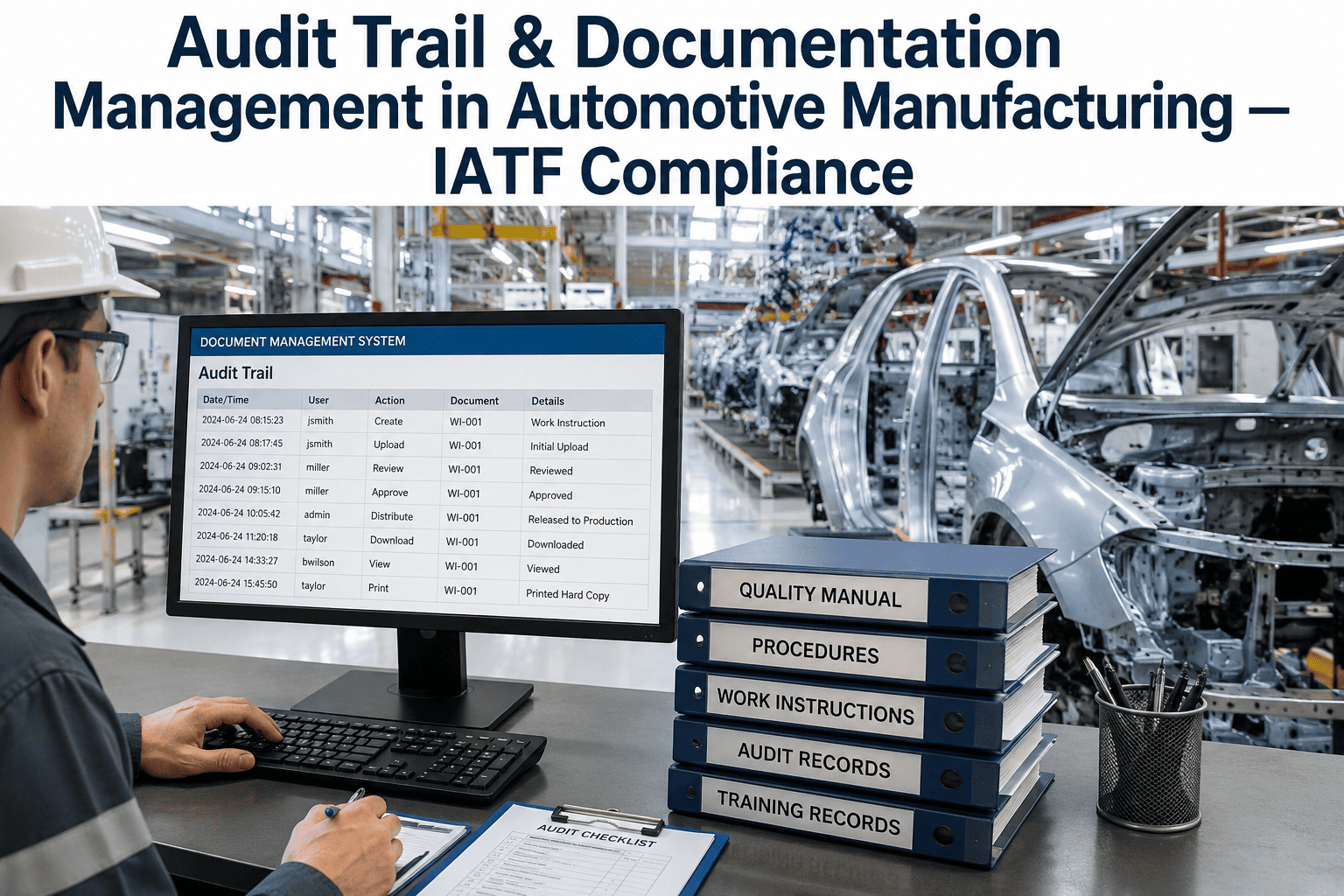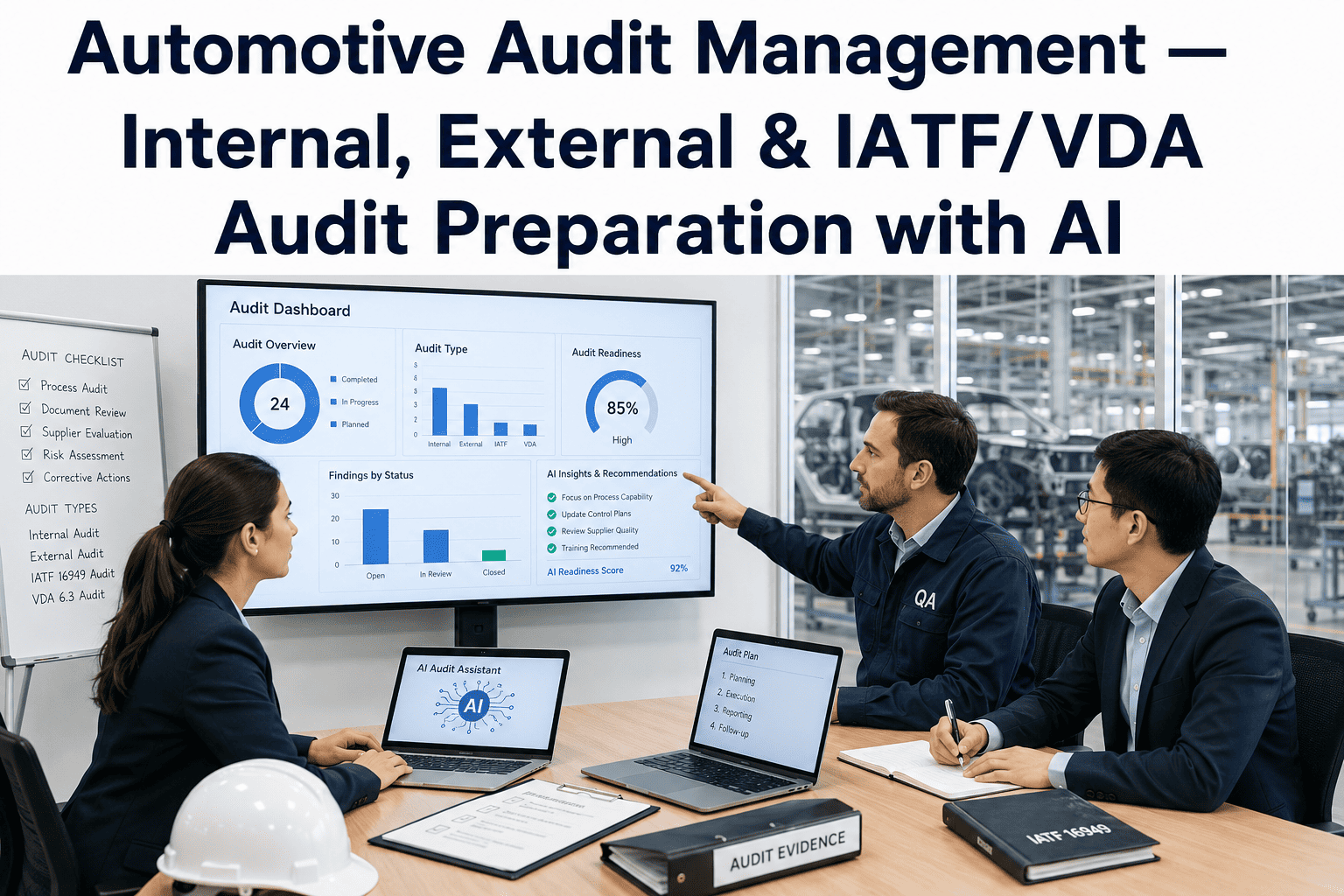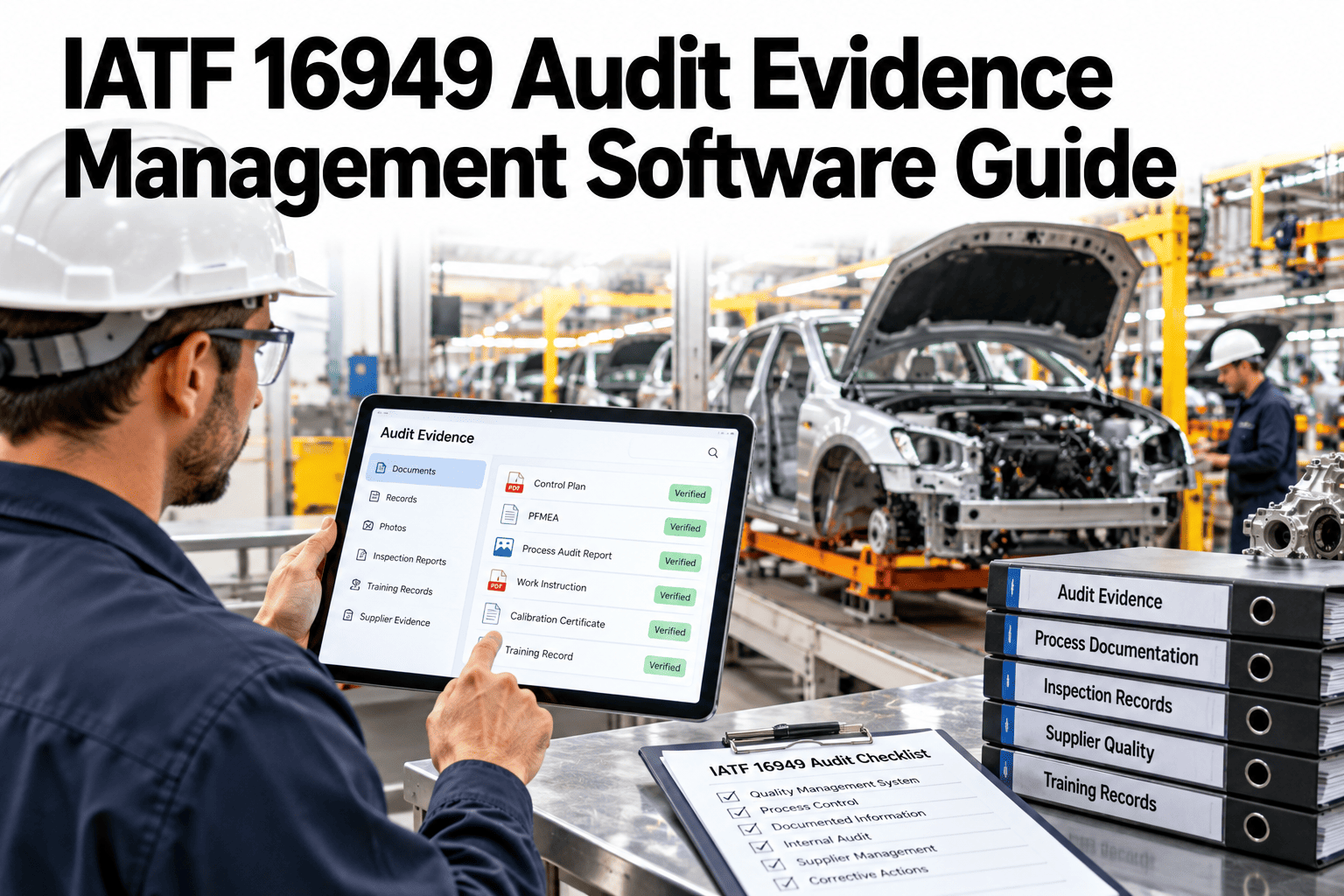
An IATF 16949 external audit rarely fails because evidence doesn't exist. It fails because the evidence exists in the wrong folder, under the wrong version, and nobody can retrieve it inside the window the auditor is standing in the room. Audit evidence management consolidates documents from scattered sources, aligns them against your actual retention policy, and makes retrieval fast enough that the audit stays painless instead of becoming a scramble. Quality managers can see a document retrieval run in real time on iFactory AI before their next surveillance audit arrives.
The Document Exists. Can You Find It in Thirty Seconds?
iFactory AI consolidates audit evidence, aligns retention policy, and makes retrieval fast enough that the auditor never has to wait.
Where Evidence Gets Lost
Multiple copies of a procedure, unclear which is the controlled version.
Different departments keep their own records in their own systems.
A record expected by the policy was never actually archived.
The same document type filed under different names across sites.
Searching by filename instead of by product, date or process.
A finding not because the record is missing, but because it can't be shown in time.
Consolidation, Retention, Retrieval
| Stage | What It Solves | Common Gap |
|---|---|---|
| Consolidation | One place for every controlled document | Documents still live in several systems |
| Retention alignment | Records kept for the policy's required duration | No automatic check against the policy |
| Audit-ready retrieval | Fast search by product, date or process | Only filename-based search available |
Map Where Your Own Evidence Gets Stuck
Bring your last internal audit findings to a 30-minute session and trace where retrieval slowed down.
A Retention Policy That Actually Gets Checked
Retention period set per document type.
Every document linked to its retention rule at creation.
Missing or expiring records surfaced before an audit, not during.
Compliant record set available on request.
A Composite Scenario: The Finding That Was About Speed, Not Content
Picture an auditor requesting a specific calibration record from eighteen months earlier. The document exists, correctly filed, but it takes the team forty minutes across two departments to locate it.
The finding written up afterward is not about the record's content, which was fine, but about the time it took to produce it. Consolidated, context-searchable evidence turns that forty minutes into thirty seconds.
Where iFactory AI Fits
Consolidates the sources
Brings documents from scattered systems into one searchable location.
Checks retention automatically
Flags gaps against your policy before an auditor ever asks.
Searches by context
Retrieves by product, date or process, not just a filename.
Keeps version control
Surfaces the current controlled version, not an outdated copy.
Expert Review
A quality systems consultant's perspective, reviewed for accuracy before publication: in reviewing audit findings across suppliers, the pattern that stands out is how rarely the issue is a genuinely missing record. It is almost always a retrieval time problem dressed up as a documentation problem. Timing your own retrieval against a real audit request is usually the clearest way to see where the gap sits.
Frequently Asked Questions
What is the difference between document control and audit evidence management?
Document control typically governs how a procedure or form is created, approved and revised. Audit evidence management is the broader discipline of making sure the records generated during operation, like calibration logs or inspection results, can be consolidated, retained correctly and retrieved quickly when an auditor asks for them. See how both pieces would connect in your own environment in a short session.
How do we check whether our retention policy is actually being followed?
A gap check compares what the policy requires to be retained, and for how long, against what records actually exist and are findable. Doing this proactively, rather than discovering gaps when an auditor asks, gives your team time to correct them. Ask for a gap check run against your own retention policy.
Can this consolidate records from multiple existing systems?
In most cases, yes, through connectors or integrations that bring records from document management, quality and ERP systems into one searchable view without necessarily replacing those source systems. Exact integration options depend on what systems you currently use. Explore which of your current systems could connect.
How fast should audit evidence retrieval realistically be?
There is no universal standard, but the practical goal is retrieval fast enough that an auditor is not left waiting in a way that reflects poorly on your quality system. Minutes rather than hours is a reasonable target for most common document requests once evidence is consolidated and searchable by context. Try timing a few common requests against your current process.
Does this help with internal audits as well as external ones?
Yes, the same consolidation and retrieval speed benefits internal audits, which often happen more frequently and are a good opportunity to catch retrieval gaps before an external auditor finds them. Many quality teams use internal audit performance as the proving ground before an external surveillance visit. Join a session on using internal audits to stress-test retrieval.
Make the Next Audit Request a Non-Event
iFactory AI consolidates evidence and makes retrieval fast enough that an auditor never has to wait. Book a walkthrough with your own documents.