Choosing SQC optimization software in 2026 is a different decision than it was five years ago. The legacy default for automotive plants — SAP MII feeding fixed-limit control charts — is now on a maintenance clock, and the alternatives have split into two camps: traditional SPC tools that digitize the old paradigm, and AI-native platforms that predict variation before it becomes scrap. For a Tier 1 supplier living under IATF 16949 PPM targets and PPAP obligations, the wrong pick means another three years of reactive quality. This guide breaks down what separates the best SQC optimization software from the rest in 2026 — the seven criteria that actually matter, how the leading approaches compare, and why an on-premise, AI-native architecture has become the benchmark for automotive quality teams that want zero-defect, not just well-documented defects.
Best SQC Optimization Software for Automotive Plants in 2026
What to look for, what to avoid, and how AI-native SQC has redrawn the shortlist. A practical evaluation framework for Tier 1 and OEM quality teams choosing a platform that predicts variation instead of just recording it — IATF 16949 ready, PPAP automated, on-premise or cloud, live in 12 weeks.
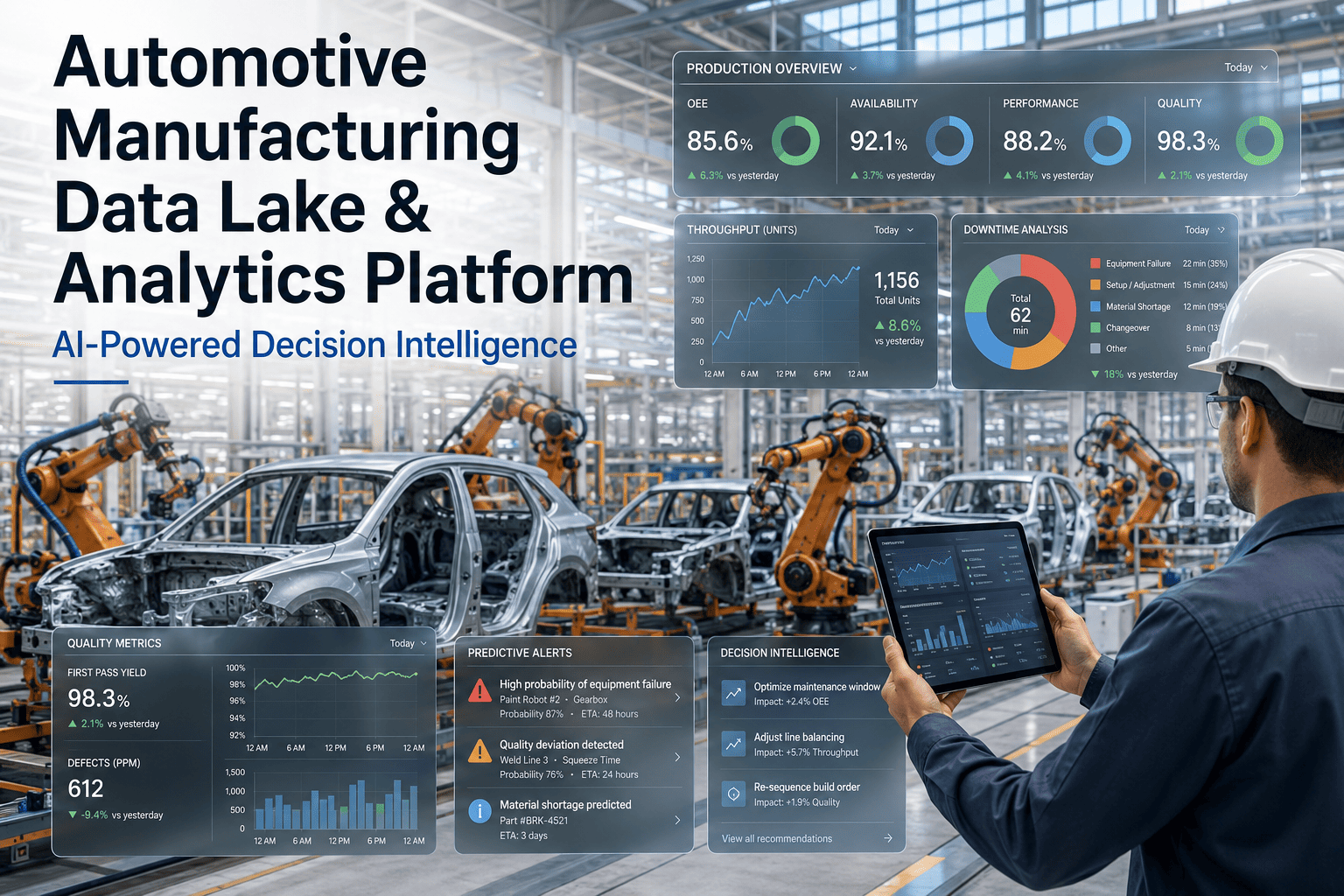
The best SQC optimization software in 2026 does three things legacy tools can't: it predicts process drift days ahead with multivariate AI, it traces variation to the exact upstream source, and it assembles IATF/PPAP evidence continuously. iFactory delivers all three on a pre-configured on-premise NVIDIA appliance — or in the cloud — keeping your quality data inside your plant.
Why the SQC Software Decision Changed in 2026
Three forces converged this year. SAP MII mainstream maintenance is ending, forcing a re-platform anyway. AI-native SQC has matured from pilot to production, with machine-learning models now predicting failures two to eight weeks ahead by analyzing SPC data alongside equipment, material, and environmental signals. And data-sovereignty pressure has pushed regulated manufacturers toward on-premise AI — IDC projects 75% of enterprises will adopt hybrid deployment models by 2027. For automotive, where export-controlled IP and OEM audit boundaries are real constraints, where the AI runs matters as much as how well it runs.
Already mid-migration off SAP MII and need a second opinion on your target architecture? Reach iFactory Support with your current MII footprint and the team will map your BLS transactions and xMII queries to a recommended path — typically a written response within 3 business days, no obligation.
The 7 Criteria That Separate the Best From the Rest
Use this as a scoring rubric when you evaluate any SQC platform. The best automotive tools in 2026 score high on all seven; legacy and bolt-on tools typically clear only the first three.
Predictive, not just reactive
Can it forecast where a parameter is heading and flag drift before the limit is breached? Time-series and ML models should warn days ahead — not alarm after the scrap is made.
Multivariate analysis
Real processes have dozens of correlated inputs. Look for Hotelling T² and ML pattern detection across hundreds of variables — not just single X̄–R charts that miss interactions.
Root-cause traceability
When quality drifts, does it tell you which upstream machine, tool, or material lot caused it — or just that something is wrong? Cross-process correlation is the difference.
IATF 16949 & PPAP automation
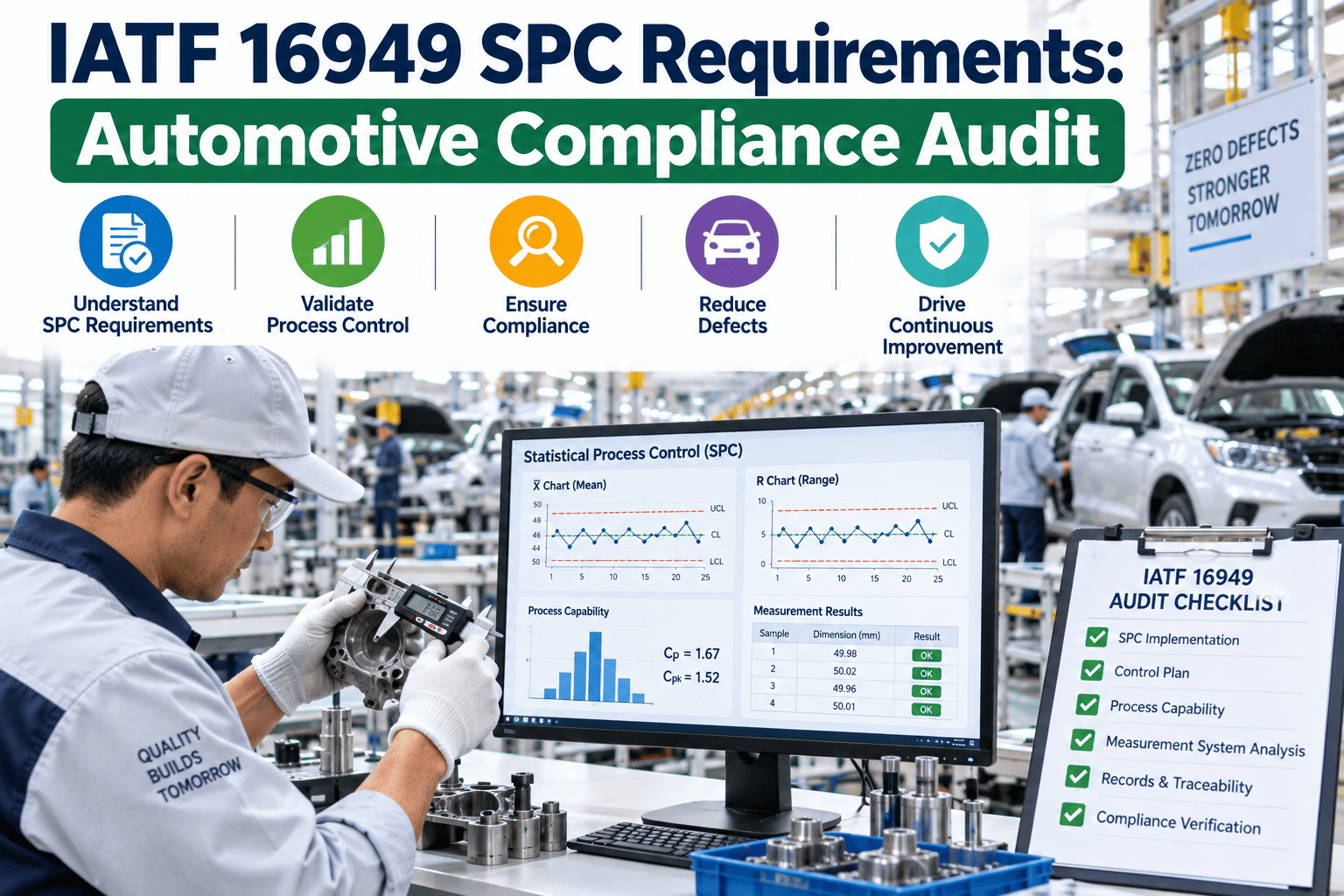
Cp/Cpk/Ppk tracking, Western Electric & Nelson rules, and continuous PPAP evidence should be built in — collapsing audit prep from weeks to hours.
Deployment flexibility
On-premise for data sovereignty and latency, cloud for multi-plant benchmarking — with full feature parity either way. Not a cloud-only lock-in.
Shop-floor integration
Native connectivity to CNCs, PLCs, CMMs (Zeiss, Hexagon, Mitutoyo), digital gauges, and IoT sensors via OPC-UA, Modbus, MQTT — plus ERP/MES traceability.
Fast, low-risk deployment
A pre-configured appliance and phased line-by-line rollout should put a first cell live in weeks and prove ROI before plant-wide commitment.
Want to score your current setup against all seven? Book a 30-minute demo and iFactory will benchmark your existing SQC against this rubric on your own line data — no obligation. Sessions available this week.
How the Three Approaches Compare
Most 2026 shortlists come down to three options: keep legacy SPC on a re-platformed stack, adopt a cloud SQC bolt-on, or move to an AI-native platform. Here is how they stack up against the seven criteria.
| Capability | Legacy SPC (SAP QM / fixed-limit) |
Cloud SQC bolt-on | iFactory AI-native |
|---|---|---|---|
| Predictive drift detection | Reactive only | Limited | 2–8 weeks ahead |
| Multivariate analysis | Single-variable | Some | Hundreds of params |
| Root-cause trace | Manual | Partial | Automatic |
| IATF / PPAP automation | Templates | Reports | Continuous evidence |
| On-prem + cloud parity | On-prem only | Cloud only | Both, full parity |
| Deployment speed | 12–36 months | Months | 12 weeks |
Want this comparison run against your actual shortlist? Schedule a 30-minute demo — pick a time that suits your shift schedule and iFactory will score your candidate platforms side by side on your own line data, walking through predictive detection, root-cause trace, and PPAP automation live.
Why On-Premise AI Became the Automotive Benchmark
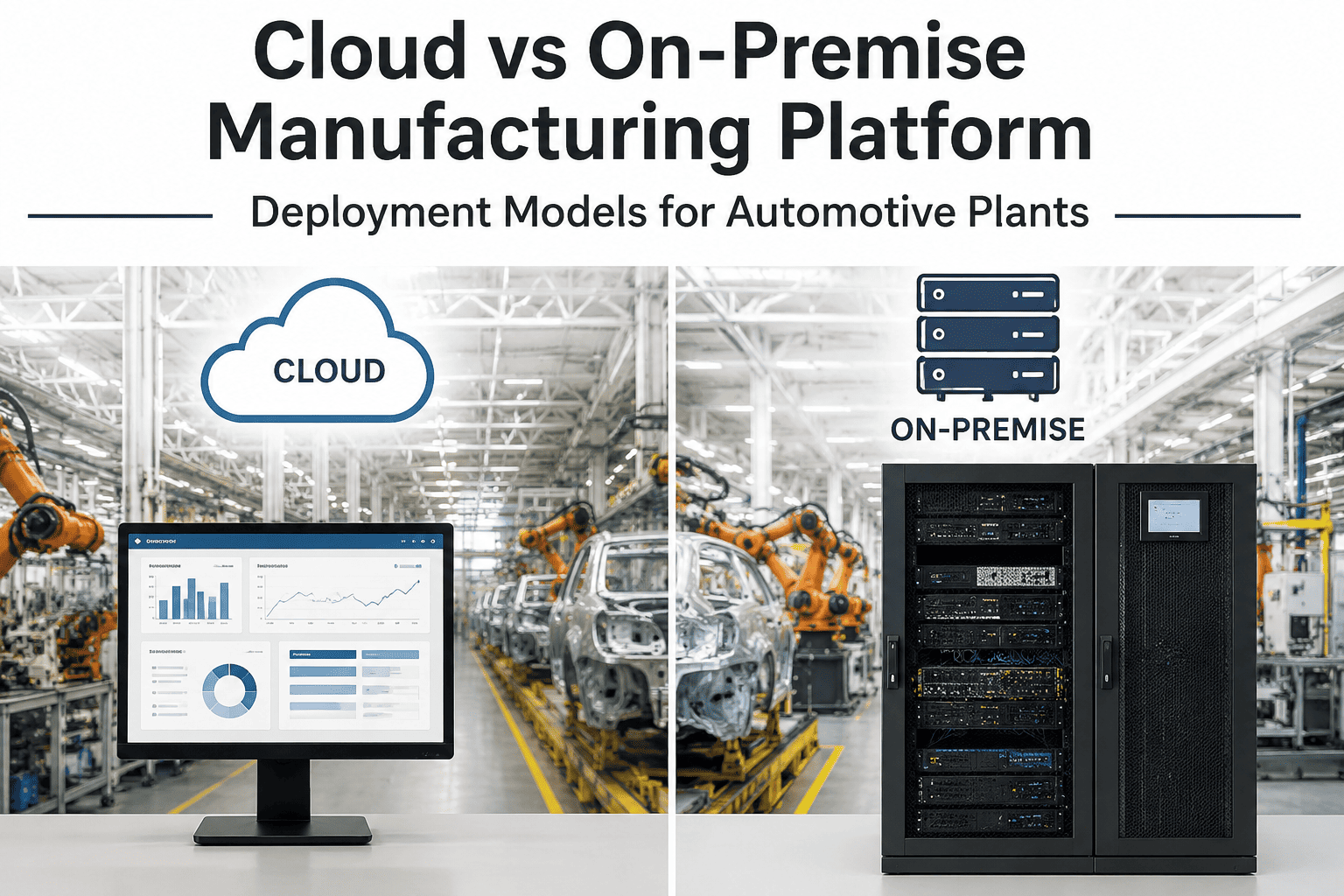
For automotive specifically, the deployment model is not a footnote — it is a selection filter. Quality data carries process IP, OEM-confidential specs, and sometimes export-controlled detail. Running inference at the line also keeps pace with high-cycle production that cloud round-trips can't match. That's why the strongest 2026 platforms lead with on-premise and offer cloud as the multi-plant complement, rather than forcing a single model.
iFactory On-Premise Appliance The automotive default — sovereignty + latency
- Pre-configured NVIDIA AI server — racked, loaded, ready to plug in.
- Data never leaves the plant — meets OEM audit and IP-residency needs.
- Line-speed inference — keeps up with high-cycle production.
- Runs through WAN outages — quality monitoring stays live.
iFactory Cloud For multi-plant fleets with central governance
- Fully managed — no rack, no facility build-out.
- Identical SQC engine — predictive, multivariate, adaptive.
- Cross-plant benchmarking — compare Cpk and yield site to site.
- Fastest start — first plant live in 2–4 weeks.
Not sure whether on-premise, cloud, or a hybrid split fits your data-residency and OEM-audit constraints? Send the question to iFactory Support with your plant count and IT setup, and the team will recommend a deployment model — including what rack space, power, and network you'd need for the on-premise appliance.
What the Right Platform Delivers
The payoff of scoring high on all seven criteria shows up in the numbers automotive quality teams actually report after moving to AI-native SQC.
Curious what these numbers would look like for your specific line? Schedule a demo and iFactory will build a sized projection from your current defect rate, Cpk, and volume during the session — sessions run 30 minutes and slots are open this week.
A Quick Buyer's Checklist
Before you sign, run any shortlisted platform through these questions. Every "no" is a gap you'll be living with for years.
The best SQC software in 2026 prevents defects. The rest just document them.
iFactory checks all seven boxes — predictive, multivariate, root-cause-aware, IATF-ready SQC on a pre-configured NVIDIA appliance or in the cloud, live in 12 weeks. Score your current platform against the rubric in a 30-minute demo, on your own line data.
Frequently Asked Questions
What's the difference between SQC and SPC software?
SPC is a subset of SQC. SPC focuses on monitoring and controlling processes with control charts; SQC is the broader discipline that also covers acceptance sampling, inspection methods, and output-quality measurement. The best modern platforms cover the full SQC scope and add AI prediction on top — so you get capability analysis, sampling, and forecasting in one place.
Is AI-native SQC compliant with IATF 16949?
Yes. A strong platform is designed around ISO 9001, IATF 16949 for automotive, plus AS9100 and FDA frameworks for adjacent industries. It should provide Cp/Cpk/Ppk tracking, Western Electric and Nelson rules, FMEA and control-plan linkage, and continuous PPAP evidence — which is what turns audit prep from a multi-week scramble into a few hours of review. If you want a checklist of exactly which IATF clauses and PPAP elements iFactory automates for your part families, contact iFactory Support and the team will send the mapping document.
Should an automotive plant choose on-premise or cloud?
Many choose on-premise at the plant for data sovereignty, OEM audit boundaries, and line-speed inference, then use cloud for cross-plant benchmarking. The key is full feature parity across both, so the decision is driven by your constraints rather than the vendor's architecture. IDC projects most enterprises will run hybrid by 2027. A 30-minute demo is the fastest way to pin down the right model — schedule one here and bring your data-residency and latency requirements; iFactory will recommend on-prem, cloud, or hybrid on the call.
How quickly can we go live and see results?
A pre-configured appliance enables a 12-week deployment, with cloud bringing a first plant live in 2–4 weeks. The lowest-risk path is to start on the line where quality cost is highest, validate predictive accuracy and yield there, then expand cell by cell — proving measurable ROI before any plant-wide commitment.
What equipment does iFactory connect to?
iFactory connects to CNCs and machining centers via OPC-UA, PLCs via Modbus/TCP, CMMs by direct API (Zeiss, Hexagon, Mitutoyo), digital gauges over Bluetooth or USB, and IoT sensors via MQTT. It also integrates with MES and ERP systems for work-order and part traceability, and supports guided manual entry with barcode scanning where inspection is hands-on. If your line uses a controller or gauge not listed here, ask iFactory Support to confirm the integration before you evaluate.
How do I book a demo or get my questions answered?
Two routes. For a live walkthrough on your own line data, schedule a 30-minute demo — you pick the slot, and the session covers predictive SQC, root-cause trace, PPAP automation, and a sized ROI estimate. For written questions, integration checks, or a deployment recommendation, contact iFactory Support and expect a response within about 3 business days. There's no obligation either way.
Shortlisting SQC software this year? Start with the platform that predicts.
The 2026 benchmark is clear: AI-native, multivariate, root-cause-aware SQC running where your data needs to stay. iFactory delivers it on-premise or in the cloud, IATF 16949 ready, live in 12 weeks — with ROI proven on one line first. The next step is a 30-minute demo against your own process data. Sessions available this week.