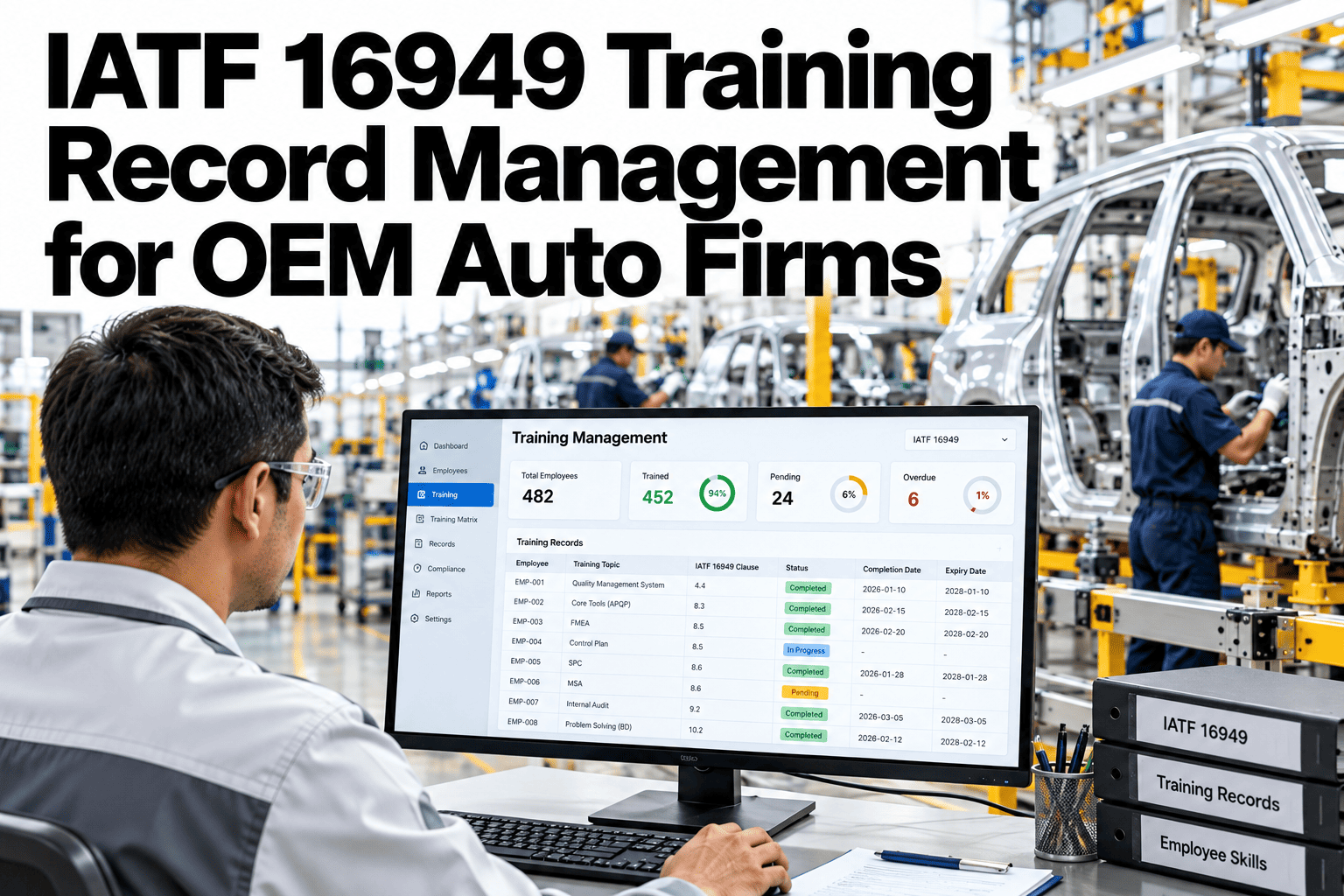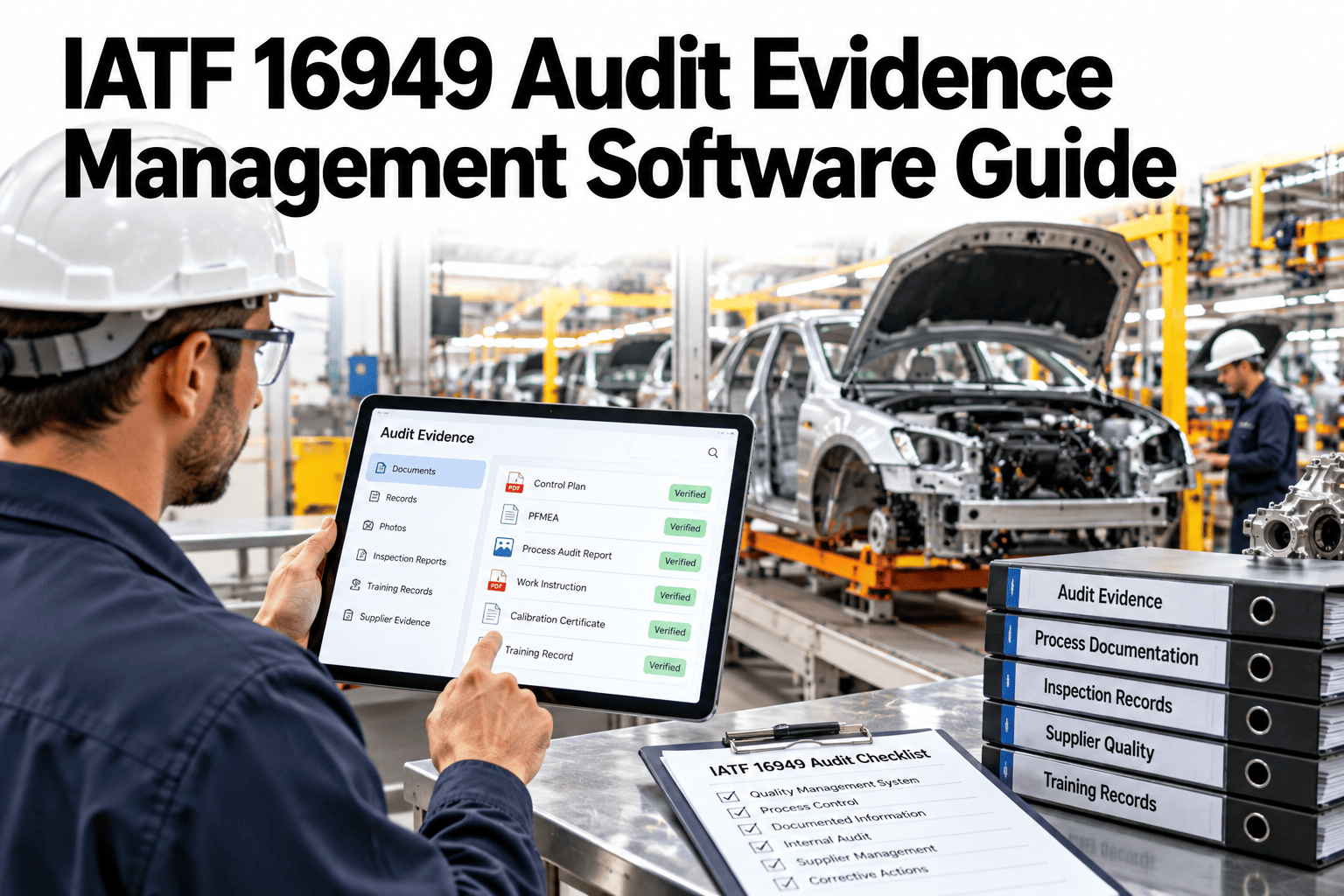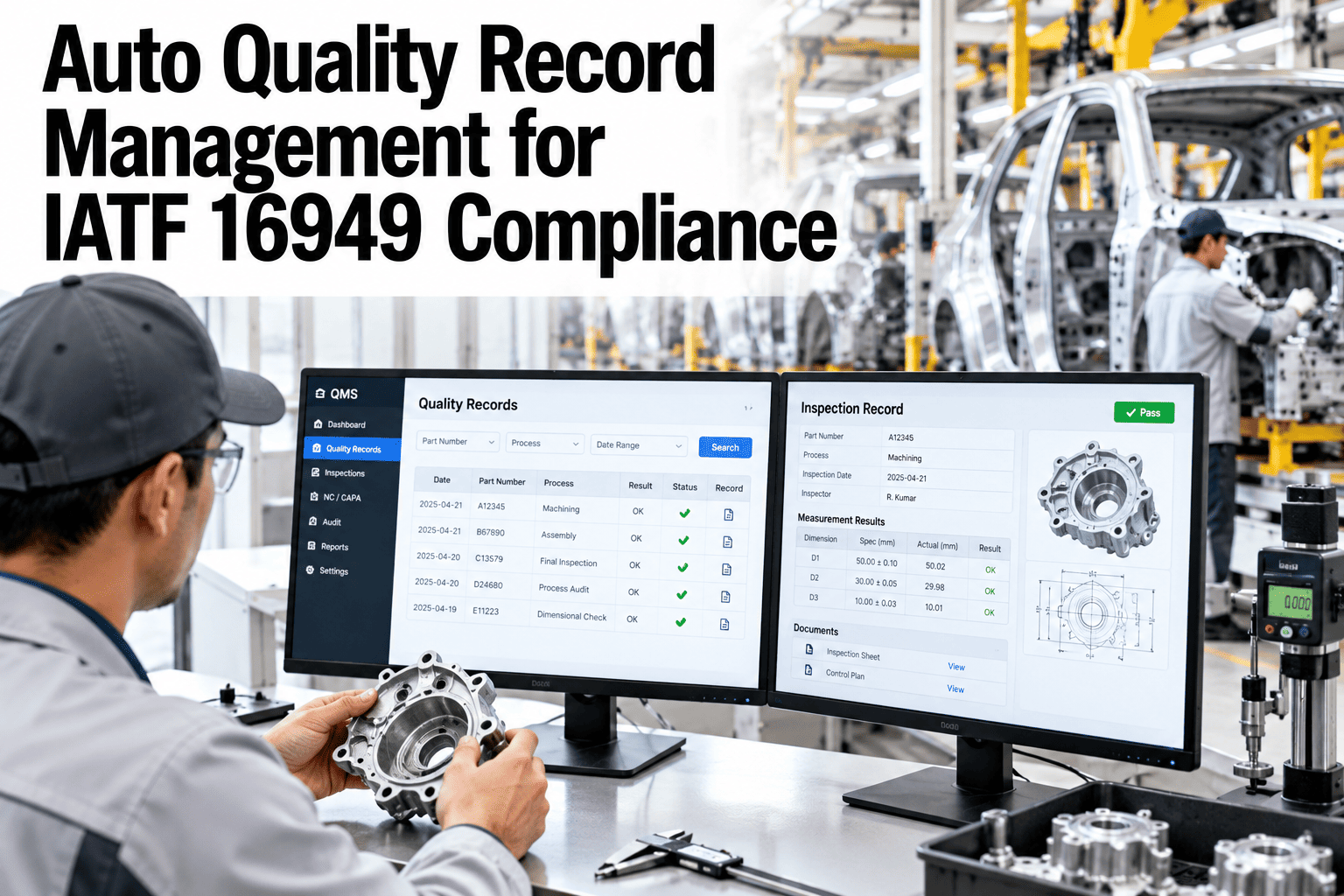
Quality records in an automotive plant don't all need to be kept for the same length of time, and treating them as if they do, either by deleting too early or keeping an unmanageable pile of everything indefinitely, creates its own risk. A control plan has a different retention requirement than a calibration record, and both differ from a PPAP package. Beyond retention length, the record also has to remain provably unaltered and retrievable on demand, not just technically stored somewhere. Getting retention, evidence integrity and retrieval all right together is what makes quality records defensible rather than a liability. Quality teams can review their own record management against this structure in a short session.
Different Records, Different Retention, One Defensible System
iFactory manages retention, evidence integrity and retrieval for every quality record type, automatically.
Why One Retention Rule Doesn't Fit Every Record
Automotive quality records carry different retention expectations depending on the record type, and a single blanket policy either over-retains low-value records or, worse, under-retains the ones that actually need to survive longer.
| Record Type | Retention Consideration | Common Risk |
|---|---|---|
| Control plans and PPAP | Typically tied to production life of the part | Deleted too early under a generic retention policy |
| Calibration records | Shorter, defined retention window | Kept indefinitely, cluttering the record system unnecessarily |
| Internal audit records | A defined, shorter retention period | Mixed in with longer-retention records, complicating review |
See Whether Your Retention Policy Fits Your Actual Record Types
Book a 30-minute session and iFactory will review your current record retention against record-type-specific best practice.
Three Pillars of Defensible Records
Record-Type-Specific Retention
Each record type retains for the duration appropriate to it, rather than one blanket policy applied indiscriminately.
Evidence Integrity
Records are provably unaltered since creation, with a tamper-evident history, not just stored in an editable file.
Audit-Ready Retrieval
Any record can be located and produced immediately when an auditor or customer asks for it, by part, date or type.
Signals Your Record System Won't Hold Up
Where iFactory Fits
iFactory manages retention by record type, preserves evidence integrity, and makes any record retrievable on demand.
Configured Retention by Record Type
Each record type follows its own appropriate retention duration, applied consistently and automatically.
Tamper-Evident Storage
Records are stored with a provable, unalterable history, supporting evidence integrity under audit scrutiny.
Instant Audit Retrieval
Any record can be pulled immediately by part, date or type, with no manual search effort.
Retention Compliance Reporting
Retention status across all record types is visible, confirming nothing is being retained past its appropriate window or deleted too early.
Reviewed by iFactory's Automotive Quality Systems team for alignment with IATF 16949 record retention and evidence requirements. The retention durations shown are illustrative; actual requirements should be confirmed against your own quality manual and applicable customer-specific requirements.
Frequently Asked Questions
How are retention periods determined for each record type?
Retention periods generally follow IATF 16949 requirements combined with your customer-specific requirements, since some OEMs specify retention beyond the base standard. Support can help confirm your specific retention requirements.
What does tamper-evident storage actually mean?
It means any change to a record, or attempt to alter it, is logged and detectable, so the record's integrity can be demonstrated rather than simply assumed from the fact that it's stored in a system.
Can historical paper records be brought into this system?
Yes, historical records can be digitized and migrated in, with their retention classification applied retroactively based on record type and date. See a migration plan for your own historical records in a short session.
How does this handle records tied to a part that's still in production?
Records tied to active production parts are flagged to retain through the production life plus any required period beyond it, rather than being evaluated against a fixed calendar date that doesn't account for ongoing production.
Does this support records from multiple plants in one system?
Yes, records from multiple plants can be managed in one system with consistent retention and retrieval rules, while still supporting plant-level access controls where needed. Ask support how multi-plant access is configured.
Make Every Quality Record Defensible, Not Just Stored
iFactory manages retention, integrity and retrieval across every record type. Book a walkthrough on your own quality records.