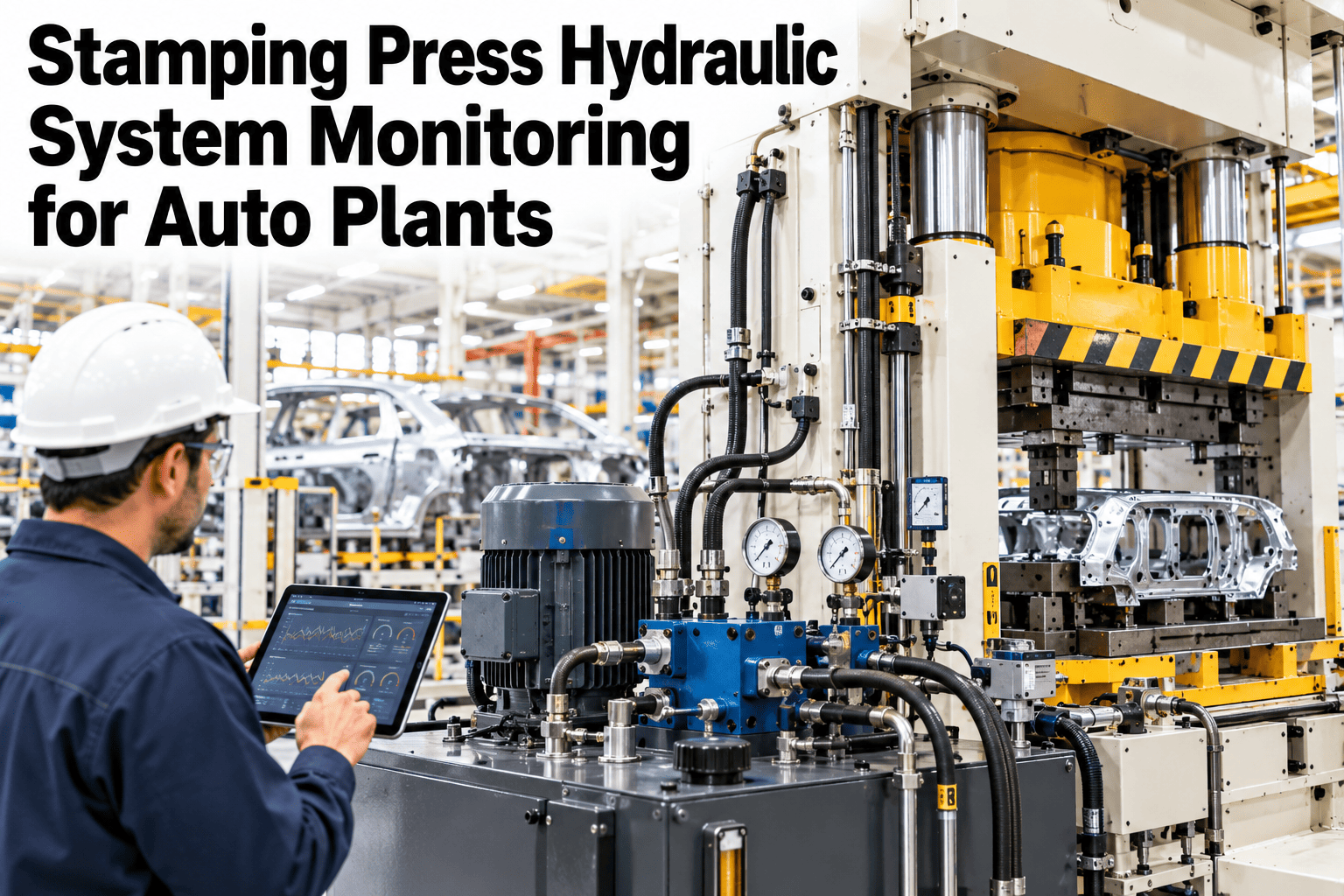
A stamping press failure doesn't usually come from one subsystem acting alone, it comes from hydraulic, bearing, servo and flywheel systems each wearing at their own pace, with a failure in any one of them capable of taking down a body-panel line for hours. Treating these as separate maintenance programs, each with its own inspection schedule and no shared view, means a press can look fine on paper while one specific subsystem is quietly heading toward failure. Monitoring all four together, under one predictive maintenance view, is what actually keeps a stamping line running. Plant maintenance leaders can review their own press health data in a short session.
Four Subsystems, One Press, One View
iFactory monitors hydraulic, bearing, servo and flywheel health together, so no single subsystem is the blind spot that takes down the line.
Why All Four Systems Need the Same Level of Attention
A stamping press is only as reliable as its weakest monitored subsystem, and a program that watches three systems closely while leaving the fourth unmonitored still has a real blind spot.
| Subsystem | Failure Risk | Monitoring Approach |
|---|---|---|
| Hydraulic | Pump wear, valve response degradation, leaks | Pressure, flow and temperature trend analysis |
| Bearing | Main, connecting rod and crank bearing wear | Vibration signature analysis against known wear patterns |
| Servo | Drive or feedback degradation affecting positioning accuracy | Position accuracy and current draw trend monitoring |
| Flywheel | Clutch and brake wear affecting energy delivery consistency | Speed consistency and engagement timing analysis |
Find Out Which of Your Four Systems Is the Blind Spot
Book a 30-minute session and iFactory will review your current press monitoring coverage across all four subsystems.
What Full-Press Monitoring Looks Like
One Unified Health View
All four subsystems report into one dashboard, so a maintenance team sees the full press picture, not four disconnected reports.
Cross-System Correlation
Some failure patterns span subsystems, like a bearing issue affecting servo positioning accuracy, visible only when watched together.
Prioritized Maintenance Scheduling
Maintenance attention goes to whichever subsystem's health score is actually lowest, not a fixed rotating schedule.
Signals Your Current Press Monitoring Has a Gap
Where iFactory Fits
iFactory monitors all four stamping press subsystems together, in one unified predictive maintenance view.
Hydraulic System Analytics
Pressure, flow and temperature are tracked continuously against baseline, catching drift before failure.
Bearing Vibration Analysis
Vibration signatures are compared against known wear patterns to flag degradation early.
Servo Performance Monitoring
Position accuracy and current draw trends catch servo drive degradation before positioning errors occur.
Flywheel and Clutch Tracking
Speed consistency and engagement timing are monitored to catch clutch and brake wear early.
Reviewed by iFactory's Automotive Maintenance Engineering team for alignment with current stamping press PdM practice. The health scores shown are illustrative; actual thresholds should be calibrated against your own press model, tonnage and maintenance history.
Frequently Asked Questions
Do we need to monitor all four systems from day one?
Starting with the subsystem most lacking visibility is a common and reasonable approach, then expanding to full coverage as the program proves value, rather than requiring all four at once. Support can help prioritize based on your current gaps.
Does this require new sensors on older presses?
It depends on the press's existing instrumentation, but many older presses can be retrofitted with monitoring sensors without requiring a full press replacement.
How early can a bearing failure actually be caught?
Vibration signature analysis typically catches bearing degradation well before it would trigger a hard fault, often weeks ahead, giving time to schedule maintenance rather than respond to an unplanned failure. See this applied to your own press's history in a short session.
Can this reduce unplanned stamping line downtime?
Yes, catching subsystem drift early allows maintenance to be scheduled proactively rather than reactively after an unplanned failure, which is typically the larger driver of stamping line downtime.
How does this connect to our existing maintenance management system?
Health scores and alerts are built to feed into your existing CMMS, generating work orders automatically rather than requiring a separate standalone monitoring tool. Ask support how this integrates with your current CMMS.
Watch All Four Systems, Not Just the Ones That Fail the Loudest
iFactory monitors hydraulic, bearing, servo and flywheel health together across your stamping presses. Book a walkthrough on your own line.