A stamping press's hydraulic system rarely fails without warning, it usually telegraphs the failure for days or weeks through small shifts in pump pressure, slower valve response, or a reservoir running warmer than it should. The trouble is these shifts are individually small enough to dismiss, and without continuous monitoring against a known baseline, nobody notices the trend until the pump actually fails mid-shift. Watching pump pressure, valve response and reservoir temperature continuously, against their own normal range, is what turns that slow warning into an actionable alert. Plant maintenance teams can review their own hydraulic trend data in a short session.
Three Parameters That Telegraph a Hydraulic Failure Early
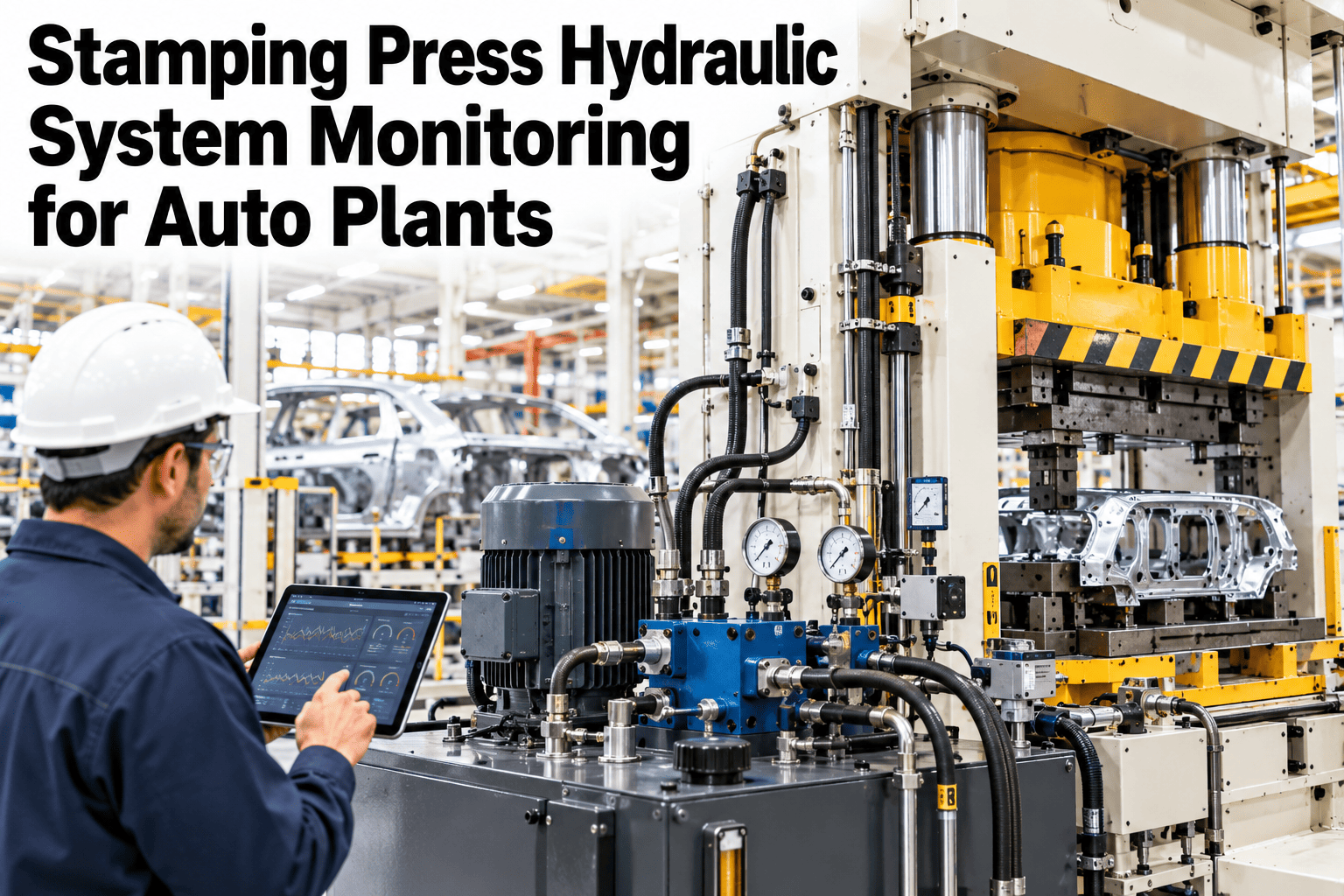
iFactory watches pump pressure, valve response and reservoir temperature continuously, catching drift weeks before an unplanned failure.
What Each Parameter Tells You Before It Fails
Each hydraulic parameter degrades differently, and a trend in any one of them, caught early, is a maintenance window instead of an unplanned shutdown.
| Parameter | Normal Pattern | Failure Signature |
|---|---|---|
| Pump pressure | Stable within a tight band at operating speed | Gradual decline signals pump wear or internal leakage |
| Valve response time | Consistent response across cycles | Slowing response indicates valve wear or contamination |
| Reservoir temperature | Stable once the system reaches operating temperature | Rising temperature trend often points to a developing restriction or pump inefficiency |
Find Out If Your Hydraulic System Is Already Drifting
Book a 30-minute session and iFactory will review your current hydraulic data for early drift signals.
Why Hydraulic Failures Are Costly on a Stamping Line
Full Line Stop
A hydraulic failure typically stops the entire press, not just reduces throughput, making it one of the costliest failure modes.
Repair Parts Lead Time
Pump and valve replacement parts can carry significant lead time, extending downtime well beyond the repair itself.
Downstream Impact
A body-panel stamping line stop can ripple into assembly, affecting far more than the press itself.
Signals Your Hydraulic System Needs Attention
Where iFactory Fits
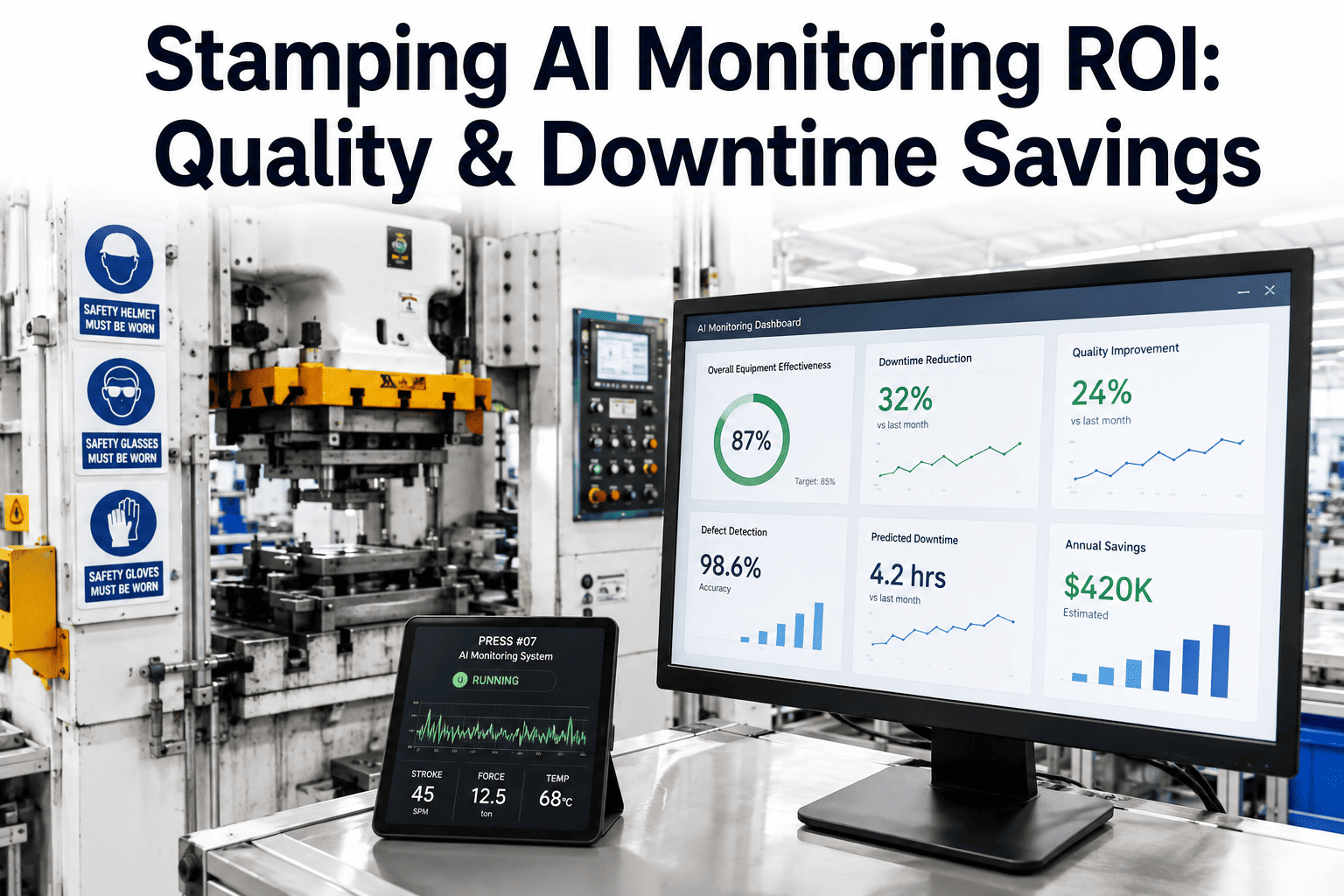
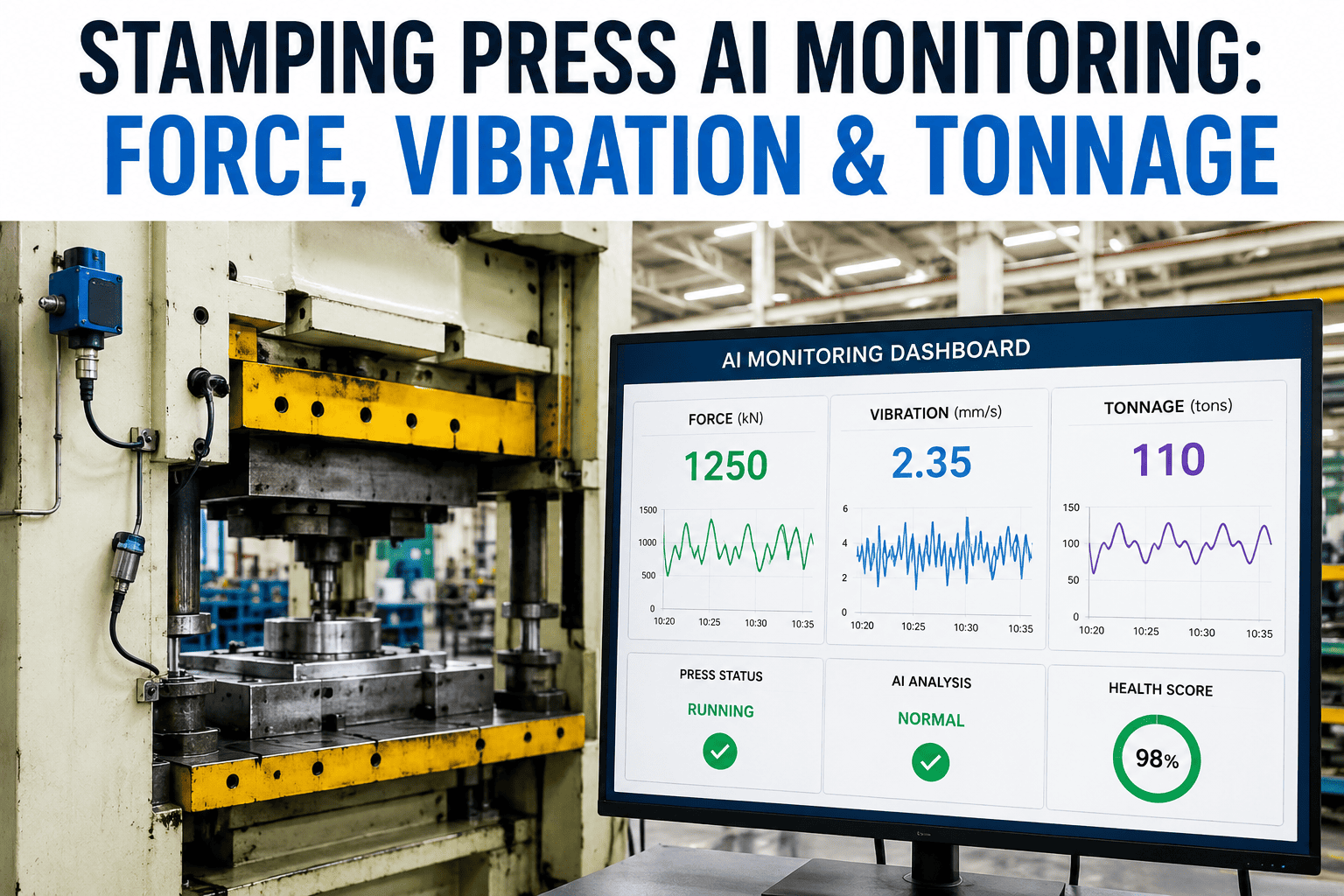
iFactory monitors pump pressure, valve response and reservoir temperature continuously against your own baseline, flagging drift early.
Continuous Pressure Trending
Pump pressure is tracked against baseline continuously, catching gradual decline before a hard failure.
Valve Response Monitoring
Response time trends flag wear or contamination before it affects press performance.
Reservoir Temperature Tracking
Temperature trends against normal operating pattern catch developing restrictions early.
Maintenance Window Alerts
Drift alerts give maintenance teams a planning window instead of an unplanned shutdown to respond to.
Reviewed by iFactory's Automotive Maintenance Engineering team for alignment with current hydraulic system monitoring practice. The parameter bands shown are illustrative; actual normal ranges should be established from your own press's baseline operating data.
Frequently Asked Questions
Does this require new sensors on our existing hydraulic system?
Often not entirely, since many presses already have pressure and temperature sensors installed for control purposes, which can be used for trend monitoring too. Support can assess what your current press already provides.
How is a normal operating baseline established?
Baseline is typically built from a period of normal operation data, capturing the expected range for each parameter under your press's typical conditions and load, rather than a generic industry value.
How far in advance does this typically catch a developing failure?
This varies by failure mode, but trend-based monitoring commonly catches hydraulic degradation days to weeks before it would trigger a hard fault alarm, giving real planning time. See this applied to your own press's recent history in a short session.
Can this reduce the cost of pump and valve replacement parts?
Indirectly, since planned maintenance allows parts to be ordered in advance rather than expedited at a premium during an unplanned failure, and catching wear early can sometimes allow for a less invasive repair.
How does this integrate with our existing press control system?
Monitoring data is pulled from existing sensors and control system signals rather than requiring a separate, disconnected monitoring layer. Ask support how this connects to your specific press controller.
Catch Hydraulic Drift Before It Stops the Line
iFactory tracks pump pressure, valve response and temperature continuously. Book a walkthrough on your own stamping press.