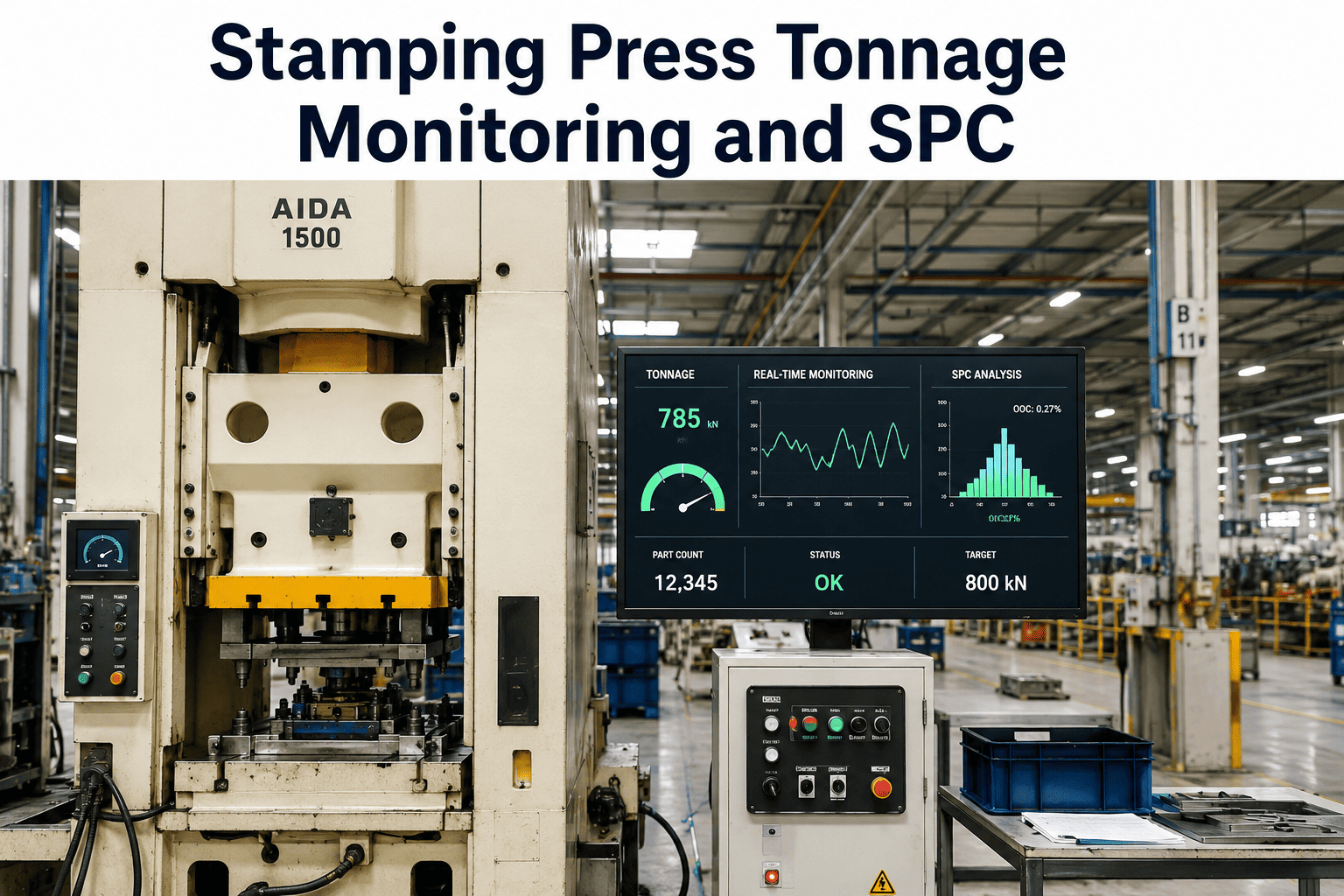
A stamping press generates a force signature on every single stroke, and buried inside that signature is a running record of exactly how the die is wearing, whether the material is aligning correctly, and whether the part coming off this stroke will pass quality or need to be scrapped — all of it available in real time, and almost all of it thrown away the moment the stroke completes. Most presses today are monitored for basic overload protection and little else, which means the richest source of predictive data on the entire stamping line goes largely unused. Reading that signature properly turns a press from a piece of equipment you react to into one you can see problems coming from. iFactory's stamping press monitoring platform is built to read it continuously.
Stamping Press AI Monitoring
What Your Press Force Signature Is Already Telling You
Every stroke generates a force, vibration, and tonnage signature rich with early warning signs. See how AI reads that signature continuously instead of discarding it.
Three Signals, One Press
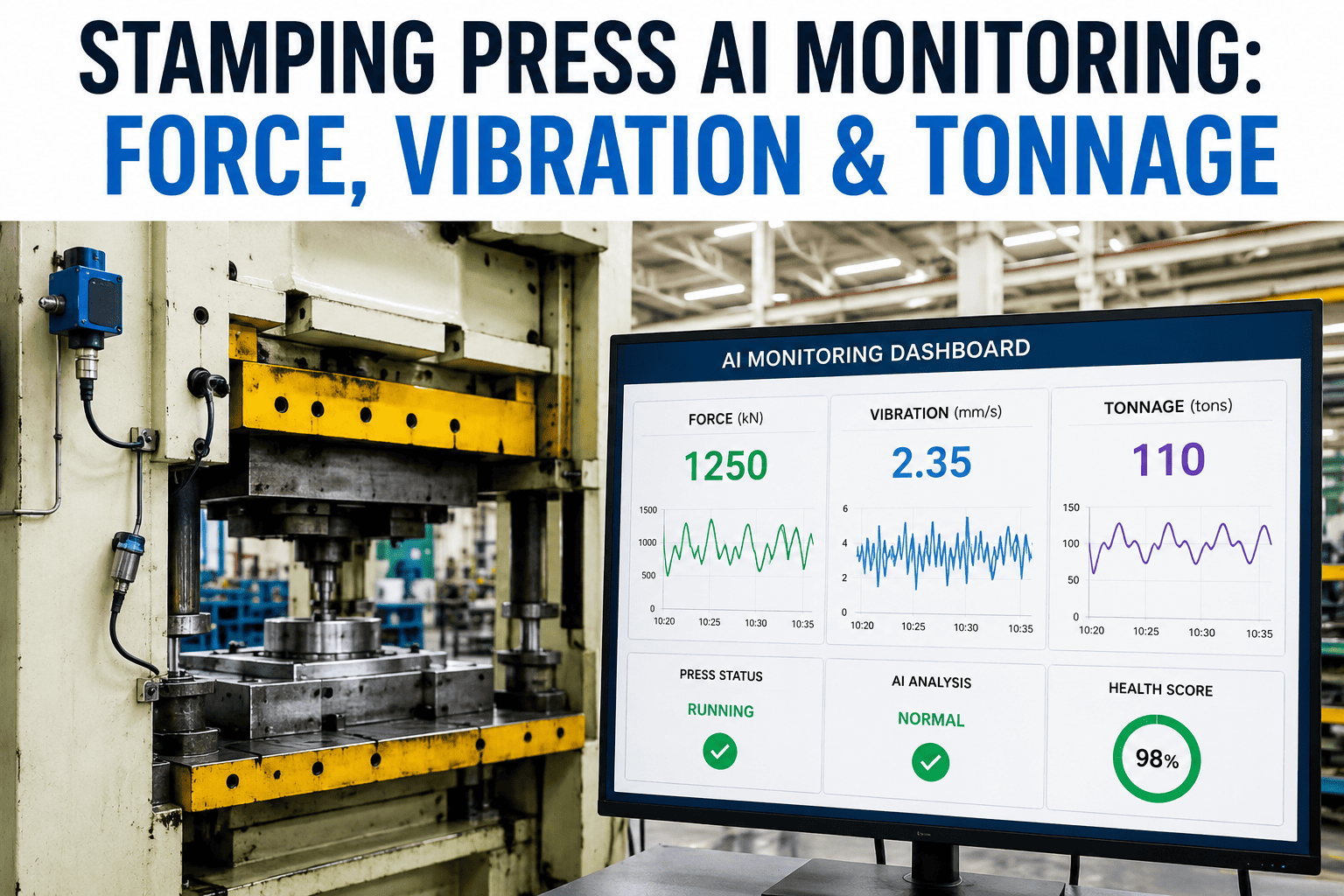
Force, vibration, and tonnage each tell a slightly different part of the same story, and reading them together gives a far more complete picture of press and die health than any one signal alone.
Force Signature
The shape of the force curve across a stroke reveals material flow, alignment, and die condition changes stroke by stroke.
Vibration Pattern
Abnormal vibration frequencies often surface bearing wear or mechanical looseness before it becomes audible or visible.
Tonnage Trend
Gradual tonnage drift across thousands of strokes is one of the clearest early indicators of progressive die wear.
What Gets Missed With Basic Overload Monitoring
Threshold-Only Alerts
Standard tonnage monitors flag only hard overload events, missing the gradual drift that precedes them by thousands of strokes.
No Shape Analysis
A force curve can shift shape significantly while staying within peak tonnage limits, hiding a real process change.
Vibration Ignored Entirely
Many presses have no vibration monitoring at all, missing an entire category of mechanical wear signals.
Reactive Maintenance
Without predictive signals, maintenance happens after a failure or on a fixed calendar schedule instead of when actually needed.
From Raw Signal to Actionable Alert
1
Capture
Force, vibration, and tonnage sensors log data continuously, stroke by stroke
2
Baseline
AI establishes the normal signature shape for each die and press combination
3
Detect Drift
Deviations from the baseline signature flagged well before they trigger a hard threshold
4
Alert and Diagnose
Maintenance and process teams get a specific signal type and likely cause, not just a generic alarm
Curious what your own press signal data would reveal with continuous baseline monitoring? Talk to our team about a press monitoring assessment.
Signal Patterns and What They Typically Indicate
| Signal Change | Likely Cause | Typical Response |
|---|
| Gradual tonnage increase over time | Progressive die wear | Schedule maintenance before failure |
| Sudden force curve shape shift | Material lot change or misfeed | Investigate material and feed alignment |
| New vibration frequency component | Bearing wear or mechanical looseness | Inspect mechanical components |
| Asymmetric force distribution | Die or press misalignment | Check alignment and leveling |
What Continuous Signature Monitoring Delivers
Earlier
Detection of die wear before it affects part quality
Fewer
Unplanned press stops caused by undetected mechanical wear
Smarter
Maintenance scheduling based on actual condition, not a fixed calendar
Who Uses Press Signal Data Day to Day
01
Maintenance Teams
Prioritize press service based on real condition signals instead of a fixed preventive maintenance calendar.
02
Process Engineering
Investigates force curve shifts to distinguish material issues from die or press mechanical problems.
03
Tool and Die Shops
Uses tonnage trend data to plan die refurbishment before wear affects part quality.
04
Plant Leadership
Tracks unplanned press downtime reduction as a direct outcome of predictive signal monitoring.
Frequently Asked Questions
Does this require new sensors on every press?
Many presses already have force and tonnage sensors installed for basic overload protection, so the addition is often vibration sensing plus the analytics layer that reads the existing signals continuously rather than only checking them against a hard threshold. Coverage requirements vary by press age and existing instrumentation.
Our team can assess what your current presses already support.
How is this different from a standard tonnage monitor?
A standard tonnage monitor typically checks peak force against a fixed threshold and alarms on overload, while signature monitoring analyzes the full shape of the force curve across the entire stroke and tracks how that shape drifts over thousands of cycles, catching gradual wear long before it would ever trip a threshold alarm.
Can this distinguish between a die problem and a material problem?
Often yes, since die wear tends to produce a gradual, progressive signature drift while material lot changes or misfeeds tend to produce a sudden shift, and the pattern of the change is one of the strongest clues an AI model uses to differentiate between the two.
How much advance warning does this typically provide before a die needs service?
This depends heavily on the specific die, material, and wear mode, so the honest answer requires establishing a baseline on your own equipment first — plants that do this consistently find measurable drift showing up well before tonnage would cross a hard alarm threshold, giving maintenance real lead time to plan rather than react.
Where should a plant start with press signature monitoring?
Start with the press and die combination that has the highest downtime cost or most frequent unplanned stops, since that's where establishing a baseline and catching early drift delivers the most immediate, visible value.
Book a demo to see how that starting point typically gets identified.
Your Press Is Already Telling You What's Wrong.
Start Reading the Force Signature Your Press Generates Every Stroke
Bring your current press instrumentation and downtime history. We'll show you what continuous signature monitoring could reveal.