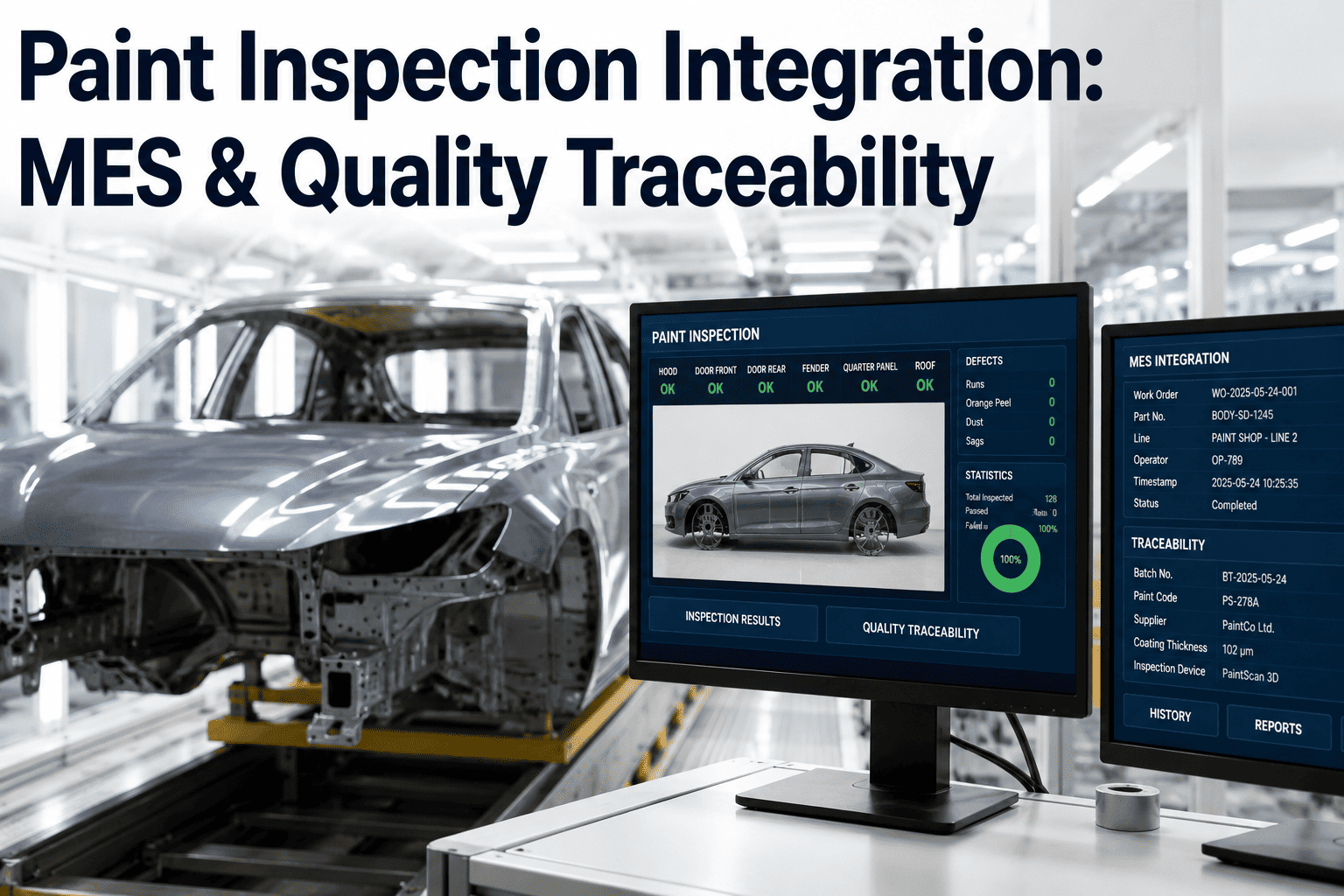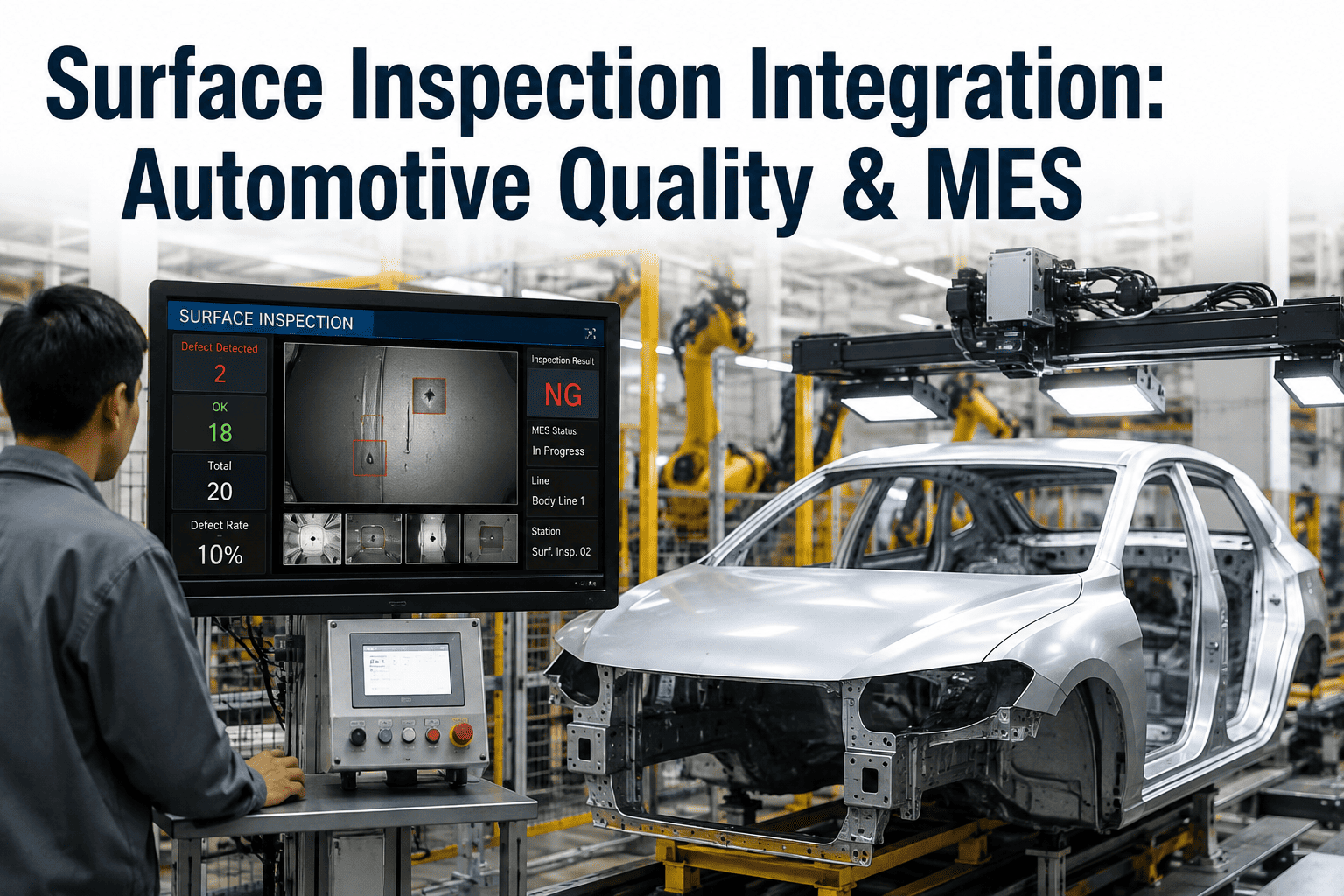
An AI vision system that catches every surface defect but leaves the result sitting in a standalone dashboard is only half a solution — the defect still has to reach a quality hold, a VIN record, and a disposition decision before it actually protects a customer. Plants running surface inspection as an island, disconnected from MES and quality systems, end up with two versions of the truth: what the camera saw and what the paperwork says. Integration closes that gap, routing every detection into VIN-level traceability, automated disposition workflows, and the same quality record your IATF audits already depend on. Teams looking to connect inspection results directly into their MES can Book a Demo to see a live integration walkthrough.
Stop Reconciling Two Versions of Quality Truth — Connect Inspection Straight Into MES
iFactory routes every AI vision detection into your quality and MES systems automatically, attaching VIN-level traceability and triggering disposition workflows the moment a defect is flagged — no manual re-entry, no reconciliation gap.
The Connected Quality Flow — From Camera to Corrective Action
Integration means a detection event triggers a chain of automated steps rather than sitting in an inspection report someone reviews hours later. The flow below reflects how a connected surface inspection deployment actually moves a defect from detection to resolution.
Detection Event
AI vision flags a surface defect on a specific panel at the moment of inspection.
VIN Attachment
The detection is tagged to the vehicle's VIN or build number, linking it permanently to that unit's quality history.
MES Quality Hold
The unit is automatically flagged in MES, routing it to a hold, rework, or scrap disposition path without manual paperwork.
Disposition Workflow
Quality staff review the flagged image and disposition the unit directly in the connected system, closing the loop.
What VIN-Level Traceability Actually Solves
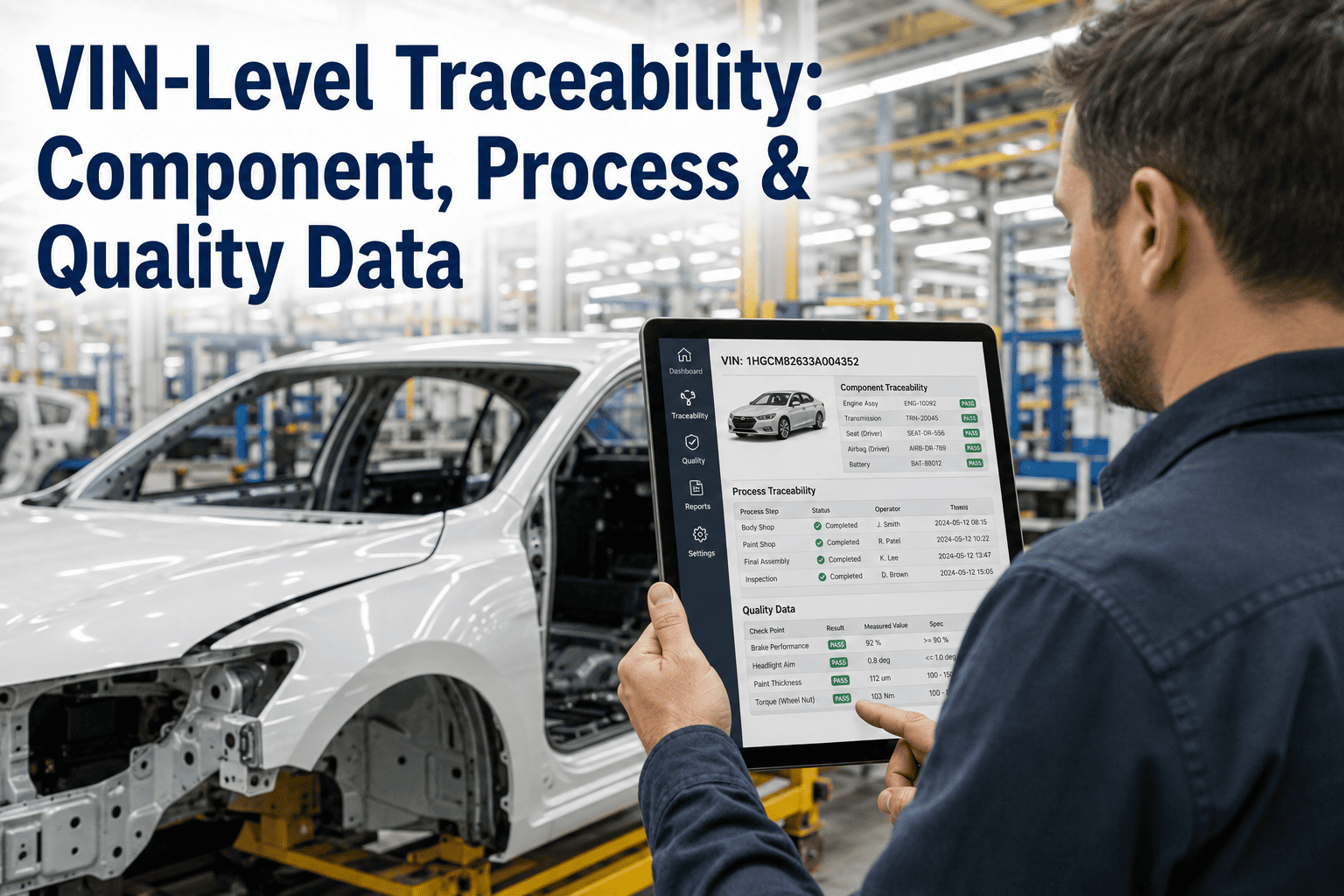
Traceability is not a compliance checkbox — it is the difference between a targeted recall of a few hundred units and a blanket recall of an entire production run because nobody can prove which vehicles were affected by a specific defect window.
Scoped Recall Response
When a defect pattern is identified after the fact, VIN-level records show exactly which vehicles were built during the affected window — narrowing recall scope from an entire model run to a specific date range.
Audit-Ready Records
IATF 16949 and customer-specific audits require documented inspection evidence per unit — automated VIN tagging produces that record without manual logging.
Warranty Claim Defense
A documented pass at the point of manufacture gives your team an evidence-backed response when a warranty claim disputes whether a defect existed at build.
Supplier Accountability
VIN-level defect records tied to material lot data give supplier quality teams a specific, defensible basis for corrective action requests.
Integration Points: What Connects to What
A production-ready integration typically touches several systems beyond the inspection cameras themselves. The table below outlines the common connection points and what data flows across each one.
| System | Data Direction | What Flows |
|---|---|---|
| MES | Bi-directional | VIN/build number in, quality hold and disposition status out |
| Quality Management System | Outbound | Defect classification, severity, image reference, timestamp |
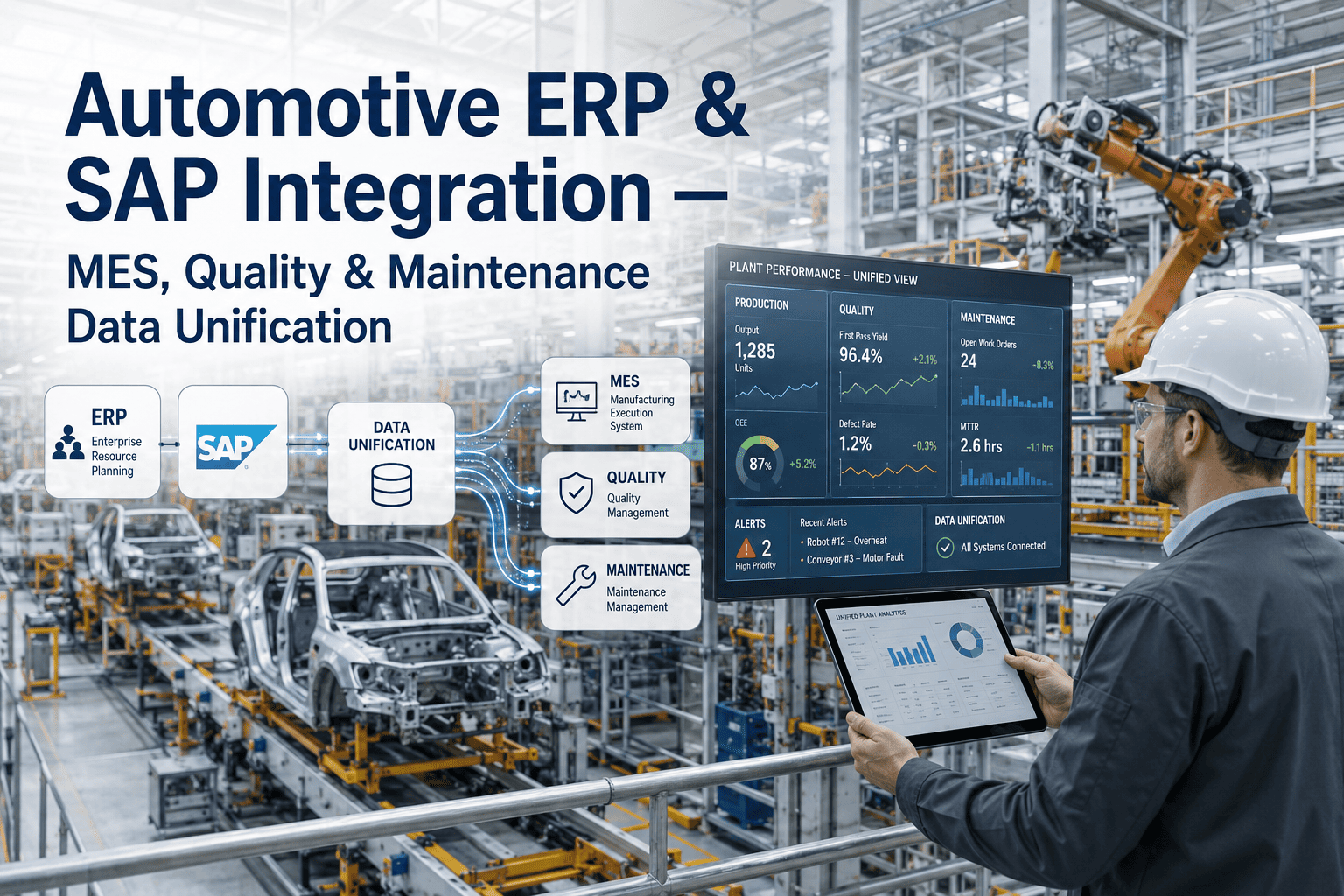
| ERP | Inbound | Material lot, supplier source, model variant context |
| CMMS | Outbound | Equipment-linked defect trends for maintenance work orders |
| SPC / Analytics Platform | Outbound | Aggregated trend data for statistical process control charts |
Give Your IATF Audit a Record That Writes Itself
Every detection, disposition, and rework decision is logged automatically at the VIN level — no manual inspection logs to reconstruct before an audit.
Automated Disposition — Removing the Manual Handoff
The biggest time cost in a disconnected inspection process is not the inspection itself — it is the manual handoff between "a camera flagged this" and "someone with authority decided what to do about it." Automated disposition workflows compress that handoff to minutes.
Frequently Asked Questions
What MES platforms can surface inspection integrate with?
iFactory's integration layer connects to major MES platforms through standard API and database connectors, and custom or legacy MES environments are supported through a mapped integration during the assessment phase. The goal is matching your existing MES data structure rather than requiring a platform change — VIN or build number fields, quality hold status, and disposition codes are mapped to your system's existing schema so inspection data appears exactly where your team already looks for it. Teams can Book a Demo to review integration options for their specific MES.
How does VIN-level tracking work if our line doesn't scan VINs at every station?
Most body and paint shop lines already have some form of unit identification — a build sequence number, RFID tag, or barcode — even before a permanent VIN is assigned, and inspection data can be tagged to that identifier and reconciled to the final VIN once it is assigned later in production. If no unit identification exists at the inspection station, iFactory's assessment phase evaluates the most practical tracking method for that specific line, which may include a lightweight barcode or RFID addition at the station.
Does automated disposition remove human decision-making from quality holds?
No — automated disposition routes the flagged unit and its defect data to the right quality staff member instantly, but the actual disposition decision, whether that's rework, scrap, or release, remains a human judgment call reviewed against the flagged image and defect classification. What changes is the time between detection and that decision reaching the right person, which drops from a shift-change delay to near real time. Contact iFactory Support for details on configuring disposition rules for your quality team's workflow.
How long does a typical MES integration take to deploy?
A standard integration with a modern MES platform using documented APIs typically takes 3 to 6 weeks alongside the inspection system deployment itself, covering data mapping, VIN tracking configuration, and validation that quality holds trigger correctly in test conditions before going live. Legacy or heavily customized MES environments can extend this timeline as data mapping requires more manual configuration work. The integration is validated in parallel with inspection model training, so it does not typically add net time to an overall deployment.
Can inspection data feed our supplier quality scorecards automatically?
Yes — when material lot data is available from your ERP or incoming inspection system, defect detections are automatically correlated to the supplier source, and this data can feed directly into existing supplier scorecard processes rather than requiring manual compilation. This gives supplier quality teams objective, VIN-linked evidence for corrective action requests instead of relying on periodic sampling or anecdotal defect reports.
One Connected Quality Record, From Camera to Disposition
iFactory integrates AI vision surface inspection directly with your MES, quality system, and ERP — every detection VIN-tagged, every disposition automated, every record audit-ready from day one.