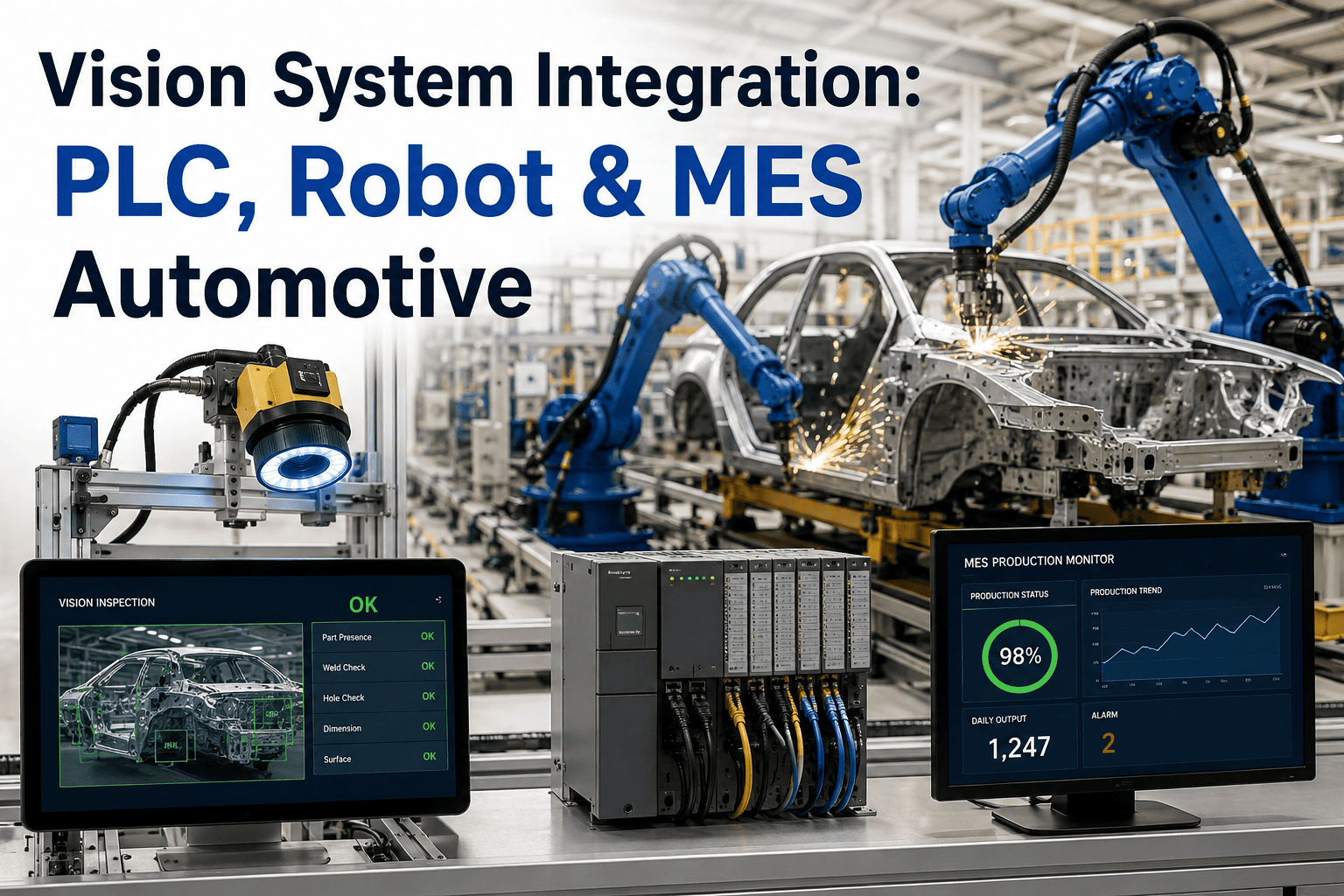
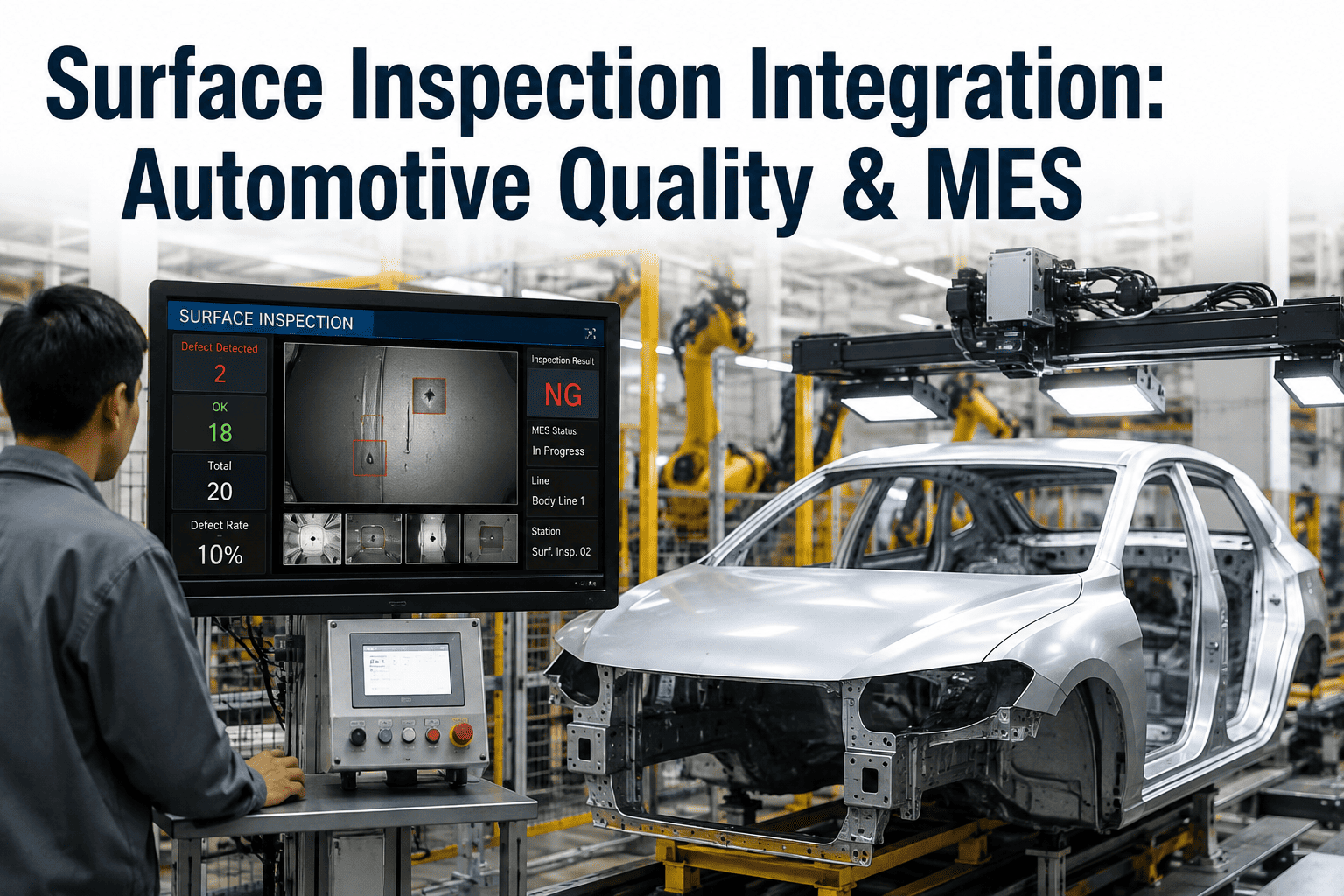
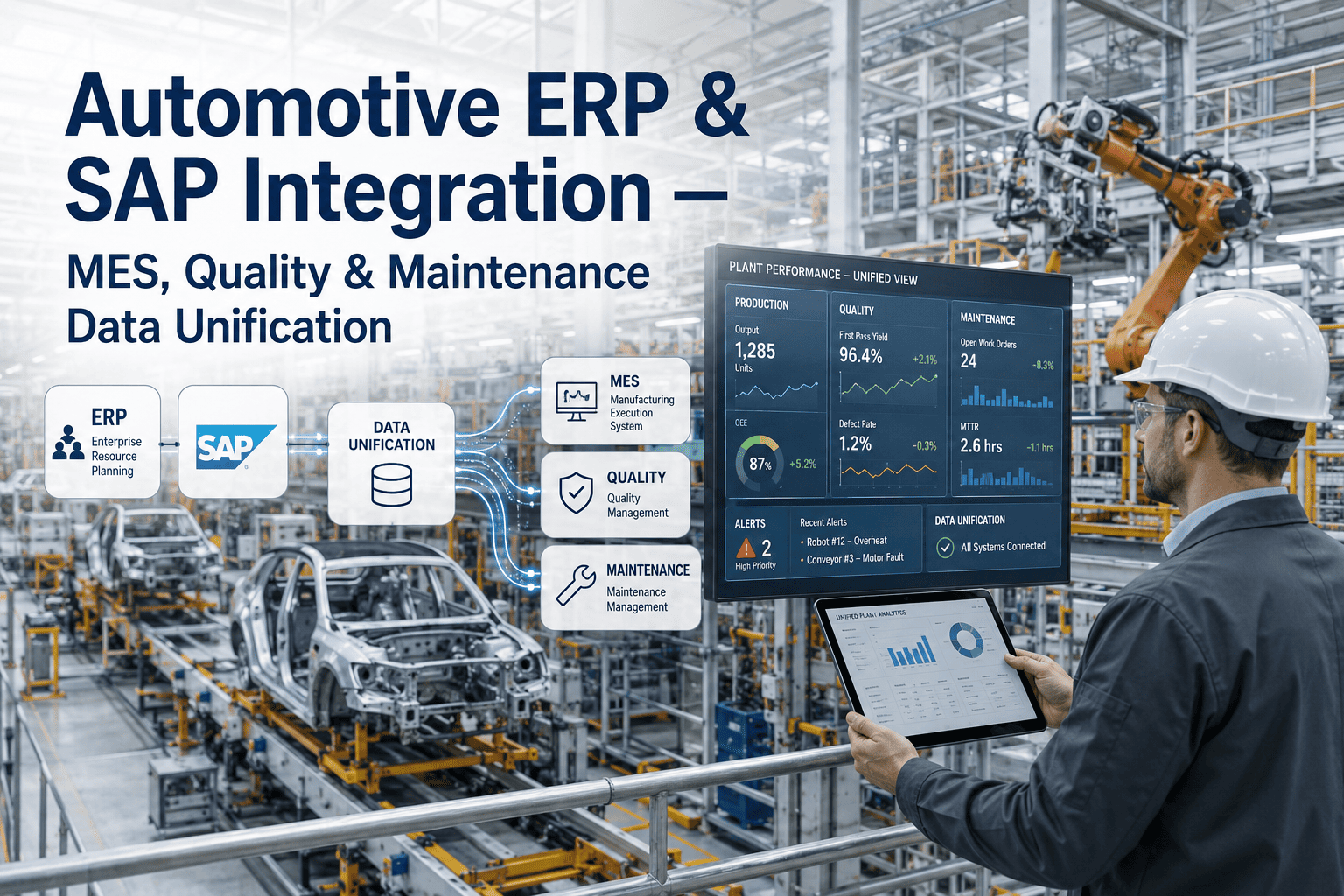
An AI vision system that inspects perfectly but sits disconnected from the PLC, the robot controller and the MES is a system that generates reports nobody acts on in time. In automotive production, a defect decision has to reach the robot before the next part is placed, reach the PLC before the line advances, and reach the MES before the shift report closes, all within the same cycle time the line already runs on. Most vision deployments stall not because the camera can't see the defect, but because the integration layer connecting detection to action was never built to production timing. Book a demo to see vision-to-PLC integration running at your actual cycle time.
Vision System Integration
Detection Without Integration Is Just a Report Nobody Acted On In Time
iFactory's vision platform synchronizes triggers, communicates results and flows quality data across PLC, robot and MES systems in real time, so every inspection decision reaches the point of action inside the cycle it happened in.
The Three Systems a Vision Platform Has to Talk To
Every automotive inspection point sits at the intersection of three separate control systems, each with its own timing requirements and communication protocol. Getting vision data into any one of them is straightforward; keeping all three synchronized in real time under production cycle time is where most integrations fail. Ask support how integration is scoped for your specific PLC and MES stack.
iFactory Vision
Detection & Decision Engine
PLC
Trigger sync, part presence, line advance signals sent within milliseconds of decision.
Robot Controller
Pick, place or rework path adjustments issued the moment a defect or position result is confirmed.
MES
Quality dispositions, genealogy and defect data posted automatically into the production order record.
What Real-Time Synchronization Actually Requires
Synchronization is not a single connection, it is three distinct integration disciplines running in parallel without adding latency to the line. Book a demo to see the full integration stack mapped to your line architecture.
Trigger Synchronization
Camera Capture Timed to the Millisecond With Part Presence
The PLC's part-presence and position signals trigger image capture at the exact moment the part is in frame, eliminating blur, partial captures and missed inspections caused by fixed-interval or manually tuned trigger timing.
Result Communication
Pass, fail and rework decisions are pushed back to the PLC and robot controller within the active cycle, not queued for the next scan cycle.
Robot Path Feedback
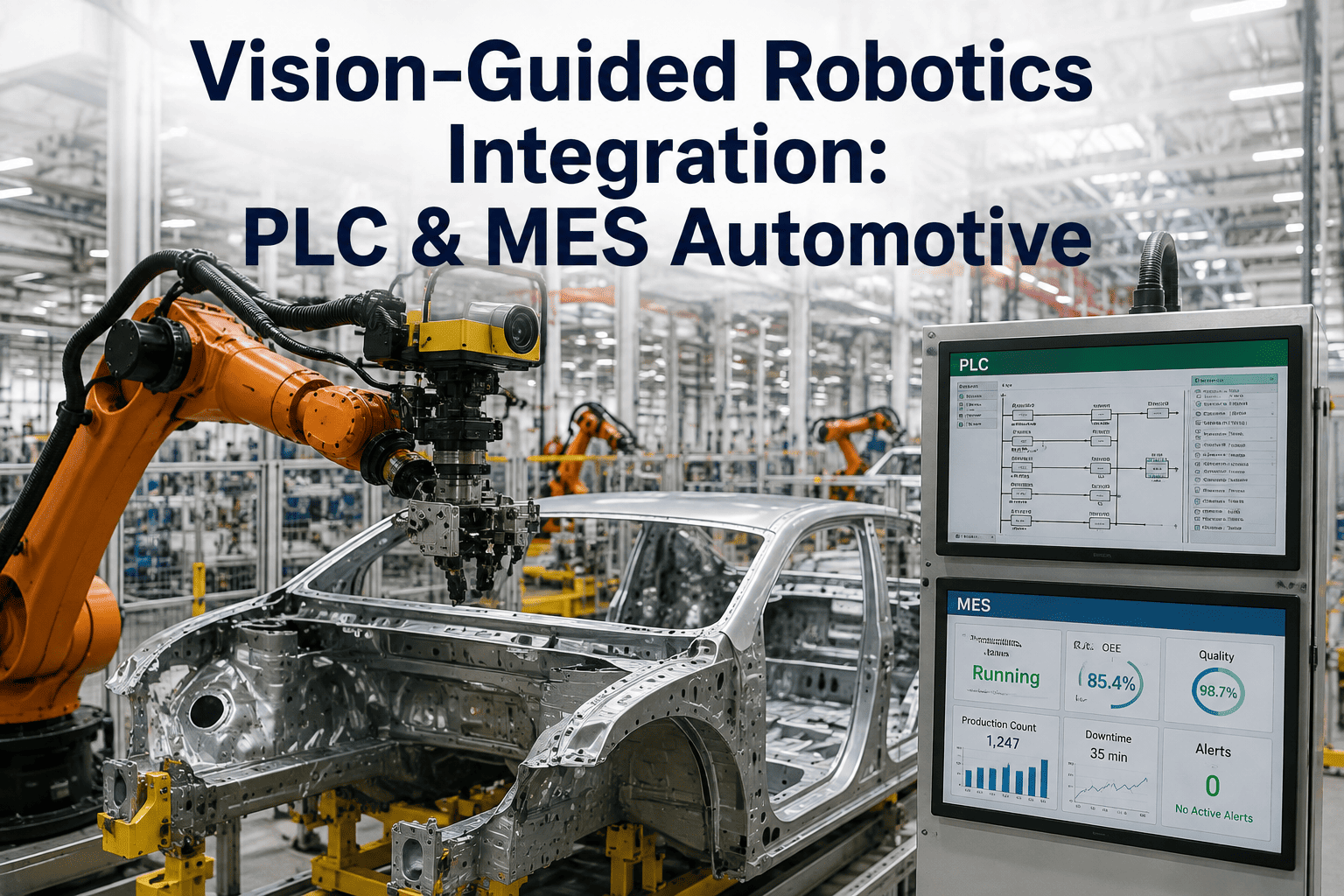
Vision-confirmed part position and orientation data adjusts robot pick and place paths in real time for accurate handling.
Quality Data Flow
Every inspection result posts automatically to the MES against the correct production order and part serial number, no manual entry.
Exception Handling
Line Behavior Defined for Every Failure Mode in Advance
What happens when a part fails, when a camera loses trigger sync, or when the network connection drops is defined and tested before go-live, so the line has a known, safe behavior rather than an undefined state under fault conditions.
Disconnected Vision vs. Fully Synchronized Vision Integration
Compare your current vision setup against a fully synchronized integration.
| Capability | Standalone / Disconnected Vision | iFactory Synchronized Integration |
|---|
| Trigger Timing | Fixed interval or manual trigger, prone to blur and missed captures. | PLC-synchronized capture timed to exact part presence. |
| Result Delivery | Results reviewed after the fact from a separate report or dashboard. | Pass/fail and rework decisions delivered within the active cycle. |
| Robot Coordination | No feedback loop; robot operates on programmed path regardless of vision data. | Robot path adjusts in real time based on vision-confirmed position. |
| MES Data Entry | Manual transcription of inspection results into quality records. | Automatic posting of every result to the correct production order. |
| Fault Behavior | Undefined; line behavior during a fault is improvised on the floor. | Defined, tested failure states for every integration point before go-live. |
Map Your PLC, Robot and MES Integration Before You Commit
iFactory's integration team reviews your existing control architecture and protocol stack to scope a synchronization plan before any hardware changes are made.
Integration Rollout, Stage by Stage
Integration is validated in isolation before it runs live on the production line, so cycle time and safety behavior are proven before the system takes over any decision-making role.
1
Control Architecture Review
Existing PLC, robot controller and MES protocols, tag structures and cycle timing are documented before any connection is built.
2
Trigger Sync Validation
Camera capture timing is validated against PLC part-presence signals offline before connecting to a live production cycle.
3
Result Path Testing
Pass, fail and rework decision paths to PLC and robot controller are tested against every defined failure mode.
4
MES Connection
Quality data posting to the MES is validated against a sample of production orders before going live plant-wide.
5
Live Cutover
The station goes live with full synchronization while cycle time and fault behavior are monitored closely during ramp-up.
Results From Integrated Vision Deployments
Automotive Stamping Plant
Zero Added Cycle Time After PLC Trigger Sync
A plant running vision inspection on a standalone basis was seeing missed captures and delayed reject sorting that added seconds to effective cycle time. After integrating trigger synchronization directly with the PLC's part-presence signal, missed captures dropped to near zero and reject sorting became immediate, with no measurable addition to line cycle time.
0 sec
Added cycle time after integration
5 wks
Time to full synchronization
What Controls Engineers Say
Every fault mode was tested before go-live, not discovered on the floor. That gave our controls team confidence to actually let the system make sorting decisions.
Controls Engineering Lead
Stamping Plant, Alabama
Quality data used to be typed into the MES by hand at shift end. Now it posts automatically against the right part every single time.
Manufacturing Systems Manager
Automotive Assembly Plant, Indiana
Frequently Asked Questions
Which PLC brands and protocols does iFactory's vision system integrate with?
iFactory integrates with the major industrial PLC platforms used across automotive production through standard industrial protocols, connecting to existing tag structures rather than requiring new controller programming. The specific integration approach is scoped during the control architecture review based on your existing PLC brand, firmware version and network configuration.
Will vision integration add any measurable delay to our line cycle time?
When trigger synchronization is properly validated against PLC part-presence signals, integration is designed to add no measurable delay to cycle time, since capture, decision and result communication all happen within the existing cycle window rather than requiring an additional dwell period. Cycle time impact is measured explicitly during the trigger sync validation stage before any live cutover.
What happens to the line if the vision system loses network connection mid-shift?
Fault behavior for network loss, camera failure and trigger sync loss is defined and tested before go-live so the line has a known, safe fallback state rather than an undefined one. Depending on the station, this may mean defaulting to a hold state, routing to manual inspection, or continuing with a logged exception, configured based on your process risk tolerance.
Does robot path adjustment based on vision data require reprogramming the robot?
No, vision-confirmed position and orientation data is communicated to the existing robot controller through its standard input interface, adjusting the active path within its existing program rather than requiring a full reprogram.
Talk to support about your specific robot controller and communication interface.
How long does full PLC, robot and MES integration typically take?
Most single-station integrations complete within four to six weeks from control architecture review through live cutover, with trigger sync and result path testing typically the longest stages since they are validated thoroughly before any live production exposure. Additional stations using the same PLC and MES architecture onboard faster using the validated integration template.
Book a demo to see a timeline scoped for your line.
Turn Vision Detection Into Real-Time Action Across Your Line
iFactory synchronizes triggers, communicates results and flows quality data across PLC, robot and MES systems so every inspection decision reaches the point of action in time.
Trigger sync timed to exact part presence
Pass/fail decisions delivered within cycle time
Quality data posted automatically to the MES
Fault behavior tested before go-live