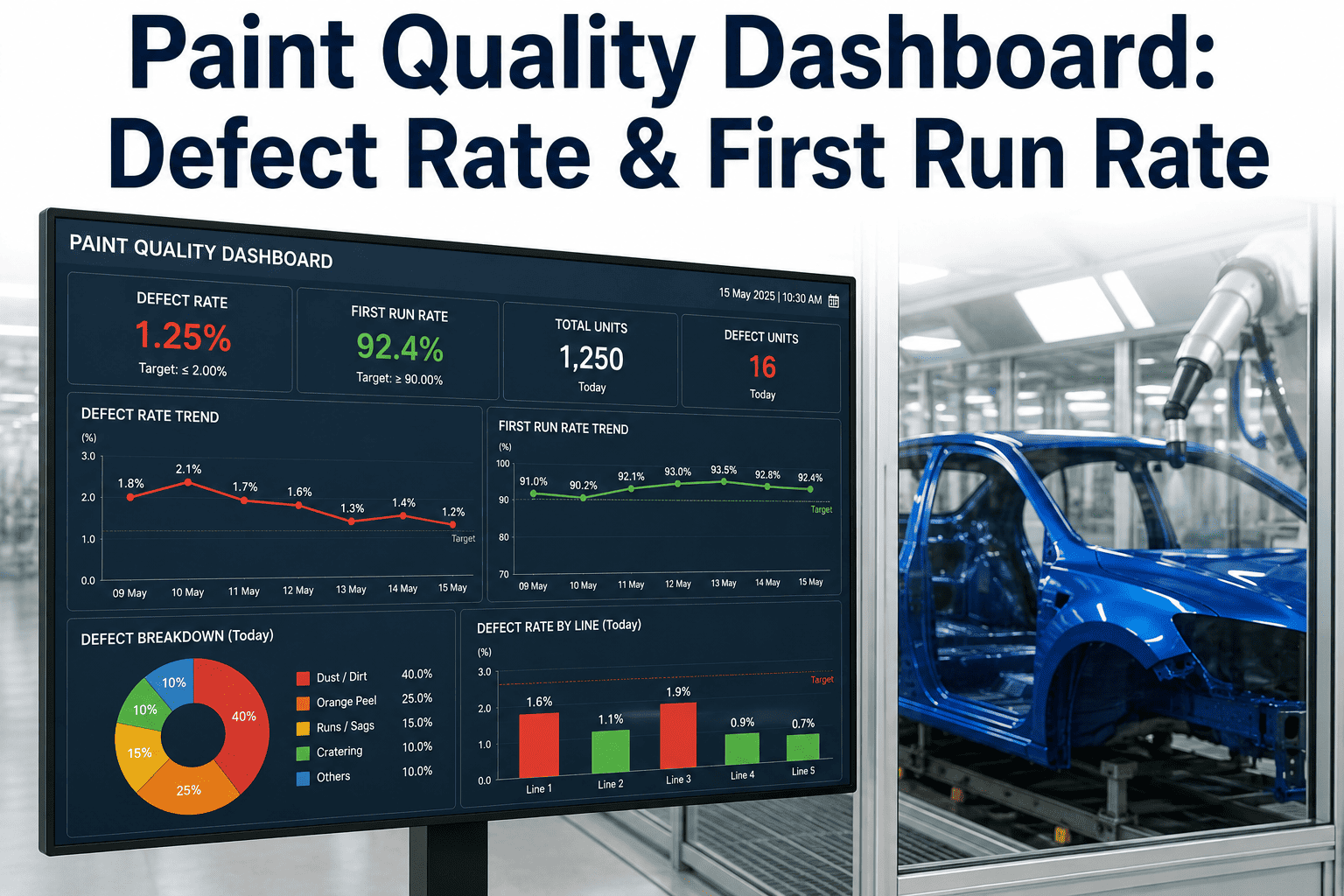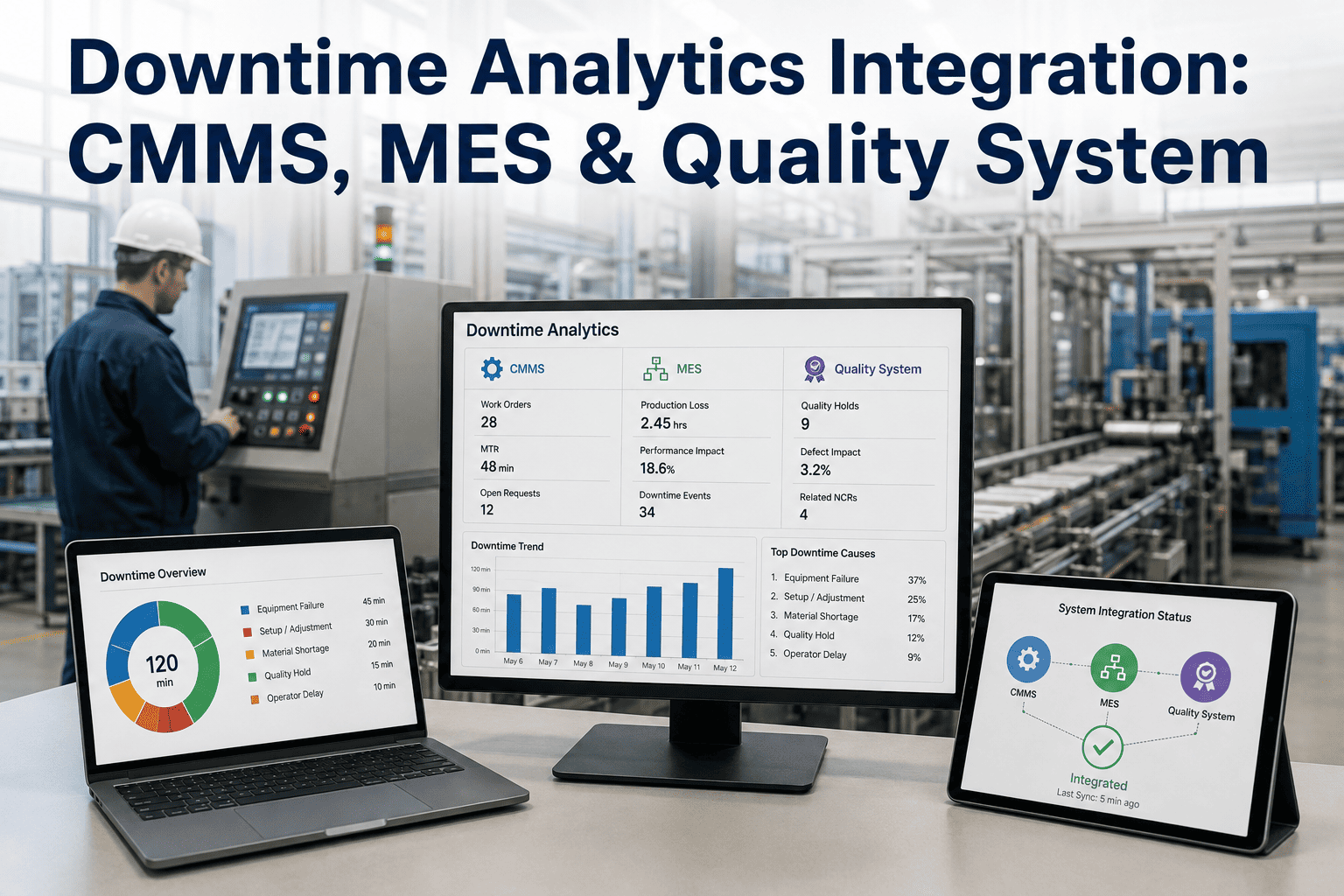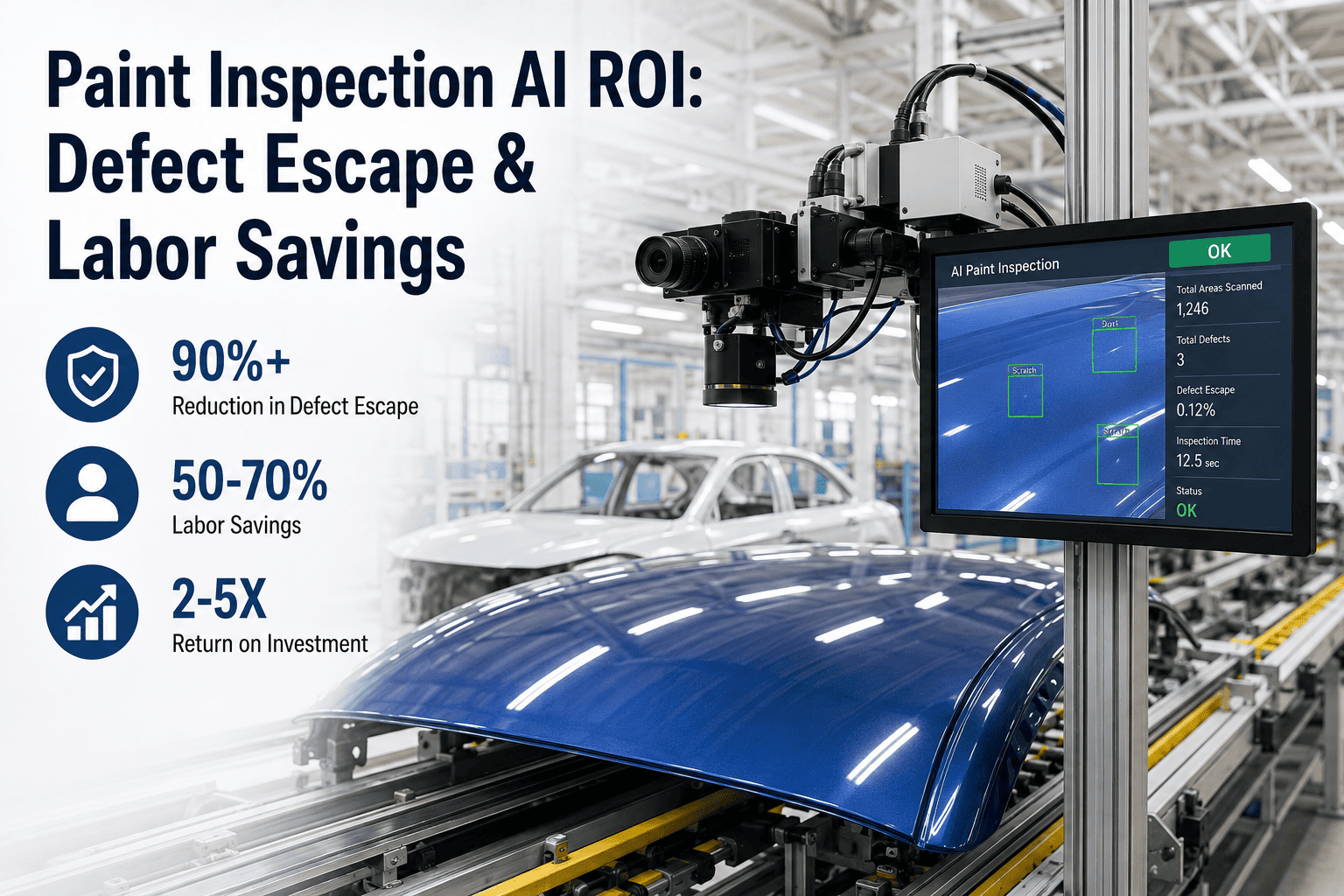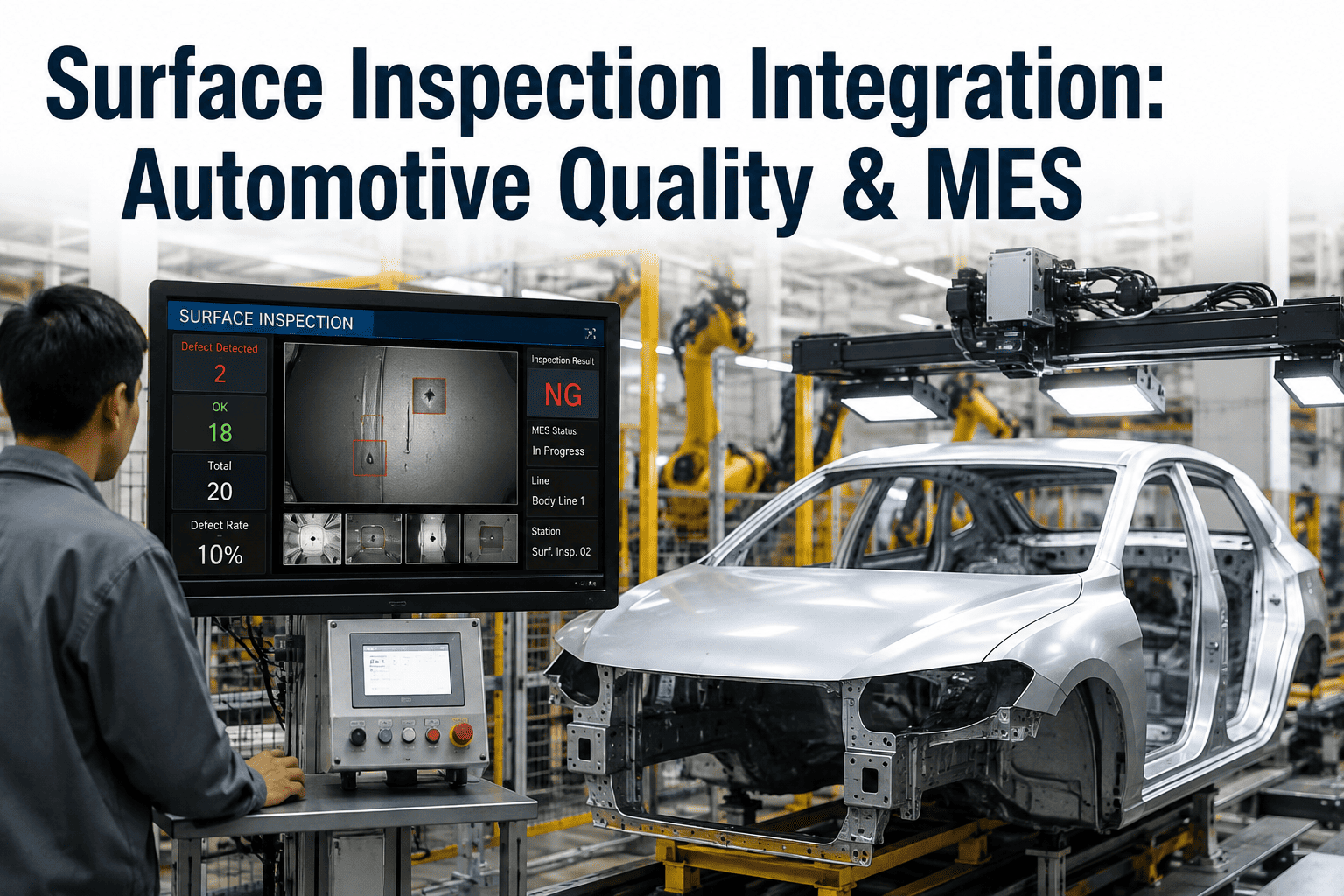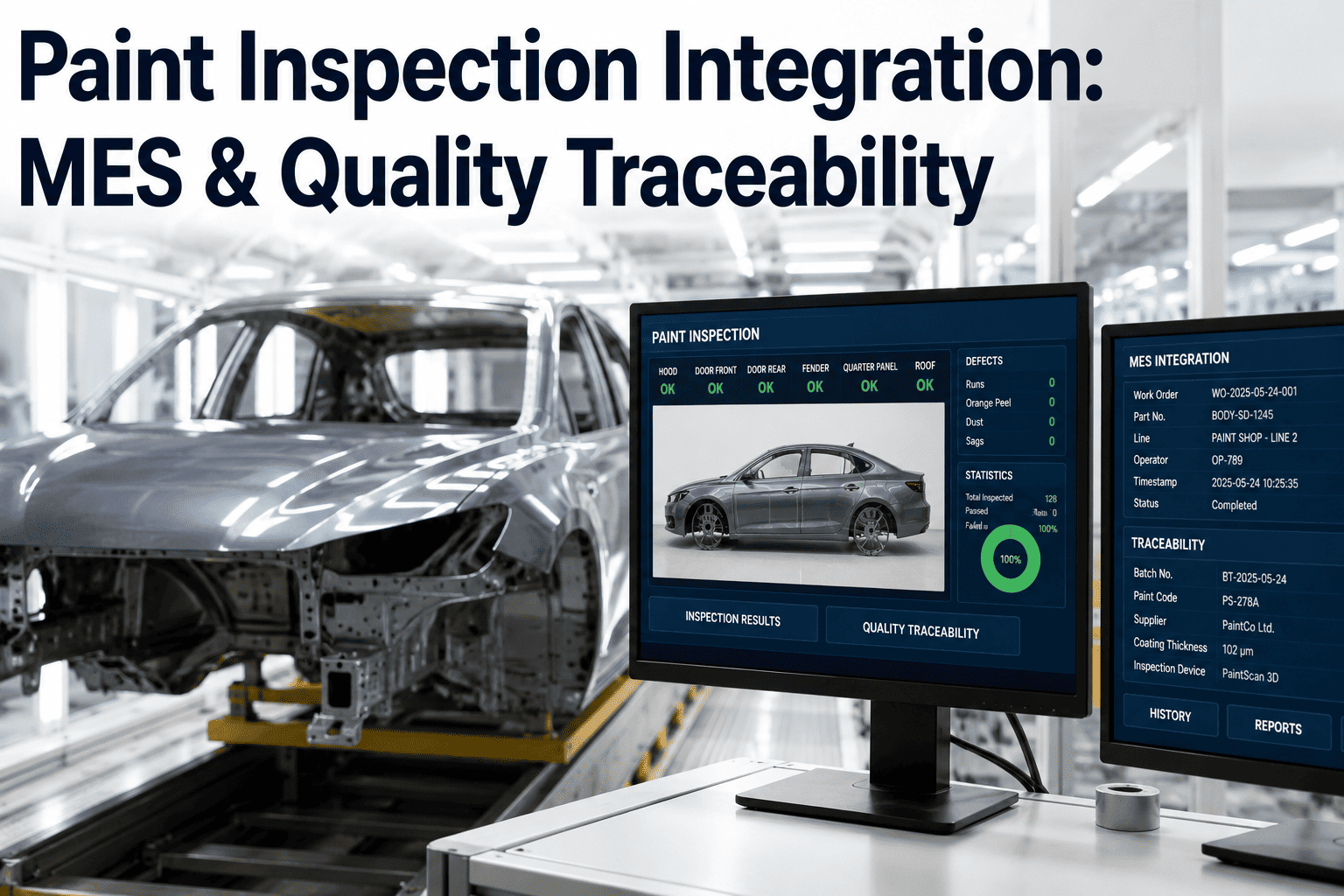
A paint inspection system that catches every defect but never talks to your MES is only doing half its job, because the defect data stays trapped in a standalone dashboard while the quality team is still manually keying VIN numbers into a separate traceability spreadsheet to figure out which units need a hold. The value of AI paint inspection multiplies the moment it becomes part of the same data fabric as your quality and manufacturing execution systems, turning a defect flag into an automatic hold, a routed non-conformance report, and a permanent VIN-level record without anyone re-entering the same information twice, and iFactory's integration layer is built specifically to make that connection across whatever mix of modern and legacy systems your plant actually runs, which is worth seeing against your own MES on a short call.
Connect Paint Inspection to MES, and a Defect Flag Becomes an Automatic Hold
iFactory links AI paint inspection directly to your manufacturing execution and quality systems, so every defect is tied to a VIN, every hold triggers automatically, and every non-conformance report generates itself instead of waiting on a manual entry, closing the loop between detection and action in seconds rather than hours.
What Happens When Inspection Data Lives in Its Own Silo
Most paint shops that add AI vision inspection get the detection benefit immediately, more defects caught, more consistently, across every shift. What often lags behind is connecting that detection to the systems that actually act on it, and that lag is understandable, since detection and integration are frequently treated as two separate projects with two separate budgets and two separate timelines rather than a single deployment that needs both pieces to deliver its full value. Without integration, a defect flagged by the vision system still requires someone to manually look it up, cross-reference the VIN against a production log, and enter a hold or NCR by hand, which reintroduces exactly the kind of manual, error-prone step the inspection investment was meant to reduce elsewhere in the process.
The gap between these two columns rarely shows up as a single dramatic failure, it shows up as a slow accumulation of small delays and small inconsistencies that quality teams eventually stop noticing because they have become normal. A hold that takes fifteen extra minutes to enter does not feel urgent in isolation, but multiplied across every defect flagged on a high-volume line over a full year, that fifteen minutes becomes a meaningful chunk of a technician's shift spent on data entry instead of the verification and root cause work that actually improves quality outcomes.
From Camera Flag to MES Record in Four Steps
The integration is built to sit alongside your existing MES rather than replace any part of it, passing structured defect data through the interfaces your quality and production systems already use. The four-step flow described below is the same regardless of which specific MES or QMS platform sits on the receiving end, since the differences between platforms mostly affect how the data gets delivered rather than what gets delivered.
Each of these four steps happens within seconds of the original defect detection, which is the practical difference integration makes versus a standalone inspection system. The vision system was already fast at catching the defect, what integration adds is closing the loop just as fast, so a unit that should be held never has the chance to move further down the line before someone notices the flag sitting in a dashboard nobody was watching at that exact moment.
See the Full Loop, From Defect Flag to Closed NCR
Bring a sample of your current MES hold and NCR workflow to the call, and iFactory will map exactly where the vision system's data feeds in.
Why Tracking Defects at the VIN Level Changes What You Can Do With the Data
A defect count by shift or by day tells you something happened, but a defect record tied to a specific VIN tells you what happened, where on the body it happened, and what else that vehicle's build record shows about the conditions at the time, which is the difference between a metric you report upward and a dataset your team can actually act on. That level of detail is what turns inspection data from a quality metric into a diagnostic tool.
These four applications share a common requirement, the underlying data has to be structured and searchable rather than sitting in a folder of standalone dashboard screenshots. A defect count is useful on its own, but a defect count that can be filtered by booth position, cross-referenced against a material batch, and pulled up instantly during a warranty dispute is what actually changes how a quality team operates day to day, and that only happens once the inspection data lives inside the same structured system as the rest of your production and quality records.
Which Systems the Integration Layer Is Built to Work With
Paint shops run a wide range of MES and quality platforms, often a mix of systems accumulated over years of plant upgrades, and an integration approach that only works with one vendor's stack is not much use to most real deployments, which is why compatibility gets confirmed against your actual environment before any implementation timeline is committed to.
| System Type | Integration Approach | Typical Effort |
|---|---|---|
| Modern MES With Open APIs | Direct API integration pushing structured defect records in real time | Low, typically configured within the first weeks of deployment |
| Legacy MES With File-Based Interfaces | Structured file exports on a defined interval, matched to existing batch cycles | Moderate, depends on existing file interface documentation |
| Standalone Quality Management System | Direct NCR creation through the QMS's own integration interface | Low to moderate, depends on QMS vendor and configuration |
| Spreadsheet-Based Quality Tracking | Structured export replacing manual entry, with a migration path to a proper QMS | Low, though this is usually where the biggest process improvement happens |
Plants still running spreadsheet-based quality tracking often see the largest relative improvement from integration, simply because the baseline process it replaces involves the most manual re-entry and the most opportunity for a defect to fall through a gap between systems. A mixed environment, common at plants that have grown through acquisition or multiple platform upgrades over the years, usually needs a slightly different integration path for each line or each MES instance rather than a single approach applied uniformly, and mapping that out is typically the first technical task once a deployment begins.
It is worth noting that none of these integration approaches require your plant to standardize on a single MES platform before starting. Many automotive manufacturers run different systems at different plants for entirely legitimate historical reasons, and the integration layer is built to accommodate that reality rather than treating it as a blocker that has to be solved first.
Clearing Up the Assumptions That Slow a Project Down Before It Starts
IT and quality teams evaluating an integration project often assume it requires more disruption than it actually does, and that assumption alone is enough to push a useful project to the bottom of a priority list. A few of the most common misconceptions are worth addressing directly before they become the reason a plant delays a project that would otherwise pay for itself quickly.
The first misconception is that integration requires a full MES upgrade or replacement, which is rarely true, since most integration work happens at the interface layer regardless of how old the underlying MES is. The second is that IT needs to build and maintain custom integration code long-term, when in practice the integration layer is designed to be configured once against your existing interfaces and then maintained as part of the ongoing platform relationship rather than becoming an internal engineering project. The third is that connecting inspection data to quality systems creates new compliance risk, when the opposite tends to be true, a unified VIN-level record with automated holds and NCR generation is generally easier to defend in an audit than a process that relies on manual entry at multiple points, each one a place a record could be missed or entered incorrectly.
Clearing up these assumptions early in a conversation with IT and quality leadership tends to shorten the internal approval process considerably, since much of the hesitation around integration projects comes from overestimating the scope rather than any genuine technical obstacle specific to a given plant.
What Plants Report After Connecting Inspection to MES
These figures reflect outcomes reported by automotive paint shops after integrating AI vision inspection directly with their MES and quality systems, drawn from plants running a mix of modern and legacy platform environments rather than a single ideal deployment.
What Else Becomes Possible Once Inspection Data Flows Into MES
Automated holds and NCR generation are usually the first benefit a plant notices, since they solve an immediate, visible pain point in the daily workflow. But once defect data is flowing structurally into the same system as production and quality records, a second set of capabilities tends to open up that were simply not practical when the data lived in a separate dashboard.
Quality teams start building trend reports that cross-reference defect type against production variables the MES already tracks, shift, line speed, booth temperature, and material batch, without needing a data analyst to manually merge spreadsheets from two different sources. Supplier quality teams get a documented, VIN-linked record to bring to a paint or material supplier when a defect pattern points toward an incoming material issue rather than a process issue on the line itself. And plant leadership gets a single source of truth for defect rates that matches what shows up in warranty and rework reporting, instead of two slightly different numbers depending on which system someone pulled the report from.
None of these downstream capabilities require additional investment once the integration itself is in place, they are a natural consequence of defect data living inside the same structured environment as the rest of a plant's production and quality records rather than sitting in a parallel system that nothing else can query against.
How Plants Typically Sequence the Integration
Connecting inspection to MES does not need to happen all at once, and most plants find a phased approach easier to validate before it becomes the primary hold and NCR pathway, since it gives both the quality team and IT a chance to build confidence in the automated path before the manual process it replaces gets retired.
Questions IT and Quality Teams Ask Before Connecting Systems
What the First Technical Conversation Actually Covers
A first call with iFactory's integration team is not a generic product demo, it starts with a walkthrough of your specific MES and QMS platforms, your current hold and NCR workflow, and however VIN or line tracking currently works on your production floor. By the end of that conversation, most IT and quality teams have a clear picture of which integration approach applies to their systems and a rough timeline for a parallel-run period before automated routing becomes the primary workflow.
Where a plant runs more than one MES across different lines or facilities, the conversation typically maps each system separately rather than assuming a single integration approach covers everything, since that mismatch is exactly the kind of detail that causes integration projects to stall midway if it is not addressed up front. The goal of the first call is a concrete technical plan specific to your environment, not a generic pitch that leaves the hard questions for later.
Turn Every Defect Flag Into an Automatic Hold and a Complete Record
iFactory connects AI paint inspection directly to your MES and quality systems, closing the gap between detection and action so a flagged defect becomes a hold and a documented record within seconds rather than waiting on a manual entry. Book a demo and see it mapped against your own workflow.