In the fast-paced automotive industry, aligning production capacity with ever-shifting demand is a critical challenge. Traditional planning methods often fall short when faced with model-mix volatility, seasonal fluctuations, and global supply chain disruptions. Artificial intelligence is revolutionizing how operations directors approach capacity planning and demand forecasting. By leveraging AI analytics, automotive manufacturers can predict demand with greater accuracy, optimize capacity utilization across multi-plant networks, and make smarter capital investment decisions. This article explores how AI-driven forecasting transforms automotive capacity planning, offering a data-backed approach to balance supply and demand while minimizing waste and maximizing profitability. Discover how to stay ahead in a competitive market by integrating AI into your production planning strategy. Explore support options.
85%
Forecast Accuracy Improvement with AI
30%
Reduction in Excess Inventory Costs
20%
Increase in Capacity Utilization
2x
Faster Demand Response Time
Understanding Automotive Demand Volatility
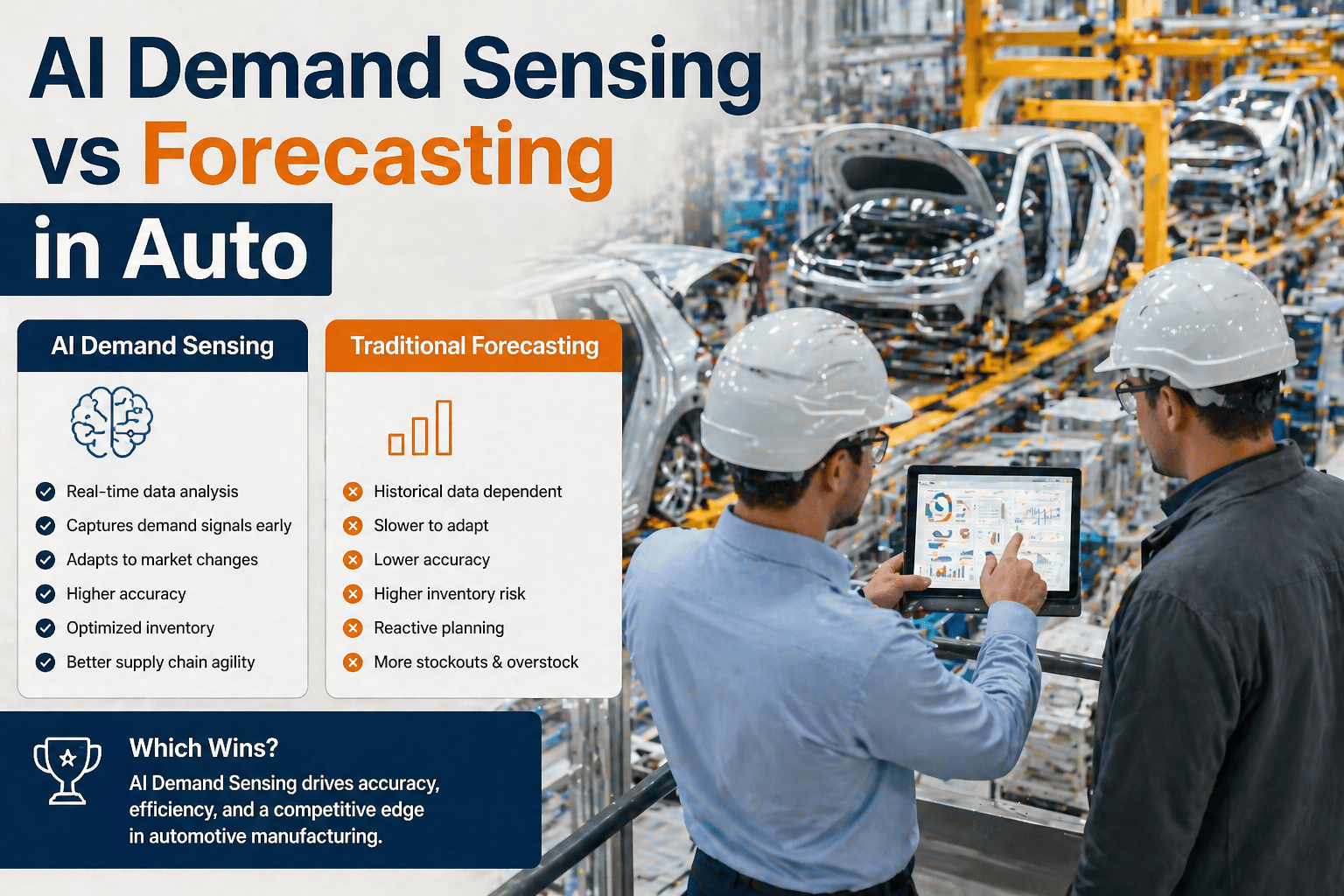
Automotive demand is notoriously volatile, influenced by economic cycles, consumer preferences, regulatory changes, and technological disruptions. Traditional forecasting methods often rely on historical data and simple trend analysis, which fail to capture sudden shifts like a surge in electric vehicle adoption or a drop in SUV sales due to fuel price hikes. AI analytics can process vast amounts of data from multiple sources, including social media trends, economic indicators, and real-time dealer inventories, to detect early signals of demand changes. This allows operations directors to adjust production plans proactively, reducing the risk of overproduction or stockouts. By understanding the root causes of volatility, manufacturers can build more resilient capacity plans that adapt to market dynamics without sacrificing efficiency.
AI-Driven Demand Forecasting Models
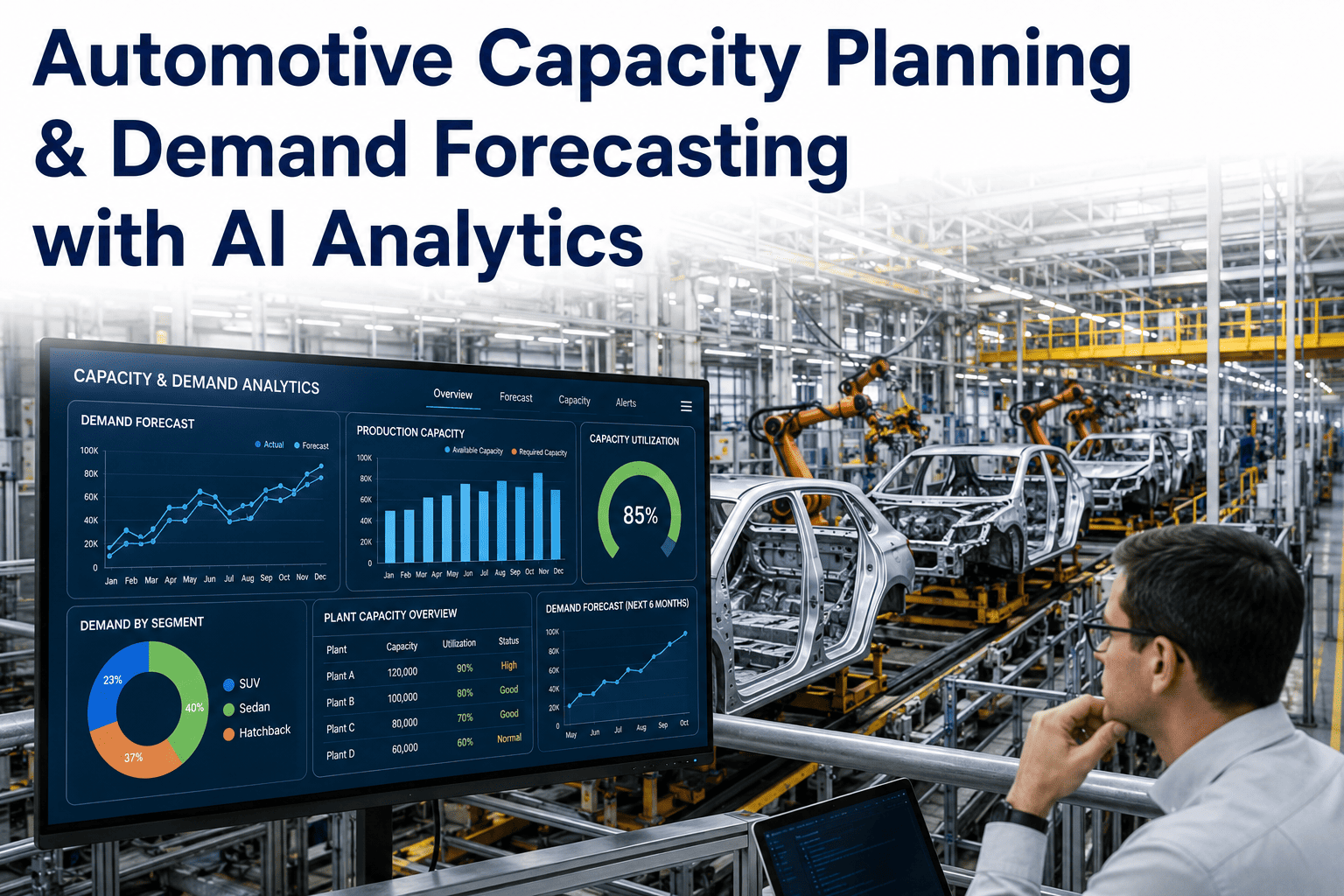
AI-driven demand forecasting uses machine learning algorithms to analyze historical sales data, seasonality, promotional activities, and external factors like weather or geopolitical events. These models can identify complex patterns and correlations that humans might miss, leading to more accurate predictions. For automotive capacity planning, AI can forecast demand at the model, trim, and option level, enabling granular capacity allocation across plants. For example, if AI predicts a rise in demand for hybrid vehicles in a specific region, the system can recommend reallocating production lines to meet that need. The models continuously learn from new data, improving accuracy over time. This dynamic approach helps manufacturers avoid costly mistakes and maintain optimal inventory levels, directly impacting the bottom line.
Multi-Plant Capacity Optimization
Managing capacity across multiple plants adds complexity to automotive production planning. Each plant may have different capabilities, labor costs, and supply chain dependencies. AI analytics can optimize capacity utilization by simulating various production scenarios and identifying the most efficient allocation of resources. For instance, AI can recommend which plant should produce which model based on demand forecasts, transportation costs, and plant efficiency metrics. This not only maximizes overall capacity utilization but also reduces lead times and logistics expenses. Operations directors can use these insights to make data-driven decisions about capital investment, such as whether to expand a plant or retool an existing line. The result is a more agile and cost-effective production network that can quickly adapt to market changes.
Ready to Transform Your Capacity Planning?
Discover how AI-driven forecasting can help you align production with demand, reduce waste, and improve profitability. Book a demo to see our solution in action.
Key Benefits of AI in Automotive Capacity Planning
Improved Forecast Accuracy
AI models reduce forecast error by up to 50%, ensuring production plans are based on reliable demand signals. This minimizes the need for costly last-minute adjustments and reduces inventory holding costs.
Real-Time Demand Sensing
AI continuously monitors market signals, such as social media sentiment and competitor pricing, to detect demand shifts in real time. This allows manufacturers to respond quickly to emerging trends.
Optimal Resource Allocation
By analyzing plant capacities and demand forecasts, AI recommends the best allocation of labor, materials, and machinery across multiple sites, reducing idle time and bottlenecks.
Scenario Simulation
Operations directors can simulate various what-if scenarios, such as a supplier disruption or a sudden demand spike, to evaluate the impact on capacity and develop contingency plans.
Implementing AI for Capacity Planning: A Step-by-Step Roadmap
Step 1: Data Integration
Collect and consolidate data from ERP systems, IoT sensors, CRM platforms, and external sources. Ensure data quality and consistency across all plants and regions.
Step 2: Model Development
Build machine learning models tailored to your product mix and market dynamics. Train models on historical data and validate their accuracy against actual outcomes.
Step 3: Deployment & Integration
Integrate AI models into your existing planning systems, such as APS or MES. Set up dashboards for real-time visibility into demand forecasts and capacity utilization.
Step 4: Continuous Improvement
Monitor model performance and retrain with new data regularly. Incorporate feedback from planners to refine algorithms and adapt to changing market conditions.
Frequently Asked Questions
How does AI improve demand forecasting for automotive?
AI improves demand forecasting by analyzing vast datasets beyond traditional sales history, including economic indicators, social media trends, and real-time dealer data. Machine learning algorithms identify complex patterns and correlations that humans might miss, leading to more accurate predictions. For automotive, this means better anticipation of model-mix shifts, seasonal fluctuations, and regional preferences. The result is a demand forecast that adapts quickly to market changes, reducing the risk of overproduction or stockouts. Contact support for more details.
What data is needed for AI capacity planning?
AI capacity planning requires a combination of internal and external data. Internally, you need historical production data, machine utilization rates, labor availability, and inventory levels. Externally, data on market demand, competitor activities, economic trends, and supplier performance is crucial. IoT sensor data from production lines can also provide real-time insights into equipment health and throughput. The more comprehensive the data, the better the AI model can predict capacity needs and optimize resource allocation. Learn more about data integration.
Can AI handle multi-plant capacity optimization?
Yes, AI excels at multi-plant capacity optimization by analyzing data from all facilities simultaneously. It considers factors like plant-specific capabilities, labor costs, transportation distances, and demand forecasts to recommend the most efficient production allocation. AI can simulate different scenarios, such as shifting production between plants during a disruption, to minimize impact on delivery times and costs. This holistic view helps operations directors make informed decisions about capacity expansion, retooling, or outsourcing. Book a demo to see it in action.
How long does it take to implement AI forecasting?
Implementation timelines vary based on data readiness, model complexity, and integration requirements. Typically, a pilot project can take 3-6 months, including data integration, model development, and validation. Full-scale deployment across multiple plants may take 6-12 months. The key to a successful implementation is having clean, accessible data and a clear understanding of business objectives. Many vendors offer phased approaches to minimize disruption and demonstrate value early. Get support for implementation planning.
What are the common challenges in AI capacity planning?
Common challenges include data silos across departments, inconsistent data quality, and resistance to change from planning teams. AI models require continuous monitoring and retraining to remain accurate as market conditions evolve. Integration with legacy ERP systems can also be complex. To overcome these challenges, it's important to have strong executive sponsorship, invest in data infrastructure, and provide training for planners to trust and use AI insights. A phased rollout helps manage risks and build confidence. Book a demo to discuss solutions.
Take the Next Step in Automotive Capacity Planning
Leverage AI to predict demand, optimize capacity, and stay competitive in a volatile market. Book a demo today to see how our solution can transform your operations.