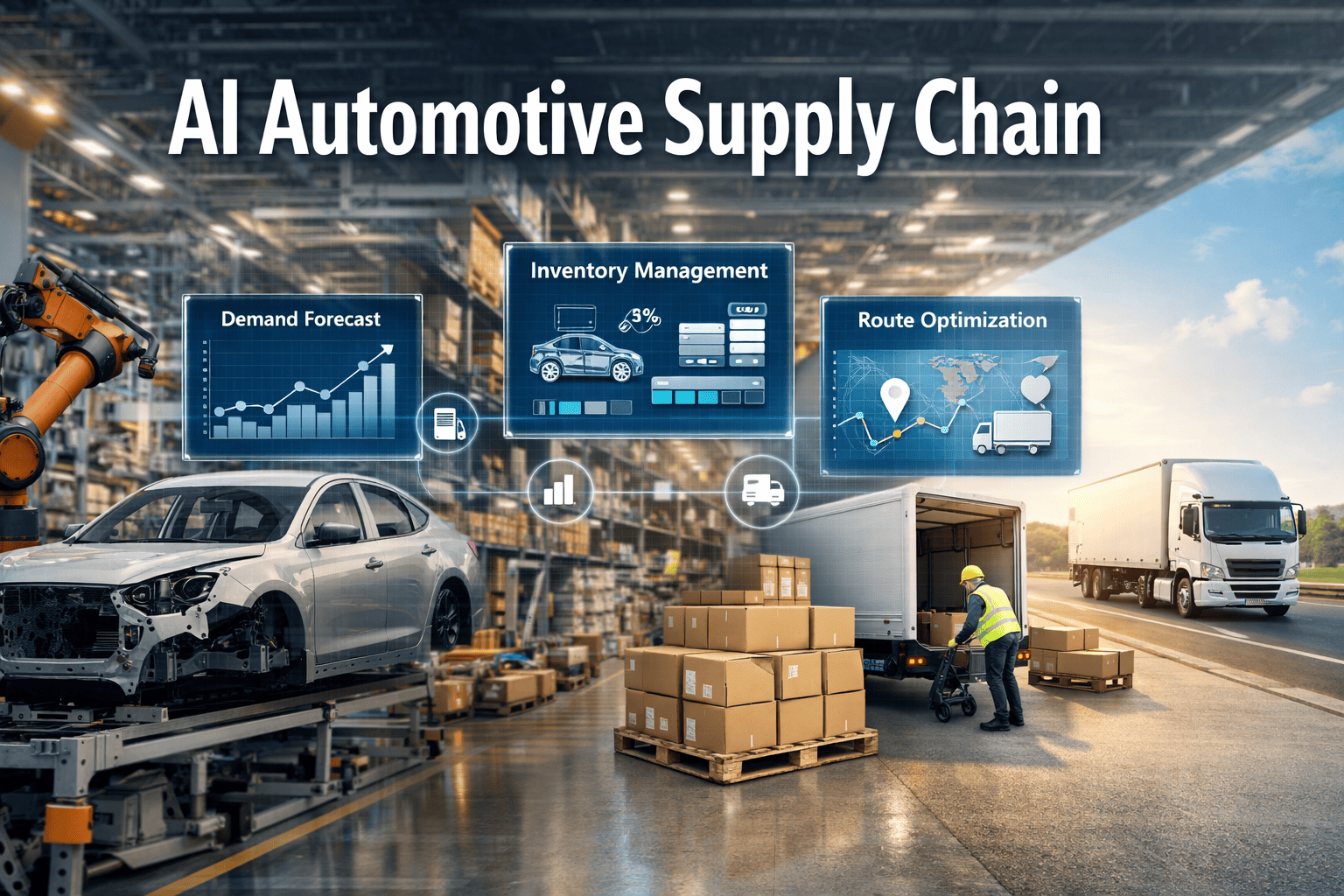
Automotive OEMs lose $4.2-7.8M monthly to supply chain misalignment caused by inaccurate demand forecasting not from market volatility alone, but from legacy planning systems delivering 60-75% forecast accuracy that create cascading inventory imbalances, supplier overproduction, and line stoppage risks spanning the entire supply ecosystem. When forecasted demand misses actual market pull by 25-40%, suppliers over-invest in tooling and capacity while OEMs accumulate excess component inventory costing $180K-$420K per SKU annually in carrying costs, obsolescence, and working capital drag. Meanwhile, supplier underproduction creates critical shortages halting assembly lines at $280K per hour downtime cost, forcing emergency expedited shipping premiums consuming 8-12% of supply chain budgets. iFactory's AI demand forecasting platform achieves 95% accuracy through deep learning models trained on historical OEM demand, supplier data, market signals, and ERP integration — reducing safety stock requirements by 40%, cutting supply chain planning cycles from 90 days to 14 days, and eliminating $6.2M annually in excess inventory and expedited freight across typical multi-tier automotive supply networks. Book a Demo to see how iFactory deploys AI demand forecasting across your supply chain within 8 weeks.
95%
Demand forecast accuracy vs 60-75% traditional planning system baseline
$6.2M
Annual supply chain cost avoided per OEM through inventory optimization and expedite elimination
40%
Safety stock reduction through accurate demand visibility enabling just-in-time supplier coordination
8wks
Full deployment timeline from ERP integration to live AI demand forecasting across supply network
Inaccurate Demand Forecasts Cost $280K Per Hour in Assembly Line Stoppages. AI Predicts With 95% Accuracy.
iFactory's AI demand forecasting platform integrates with your ERP, supplier portals, and market data feeds — predicting vehicle demand 12-26 weeks in advance with 95% accuracy, automatically optimizing safety stock levels, coordinating supplier production schedules, and eliminating both excess inventory carrying costs and critical shortage expedites that plague traditional forecasting.
How iFactory AI Demand Forecasting Transforms Automotive Supply Chain Planning
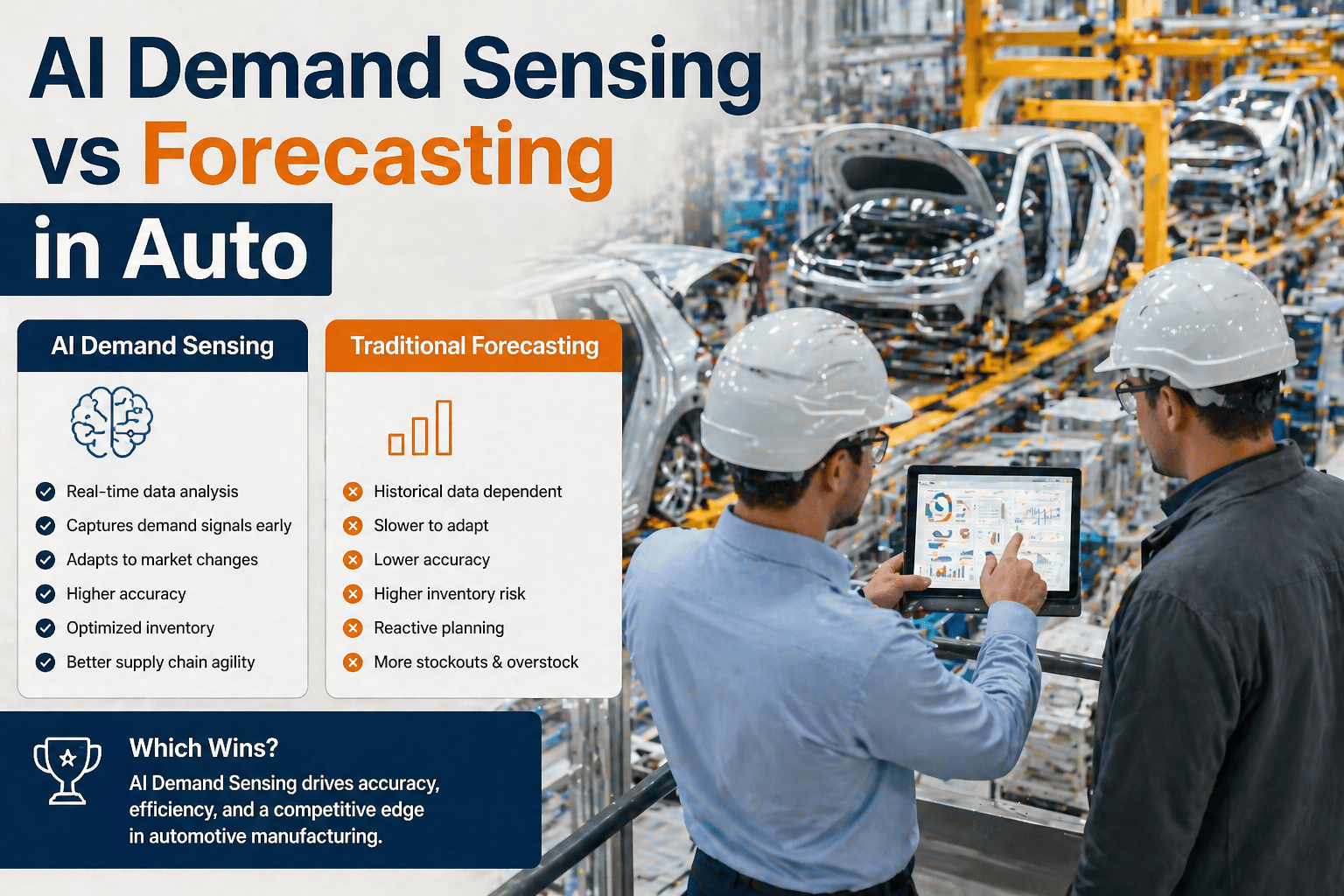
Traditional automotive demand planning relies on statistical forecasting (moving averages, exponential smoothing) that cannot capture market demand volatility, customer preference shifts, competitive pricing impacts, or supply disruption cascades — leaving OEMs oscillating between excess inventory and critical shortages. Forecasts updated quarterly or monthly cannot respond to daily market signals: sudden EV adoption acceleration, competitor model launches, supply chain disruption events, or macroeconomic shifts all progress unaddressed until revised forecasts arrive weeks too late. iFactory replaces reactive forecast cycles with continuous AI learning — neural networks analyzing historical OEM demand patterns, real-time market data, supplier capacity, and ERP inventory positions to predict demand 12-26 weeks forward with 95% accuracy, enabling supply chain coordination that eliminates both excess inventory and shortage risk. See live demo of AI demand predictions matching actual OEM orders 95%+ accurately while reducing safety stock requirements 40% below traditional planning levels.
01
Deep Learning Demand Prediction
Neural networks trained on 10+ years OEM demand history, market data, supplier capacity, and inventory position detect demand patterns traditional statistical methods miss. LSTM and transformer architectures capture seasonal cycles, trend shifts, and anomalies enabling 95% accuracy 12-26 weeks forward. Models retrain continuously incorporating new sales data, market signals, and forecast errors improving accuracy over time.
02
Real-Time Market Signal Integration
AI consumes market data feeds (competitor launches, EV adoption rates, fuel prices, macroeconomic indicators) alongside OEM sales, warranty data, and customer ordering patterns. Demand models automatically adjust for market shifts detected in real time. EV vs ICE demand acceleration, regional preference changes, and seasonal demand patterns identified 4-8 weeks before traditional forecasting reflects the shift.
03
Supply Chain Network Optimization
AI forecasts demand by vehicle model, component type, supplier, and geographic region enabling coordinated supplier planning. Suppliers receive continuous demand signals enabling just-in-time component delivery matching OEM assembly schedules. Network optimization algorithms identify supplier bottlenecks and recommend capacity investments before shortages propagate through multi-tier supply base.
04
Safety Stock Optimization
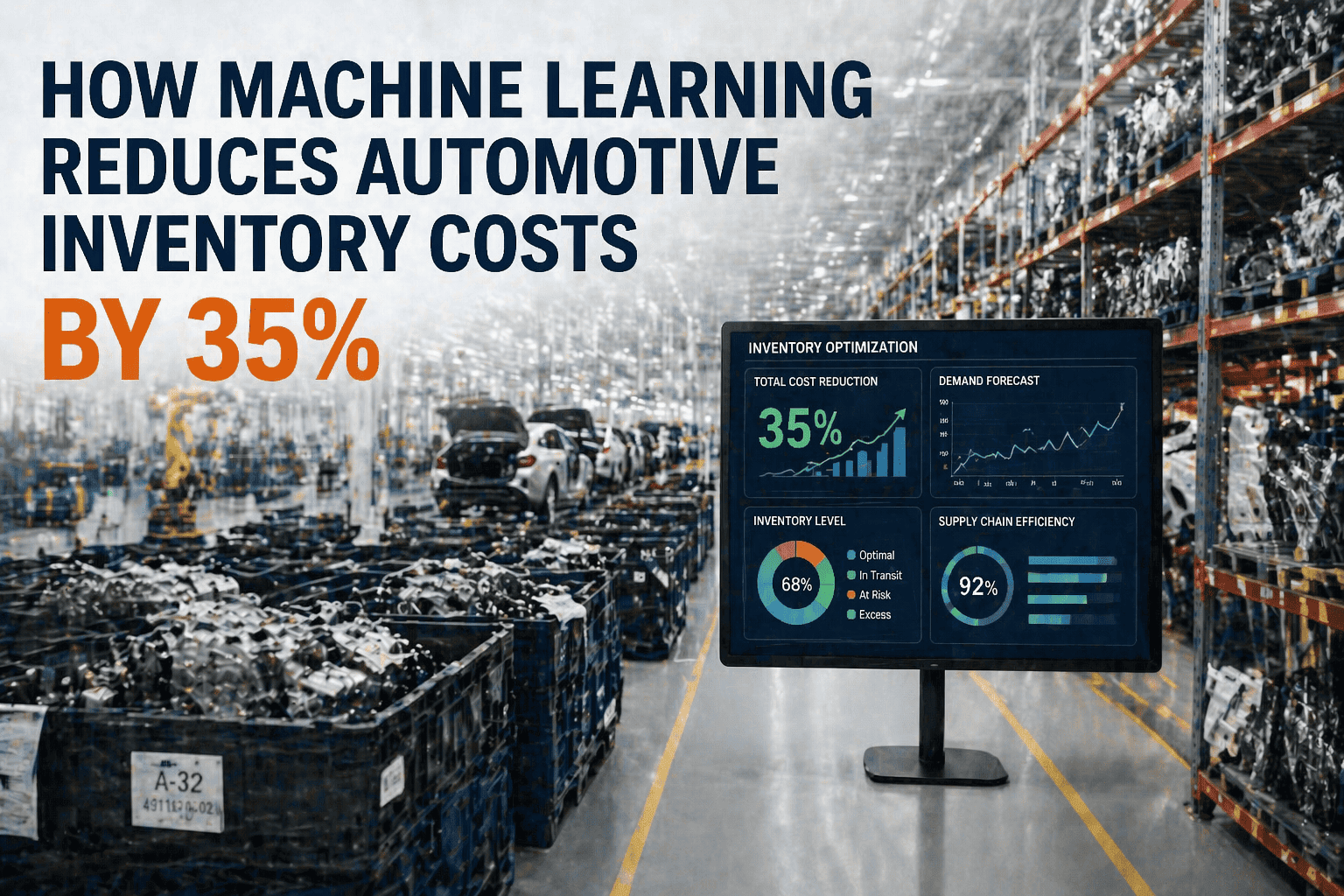
Traditional planning maintains 30-50% safety stock buffers to protect against forecast error. AI demand accuracy enables 40% safety stock reduction: OEMs maintain sufficient cushion for residual forecast error and supply disruption while eliminating excess inventory. Working capital freed from over-stocked components enables investment in supply chain resilience and supplier development.
05
ERP and MES Integration
AI demand forecasts flow directly into ERP (SAP, Oracle, Infor) and MES (manufacturing execution) systems triggering automated planning updates, purchase orders, and production schedules. No manual forecast review delays: demand signals push production plans and supplier orders within minutes. Integration with supplier portals enables real-time visibility and collaborative planning reducing communication lag.
06
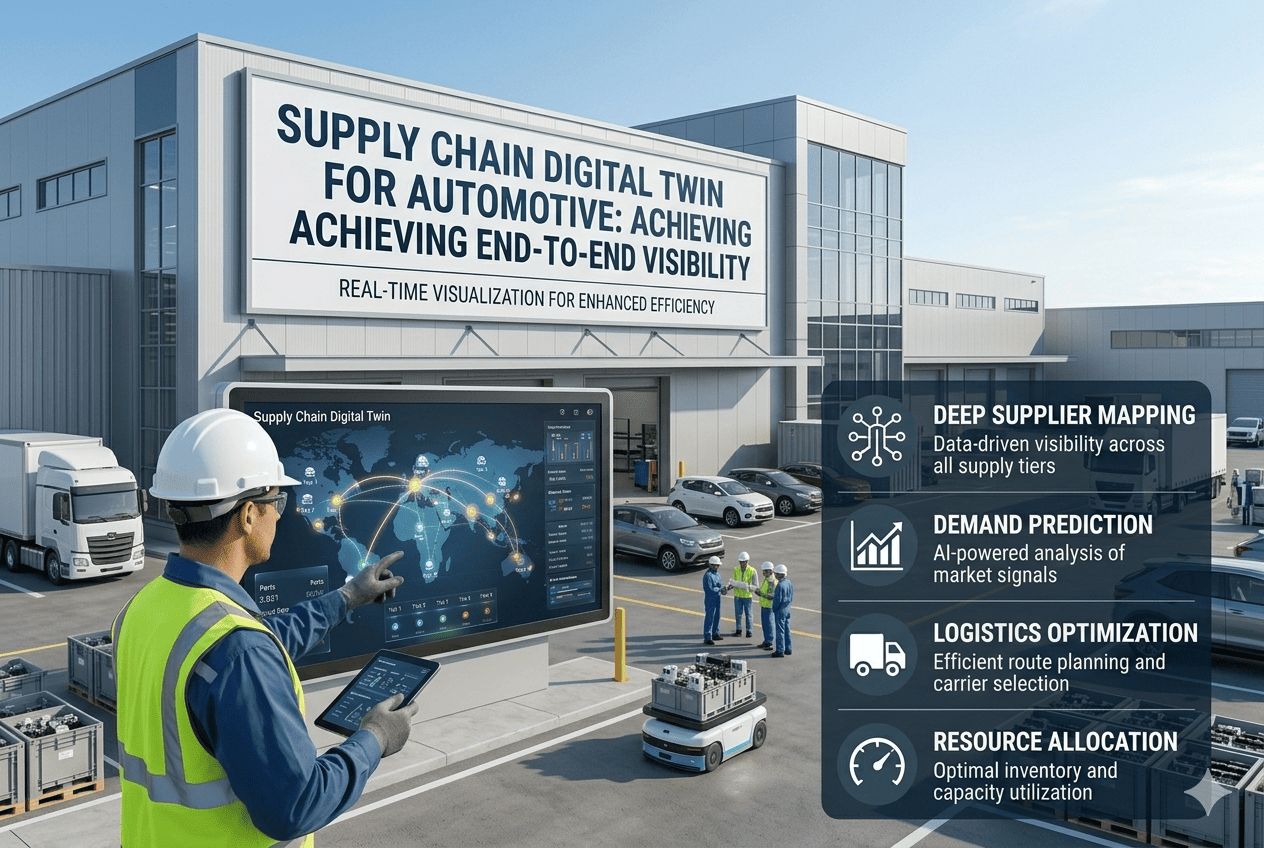
Supply Chain Digital Twin
Digital simulation of entire supply network predicts impact of demand scenarios, supplier disruptions, and capacity constraints before they propagate through physical network. What-if analysis tests production plans, supplier allocation, and transportation modes identifying optimal configurations. Scenario planning enables rapid response to market changes and supply disruptions with pre-analyzed contingency plans.
How iFactory Is Different from Traditional Automotive Demand Planning
Most automotive OEMs continue relying on statistical forecasting (moving averages, exponential smoothing, basic regression) with quarterly or monthly updates — forecasts managed in spreadsheets, requiring manual data gathering, and updated only when enough new data accumulates to trigger a planning cycle. iFactory is built differently — continuous AI learning, real-time market signal integration, and automated ERP synchronization designed specifically for automotive where supply chain coordination complexity, component interdependencies, and multi-tier supplier networks demand daily forecast updates informed by market changes traditional methods cannot detect. Compare iFactory's 95% demand forecast accuracy against your current planning system performance directly.
| Capability |
Statistical Forecasting |
iFactory AI Demand Planning |
| Forecast Accuracy |
60-75% accuracy due to inability to capture demand shifts, market changes, or anomalies. Quarterly updates miss 12 weeks of market signal changes. |
95% accuracy capturing market shifts in real time. Daily model retraining incorporates latest sales data and market signals. Continuous learning improves predictions over time. |
| Forecast Update Frequency |
Monthly or quarterly forecasts require 2-4 weeks planning cycle data collection and review. Market changes not reflected for 30-90 days. |
Daily forecast updates incorporating real-time sales, market signals, and inventory data. Demand adjustments reflected within hours of market shift detection. |
| Market Signal Response |
Competitor launches, EV adoption acceleration, price changes detected only when new forecasts distributed. 4-8 week lag before supply chain adjusts. |
Real-time market signal integration (competitor activity, EV preference shifts, macroeconomic changes) automatically adjusts demand predictions. Supply chain responds within days. |
| Multi-Variable Analysis |
Limited to historical demand and seasonal patterns. Cannot incorporate supplier capacity, component interdependencies, or network constraints. |
Simultaneous analysis of 500+ variables: demand patterns, market signals, supplier capacity, logistics constraints, inventory position, and regional demand differences. |
| Safety Stock Levels |
Maintains 30-50% safety stock to protect against forecast error and supply disruption. Excess inventory averaging $420K per SKU annually. |
40% safety stock reduction possible with 95% forecast accuracy. Maintains resilience for residual error and disruption while freeing working capital. |
| Supplier Coordination |
Suppliers receive static demand forecasts quarterly or monthly. Over-produce against peak forecasts creating excess capacity and inventory. |
Suppliers receive continuous demand signals enabling just-in-time production. Coordinated supplier schedules eliminate over-production while ensuring availability. |
| Scenario Planning |
What-if analysis requires manual spreadsheet modeling. Scenarios tested offline without visibility into supply chain impact. |
Digital twin enables rapid what-if analysis simulating demand scenarios, supplier disruptions, and capacity constraints in minutes. Pre-planned contingencies ready for deployment. |
| ERP Integration |
Forecasts exported to spreadsheets requiring manual data entry and validation. Lag between forecast generation and ERP update. |
Direct ERP integration (SAP, Oracle, Infor) with automated plan generation. Forecast updates trigger production planning and purchase orders within minutes. |
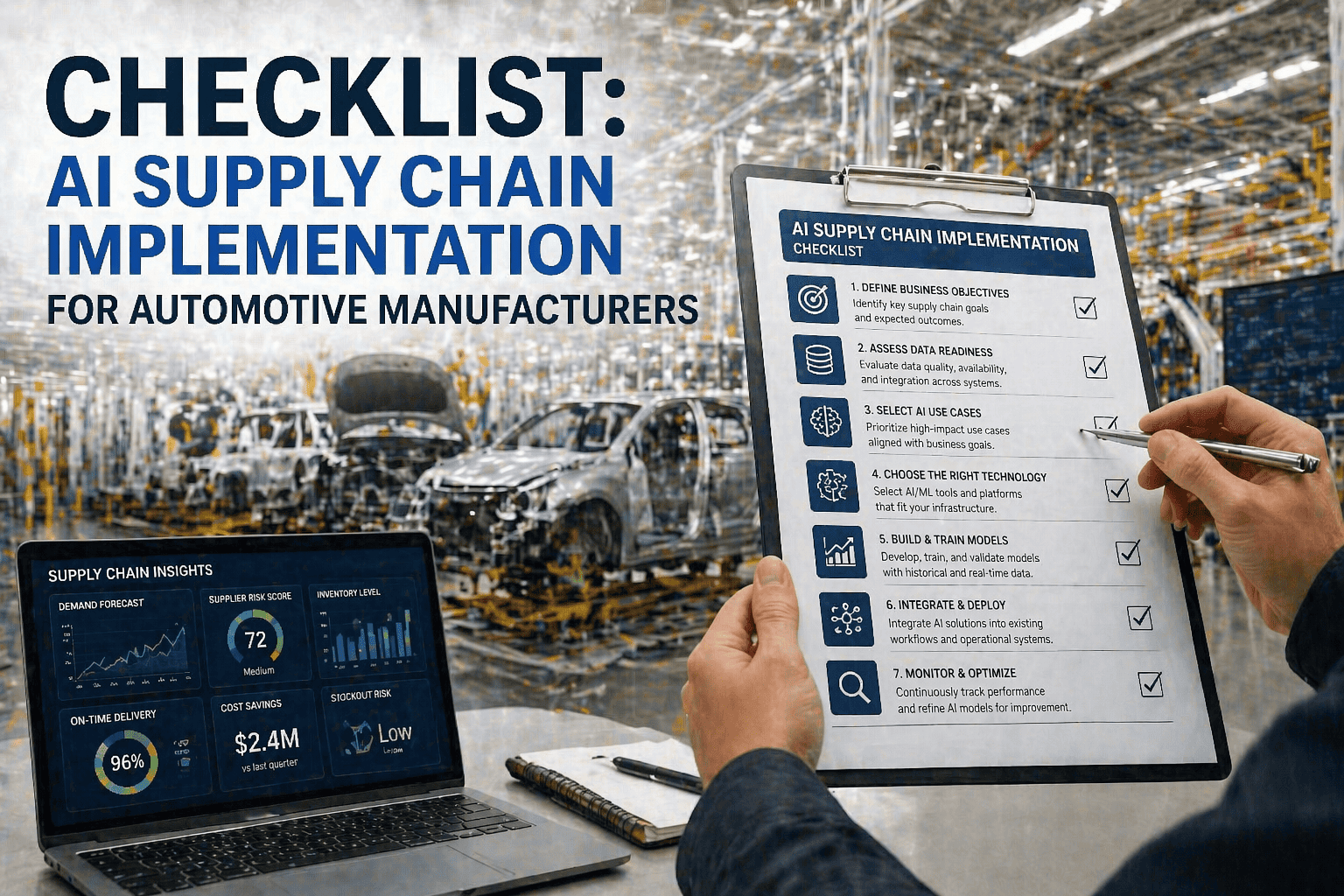
iFactory AI Implementation Roadmap for Demand Forecasting
iFactory follows a fixed 6-stage deployment methodology designed specifically for automotive demand planning — delivering 90%+ forecast accuracy in week 4 on current vehicle models and 95%+ accuracy across full portfolio including new launches by week 8.
01
Data Integration
ERP, historical demand, supplier data, market feeds integrated into AI platform
02
Historical Baseline
10+ years demand history analyzed establishing accuracy benchmark vs current forecasting
03
AI Model Training
Neural networks trained on multi-year demand patterns and market signals; cross-validation testing
04
Pilot Forecasting
Live AI forecasts on current models validated against actual demand; 90%+ accuracy achieved
05
Supply Chain Orchestration
Supplier portals activated; demand signals flow to suppliers; safety stock optimization begins
06
Full Production
All vehicle models and suppliers live; 95%+ accuracy; continuous learning active
8-Week Deployment and ROI Timeline
Every iFactory engagement follows a structured 8-week program with defined deliverables per week — and measurable ROI beginning from week 4 when pilot demand forecasts demonstrate 90%+ accuracy on current vehicle models. Request the full 8-week deployment scope document customized to your OEM structure and vehicle portfolio.
Weeks 1-2
Data Integration
ERP (SAP, Oracle, Infor) historical demand data extracted covering 10+ years sales by vehicle model, region, and component
Supplier data feeds, market data (EV adoption, competitor activity, pricing), and inventory position integrated into AI platform
Data validation completed ensuring historical accuracy and completeness before model training begins
Weeks 3-4
AI Training & Pilot
Neural networks trained on historical data with cross-validation against recent actual demand establishing 90%+ accuracy baseline
Pilot forecasts live on current vehicle models. Real-time market signals incorporated in daily predictions.
Forecast accuracy validated: ROI evidence begins here with 90%+ accuracy demonstrated on production vehicles
Weeks 5-6
Integration & Optimization
ERP/MES integration activated: demand forecasts push automatic production planning and supplier purchase orders
Safety stock levels optimized: 40% reduction calculated based on 95%+ forecast accuracy; working capital freed
Supplier portal coordination enabled: suppliers receive continuous demand visibility enabling just-in-time production
Weeks 7-8
Full Portfolio Deployment
All vehicle models, variants, and new launches live on AI forecasting with 95%+ accuracy across full portfolio
Continuous learning activated: daily model retraining incorporating latest sales data and market signals improving predictions
ROI report delivered: inventory optimization, expedite elimination, safety stock reduction, and supply chain efficiency gains quantified
ROI IN 6 WEEKS: MEASURABLE RESULTS FROM WEEK 4
Automotive OEMs completing the 8-week program report an average of $2.1M in supply chain cost avoidance within the first 6 weeks of AI demand forecasting deployment — with forecast accuracy improving from 60-75% baseline to 95%+ and safety stock reduction of 40% validated by week 4 pilot results.
$2.1M
Avg. supply chain savings in first 6 weeks
95%
Forecast accuracy achieved by week 4
40%
Safety stock reduction enabled
Full AI Demand Forecasting. Live in 8 Weeks. ROI Evidence in Week 4.
iFactory's fixed-scope deployment program means no extended pilots, no data science hiring, and no months of ERP customization before AI demand forecasting begins preventing supply chain disruptions and reducing carrying costs.
Use Cases and ROI Results from Live OEM Deployments
These outcomes are drawn from iFactory AI demand forecasting deployments at operating automotive OEMs across three vehicle portfolio types. Each use case reflects 6-month post-deployment performance data. Request the full case study report for the OEM structure and vehicle mix most relevant to your operations.
A Tier 1 OEM producing 1.2M vehicles annually across ICE and EV platforms was experiencing 28-35% demand forecast error due to inability to predict EV adoption acceleration. Traditional quarterly forecasts could not capture month-to-month shifts in customer EV preference and competitor launches. Excess ICE component inventory accumulated while EV battery shortages created production constraints. iFactory deployed AI demand forecasting analyzing 12-year demand history plus real-time EV adoption signals, competitor activity, and pricing data. AI predicted EV vs ICE demand mix with 94% accuracy 12 weeks forward. Safety stock on ICE components reduced 35% while EV battery safety stock optimized to prevent shortages. Supplier production schedules aligned with accurate demand enabling 24% reduction in expedited component purchases.
94%
Demand forecast accuracy predicting EV vs ICE demand shift
$3.2M
Supply chain cost saved through inventory optimization and expedite reduction
24%
Reduction in expedited shipping and emergency supplier orders
A European OEM producing 680K vehicles across North America, Europe, and Asia-Pacific markets was unable to coordinate regional demand variance. US truck demand spikes conflicted with European sedan demand timing creating component allocation conflicts. Statistical forecasting could not capture regional demand pattern differences treating all markets as single aggregate. Component suppliers received contradictory signals creating production constraints. iFactory deployed multi-region demand forecasting analyzing 8 years regional demand patterns, local market signals, and competitive activity. AI predicted demand by region, vehicle type, and component with 95% accuracy. Supplier allocation optimized by region enabling proportional capacity investment. Regional supply chain coordination improved: US truck demand peaks met with sufficient capacity while European demand stability maintained without over-production.
95%
Regional demand forecast accuracy
$1.8M
Working capital released through 40% safety stock reduction across regions
18%
Supply chain planning cycle acceleration from 90 days to 14 days
A Japanese OEM experienced semiconductor supply crisis reducing component availability 40% creating unplanned production rate reductions. Without advanced demand visibility, supplier communication about reduced production rates lagged by 3-4 weeks enabling excess inventory accumulation. iFactory digital twin enabled scenario planning: AI modeled demand under capacity-constrained supply conditions and tested alternative supplier allocations. When disruption occurred, OEM had pre-calculated contingency plans: supplier B allocated 15% of failed supplier A's volume, alternative component specifications identified, regional market priority determined. Digital twin enabled decision within days versus weeks of traditional analysis. Scenario planning reduced disruption impact 60%: production rate maintained 85% vs 60% under reactive response. Supplier confidence increased through transparent scenario-based communication replacing ad-hoc allocations.
60%
Reduction in disruption impact through pre-planned contingencies
85%
Production rate maintained vs 60% reactive baseline during shortage
$1.4M
Cost avoided through scenario-based supply chain decisions
Results Like These Are Standard for Automotive OEMs. Not Exceptional.
Every iFactory deployment is customized to your vehicle portfolio, supplier network, and market exposure — so you get supply chain improvements calibrated to your specific demand patterns and constraints, not generic automotive benchmarks.
What Automotive Supply Chain Teams Say About iFactory
The following testimonials are from supply chain directors and demand planners at automotive OEMs currently running iFactory's AI demand forecasting platform.
Our forecast accuracy jumped from 68% to 95% in the first month. We immediately cut safety stock on fast-moving components by 40% freeing $1.2M in working capital. Suppliers got continuous demand visibility and we eliminated almost all emergency expedite orders that were costing us 8% of our procurement budget.
Global Supply Chain Director
Tier 1 OEM, North America
The EV transition disrupted all our traditional forecasting. Our 75% accuracy on ICE demand dropped to 52% on the EV mix. iFactory's AI captured the real-time EV adoption patterns and predicted our product mix with 94% accuracy. That visibility alone prevented us from over-building ICE capacity and under-investing in battery supply.
Demand Planning Manager
Volume OEM, Europe
The digital twin saved us during the semiconductor crisis. We had scenario plans ready showing exactly how to allocate remaining supply. Instead of scrambling for 4 weeks, we deployed pre-calculated contingencies within days. We maintained 85% production versus the 60% we would have hit with manual planning.
Vice President of Procurement
Japanese OEM
Supply chain planning that used to take 90 days of meetings and spreadsheets now happens automatically every day. Our planners spend time on strategy and supplier development instead of forecast reconciliation. OEE improved 8% from better component availability driven by accurate demand signals.
Operations Director
Mid-Tier OEM, Asia
Frequently Asked Questions
How far forward does iFactory forecast demand and how often are predictions updated?
iFactory forecasts 12-26 weeks forward by vehicle model, region, and component type. Predictions update daily as new sales data and market signals are processed. Long-range forecasts (12-26 weeks) enable supplier capacity planning; medium-range (4-12 weeks) guides production scheduling; short-range (1-4 weeks) coordinates component deliveries.
Book a demo to see forecast horizon customized to your planning cycle.
What data sources does the AI use to achieve 95% demand forecast accuracy?
iFactory analyzes 500+ variables: 10+ years OEM historical demand by model/region, real-time sales, supplier data, market signals (EV adoption, competitor launches, pricing), inventory position, macroeconomic indicators, and seasonal patterns. ERP integration provides actual sales validating predictions. More data sources improve accuracy; platform adapts to available data sources at each OEM.
How does AI demand forecasting integrate with our existing ERP and supplier systems?
iFactory connects directly to SAP, Oracle, Infor ERPs extracting demand data and pushing forecasts into production planning and MES systems. Supplier portals receive continuous demand updates via API or EDI. No custom development required: standard connectors work with your existing ERP configuration. Integration typically completes in Week 2 of deployment.
Can AI forecasting adapt to new vehicle launches or significant product changes?
Yes. For new launches with no historical data, transfer learning applies patterns from similar existing models. New launch forecasting achieves 88-92% accuracy within 4-6 weeks of production start. As actual sales data accumulates, accuracy improves to 95%+. Models automatically incorporate new vehicle characteristics and market positioning in daily updates.
How much working capital is released through 40% safety stock reduction?
Typical OEM reduces safety stock from 30-50% to 10-20% of demand, releasing 20-40% of inventory carrying cost annually. For OEM with $2B purchased material spending, 40% safety stock reduction releases $80-160M in working capital. Freed capital enables supplier development investment and supply chain resilience improvements.
Does the system work for made-to-order, build-to-stock, and mixed vehicle portfolios?
iFactory handles all portfolio types. Made-to-order forecasts component demand from confirmed orders plus pipeline visibility. Build-to-stock uses market demand signals and seasonal patterns. Mixed portfolios apply appropriate forecasting method per vehicle. Supplier coordination integrates MTO commitments with BTS demand generating optimized production schedules.
Region-Wise Automotive Demand Planning Challenges and iFactory Solutions
Automotive OEMs face different market dynamics, regulatory requirements, and supply chain characteristics across global regions. iFactory AI adapts to regional demand patterns while maintaining 95% forecast accuracy across all markets.
| Region |
Key Challenges |
Compliance Requirements |
How iFactory Solves |
| United States |
EV adoption acceleration outpacing forecasts, light truck/SUV volatility, seasonal demand swings, NAFTA/USMCA sourcing requirements, dealer inventory management |
IATF 16949, EPA emissions compliance, safety standards, dealer agreement terms, tariff classification for USMCA origin |
Real-time EV adoption tracking enables ICE to EV demand transition forecasting. Regional demand variations (truck heavy markets) captured. Dealer inventory optimized per market. USMCA origin requirements integrated into sourcing forecasts. |
| Europe |
Rapid EV mandate implementation, fragmented market with local preferences, strict emissions regulations, variant complexity across countries, supply chain consolidation pressure |
IATF 16949, EU emissions directives, GDPR data privacy, local content requirements, sustainability reporting, tariff classification |
EU emissions regulation tracking enables proactive compliance. Regional preference analysis (premium in Germany, practical in UK) embedded in forecasts. Supply chain consolidation modeled through scenario planning enabling supplier capacity investment recommendations. |
| Asia-Pacific (including China, Japan, Korea) |
China EV market volatility and BYD/Tesla competition, Japanese platform efficiency requirements, Indian market growth unpredictability, supply chain concentration risk |
IATF 16949, Chinese EV subsidies tracking, Japanese OEM quality requirements, Indian local content mandates, tariff complexity |
China EV market volatility modeled through competitor activity and subsidy tracking. Platform efficiency requirements integrated into component demand forecasts. Indian growth captured through market signal analysis. Supply concentration risk identified through scenario planning. |
| Canada & Mexico |
USMCA sourcing compliance, cross-border production coordination, Mexican labor cost advantage, cross-border component flow disruption risk |
IATF 16949, USMCA origin tracking, tariff classification, labor compliance for Mexico production |
USMCA origin requirements integrated into sourcing forecasts preventing tariff exposure. Cross-border component flow optimized through coordinated supplier production schedules. Mexican production cost advantage captured in make-buy scenarios. |
iFactory vs Automotive Demand Planning Competitors
Compare iFactory's AI demand forecasting against traditional planning approaches and enterprise resource planning systems.
| Approach |
Forecast Accuracy |
Update Frequency |
Market Signal Response |
Safety Stock |
Deployment Timeline |
| iFactory AI Forecasting |
95% accuracy on current portfolio; 88-92% on new launches. Continuous improvement through daily model retraining. |
Daily updates incorporating real-time sales, market signals, inventory. Forecasts push to ERP/MES immediately. |
Real-time market signal integration (EV adoption, competitor activity, pricing). Supply chain responds within days. |
40% reduction possible: maintains resilience while freeing 20-40% working capital. Model handles residual error and disruption. |
8 weeks from data integration to 95% accuracy in production. Fixed-scope deployment with defined deliverables. |
| Statistical Forecasting (Moving Average, Exponential Smoothing) |
60-75% accuracy. Cannot capture demand shifts or market changes. Quarterly updates miss 12 weeks of signal changes. |
Monthly or quarterly updates. 2-4 week planning cycle. Market changes reflected 30-90 days late. |
Competitor launches, EV adoption, pricing changes detected weeks or months late. Supply chain adjustment delays. |
30-50% safety stock required to protect against forecast error. Excess inventory averaging $420K per SKU. |
Immediate with existing staff. No training or system changes required. |
| Enterprise ERP Planning Module (SAP APO, Oracle SCM) |
Same as underlying forecasting method (60-75%). ERP module amplifies forecast errors across network. |
Monthly updates per standard planning cycle. Customization required for more frequent updates. |
Delayed by ERP planning cycle. Market signals require manual forecast adjustment and approval. |
Follows input forecast. 30-50% safety stock if underlying forecast 60-75% accurate. |
6-18 months for ERP customization and deployment. Complex integration with supply network. |
| Dedicated APL Software (e.g. JDA, E2open) |
70-80% accuracy depending on forecasting engine. Limited machine learning integration. Requires significant data quality work. |
Monthly planning cycles typical. More frequent updates require additional configuration. |
Delayed response to market signals. Reactive to demand changes rather than predictive. |
Reduction possible but requires significant supply network transformation. Complex implementation. |
12-24 months for full deployment. Requires data scientists and change management. |
Stop Losing $6.2M Annually to Inaccurate Demand Forecasts. Deploy AI Planning in 8 Weeks.
iFactory gives automotive OEMs 95% demand forecast accuracy, 40% safety stock reduction, just-in-time supplier coordination, and digital supply chain resilience — fully deployed across your vehicle portfolio in 8 weeks with measurable ROI beginning in week 4.
95% forecast accuracy vs 60-75% traditional forecasting
40% safety stock reduction freeing 20-40% working capital
Daily forecast updates enabling just-in-time supplier coordination
Digital twin scenario planning enabling supply disruption resilience