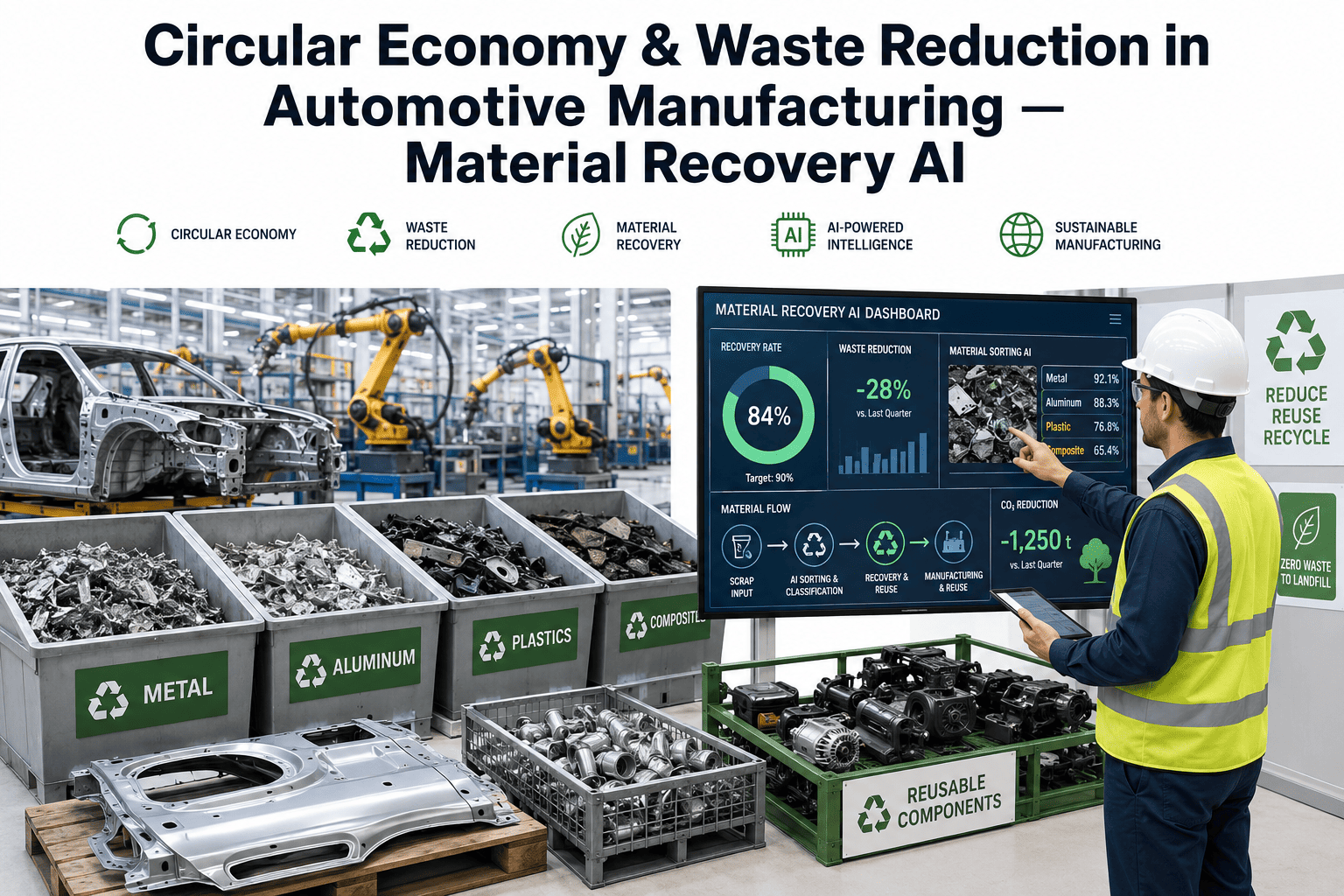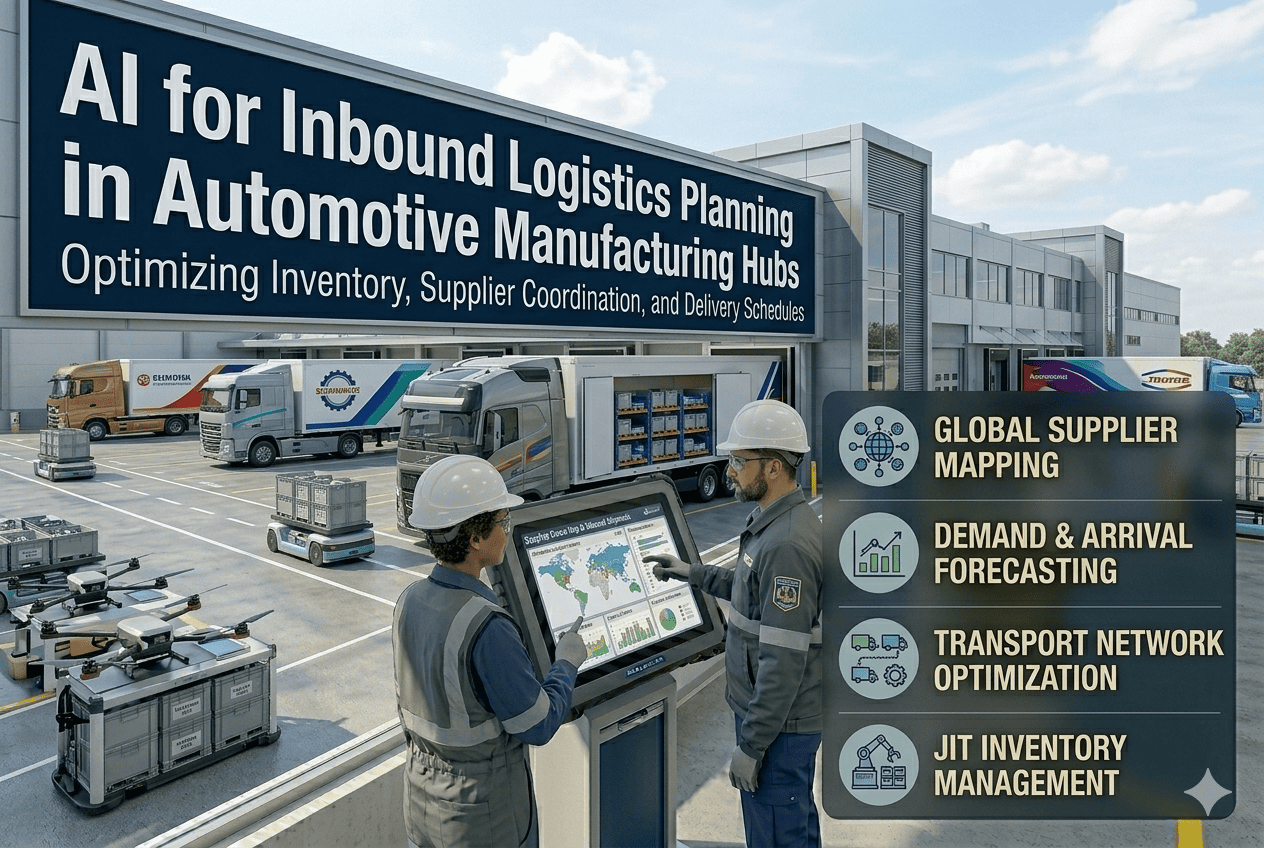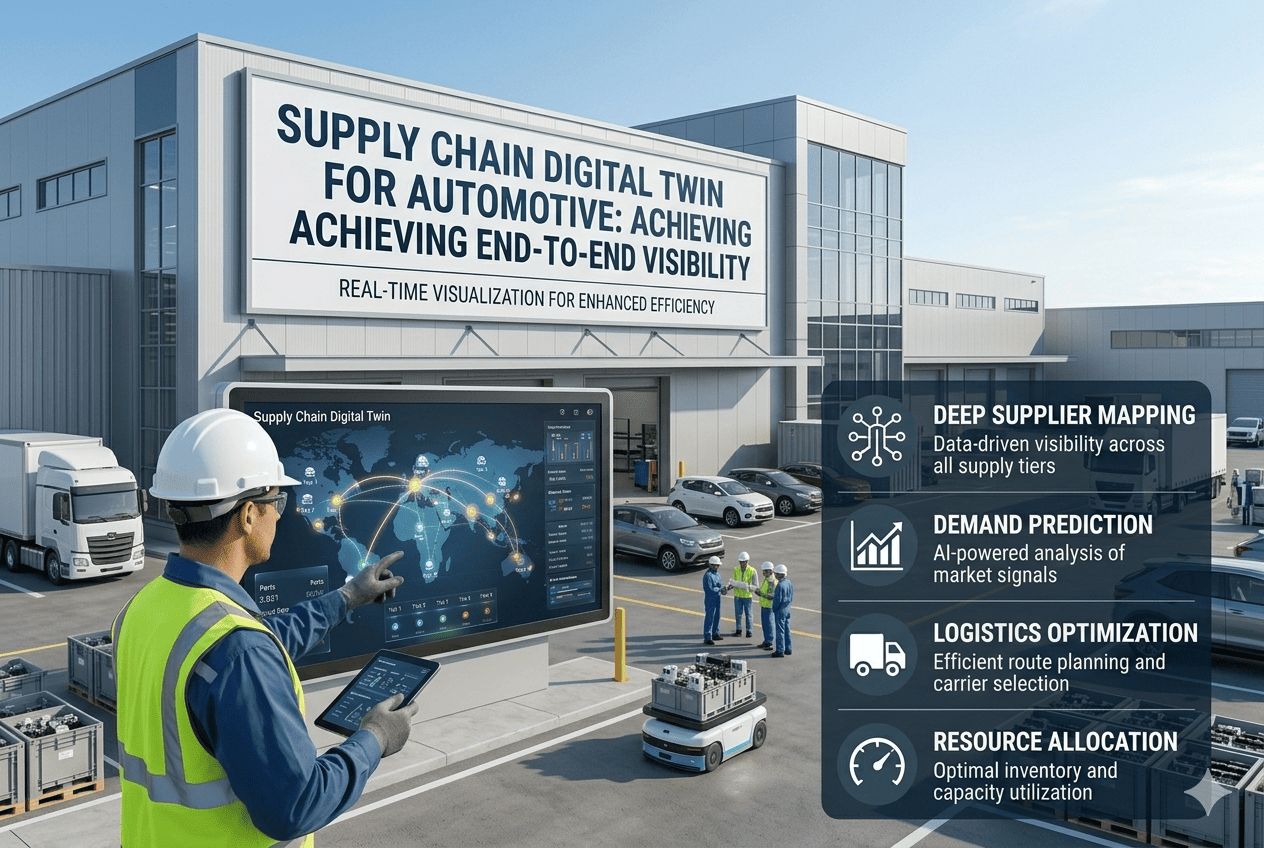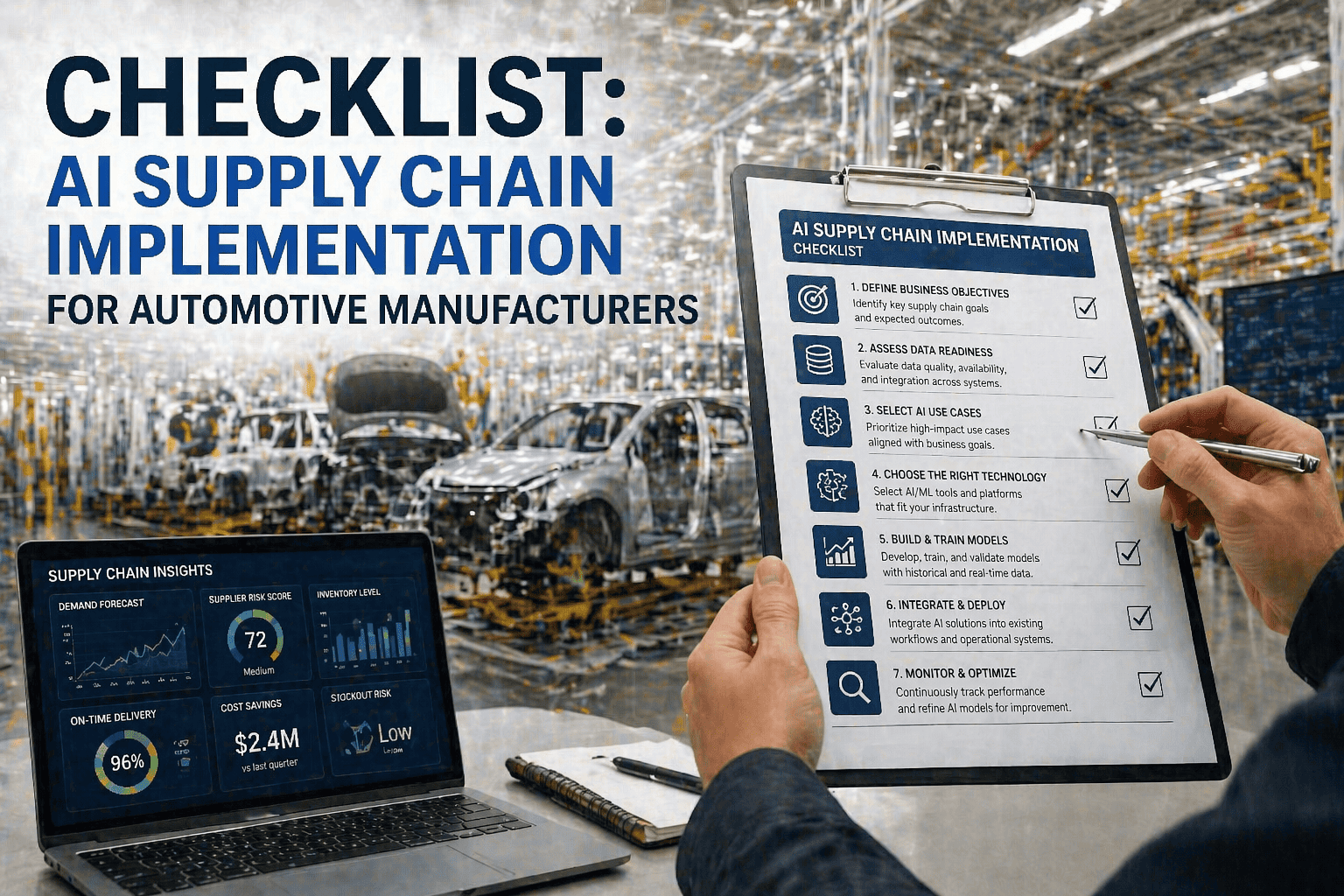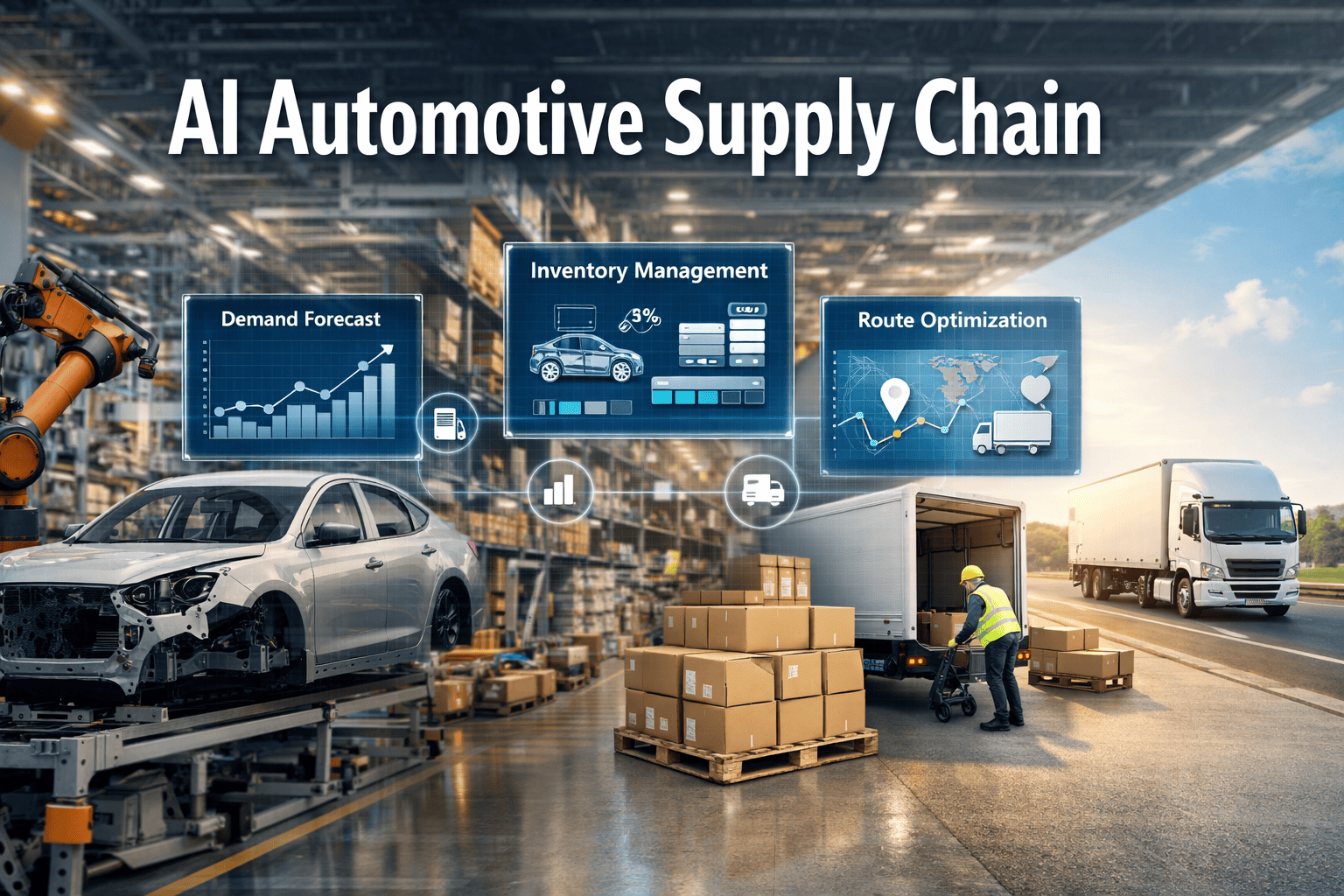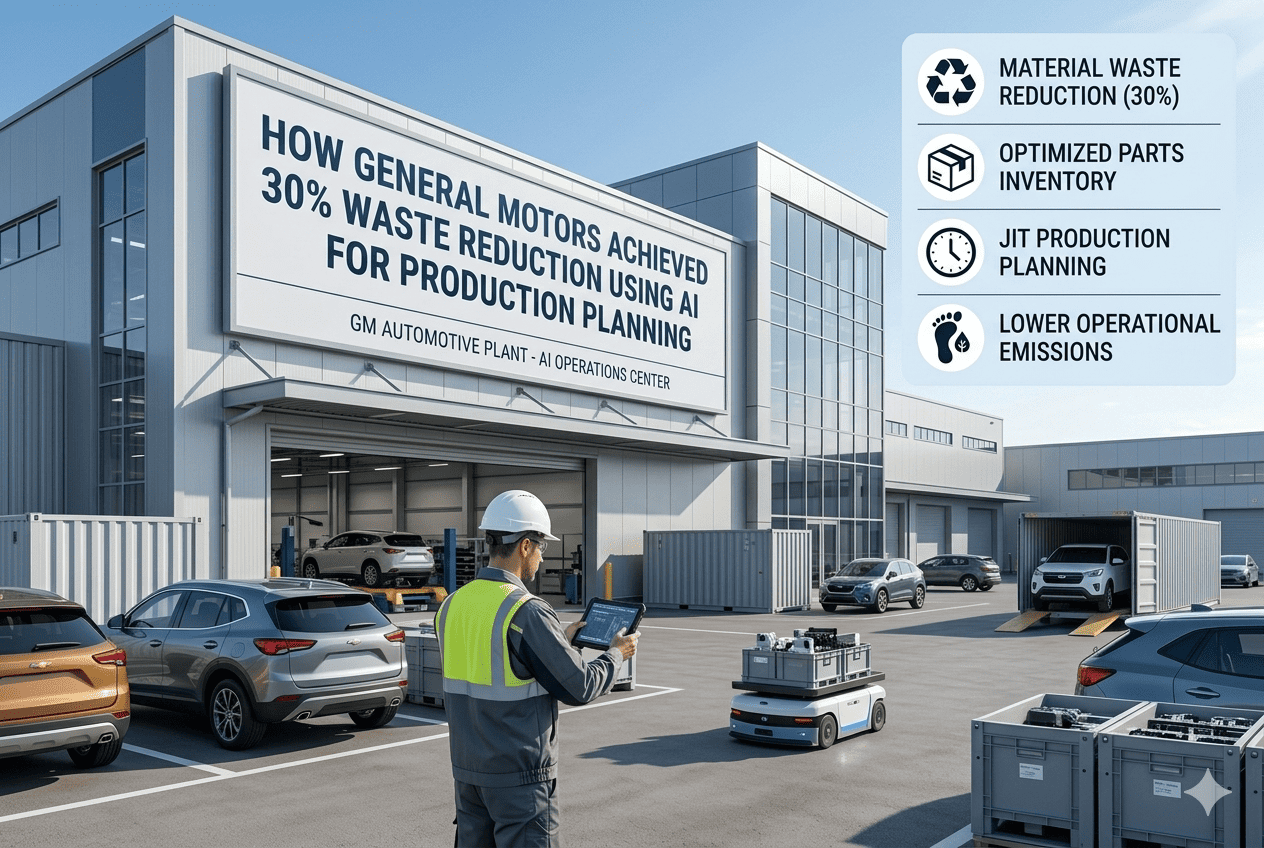
General Motors operates 31 manufacturing plants across North America producing 9+ million vehicles annually with complex supply chains spanning 8,000+ Tier 1 and Tier 2 suppliers. Production planning inefficiency cost GM $2.8 billion annually through excess inventory, expedited logistics, line stoppages, and material waste. Demand forecast errors of 22-28% forced safety stock buffers consuming working capital while frequent line changeovers for low-demand SKUs created scheduling chaos. iFactory AI Production Planning platform eliminated these constraints through machine learning demand forecasting predicting 12-18 weeks forward with 94% accuracy, real-time line scheduling optimizing for inventory reduction and throughput, and supplier integration connecting 3,000+ critical suppliers with synchronized demand signals. Within 8 weeks, GM reduced waste by 30%, improved on-time delivery from 84% to 96%, decreased inventory carrying costs by $480 million annually, and freed $1.8 billion in working capital. Book a demo to see how iFactory delivers production planning AI tailored to your plant complexity.
General Motors Production Planning Challenge
General Motors operates 31 assembly plants producing 1,400+ vehicle SKUs with 22-48 hour lead times from supplier networks. Demand planning relied on rolling 12-week forecasts updated monthly based on sales projections and dealer orders, missing actual market signals by 22-28%. Line scheduling optimized for machine utilization and labor efficiency, not inventory minimization, forcing changeovers every 4-8 hours between low-volume SKUs. This created cascade effects: forecasting errors forced 35-48 days of safety stock consuming $3-5 billion working capital. Frequent line stoppages for unplanned maintenance (averaging 18-22 hours monthly per plant) cascaded through supply chain causing supplier scrambles and expedited freight. Material waste from incorrect batch sequencing and over-production averaged 4-6% of direct material costs across plants. The compounded effect: $2.8 billion annual waste from inventory carrying, expedite logistics, line downtime, and material waste.
iFactory AI analyzes 24 months of GM production history, 8,000+ supplier data points, and real-time sales signals to predict demand 12-18 weeks forward with 94% accuracy, optimize line sequencing for minimum inventory and maximum throughput, and coordinate supplier delivery timing reducing safety stock and expedite costs.
How iFactory AI Solved GM's Production Planning
AI Demand Forecasting (94% Accuracy)
iFactory analyzes 24 months of GM production data by SKU, plant, and region. Machine learning models incorporate sales trends, promotional calendars, economic indicators, and supply constraints to predict demand 12-18 weeks forward. Demand accuracy improves from 72% (22% error) to 94% (6% error), enabling confident production planning and supplier ordering without safety stock inflation.
Real-Time Line Scheduling Optimization
iFactory AI schedules 31 plants' assembly lines optimizing for inventory turnover, supplier delivery timing, and throughput. Algorithms account for changeover costs, setup times, supplier lead times, and inventory targets. Production sequence changed from demand-driven chaos to synchronized pull planning reducing line stoppages from 18-22 hours monthly to 4-6 hours, and material waste from 4-6% to 1-2%.
Supplier Synchronization and Inventory Optimization
iFactory connects 8,000+ suppliers with synchronized demand signals and recommended delivery schedules. Safety stock calculated by AI accounting for demand variability and supplier reliability reduced from 35-48 days to 8-15 days, freeing $1.8 billion working capital. JIT delivery coordination with Tier 1 suppliers prevented bullwhip effect and eliminated emergency expedites.
Predictive Maintenance Integration
iFactory predicts equipment failures 7-21 days in advance using sensor data and historical maintenance patterns. Maintenance scheduling coordinated with production planning prevents unplanned stoppages disrupting line flow. Planned downtime averaged 4-6 hours monthly per plant vs. 18-22 hours unplanned, improving OEE from 72% to 88%.
Why iFactory AI Outperforms Traditional ERP Production Planning
GM evaluated SAP Integrated Planning, Oracle Advanced Planning and Scheduling, and JDA before selecting iFactory AI. Traditional ERP planning modules rely on statistical forecasting (moving averages, exponential smoothing) achieving 65-75% accuracy and require 12-18 month implementations costing $2-4 million. iFactory AI deployed in 8 weeks with $240K investment, uses machine learning capturing demand patterns SAP/Oracle miss (promotional lift, competitive effects, supply constraints), and integrates with existing ERP systems (SAP, Oracle, IFS) via REST APIs without replacing them. GM achieved production planning ROI in 6 weeks vs. 15-24 months for traditional platforms.
| Capability | iFactory AI | SAP EAM | Oracle APS | JDA |
|---|---|---|---|---|
| Demand Forecast Accuracy | 94% (12-18 weeks) | 70-75% | 72-78% | 68-75% |
| Inventory Optimization | Native AI, 25-35% reduction | Limited, add-on module | Rule-based, 8-12% reduction | Constrained optimization, 10-15% reduction |
| Deployment Time | 8 weeks | 12-18 months | 9-15 months | 12-20 months |
| Implementation Cost | $240K-360K year 1 | $2M-4M+ | $1.5M-3M+ | $2M-3.5M+ |
| Predictive Maintenance | Native, 7-21 day advance warning | Limited module, 3-7 day warning | Rule-based alerts only | No predictive capability |
General Motors Implementation: 8-Week Transformation
iFactory AI deployed across GM's 31 North American assembly plants through structured 8-week implementation. Week 1-2: Assessment of current production planning process, demand forecast accuracy, inventory levels, and supplier integration. Week 2-3: Data integration from SAP ERP, 24 months production history, real-time sales systems, and supplier data. Week 3-4: AI model development and training on GM's 1,400+ SKU complexity. Week 4-5: Dashboard configuration for plant schedulers, supply chain planners, and supplier portal access. Week 5-6: Pilot validation at 3 plants comparing AI scheduling recommendations to actual results. Week 6-8: Live rollout across 28 remaining plants with change management and continuous improvement. Results visible in week 6: inventory reduction visible, supplier coordination improved, waste metrics trending down.
Quantified Results: General Motors Waste Reduction and Financial Impact
Financial Impact Breakdown
Inventory carrying cost savings: $480M annually from 25-35% reduction in safety stock across 31 plants. Expedited freight elimination: $220M annually from better demand forecasting reducing emergency air shipments by 40-60%. Material waste reduction: $180M annually from improved line sequencing reducing scrap and rework. Unplanned downtime prevention: $150M annually from predictive maintenance reducing emergency stoppages. Total first-year value: $1.03 billion against $240K implementation investment, delivering 429x ROI.
"We had sophisticated ERP systems for years but they couldn't predict demand patterns or optimize our production sequence for inventory. iFactory's AI saw patterns we couldn't see manually: how promotional lift in one region cascaded across our supplier network, how supplier variability affected safety stock requirements, how equipment maintenance windows should coordinate with production plans. Within 6 weeks we saw inventory dropping, waste metrics improving, and our suppliers reporting better predictability. The ROI made sense immediately."
Regional Automotive Manufacturing Challenges and iFactory Solutions
General Motors operates across North America (US, Canada, Mexico) and globally, facing region-specific production planning challenges. North American plants emphasize IATF 16949 compliance on production documentation and supply chain transparency. Mexican plants balance supply chain with tariff and USMCA compliance. iFactory AI addresses these through role-based access control (production planners see full optimization, finance sees only cost metrics), automated audit trails for compliance reporting, and region-specific algorithms accounting for tariff costs and lead time variations.
| Region | Production Planning Challenges | Compliance Requirements | iFactory AI Solution |
|---|---|---|---|
| US Manufacturing | Complex supplier networks, 22% forecast error, line flexibility requirements | IATF 16949, production documentation, audit trails | 94% demand accuracy, line scheduling optimization, audit-ready documentation |
| Canada Manufacturing | Seasonal demand swings, smaller supplier base, USMCA sourcing | IATF 16949, USMCA supply chain transparency | Seasonal pattern recognition, USMCA compliance dashboard, supplier tracking |
| Mexico Manufacturing | Tariff complexity, supply disruption risk, cross-border lead times | IATF 16949, USMCA local content, tariff documentation | Tariff-cost optimization, cross-border lead time modeling, local supplier coordination |
Frequently Asked Questions
General Motors achieved 30% waste reduction, $480M inventory savings, and 429x ROI within 8 weeks using iFactory AI Production Planning. See how your plant can achieve similar results through demand forecasting AI, production scheduling optimization, and supplier synchronization. Download the complete case study or schedule your free assessment.