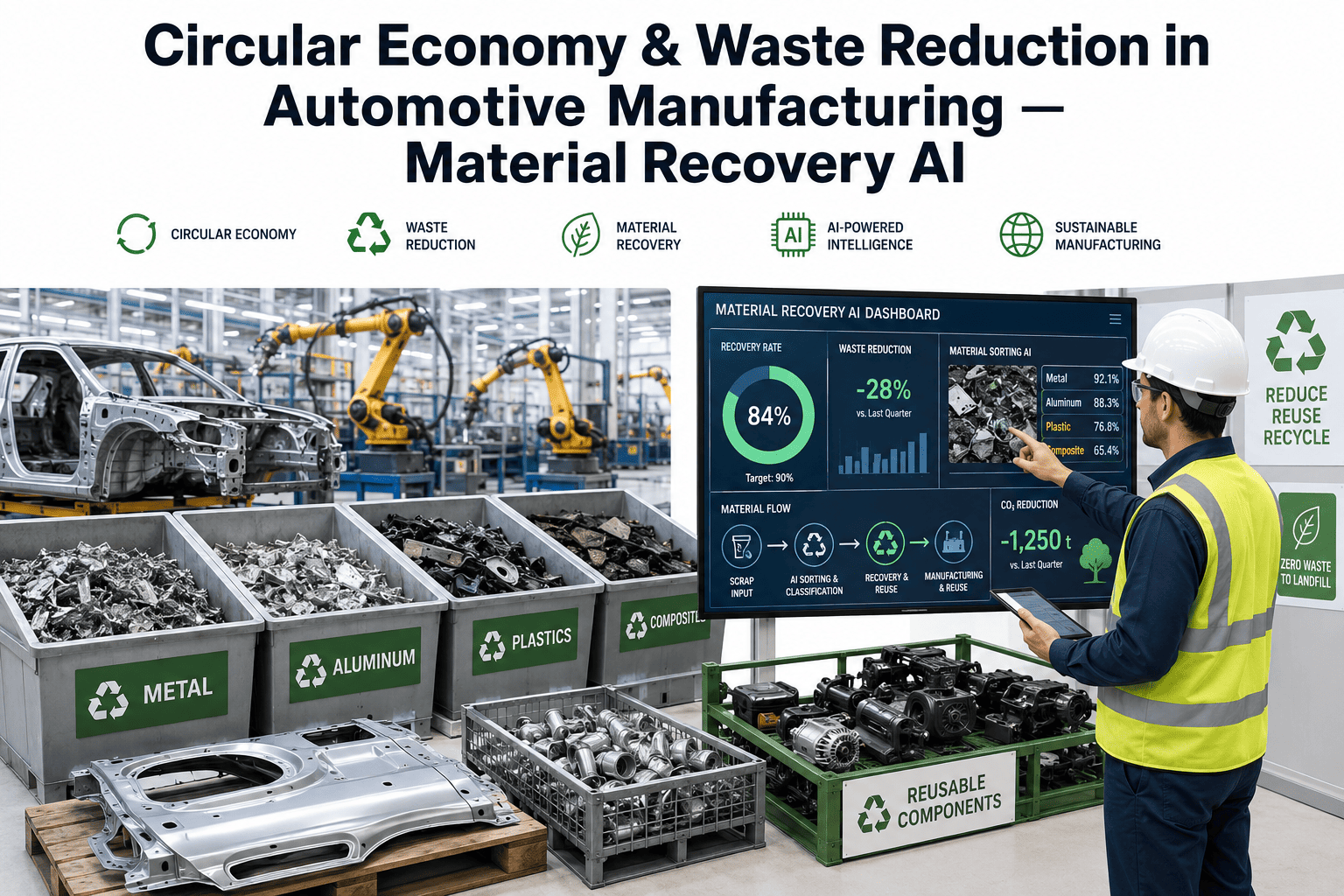
The automotive industry is undergoing a profound transformation, driven by the urgent need to decouple economic growth from resource consumption. Traditional linear manufacturing models, which follow a take-make-dispose pattern, are no longer viable in an era of volatile raw material prices, tightening environmental regulations, and growing consumer demand for sustainable products. For Operations Directors, the challenge is not merely to reduce waste but to fundamentally redesign material flows to create a closed-loop system. This shift toward a circular economy in automotive manufacturing requires a sophisticated understanding of material streams, from high-value scrap metals and alloys to complex composite waste and hazardous byproducts like paint overspray and coolant. AI-driven material recovery optimization offers a powerful solution, enabling real-time tracking, predictive analytics, and automated decision-making to maximize resource efficiency. By leveraging advanced sensors, machine learning algorithms, and digital twin technology, manufacturers can identify waste reduction opportunities that were previously invisible, turning what was once considered trash into valuable secondary raw materials. This article explores the key strategies, technologies, and business cases for implementing a circular economy framework in automotive production, focusing on practical steps that deliver immediate cost savings and long-term sustainability gains. Book a Demo to see how AI can transform your waste management operations.
Zero Waste Manufacturing Starts Here
Achieve your circular economy targets with AI-powered material recovery. Reduce scrap, recycle more, and lower costs.
Scrap Metal Recovery
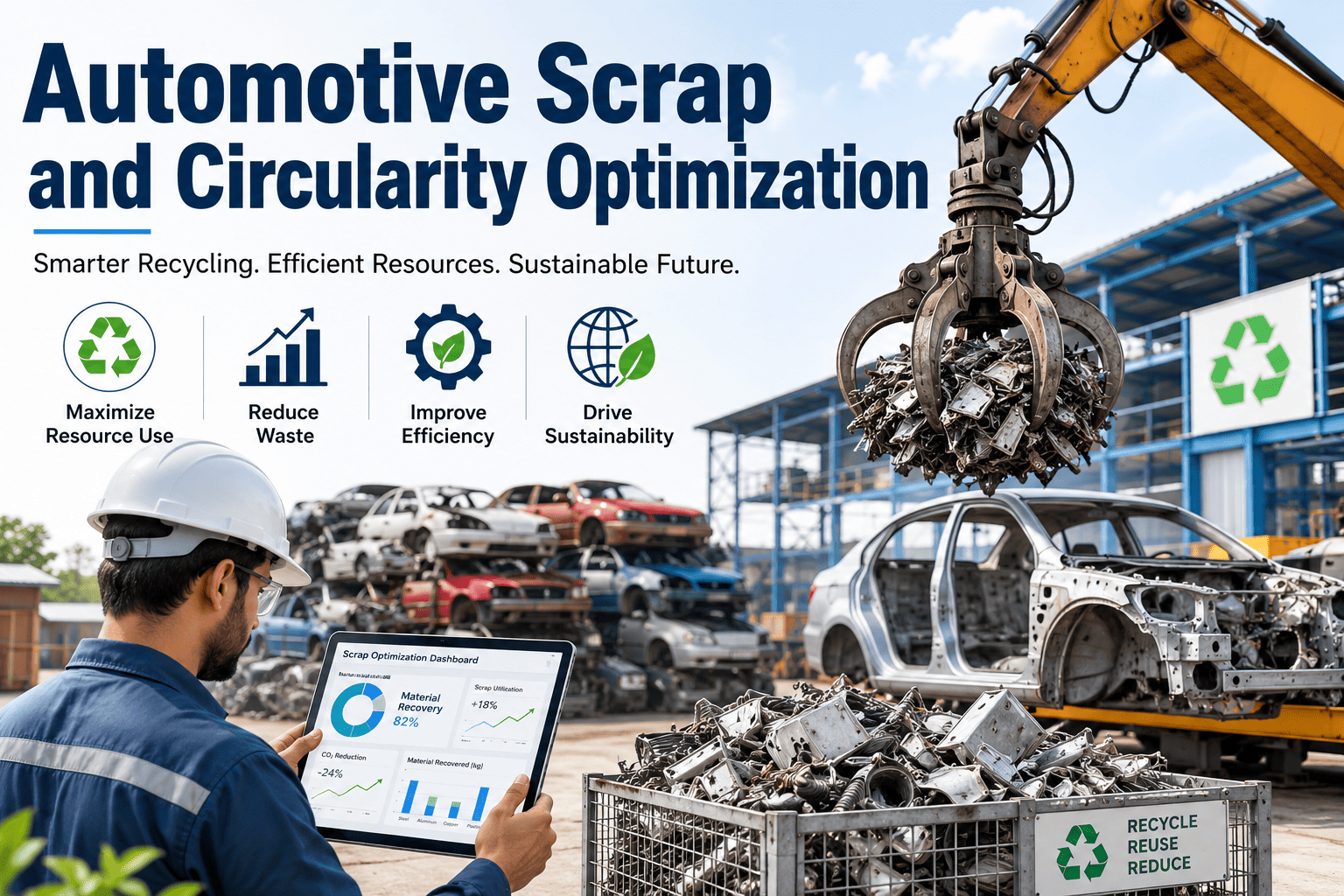
Automotive manufacturing generates significant scrap metal from stamping, machining, and assembly operations. AI-driven sorting systems using hyperspectral imaging and eddy current sensors can identify and separate different alloys with over 99% purity. This enables direct reuse in new parts, reducing the need for virgin material extraction. Real-time tracking of scrap bins and predictive collection schedules minimize contamination and maximize recovery value. Operations Directors can see a 15-20% reduction in raw material procurement costs within the first year of implementation.
Paint Overspray Recycling
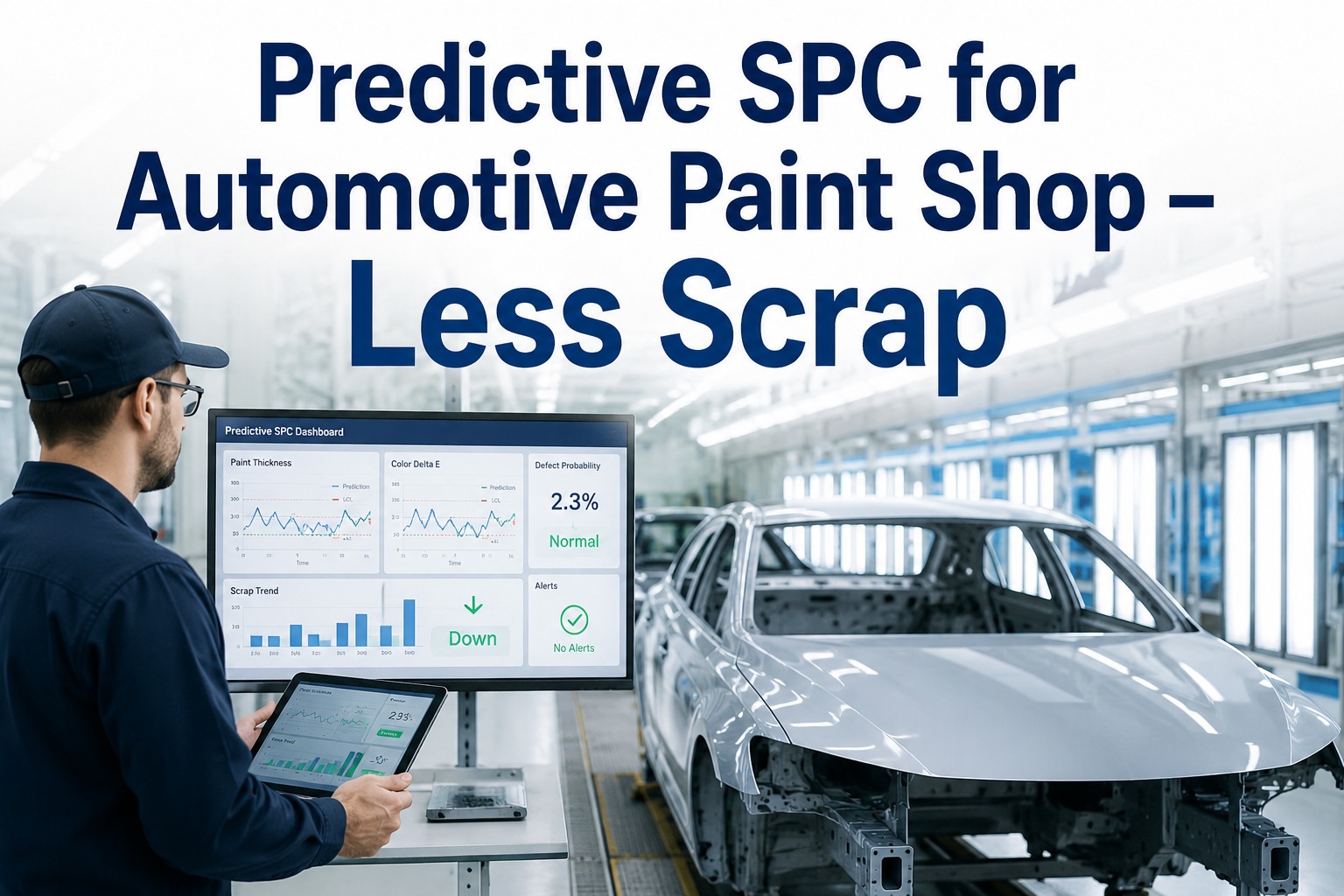
Paint overspray accounts for up to 40% of total paint used in automotive plants, creating hazardous waste that is costly to dispose. Advanced filtration and solvent recovery systems, guided by AI process optimization, can reclaim up to 85% of overspray for reuse. Sensors monitor booth conditions in real time, adjusting airflow and atomization parameters to minimize waste generation. The recovered paint can be reformulated into primer or undercoat, significantly lowering volatile organic compound (VOC) emissions and disposal costs.
Packaging Waste Optimization
Automotive supply chains generate massive amounts of packaging waste from inbound parts, subassemblies, and finished goods. AI-powered reverse logistics platforms analyze packaging types, volumes, and return cycles to design reusable container systems. Smart bins with IoT sensors track fill levels and location, enabling just-in-time collection and redistribution. This reduces single-use packaging by 60% and cuts logistics costs by 12%. The system integrates with supplier portals to enforce packaging standards and track compliance.
Coolant Recycling Systems
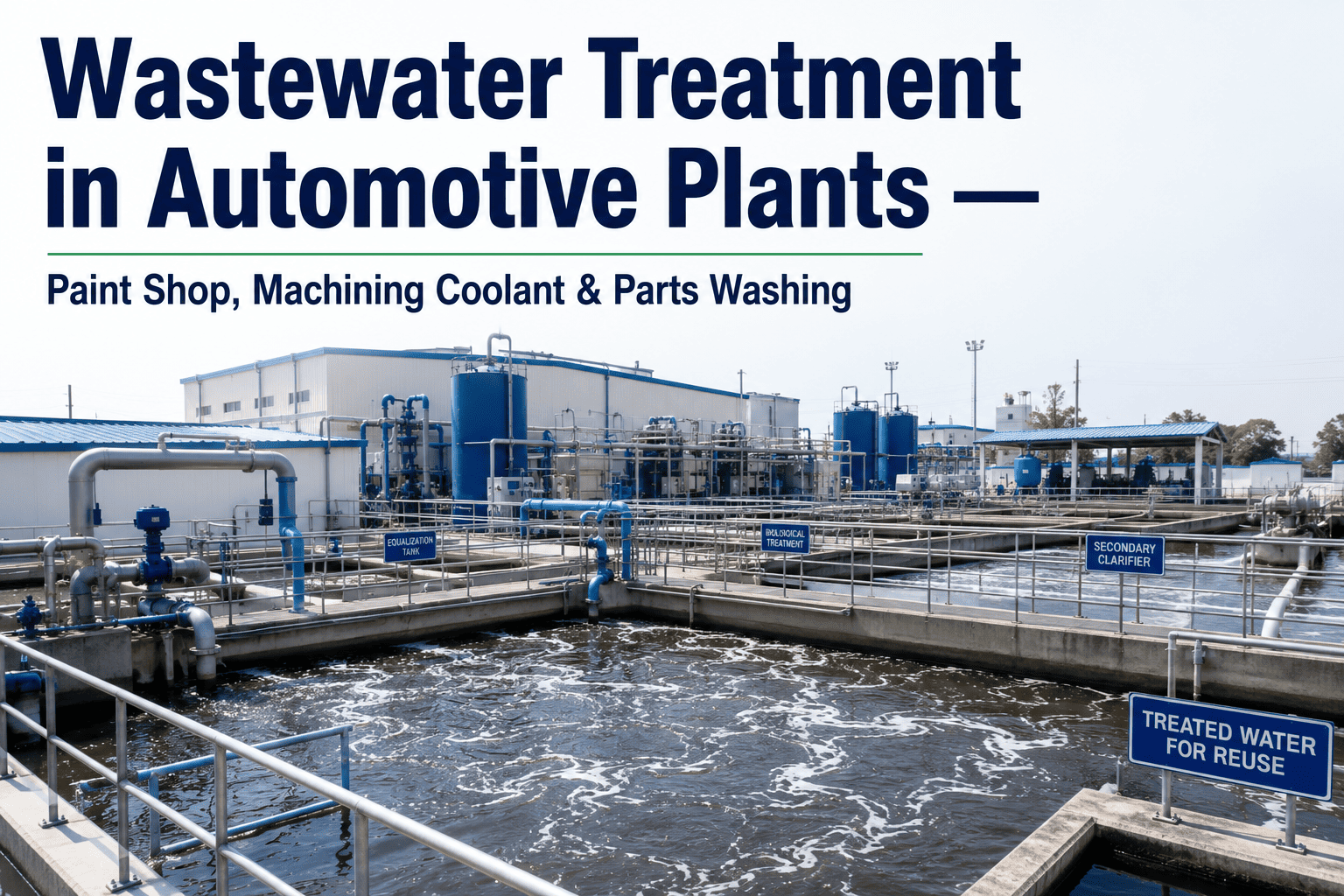
Metalworking fluids (coolants) are essential for machining operations but pose environmental and health risks if not managed properly. AI-based coolant management systems monitor pH, concentration, and bacterial growth in real time, triggering automated filtration and replenishment cycles. This extends coolant life by 300% and reduces hazardous waste volume by 70%. The system also predicts when coolant must be fully replaced, optimizing disposal schedules and minimizing production downtime.
Ready to Close the Loop?
Our AI platform helps you track, recover, and monetize every material stream. Start your zero-waste journey today.
Roadmap to Circularity
Audit Material Flows
Conduct a comprehensive audit of all waste streams using IoT sensors and manual sampling. Identify high-volume, high-value materials for immediate recovery.
Implement AI Sorting
Deploy AI-powered sorting and separation technologies for scrap metal, plastics, and composites. Train models on your specific material signatures.
Optimize Reverse Logistics
Design a closed-loop logistics network for packaging, coolants, and process chemicals. Use predictive analytics to schedule collections and minimize inventory.
Monitor & Report
Integrate real-time dashboards with ERP systems to track circularity KPIs. Automate compliance reporting for ESG frameworks and regulatory bodies.
Key Material Streams & Recovery Potential
Steel & Iron
Recovery rate: 95%
Direct reuse in new body panels and structural components.
Aluminum
Recovery rate: 90%
Recycled into engine blocks, wheels, and suspension parts.
Copper
Recovery rate: 85%
Reclaimed for wiring harnesses and electric motors.
Plastics
Recovery rate: 70%
Regrinded for interior trim and underhood components.
Rubber
Recovery rate: 60%
Devulcanized for seals, gaskets, and vibration dampeners.
Glass
Recovery rate: 80%
Crushed and remelted for new windshields and windows.
Waste Reduction Impact Comparison
| Material Stream | Baseline Waste (tons/yr) | After AI (tons/yr) | Reduction % | Cost Savings ($/yr) |
|---|---|---|---|---|
| Scrap Steel | 12,000 | 600 | 95% | $2.4M |
| Paint Overspray | 800 | 120 | 85% | $1.2M |
| Packaging Waste | 5,000 | 2,000 | 60% | $800K |
| Coolant | 1,500 | 450 | 70% | $600K |
| Aluminum | 3,000 | 300 | 90% | $1.8M |
Frequently Asked Questions
How does AI improve scrap metal recovery in automotive plants?
AI systems use hyperspectral cameras and electromagnetic sensors to identify metal alloys in real time as scrap moves along conveyor belts. Machine learning models classify materials with over 99% accuracy, enabling automated sorting into separate bins for steel, aluminum, copper, and stainless steel. This eliminates manual sorting errors and cross-contamination, which previously reduced the value of recycled scrap. The system also predicts optimal collection times based on production schedules, ensuring that bins are emptied before overflow causes mix-ups. Operations Directors can monitor recovery rates and purity levels on a live dashboard, with alerts when deviations occur. Book a Demo to see how our AI sorting module can be integrated into your existing material handling infrastructure.
What are the main challenges in implementing a circular economy for automotive manufacturing?
The primary challenges include high initial capital investment for advanced sorting and recycling equipment, the need for cross-functional collaboration between procurement, production, and waste management teams, and the complexity of tracking materials across multiple tiers of the supply chain. Regulatory compliance with varying international standards for waste classification and recycling also adds overhead. However, AI-driven analytics can mitigate these challenges by providing a clear ROI projection, automating compliance reporting, and offering a centralized platform for material tracking. Many manufacturers recoup their investment within 18-24 months through reduced raw material costs and lower waste disposal fees. Support from our team can help you navigate the implementation process.
Can AI help reduce hazardous waste like paint overspray and coolant?
Yes, AI is particularly effective for managing hazardous waste streams. For paint overspray, AI algorithms analyze booth conditions, including temperature, humidity, and airflow, to optimize spray parameters and minimize overspray generation. The system also controls filtration and solvent recovery units, reclaiming paint for reuse. For coolants, AI monitors chemical composition and microbial contamination, triggering automated filtration and biocide dosing to extend fluid life. Predictive maintenance models forecast when equipment needs servicing to prevent leaks and spills. These interventions reduce hazardous waste volumes by 70-85%, lowering disposal costs and environmental liability. Book a Demo to learn more about our hazardous waste optimization module.
What KPIs should Operations Directors track for circular economy initiatives?
Key performance indicators include material circularity index (ratio of recycled to virgin material used), waste diversion rate (percentage of waste diverted from landfill), recovery yield per material stream, cost savings from reduced raw material procurement, and reduction in hazardous waste generation. Additionally, tracking energy consumption and carbon emissions associated with recycling processes provides a complete sustainability picture. AI dashboards can aggregate these KPIs in real time, benchmarking performance against industry standards and regulatory targets. Automated reporting generates audit-ready documentation for ESG disclosures and certifications like ISO 14001. Support is available to help you set up custom KPI tracking aligned with your corporate goals.
How does circular economy adoption impact the bottom line for automotive manufacturers?
Circular economy practices directly improve profitability by reducing raw material costs, lowering waste disposal fees, and creating new revenue streams from selling recovered materials. For example, a typical automotive plant processing 50,000 vehicles per year can save $3-5 million annually through optimized scrap metal recovery alone. Additionally, regulatory compliance costs decrease as waste volumes shrink, and brand reputation improves, potentially commanding premium pricing for sustainably produced vehicles. The initial investment in AI infrastructure and sorting equipment is typically recovered within two years, with ongoing savings thereafter. Book a Demo to calculate the potential ROI for your specific plant configuration.
Transform Your Waste into Value
Take the first step toward a circular manufacturing model. Our experts will guide you through assessment, implementation, and optimization.