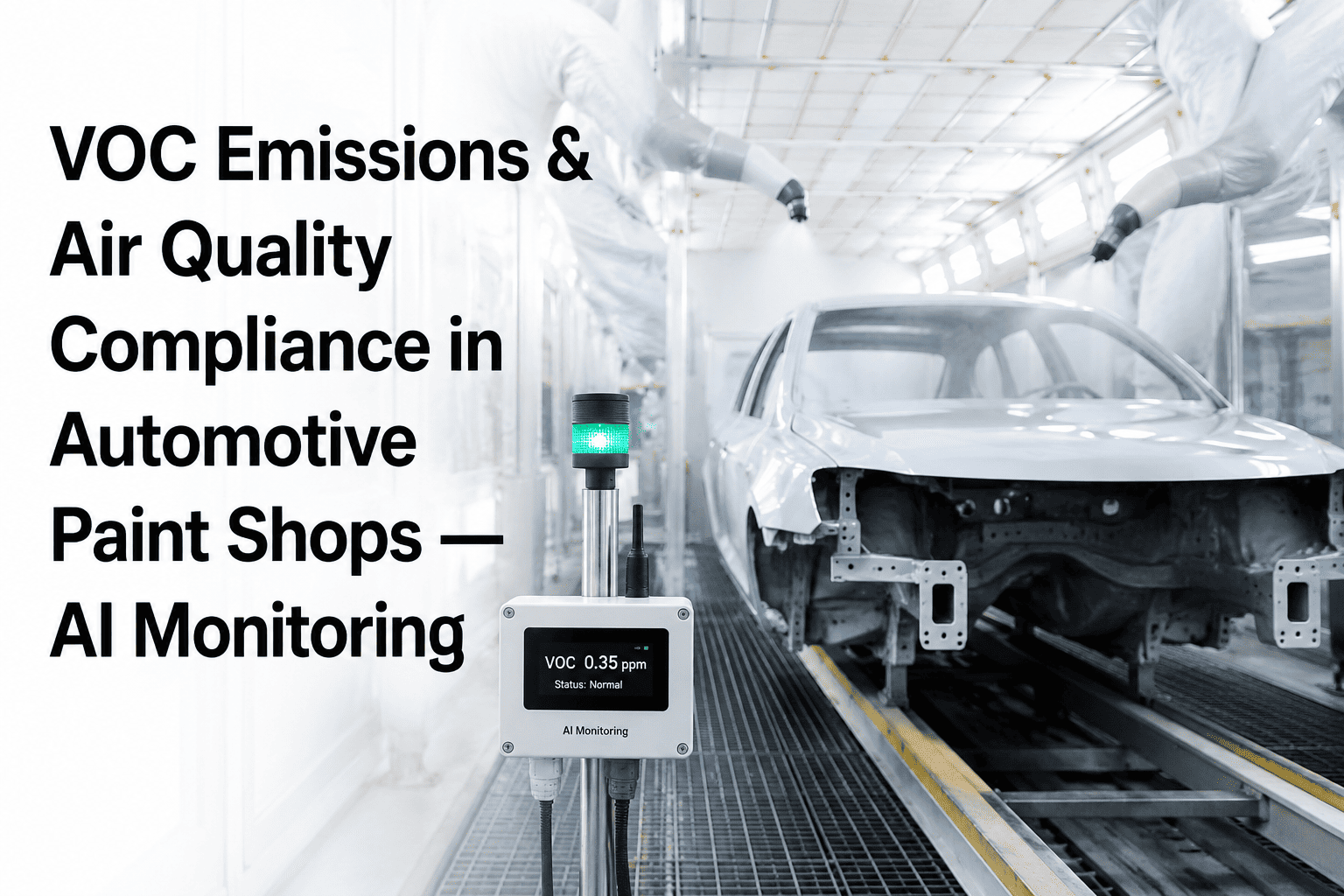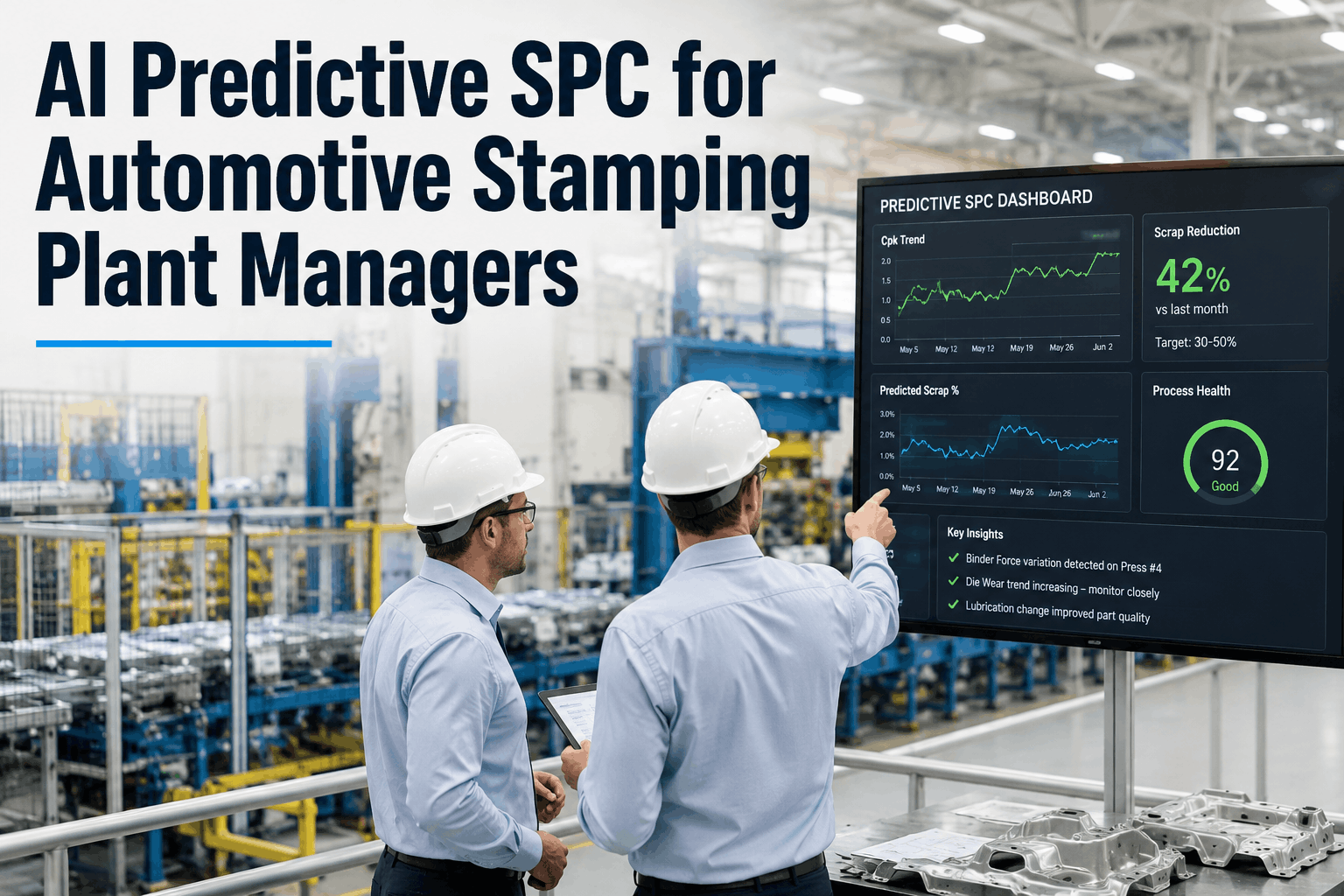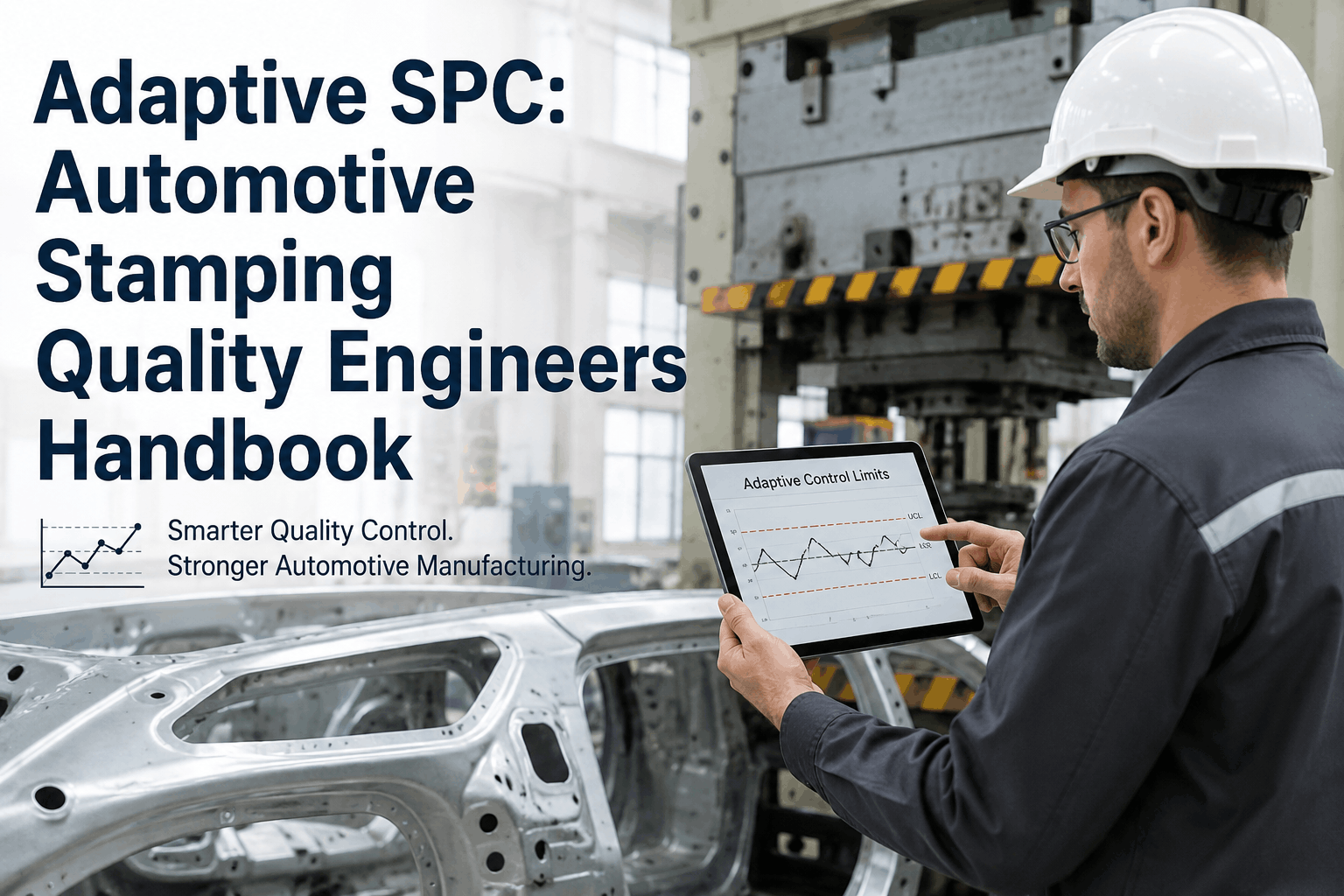
Automotive paint shops carry one of the most expensive quality envelopes in the entire vehicle manufacturing chain — a single rework cycle on a body can consume hours of labor, an oven slot, and material cost that runs into hundreds of dollars per unit, while severe defect bodies that escape repair head to scrap at full body cost. Shift supervisors running the paint shop know the pattern intimately — dirt particles, sags, runs, orange peel, popping, fisheyes, color match issues, film thickness variance, and edge defects appear in clusters that traditional reactive SPC catches after the body has already passed through the booth. Reactive SPC tells the team what just went wrong; predictive SPC tells them what is about to go wrong, with enough lead time to adjust booth temperature, humidity, atomizer settings, paint flow, robot trajectory, or operator handoff to prevent the defect from forming in the first place. The math is decisive — predictive SPC built on multivariate machine learning and adaptive control limits delivers scrap reduction of 30–50% across major paint shop operations within the first twelve months of deployment, plus rework cycle reduction, color match improvement, and IATF 16949 SPC evidence strengthened continuously rather than reactively assembled. This page is the automotive paint shop shift supervisor's guide to predictive SPC — what it actually does at each station in the paint shop, how it differs from reactive SPC, the paint defect taxonomy it covers, and how the shift supervisor workflow changes once predictive SPC is live.
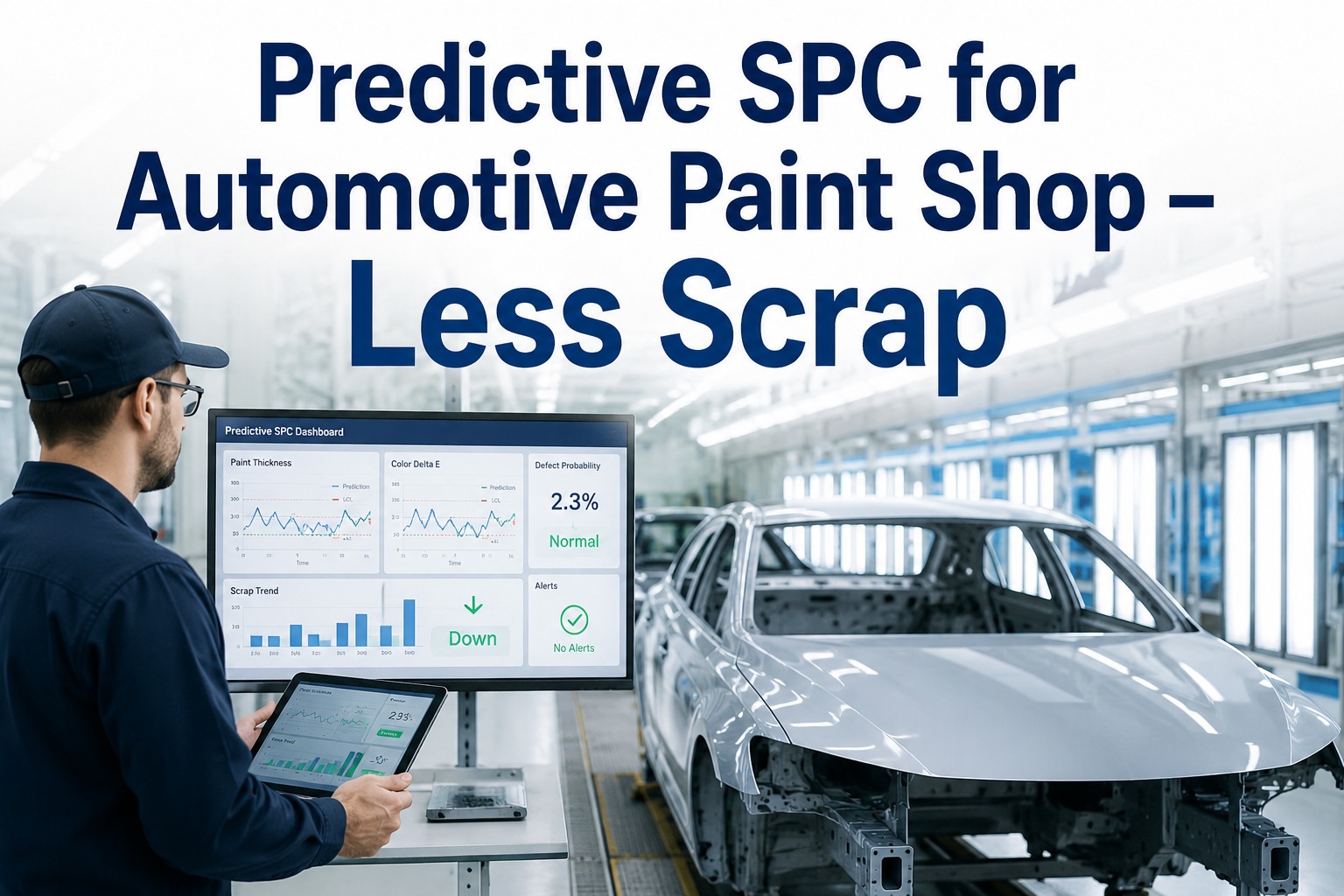
Predictive SPC for Automotive Paint Shop – Less Scrap
The automotive paint shop shift supervisor's guide to predictive SPC — AI-native SPC with multivariate ML and adaptive limits that cuts scrap 30–50% across pre-treatment, primer, basecoat, clearcoat, oven, and inspection stations. Predictive quality analytics, paint defect detection, and IATF 16949 SPC evidence on one platform.
Predictive SPC Across the Automotive Paint Shop — Station by Station
Paint shop SPC has to cover every station from pre-treatment through final inspection because defect causes cluster around different station types. Predictive SPC works at every stage — adapting limits to the specific physics of each station and connecting upstream causes to downstream defects. The coverage map below shows what predictive SPC actually monitors in a typical automotive paint shop and the AI-native capability that runs at each station.
The structural advantage of predictive SPC for paint shop is the cross-station correlation. A pre-treatment film weight drift today produces a basecoat adhesion problem on tomorrow's bodies; a humidity excursion in the primer booth at 9 AM correlates with a clearcoat orange peel signature at 11 AM. Traditional reactive SPC catches both as independent events long after the fact. Predictive SPC connects them automatically and surfaces the upstream cause within minutes of the precursor signature appearing.
Want predictive SPC mapped to your specific paint shop layout? Schedule the AI Manufacturing Transformation Workshop — iFactory's automotive team will diagram your current paint shop and demonstrate predictive SPC on representative data. Sessions available this week.
Predictive SPC vs Reactive SPC — What Changes for the Paint Shop
Reactive SPC is what most automotive paint shops run today — Shewhart charts on individual variables, control limits set statically, and out-of-control alerts firing after the body has already left the station. Predictive SPC is structurally different. The comparison below shows what shift supervisors actually experience as the platform shifts from reactive to predictive.
Every row of the comparison represents a structural improvement for the shift supervisor. Method moves from univariate to multivariate. Control limits move from static to adaptive. Detection timing moves from after-the-fact to hours-ahead. Supervisor action moves from reactive damage control to predictive intervention. None of these require new instrumentation — they all come from the AI-native layer added above the existing paint shop data sources.
Paint Shop Defect Taxonomy & AI Capability Mapping
Common automotive paint shop defects and the AI capability that catches each
Automotive paint shop defects fall into recognizable categories — each with its own physics, root cause clusters, and the predictive signature that announces it. The taxonomy below maps the common paint defect categories to the AI capability that catches each, with the upstream variables that drive the prediction.
The taxonomy is what makes predictive SPC tangible for the paint shop team. Every defect category has an identifiable upstream cause set, and every cause set has a corresponding AI capability that catches the precursor signature before the defect forms. The shift supervisor's workflow shifts from chasing defect categories after the fact to managing the prevention queue surfaced by the platform.
Want defect-specific prediction demonstrated against your historical paint shop data? Send your paint shop defect categories and current SPC configuration to iFactory support and the automotive team will return a customised prediction model assessment — typically within 3 business days, no obligation.
Five AI-Native Capabilities for Automotive Paint Shop SPC
Multivariate ML
Predictive SPC across the full paint shop variable set
Adaptive Limits
Per-color, per-shift, per-booth-state control limits
Hours-Ahead
Defect risk surfaced before the body enters the booth
AI Vision
Defect detection on body inspection with edge AI
IATF 16949
SPC evidence continuous and audit-ready
How the Shift Supervisor Workflow Changes with Predictive SPC
Six concrete workflow shifts the paint shop shift supervisor experiences
Shift handover
Before — sift through reports, ask outgoing supervisor. After — predictive SPC dashboard shows booth state, color campaign forecast, and ranked risks at handover.
Booth health check
Before — periodic manual sampling. After — continuous booth health score with predicted defect risk by station, refreshed every cycle.
Defect investigation
Before — pull data from multiple systems, manual correlation. After — autonomous RCA surfaces ranked causes with evidence within minutes.
Color campaign planning
Before — color schedule based on production targets. After — predictive analytics flags high-risk color sequences and recommends adjustments.
Operator coaching
Before — based on shift observations. After — operator AI assistant data shows specific stations where coaching delivers the highest scrap reduction.
IATF audit prep
Before — weeks of evidence assembly before audits. After — continuous IATF 16949 SPC evidence is always audit-ready, with Cpk continuous.
The cumulative effect on the shift supervisor role is significant — less time on reactive damage control, more time on prevention and improvement work. Supervisors who have run predictive SPC for six months typically describe the shift as moving from firefighter to coach.
Six Paint Shop Stations Where Predictive SPC Pays Back Fastest
Pre-Treatment & E-Coat
Bath chemistry MSPC catches phosphate weight drift and E-coat film weight issues before they propagate through the system.
Primer Booth
Predictive control on booth conditions, atomizer health, and primer film thickness. Adhesion defects prevented at root cause.
Basecoat Application
Highest-leverage paint shop application. Color match, film thickness, and atomizer drift predicted from booth state and material data.
Clearcoat & Gloss
Orange peel, runs, popping prevented through multivariate predictive ML. Distinctness of Image (DOI) continuously tracked.
Bake Oven Profile
Oven profile MSPC catches temperature distribution drift. Solvent popping and cure-related defects prevented through profile prediction.
Final Inspection
Edge AI vision delivers defect detection accuracy higher than rule-based legacy systems. Color compliance via spectroscopy.
Want station-specific projections for your paint shop? Send your paint shop layout, scrap rates by category, and current SPC setup to iFactory support and the automotive team will return a customised projection — typically within 3 business days, no obligation.
IATF 16949 SPC Evidence — Continuous, Audit-Ready
Pre-built workflows for IATF 16949 SPC evidence in automotive paint shops
- IATF 16949 — SPC evidence continuous, not reactive
- PPAP — continuous Cpk on paint shop CTQs
- APQP — paint shop process plan with predictive evidence
- MSA — Measurement Systems Analysis on inspection
- Process Capability (Cpk / Ppk) — auto-computed by feature
- Control Plans — live, updated by actual predictive behavior
- FMEA — defect modes mapped to predictive monitors
- OEM customer-specific paint requirements (CSRs)
The IATF 16949 SPC evidence becomes a byproduct of running predictive SPC continuously — not a separate workstream the team maintains. Cpk on critical paint features assembles automatically. Control plan execution evidence accumulates. Auditors typically respond favorably to the stronger evidence base produced by predictive SPC compared to retrospective xMII reports.
Two Real Automotive Paint Shop Predictive SPC Outcomes
OEM premium vehicle paint shop with high customer quality expectations
An OEM premium vehicle assembly plant operating a high-throughput paint shop served customer segments with extremely tight visual quality expectations — premium colors, DOI scoring against benchmark, near-zero tolerance for visible defects. Reactive SPC was catching defects after the body left the booth, leading to rework cycles, scrap on uncorrectable defects, and customer scorecard pressure. Scrap rate sat above industry benchmark and the shift supervisor team spent most of each shift on damage control rather than improvement.
Multi-platform paint shop running frequent color changeovers across vehicle programs
An automotive plant operating a multi-platform paint shop ran frequent color campaigns across multiple vehicle programs — premium and standard colors mixed throughout each shift. The high color-change frequency made static SPC limits effectively useless; every color campaign had different defect risk profiles, but the reactive SPC system applied the same limits across all of them. Defect rates spiked unpredictably during specific color campaigns and the shift supervisor team had no early warning before scrap occurred.
Neither scenario matches your operation? Send your paint shop configuration and current scrap rate data to iFactory support and the automotive team will return a customised analysis with 12-month roadmap — typically within 3 business days, no obligation.
Predictive SPC for automotive paint shop. Less scrap. Predictive intervention before the booth produces defects.
AI-native predictive SPC with multivariate ML and adaptive control limits — running on a pre-configured NVIDIA appliance, on-prem, sub-50ms inference. Cuts paint shop scrap 30–50% within 12 months. Strengthens IATF 16949 SPC evidence continuously. Shift supervisors move from firefighting to prevention. The AI Manufacturing Transformation Workshop sizes the deployment for your specific paint shop.
FAQ: Predictive SPC for Automotive Paint Shop
What makes predictive SPC actually predictive vs traditional reactive SPC?
The structural difference is what the platform infers from the data. Reactive SPC applies static univariate control limits to individual variables and flags out-of-control events after they occur. Predictive SPC uses multivariate machine learning on the full variable set to detect precursor patterns that announce defect formation hours ahead, with adaptive control limits that learn per-color, per-shift, and per-booth-state conditions. The shift supervisor sees ranked intervention candidates before the defective body even enters the booth. Book a demo to see predictive SPC on representative paint shop data.
How much scrap reduction can we actually expect?
Typical results across deployed automotive paint shops — 30–50% scrap reduction within the first 12 months of deployment. The variance reflects the starting point (paint shops with higher baseline scrap see larger relative improvements) and the specific defect mix (operations dominated by sags, runs, orange peel, and popping see the largest gains because these have the strongest predictive signatures). Customers typically see meaningful results within the first 6–8 weeks of going live as the ML models tune to plant-specific data.
How does predictive SPC handle frequent color changeovers?
Adaptive control limits are the answer. Traditional static SPC limits assume the process is the same regardless of color, which is structurally wrong — different colors have different defect risk profiles. iFactory's adaptive limits learn per-color, per-shift, and per-booth-state defect risk, so the predictive monitoring is tuned for each color campaign rather than applied uniformly. Operations with high color-change frequency typically see the largest relative improvement because static SPC was effectively useless for them.
What does the AI vision inspection capability cover?
The AI vision capability runs on edge AI inference (sub-50ms) at final inspection stations covering body surface inspection for the full automotive paint defect taxonomy — dirt, sags, runs, orange peel, popping, fisheyes, edge defects, and dimensional issues. Color compliance uses spectrophotometry integration. The AI vision results feed back into the predictive SPC layer so that defect detections improve the upstream prediction models continuously. Integration covers existing inspection camera infrastructure or new IP cameras deployed during the migration.
How does this change what the shift supervisor actually does day-to-day?
The shift supervisor workflow shifts from reactive damage control to predictive prevention. At shift handover, the predictive SPC dashboard shows current booth state, predicted defect risk by station, and ranked interventions. During the shift, the supervisor manages the prevention queue surfaced by the platform rather than chasing defects after the fact. Operator coaching becomes data-driven (stations where coaching delivers the highest scrap reduction are flagged). IATF audit prep becomes continuous rather than periodic. Supervisors typically describe the shift as moving from firefighter to coach.
Does iFactory's predictive SPC strengthen IATF 16949 audit posture?
Yes — and IATF auditors typically respond favorably to the continuous evidence base produced by predictive SPC compared to retrospective reports from SAP xMII or similar systems. Cpk on critical paint features assembles automatically, control plan execution becomes auditable continuously, and the predictive monitoring records provide stronger evidence of process control than periodic sampling delivered. PPAP packages benefit from continuous Cpk evidence on paint shop CTQs.
How does the platform integrate with our existing paint shop systems?
iFactory integrates with major DCS platforms, paint shop SCADA, ABB and Fanuc robot controllers, atomizer monitoring systems, oven controllers, and existing surface inspection cameras. The integration runs through iFactory's adapter layer for SAP MII / xMII / DMC if you have any of those in place. The plant-floor L1/L2 control architecture is not touched — robot programs, atomizer setpoints, and oven recipes remain in their existing systems. iFactory adds the predictive intelligence layer above the existing infrastructure.
Do we need to buy NVIDIA servers separately?
No. iFactory's on-premise appliance ships fully loaded — pre-configured NVIDIA AI server, automotive paint shop AI models pre-installed, network gear, cabling, edge devices for line-side inference, integration adapters for SAP and major plant systems. You provide rack space, line power, Ethernet, and integration points. The deployment team handles installation, validation, and configuration across the 6–12 week window.
Less scrap. Better DOI. Stronger IATF evidence. Predictive SPC for automotive paint shop.
AI-native predictive SPC with multivariate ML and adaptive control limits — for the automotive paint shop shift supervisor and operations team. Cuts scrap 30–50% across major paint shop operations within 12 months. AI vision manufacturing, autonomous quality control, continuous IATF 16949 SPC evidence. The Workshop is the fastest way to size the deployment — sessions available this week.