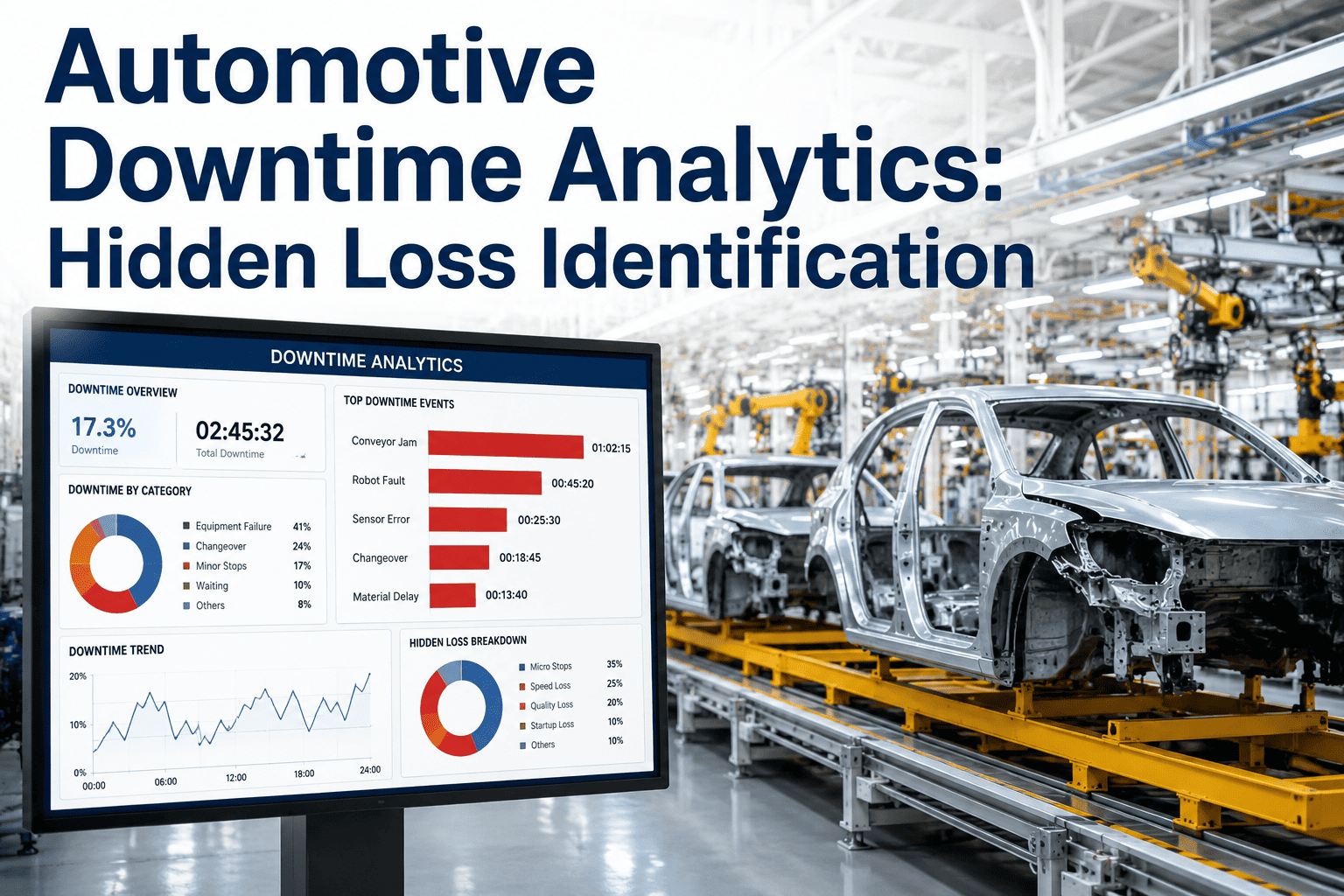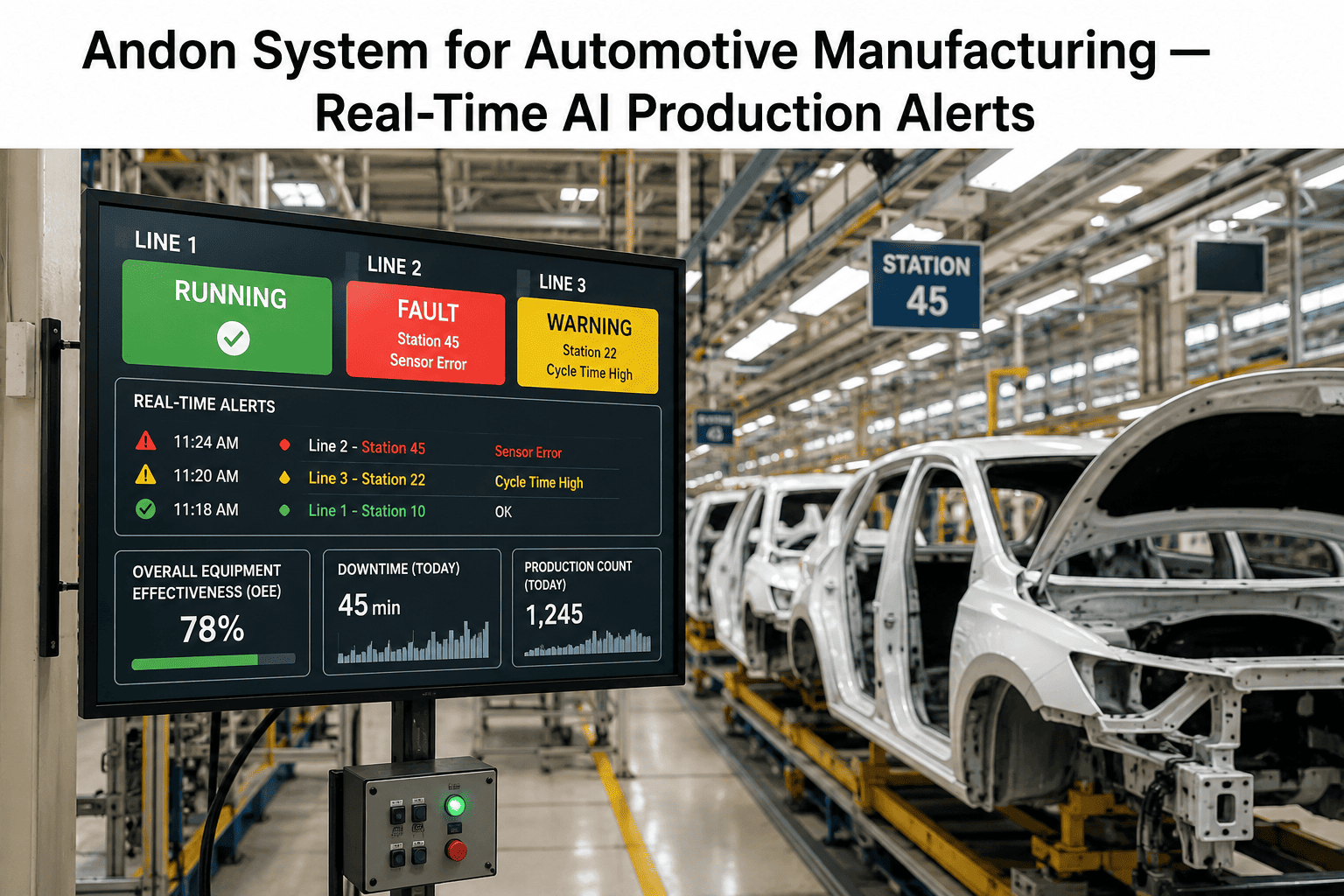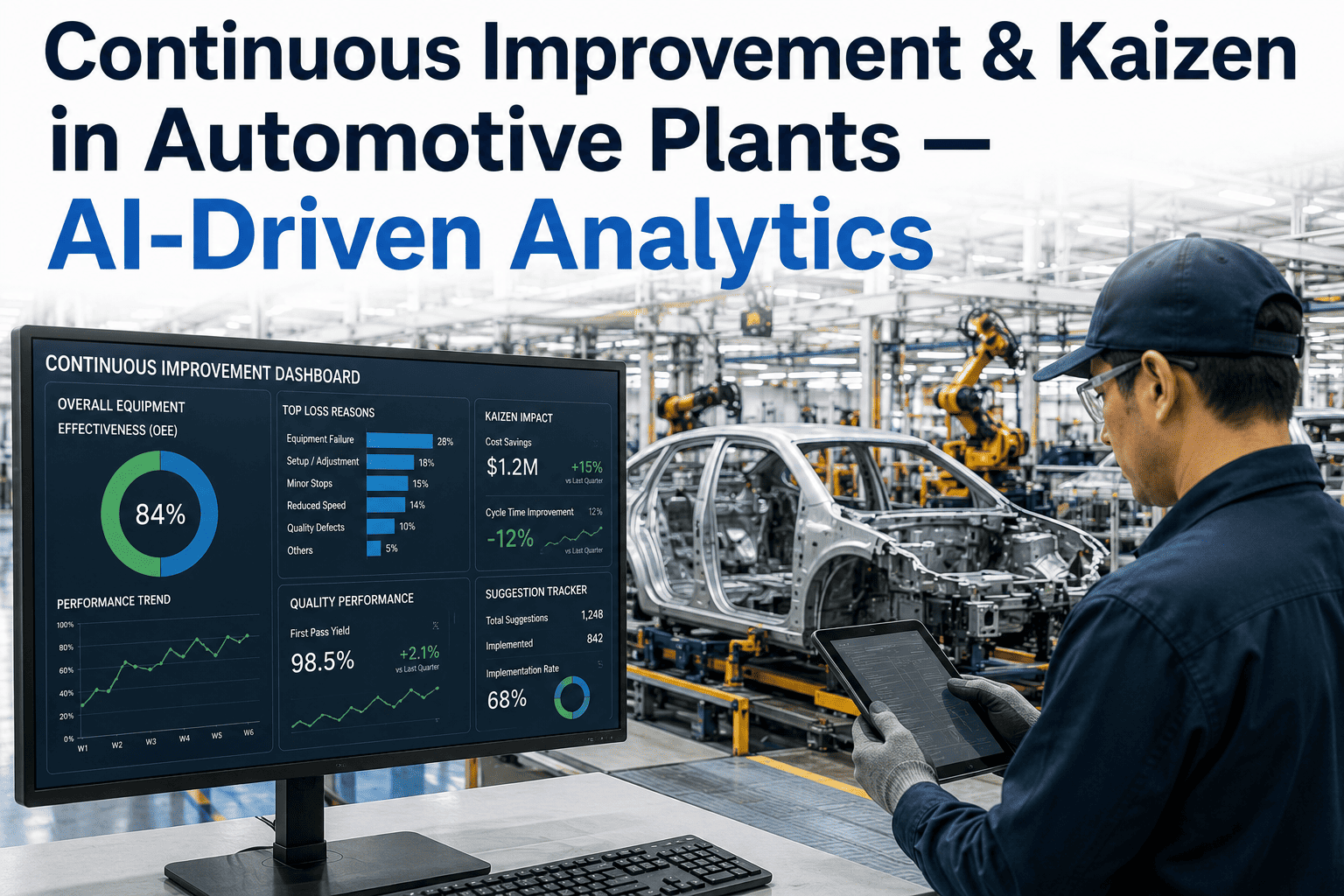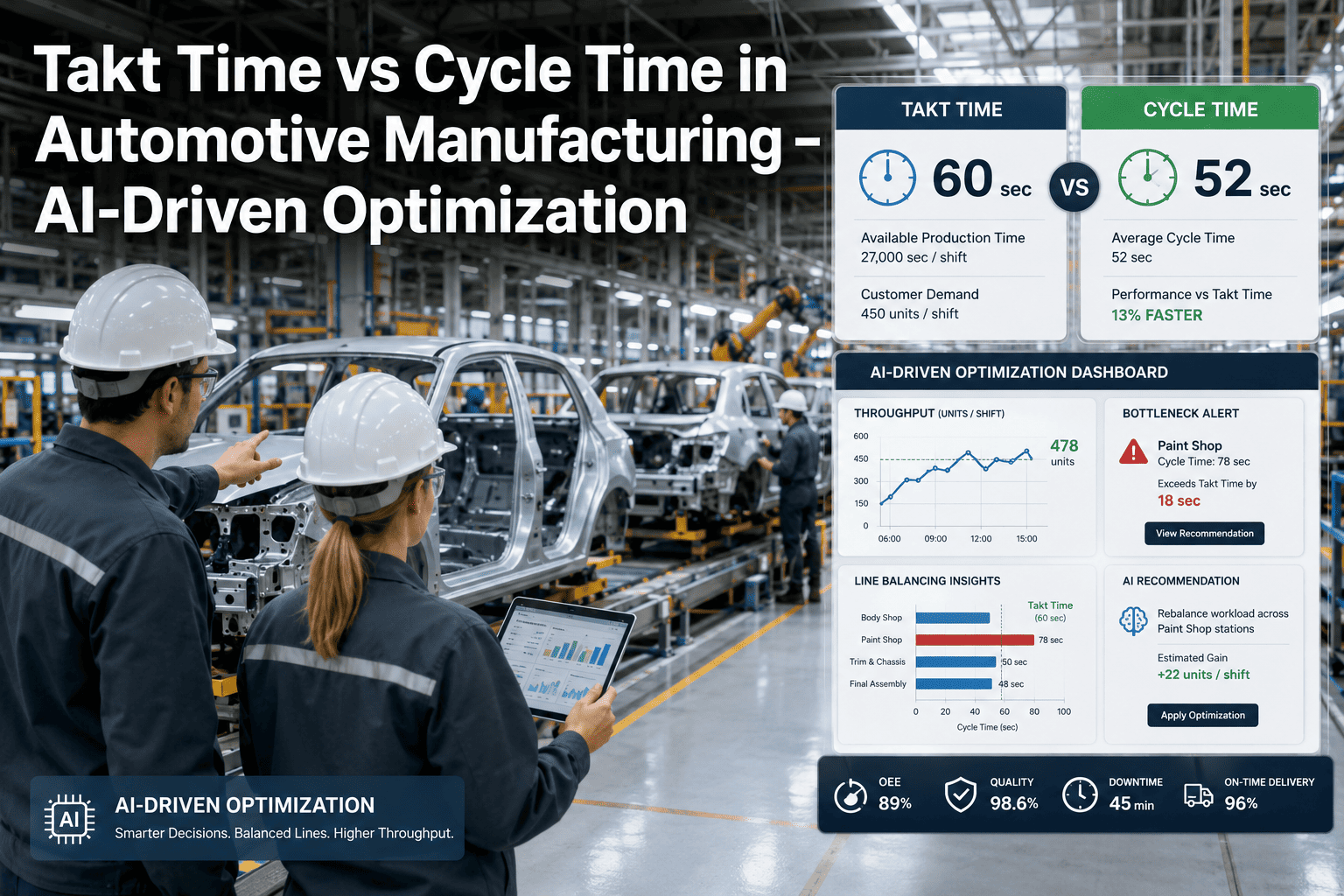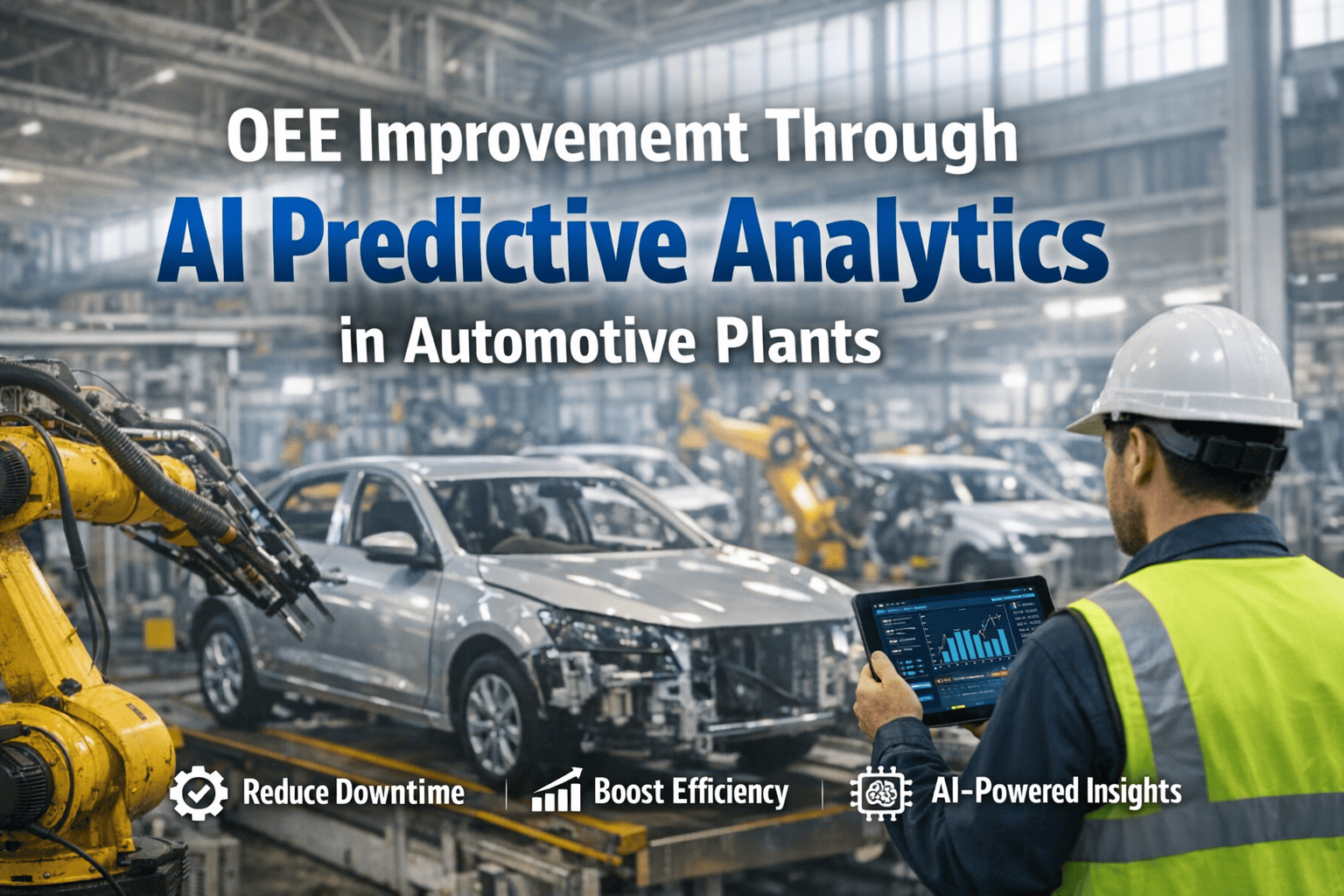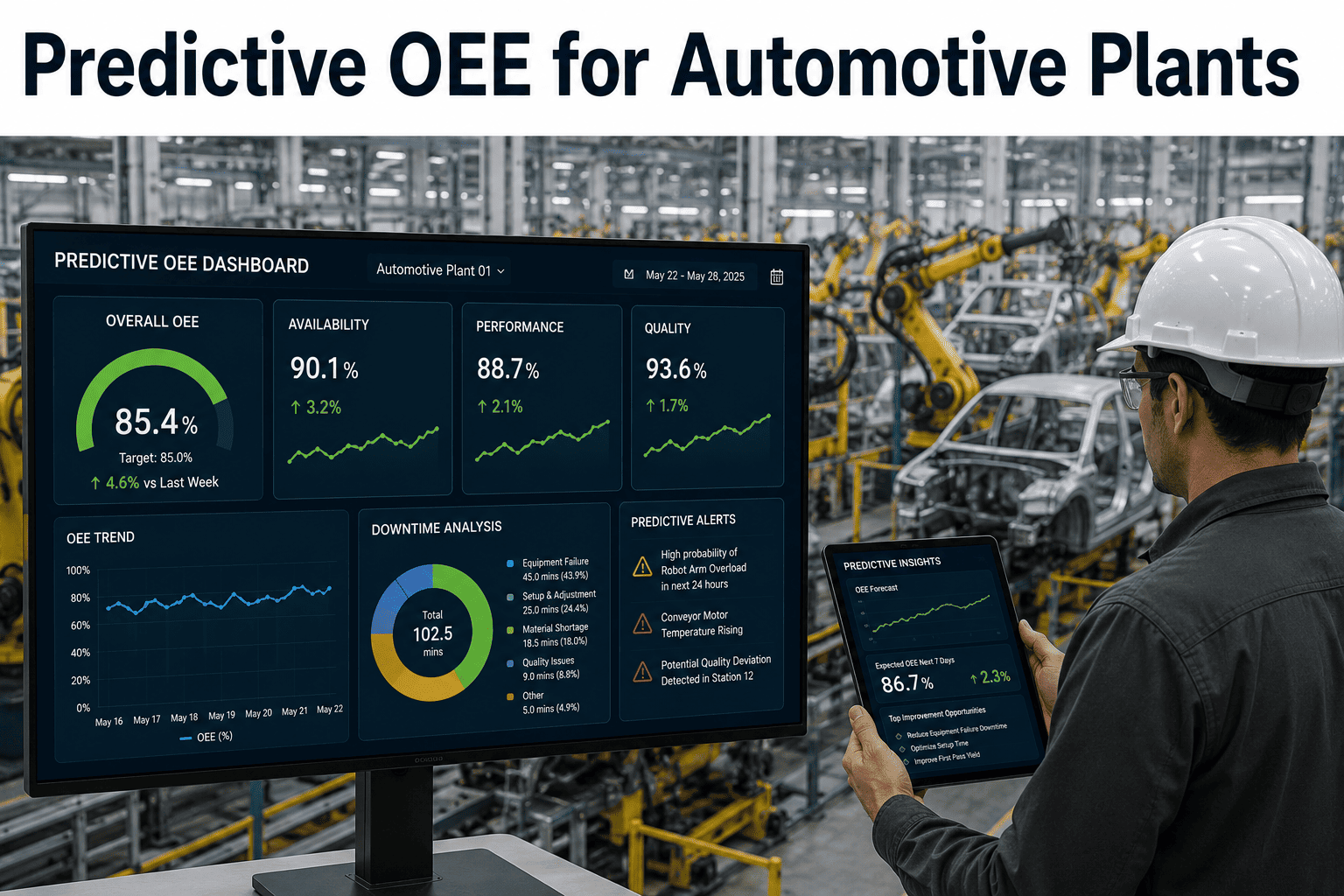
In modern automotive manufacturing, Overall Equipment Effectiveness (OEE) remains the undisputed benchmark for production efficiency. Yet, traditional OEE reporting suffers from a critical latency: by the time yesterday's OEE data reaches the plant floor, the losses have already materialized, impacting throughput, quality, and cost. This backward-looking approach forces maintenance and production teams into reactive firefighting, rather than proactive optimization. Enter predictive OEE—an AI-driven methodology that not only forecasts OEE losses hours before they occur but also attributes those losses to specific root causes with high precision. This paradigm shift empowers automotive plants to preemptively adjust parameters, schedule interventions, and maintain optimal performance. At iFactory, we specialize in deploying such intelligent systems across Industry 4.0 environments, enabling enterprises to achieve unprecedented levels of efficiency. For a deeper dive into how your plant can benefit, Book a Demo with our experts.
The Cost of Reactive OEE Management
Automotive plants operate under immense pressure to maintain high OEE scores—typically above 85% for world-class facilities. However, traditional OEE dashboards present historical data with an average delay of 12 to 24 hours. This lag means that a minor stoppage at 10 AM might only be flagged the next morning, by which time the root cause—say, a misaligned robot arm—has already caused dozens of subsequent defects. The financial impact is staggering: every percentage point of OEE lost in a high-volume plant can equate to millions in annual revenue. Reactive management also leads to expedited shipping costs, overtime labor, and warranty claims from defective vehicles. The solution lies not in better reporting of the past, but in accurate prediction of the future.
The Predictive OEE Architecture
Predictive OEE leverages a multi-layered AI framework that ingests real-time data from PLCs, sensors, MES, and quality systems. The architecture comprises three core modules:
Data Ingestion Layer
Collects over 200+ parameters per station, including cycle times, temperature, vibration, torque, and vision inspection results. Data is streamed at sub-second intervals, normalized, and stored in a time-series database optimized for high-frequency analytics.
Forecasting Engine
Utilizes a hybrid model combining Long Short-Term Memory (LSTM) networks with Gradient Boosting Machines. This ensemble approach captures both temporal dependencies and non-linear interactions, achieving a Mean Absolute Percentage Error (MAPE) of less than 2% for OEE predictions up to 4 hours ahead.
Attribution Module
Employs SHAP (SHapley Additive exPlanations) values to decompose the forecasted OEE into contributions from each input parameter. This provides plant operators with a ranked list of root causes—e.g., "Predicted OEE drop due to increasing spindle temperature on Station 7."
Real-World Implementation at a Tier-1 Supplier
Consider a case study from a leading automotive powertrain manufacturer. The plant had a baseline OEE of 74%, primarily hampered by unplanned downtime and micro-stoppages. After deploying iFactory's predictive OEE solution, the following transformations occurred:
| Metric | Before Implementation | After 6 Months | Improvement |
|---|---|---|---|
| OEE | 74% | 89% | +15% |
| Unplanned Downtime | 12.4% | 4.1% | -67% |
| First Pass Yield | 92% | 98.5% | +6.5% |
| Mean Time Between Failures | 48 hours | 186 hours | +287% |
Transform Your Plant's OEE Today
Stop relying on yesterday's data. Predict and prevent losses with AI. Book a demo to see how iFactory can help you achieve 90%+ OEE.
Key Technical Differentiators
Predictive OEE is not merely a forecasting tool; it is a comprehensive decision-support system. Its key differentiators include:
- Multi-Horizon Forecasting: Predictions available for 1-hour, 2-hour, and 4-hour windows, allowing operators to plan interventions based on severity and lead time.
- Causal Attribution: Unlike black-box models, the system provides transparent explanations, enabling root cause analysis directly from the forecast.
- Adaptive Thresholds: The AI continuously learns from operational changes—such as new product introductions or maintenance actions—and adjusts its prediction models accordingly.
- Seamless Integration: APIs connect to existing SCADA, MES, and CMMS platforms without requiring hardware upgrades.
Implementation Roadmap for Automotive Plants
Deploying predictive OEE requires a structured approach. iFactory follows a proven 6-step methodology:
Assessment & Data Audit
Evaluate existing data sources, identify gaps, and define key performance indicators (KPIs) aligned with plant goals.
Sensor & Connectivity Setup
Install necessary IoT sensors and establish secure data pipelines to the cloud or on-premise AI engine.
Model Training & Validation
Train the hybrid LSTM-GBM model on historical data, validate against actual OEE outcomes, and fine-tune hyperparameters.
Dashboard & Alert Configuration
Deploy real-time dashboards with predictive OEE gauges, loss attribution charts, and configurable alerts for operators.
Pilot Run & Calibration
Run a 4-week pilot on a single production line, calibrate the model based on operator feedback, and measure ROI.
Full Rollout & Continuous Improvement
Scale to all lines, integrate with maintenance planning, and establish a continuous learning loop for model updates.
Comparing Traditional vs. Predictive OEE
The table below highlights the fundamental differences between conventional OEE tracking and the predictive approach:
| Dimension | Traditional OEE | Predictive OEE |
|---|---|---|
| Data Freshness | 12-24 hours old | Real-time + forecast |
| Actionable Insight | Historical loss summaries | Forecasted losses with root cause |
| Response Time | Reactive (next shift) | Proactive (within minutes) |
| Accuracy | Depends on manual entries | AI-driven, <2% error |
| Integration | Standalone reports | Embedded in MES/CMMS |
Stop Losing Millions to Unplanned Downtime
Predictive OEE gives you the power to see into the future of your production line. Book a demo and discover how iFactory can make it happen.
Overcoming Common Implementation Challenges
While the benefits are clear, automotive plants often face hurdles during adoption. Here are the top challenges and how iFactory addresses them:
Data Quality & Consistency
Many plants have fragmented data sources with inconsistent sampling rates. iFactory's data ingestion layer includes automated data cleaning, interpolation, and timestamp alignment to ensure model inputs are robust.
Change Management
Operators may distrust AI predictions. iFactory provides a transparent attribution dashboard that explains every forecast, building trust over time. Training sessions are included in the deployment package.
Integration with Legacy Systems
Older PLCs and SCADA systems may lack modern connectivity. iFactory's edge gateways can interface with Modbus, Profibus, and OPC-UA, bridging the gap without requiring full system replacement.
Scalability
Starting with one line is common, but scaling to hundreds of stations requires a robust architecture. iFactory's cloud-native platform auto-scales and supports multi-plant deployments with centralized management.
Frequently Asked Questions
What is predictive OEE and how does it differ from traditional OEE?
Predictive OEE uses machine learning models to forecast future OEE values based on real-time and historical data, whereas traditional OEE merely reports past performance. The key difference is that predictive OEE provides actionable insights before losses occur, enabling proactive interventions. For a detailed comparison, visit iFactory Support.
How accurate are the OEE forecasts?
In automotive environments, iFactory's predictive models achieve a Mean Absolute Percentage Error (MAPE) of less than 2% for forecasts up to 4 hours ahead. This high accuracy is validated through rigorous back-testing on historical data and continuous retraining. To see real-world accuracy metrics, Book a Demo.
Can predictive OEE integrate with my existing MES and CMMS?
Yes, iFactory's platform is built with open APIs and supports standard protocols like OPC-UA, MQTT, and REST. Integration with major MES (e.g., Siemens, Rockwell) and CMMS (e.g., SAP, Maximo) is straightforward. Contact our team at iFactory Support for a compatibility check.
What is the typical ROI timeline for implementing predictive OEE?
Most automotive plants see a positive ROI within 3 to 6 months. The average annual savings per production line exceed $2.1 million, driven by reduced downtime, improved quality, and optimized maintenance schedules. For a tailored ROI estimate, Book a Demo.
How does the attribution module determine root causes?
The attribution module uses SHAP (SHapley Additive exPlanations) values, a game-theoretic approach that quantifies the contribution of each input parameter to the predicted OEE. This provides a ranked list of root causes, such as "spindle temperature" or "cycle time variance." Learn more in our technical documentation at iFactory Support.
Ready to Predict Your OEE?
Don't let yesterday's data dictate tomorrow's losses. Take control with AI-powered predictive OEE from iFactory.