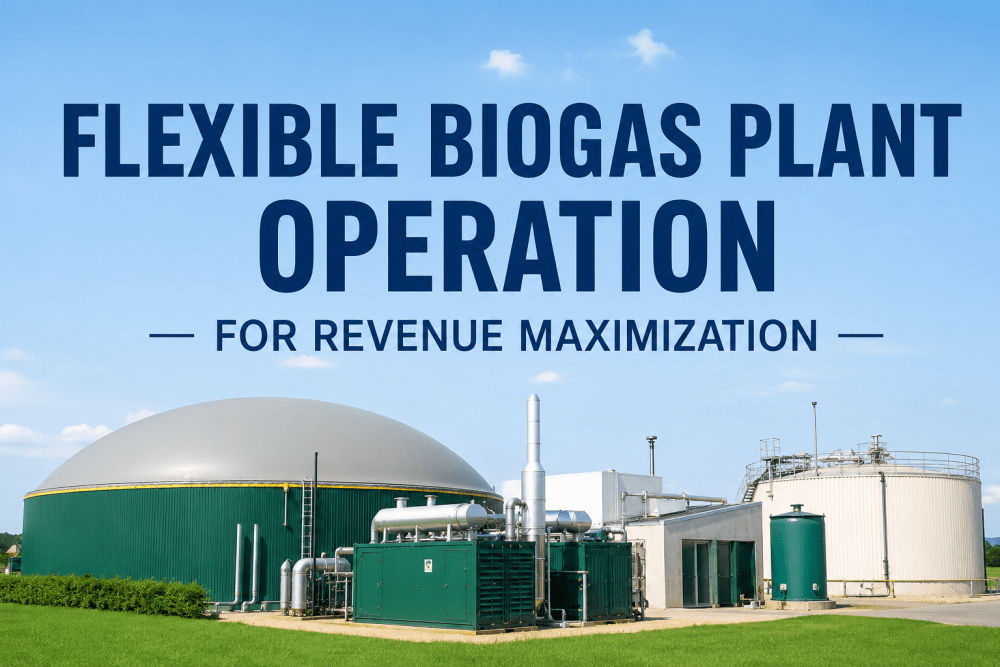
Choosing a flexible operation strategy for a modern biogas plant is no longer a question of technical feasibility—it is a question of revenue maximization.This guide explores how flexible operation transforms biogas plants from passive energy producers into active grid assets. Organizations that Book a demo with iFactory discover how the platform optimizes dispatch decisions against live market data to maximize every cubic meter of biogas.
Why Baseload Operation Is Leaving Money on the Table
The core challenge for biogas plant operators is the tension between gas production—which is relatively constant—and energy prices—which have become increasingly volatile. The platform's dispatch recommendation engine evaluates thousands of scenarios per second to identify the exact operating schedule that maximizes net revenue while respecting gas inventory constraints, maintenance windows, and contractual obligations. Plant operators who Book a demo see how this unified intelligence translates directly into dispatch decisions that improve margin per cubic meter by double digits.
| Operating Model | Revenue Profile | Market Exposure | Gas Storage Utilization | Annual Revenue / MW |
|---|---|---|---|---|
| Baseload (Fixed CHP) | Flat, predictable | None / Fixed Tariff | Minimal | $180K–$220K |
| Day-Ahead Arbitrage | Moderate, optimized | Day-Ahead LMP | Daily cycling | $230K–$280K |
| Multi-Market Flexible | High, diversified | DA + RT + AS + Capacity | Full dynamic | $290K–$360K |
Turn Gas Storage into a Revenue Asset
iFactory's AI platform provides the unified intelligence layer that bridges gas production forecasting, market price signals, and equipment health — purpose-built for the complexities of modern biogas operations.
Four Pathways to Monetize Biogas Plant Flexibility
Implementing flexible operation unlocks multiple, compounding revenue mechanisms. Each pathway targets a different energy market product, and the most profitable plants participate in several simultaneously using a single intelligence layer to balance commitments across all of them.
Energy Arbitrage
Core Mechanism: Store biogas during low-price periods and generate CHP electricity during peak-price windows. With daily price spreads exceeding $100/MWh in many ISO markets, a 1 MW plant can generate $200K+ annually in arbitrage revenue alone.
Capacity Payments
Core Mechanism: Bid firm capacity into forward auctions (PJM, MISO, CAISO) based on the plant's ability to dispatch during system peaks. Flexible biogas plants qualify for capacity revenues that can add $40–$80/kW-year to the bottom line.Book a demo
Ancillary Services
Core Mechanism: Provide frequency regulation and operating reserves by modulating CHP output in response to AGC signals. Biogas plants with fast-ramping engine configurations can earn 2–3x energy-only revenues in ancillary service markets.
Biomethane Premium
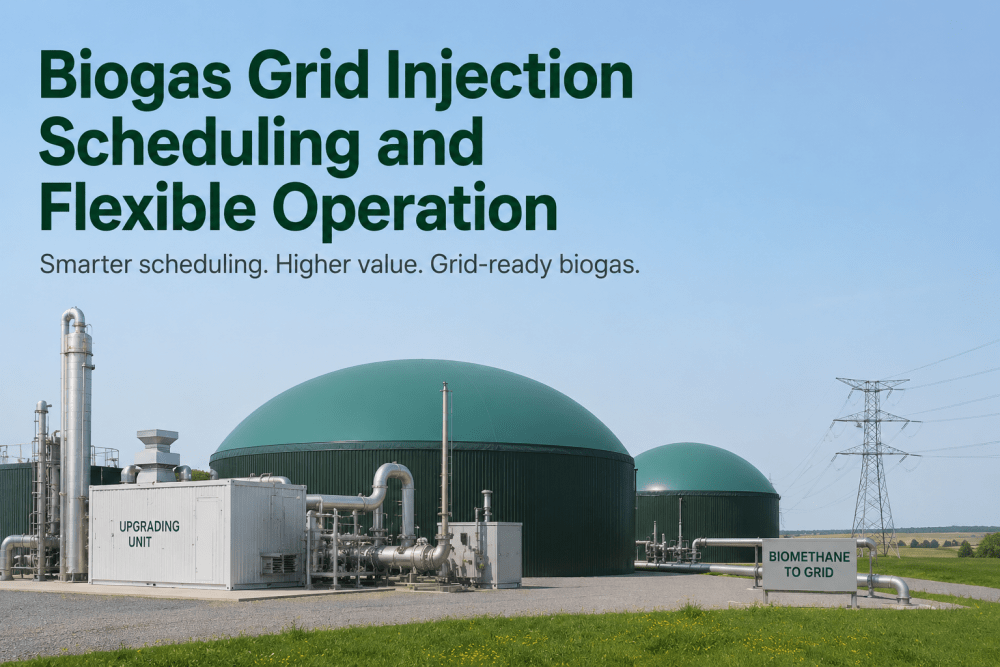
Core Mechanism: When electricity prices are low, divert raw biogas to upgrading systems for direct injection into the natural gas grid. Renewable natural gas (RNG) commands premium pricing and decouples revenue from volatile power markets.
"Before iFactory, we treated our biogas plant like a fixed-output generator. We ran the CHP at 100% around the clock and never questioned whether that was optimal. After implementing the platform's dispatch optimization, we saw the data on missed revenue opportunities—we were leaving nearly a third of potential earnings on the table. We now time our generation to capture peak prices, store gas during low-demand hours, and participate in capacity auctions that we didn't even know we qualified for.Book a demo "
Flexibility Strategies Across Every Time Horizon
Effective biogas flexibility requires coordination across three distinct planning horizons. Each horizon targets different market opportunities and requires different data inputs. iFactory's platform unifies all three into a single operational dashboard with automated recommendations for each. Operations teams that Book a demo see how real-time data streams inform decisions at every level simultaneously.
Day-Ahead Market Optimization
The day-ahead market is where the bulk of energy arbitrage value is captured. iFactory's AI ingests next-day price forecasts from your ISO, your current gas storage volume, and your CHP maintenance schedule to produce an optimal 24-hour dispatch plan. The system considers ramp rates, minimum downtime constraints, and gas production forecasts to recommend precisely when to generate and when to store. Typical day-ahead improvements yield $8–$12/MWh uplift over baseload operation.
Intraday Balancing and Ancillary Services
Real-time markets and ancillary service programs reward plants that can respond quickly to grid signals. iFactory's live market connector monitors intraday price movements and ancillary service dispatch signals, allowing your plant to adjust output on 5-minute intervals. The platform automatically calculates whether it is more profitable to stay in the energy market, switch to regulation service, or halt generation entirely and bank stored gas for a better opportunity later in the day.Book a demo
Seasonal Biomethane vs. CHP Planning
The highest-value flexibility decision is often the most strategic: whether to generate CHP electricity or upgrade biogas to pipeline-quality RNG. In summer, when gas demand for heating is low and power prices peak, CHP generation is typically optimal. In winter, when RNG prices rise with heating demand, gas upgrading can be 40% more profitable. iFactory's digital twin simulates both pathways across forward curves to recommend the optimal seasonal strategy.
Measured Impact of Intelligent Flexibility
The numbers speak for themselves. Biogas plants deploying iFactory's dispatch optimization consistently outperform baseload-only peers across a diverse range of plant sizes and configurations. These metrics represent aggregate data from over 40 biogas installations spanning six ISO markets. Operations directors who Book a demo receive a personalized ROI projection based on their plant's specific market zone, capacity, and gas storage characteristics.
From Baseload to Intelligent Flexibility in Three Phases
Transitioning from fixed baseload operation to fully optimized flexible dispatch follows a structured progression. iFactory's implementation team guides each plant through this roadmap, calibrating the speed of deployment to the plant's existing automation level and market readiness. Plant managers who Book a demo receive a personalized implementation timeline during their platform walkthrough.
Visibility and Market Data Integration
Connect existing SCADA, gas storage level sensors, and CHP telemetry to the iFactory platform. Establish real-time market data feeds from your ISO or RTO. Build the foundational dashboard that shows your plant's current revenue position vs. the baseload baseline. Timeline: 4–6 weeks.
Predictive Optimization and Dispatch Logic
Deploy iFactory's predictive engine to forecast gas production, market prices, and equipment availability. Activate automated dispatch recommendations that your control room can review and execute. Begin participating in day-ahead and intraday markets with AI-optimized bids. Timeline: 6–10 weeks.
Autonomous Operation and Multi-Market Expansion
Enable closed-loop dispatch where the platform directly controls CHP and gas storage setpoints within operator-defined safety parameters. Expand into ancillary services, capacity markets, and RNG contracting. Continuous learning models optimize performance as more data accumulates. Timeline: Ongoing.
Biogas Plant Flexible Operation — Frequently Asked Questions
What is flexible biogas plant operation and how does it increase revenue?
Flexible operation means shifting from constant baseload CHP generation to dynamic dispatch based on market prices. Instead of running 24/7 regardless of grid conditions, the plant stores biogas when prices are low and generates electricity when prices peak. This energy arbitrage strategy typically adds 20–30% to annual revenue without requiring any new capital equipment.
What market signals should a biogas plant monitor for optimal dispatch?
The critical signals are day-ahead and real-time locational marginal prices (LMPs) from your ISO or RTO, ancillary service clearing prices, capacity auction results, and natural gas basis differentials for RNG injection. iFactory aggregates all of these into a single optimization dashboard, eliminating the need for manual market monitoring across multiple platforms.
Can a biogas plant participate in multiple revenue programs simultaneously?
Yes, and the most profitable plants do exactly that. A single plant can offer capacity in forward auctions, provide regulation service in real-time, and capture energy arbitrage in day-ahead markets—all within the same operating day. iFactory's optimization engine balances these commitments to ensure compliance and avoid penalty events.
How does iFactory's platform differ from a standard energy management system?
Standard EMS platforms are passive monitoring tools that require manual decision-making. iFactory is an active optimization engine that uses predictive AI to forecast market conditions, gas production rates, and equipment health—then generates or executes dispatch decisions autonomously. The platform learns from each operating cycle to continuously improve margin capture.
What is the minimum plant size for flexible operation to be profitable?
Flexible operation is economically viable for plants as small as 500 kW, though the business case strengthens significantly above 1 MW. The key variable is not plant size but market price volatility. Plants in markets with daily peak-to-off-peak spreads exceeding $50/MWh typically see payback periods under 12 months regardless of installed capacity.
Stop Baseload. Start Capturing Peak Revenue.
iFactory's industrial analytics platform delivers the unified intelligence needed to execute flexible biogas operation at scale — purpose-built for the modern renewable energy landscape. Dispatch optimization, gas storage management, and multi-market participation in a single AI-native platform.