The economics of underground gas storage have always been tied to one core question: is the gas in the ground at the right time for the right reason? Depleted reservoir facilities, salt cavern storage, and aquifer-based storage assets across North America collectively hold hundreds of billions of cubic feet of working gas — and every day, operators managing those inventories are making injection and withdrawal decisions based on forecasting models, SCADA telemetry, and human judgment that was never designed to handle the data complexity modern energy markets demand. AI gas storage optimization underground changes that equation fundamentally. It does not assist the existing decision-making process iFactory's AI platform delivers the real-time intelligence layer that underground storage operators need to move from reactive inventory management to proactive, margin-optimizing operations. Book a Demo to see how the platform works on a live facility dataset.
Why Underground Gas Storage Is the Hardest Optimization Problem in Midstream
Underground gas storage facilities — whether depleted oil and gas reservoirs, salt cavern formations, or aquifer structures — share a fundamental operational challenge: they must simultaneously balance reservoir physics, real-time market pricing, downstream demand signals, and regulatory compliance obligations, using data that arrives from dozens of sources at different cadences and quality levels. No human operator, however experienced, can process all of those variables in real time. No legacy SCADA system was designed to optimize across them.
The result is a predictable pattern of operational loss: injection cycles that miss price arbitrage windows by hours, withdrawal schedules that under-respond to demand spikes, compressor run-hours that burn excess fuel on fixed setpoints, and wellbore integrity issues that develop undetected between annual inspection cycles. These are not random events — they are the structural consequences of operating a complex, dynamic asset with tools designed for a simpler, slower world.
Five AI Capabilities That Transform Underground Storage Operations
AI optimization in underground storage is a stack of coordinated capabilities — not a single tool. Each addresses a specific category of operational and financial loss that legacy systems cannot close. The five capabilities below represent the core of iFactory's midstream intelligence architecture for underground storage facilities.
AI Demand Forecasting
Replaces single-variable weather-based models with continuous multi-input forecasting engines that ingest real-time weather data, grid demand signals, LNG spot pricing, pipeline nominations, and industrial customer consumption patterns simultaneously. Produces rolling 72–96 hour forecast windows that align withdrawal schedules with actual downstream demand — reducing emergency spot-market sourcing costs and inventory misalignment losses.
Injection & Withdrawal Scheduling Optimization
AI optimization engines track hundreds of variables — reservoir pressure targets, compressor throughput constraints, wellhead capacity limits, and real-time spot pricing windows — simultaneously re-optimizing injection and withdrawal sequences as conditions change. Facilities report injection cycle efficiency improvements of 15–25% and measurable reductions in compressor fuel consumption from optimized run-scheduling that fixed setpoints cannot achieve.
AI-Assisted Wellbore Integrity Monitoring
Ingests continuous data from downhole pressure gauges, acoustic sensors, and surface wellhead instrumentation to build a probabilistic health model for each wellbore. Anomalies that would require days of data review to detect manually are flagged within minutes — enabling intervention before integrity events escalate to operational shutdowns, regulatory incidents, or environmental liability events.
Digital Twin Reservoir Modeling
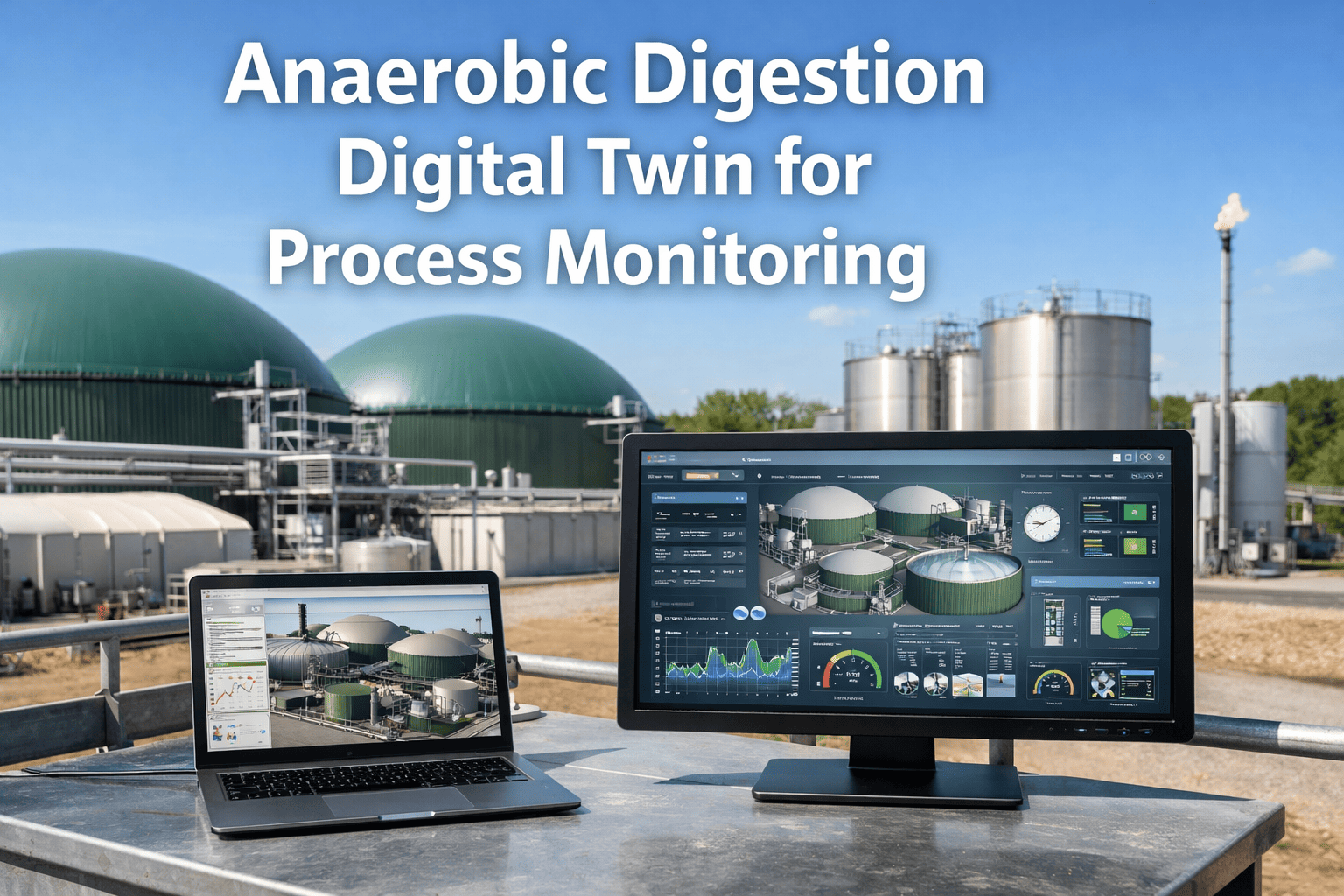
A continuously updated virtual model of reservoir conditions — pressure distribution, gas saturation zones, inter-well connectivity, and formation permeability — using real-time sensor data from existing SCADA and PLC infrastructure. Unlike static geological models updated annually, the digital twin updates in near real time, enabling scenario modeling before capital decisions.
Predictive Maintenance for Surface Equipment
Monitors vibration signatures, temperature gradients, flow rates, and energy consumption patterns across compressors, dehydration units, and critical surface processing equipment. Anomalies are ranked by failure probability and estimated time to failure — allowing maintenance teams to intervene during planned injection or withdrawal pauses rather than responding reactively to breakdowns during peak demand windows when the cost of unplanned downtime is highest.
Legacy Operations vs. AI-Optimized Underground Storage: The Performance Gap
The performance difference between a legacy-managed underground storage facility and an AI-optimized one is not incremental — it is structural. Legacy operations are reactive by architecture: they respond to conditions that have already developed. AI-optimized facilities are anticipatory: they adjust before conditions shift. The comparison below makes that operational gap explicit across every dimension that determines facility profitability and compliance standing.
- Injection schedules built from weekly forecast models and historical seasonal averages
- Compressor run-times set manually based on operator experience and shift handover notes
- Wellbore integrity checked on fixed annual inspection cycles — anomalies develop undetected between visits
- Reservoir pressure managed reactively after deviation from target is already measurable
- Demand mismatches discovered after they occur — emergency sourcing at spot premium
- Equipment failures during peak withdrawal season create unplanned downtime and delivery shortfalls
- OEE and operational efficiency calculated monthly from manual logs — no real-time visibility
- Scenario modeling requires weeks of reservoir engineering time and external consulting spend
- Rolling 72–96hr injection/withdrawal schedules continuously re-optimized from live market and weather data
- Compressor scheduling driven by AI efficiency curves — fuel consumption minimized automatically
- Continuous wellbore anomaly detection from downhole and surface sensors — issues flagged in minutes
- Reservoir pressure managed proactively using digital twin models updated in near real time
- Demand forecasts trigger schedule adjustments days before shortfalls develop
- Predictive maintenance flags equipment risk weeks before failure — interventions during planned windows
- Live OEE dashboards accessible on mobile — shift-level accountability for every performance metric
- Digital twin scenarios run in minutes — capital decisions backed by reservoir simulation before commitment
Where Underground Storage Facilities Are Losing Value — Mapped to AI Solutions
Value loss in underground gas storage concentrates in predictable categories — most invisible without real-time AI monitoring infrastructure. The table below maps the primary loss drivers against their operational and financial impact and the specific iFactory capability required to recover each gap.
| Loss Category | Operational Dimension | Typical Annual Impact | Root Cause Pattern | iFactory AI Capability |
|---|---|---|---|---|
| Suboptimal Injection Timing | Throughput Efficiency | $1M–$3M per facility | Manual scheduling blind to real-time price arbitrage windows | AI Injection Optimization |
| Demand Forecast Error | Supply Reliability | $500K–$2M spot premium costs | Single-variable weather models with 72hr+ lag and no market data feeds | AI Demand Forecasting |
| Compressor Inefficiency | Energy & Fuel Cost | 8–14% excess fuel burn annually | Fixed run schedules not adjusted for real-time throughput requirements | Predictive Maintenance + Scheduling AI |
| Wellbore Integrity Events | Safety & Regulatory | $2M–$10M per incident (regulatory + repair) | Interval-based inspection misses developing anomalies between cycles | AI Integrity Monitoring |
| Reservoir Over/Under Pressure | Asset Longevity | Accelerated formation damage; reduced working capacity | No real-time reservoir model for proactive pressure management | Digital Twin AI |
| Unplanned Equipment Downtime | Availability | $300K–$1.5M per peak-season event | Reactive maintenance on compressors and dehydration units | Predictive Maintenance |
iFactory's platform addresses all six loss categories from a single integration — no separate vendor for integrity monitoring, no separate system for demand forecasting. Book a Demo to see a live loss quantification analysis for your specific facility type.
A 90-Day AI Deployment Roadmap for Underground Gas Storage Facilities
AI optimization for underground storage does not require a multi-year digital transformation program or replacement of existing SCADA and control infrastructure. Facilities following a structured 90-day activation sequence consistently achieve measurable operational improvements within the first injection or withdrawal cycle post-deployment.
Days 1–14: Sensor Integration & Operational Data Architecture Baseline
Connect iFactory's AI platform to existing PLC, SCADA, and historian systems via OPC-UA and MQTT protocols — no replacement of existing automation infrastructure required. Establish a live data pipeline from wellhead pressure sensors, flow meters, compressor telemetry, and any existing downhole instrumentation. Build the operational baseline that defines current injection efficiency, compressor utilization, and wellbore health profiles for every asset in the facility.
Days 15–30: Demand Forecasting Activation & Injection Schedule Optimization
Activate the AI demand forecasting module and connect external data feeds — weather APIs, grid demand signals, downstream pipeline nominations, and relevant LNG or spot market pricing indices. Run the AI injection scheduling engine in parallel with existing manual scheduling for the first two weeks, allowing operations teams to validate AI recommendations against their own judgment before full handover. Typical facilities identify three to five immediately actionable schedule optimizations in this phase alone.
Days 31–60: Wellbore Integrity Monitoring & Predictive Maintenance Deployment
Deploy the AI wellbore integrity monitoring layer across all active wells, establishing anomaly detection baselines from integrated sensor data. Simultaneously activate predictive maintenance monitoring for compressors, dehydration units, and critical surface processing equipment. Configure alert thresholds and escalation workflows so that anomalies trigger actionable notifications ranked by failure probability and estimated time to failure — not just raw sensor readings.
Days 61–90: Digital Twin Commissioning & Performance Benchmarking
Commission the reservoir digital twin using the 60-day operational baseline as the training foundation. Begin running scenario models for upcoming injection or withdrawal season planning — evaluating schedule alternatives, potential new well tie-ins, or compressor additions against the live reservoir model before capital commitments are made. Establish monthly performance benchmark reports comparing AI-optimized outcomes against the pre-deployment baseline, building the accountability infrastructure for sustained improvement beyond Day 90.
Facilities completing this 90-day sequence consistently report measurable improvements in injection efficiency, compressor fuel economics, and wellbore incident frequency within the first full operating season. Book a Demo to build your facility-specific AI deployment roadmap with iFactory's midstream intelligence team.
How iFactory Integrates With Your Existing Underground Storage Infrastructure
The most common objection to AI deployment in underground storage operations is the assumption that meaningful optimization requires replacing existing SCADA and control infrastructure. iFactory's architecture is specifically designed to eliminate this barrier: the platform connects to what you already have, not to what a greenfield installation would specify.
Existing SCADA / PLC
Connect via OPC-UA and MQTT protocols. No replacement of existing automation infrastructure. Deployment completed in 2–4 weeks per facility with OEE-level data visible in week one.
iFactory Data Ingestion Layer
Real-time normalization of wellhead pressure, flow meter, compressor telemetry, and downhole instrumentation data into a unified operational data model accessible across all AI modules.
AI Engine Stack
Demand forecasting, injection/withdrawal optimization, wellbore integrity monitoring, digital twin reservoir modeling, and predictive maintenance — all coordinated in a single AI intelligence layer.
Live Operations Dashboard
Real-time alerts, mobile-accessible facility dashboards, automated shift reporting, and SAP/Oracle/Maximo integration — so AI insights reach the people who act on them without additional manual steps.
"The biggest shift was not the forecasting accuracy — it was the information latency. We were making injection decisions on a 48-hour-old SCADA export. iFactory gave us a live model of the reservoir that updates every few minutes. The first time our AI recommended holding inventory for a day-ahead price spike we would have missed, operations leadership approved it in 20 minutes. That single decision covered six months of platform cost."
— Operations Technology Manager, Midstream Underground Storage Operator
Conclusion: The Competitive Case for AI Gas Storage Optimization Is Already Closed
The question facing underground storage operators in 2025 is no longer whether AI can meaningfully improve facility performance — the operational case for AI-driven injection scheduling, demand forecasting, wellbore integrity monitoring, digital twin reservoir modeling, and predictive maintenance is established across global midstream deployments.
iFactory's midstream AI platform is built for the operational reality of underground storage: high-value assets, complex reservoir dynamics, significant regulatory exposure, and decisions that must be made faster than any manual process allows. The 90-day deployment path to measurable improvement is available now — and the capacity value recoverable in a single injection or withdrawal season routinely exceeds total platform investment. Book a Demo to begin your facility's AI deployment roadmap today.
Frequently Asked Questions
What types of underground gas storage facilities benefit most from AI optimization?
All three primary underground storage formation types — depleted reservoirs, salt cavern facilities, and aquifer-based storage — benefit from AI optimization, though the highest-value capabilities differ by formation type. Depleted reservoir facilities gain most from digital twin reservoir modeling and AI pressure management given complex multi-well dynamics. Aquifer-based storage, where formation response to injection is less predictable, gains significant value from AI anomaly detection and wellbore integrity monitoring. Book a Demo to discuss which AI capabilities map most directly to your specific formation type and operational profile.
Does deploying AI for gas storage optimization require replacing existing SCADA or control systems?
No. iFactory's AI platform connects to existing PLCs, SCADA systems, historian databases, and wellhead instrumentation through standard OPC-UA and MQTT industrial protocols. The platform is designed specifically to layer AI intelligence on top of existing automation infrastructure, not to replace it. Deployment typically completes in 2–4 weeks per facility, and AI optimization recommendations are visible within the first week of integration.
How does AI demand forecasting for underground storage improve on existing weather-based models?
Traditional demand forecasting for underground storage uses one to three primary input variables — typically heating degree days, pipeline nominations, and historical seasonal patterns. iFactory's AI demand forecasting simultaneously processes dozens of correlated variables: real-time weather feeds, power grid demand signals, LNG spot pricing, industrial customer consumption telemetry, upstream production variability, and storage inventory levels across competing facilities. The result is a continuous rolling forecast window of 72–96 hours with significantly higher accuracy, particularly during volatile weather events and demand spikes that single-variable models systematically under-predict.
What is the typical ROI timeline for AI deployment in a mid-size underground gas storage facility?
For a mid-size underground storage facility operating 10–20 active wells and 4–8 compressors on a seasonal injection/withdrawal schedule, the combination of AI injection scheduling efficiency gains, compressor fuel optimization, reduced emergency spot-market sourcing, and predictive maintenance downtime avoidance typically generates ROI multiples well above platform investment within the first full operating season — often within 12 months of deployment.
How does iFactory's digital twin for underground storage differ from static geological reservoir models?
Static geological reservoir models are built from well logs, seismic surveys, and formation core samples — they represent a snapshot of reservoir characteristics at the time of last major study, typically updated on an annual to multi-year cycle by reservoir engineers. iFactory's digital twin is a dynamic, continuously updated virtual model that mirrors live operational reality: it ingests real-time pressure data, flow rates, injection/withdrawal volumes, and temperature readings to maintain a current-state representation of reservoir conditions.