Underground gas storage facilities are under more pressure than ever. Operators managing salt caverns, depleted reservoirs, and aquifer fields across the U.S. face a compounding set of challenges — volatile demand cycles, aging infrastructure, tighter PHMSA compliance requirements, and a workforce that's shrinking faster than t can be replaced. The traditional approach — spreadsheet-based inventory models, manual pressure logging, and reactive maintenance schedules — simply cannot keep pace with what modern grid operators and LDCs now demand from underground storage assets.
This is where AI gas storage optimization underground changes the equation. By layering machine learning, digital twins, and real-time sensor integration over existing SCADA and control systems, operators are unlocking injection/withdrawal efficiency gains they couldn't achieve with legacy tools. This article breaks down exactly how AI delivers those gains — and what U.S. midstream operators need to know before investing.
How AI Gas Storage Optimization Underground Is Reshaping Midstream Operations in 2025
From injection scheduling to predictive maintenance on compressor trains, AI is turning underground storage facilities into precision-managed assets — with payback measured in quarters, not years.
Why Underground Gas Storage Is Harder to Optimize Than It Looks
Underground natural gas storage — whether in depleted fields, salt caverns, or aquifers — is not a passive buffer. It is an active, pressure-sensitive system that must respond to intraday demand swings, seasonal inventory targets, and real-time pipeline conditions simultaneously. The variables that matter most (reservoir pressure, wellhead temperature, compressor throughput, moisture content) interact in ways that linear planning models and human operators simply cannot track at speed.
Demand Forecasting Mismatch
LDC and utility demand forecasts are updated daily at best — but underground storage systems respond to hourly and sub-hourly signals. The gap between forecast cycles and operational reality drives cushion gas waste, compressor overrun, and peak-day delivery failures.
Reservoir Behavior Complexity
Depleted reservoir storage fields have heterogeneous permeability and porosity across layers. Pressure gradients shift with every injection/withdrawal cycle, and without real-time reservoir modeling, operators are flying blind on how much working gas is actually accessible at any given moment.
Compressor Reliability Under Variable Load
Underground storage compressor trains run in conditions that are fundamentally different from transmission compressors — they cycle frequently, handle high-moisture gas, and operate across a wide range of discharge pressures. Failure rates are high, and failures during peak demand periods are catastrophic for reliability.
Compliance and Integrity Data Volume
API 1170 and 1171, along with PHMSA's underground storage integrity management rules, generate enormous volumes of inspection, pressure, and mechanical integrity data. Managing this manually is both error-prone and unsustainable.
Workforce Knowledge Loss
The institutional knowledge of how a specific reservoir behaves — built over decades of operational experience — is retiring faster than it can be codified. AI-driven digital twins preserve and operationalize that knowledge before it walks out the door.
Five Ways AI Optimizes Underground Gas Storage Operations
AI gas storage optimization is not a single capability — it is a stack of interconnected intelligence layers, each targeting a different operational variable. Here is how each layer works and what it delivers.
AI-Driven Demand Forecasting
Traditional demand forecasting for underground storage relies on degree-day models and historical send-out data. AI replaces this with multi-variable regression models that ingest real-time weather feeds, grid load data, regional LDC nominations, and even LNG import terminal throughput to generate sub-hourly demand signals.
The result: injection and withdrawal schedules that respond to demand 4–6 hours ahead of the actual signal, reducing emergency injections during shoulder seasons and preventing costly peak-day shortfalls. iFactory's AI engine connects to your existing SCADA and ERP data sources to build and continuously retrain these models on your specific field's historical performance — no cloud dependency, no data egress.
Real-Time Reservoir Modeling
AI reservoir models integrate pressure transient data, well-test results, and historical injection/withdrawal cycles to build a live picture of working gas accessibility. Unlike static reservoir simulation runs (which take days and are immediately stale), AI-driven reservoir models update continuously as new sensor data arrives.
For depleted reservoir fields, this means operators know — with quantified confidence — exactly how much working gas can be delivered at a given wellhead pressure, right now. For salt cavern storage, AI tracks cavern geometry evolution and sonar survey data to prevent over-withdrawal that risks cavern wall integrity.
Predictive Maintenance for Compressor Trains
Underground storage compressors are the operational bottleneck for every withdrawal event. AI-powered predictive maintenance uses vibration sensors, lube oil analysis data, discharge temperature trends, and motor current signatures to predict compressor failures 2–6 weeks before they occur — giving maintenance teams enough lead time to schedule parts, labor, and planned downtime.
iFactory's predictive maintenance engine connects to your existing sensor network (PLC, DCS, or standalone IoT) without requiring hardware replacement. The AI model is trained on both your equipment's specific history and industry-wide compressor failure patterns to maximize prediction accuracy from day one.
AI-Optimized Injection and Withdrawal Scheduling
Injection and withdrawal scheduling has traditionally been a human-in-the-loop process — dispatchers balance nominations, pipeline pressures, and storage inventory targets using experience and judgment. AI replaces the judgment layer with a constrained optimization engine that processes hundreds of variables simultaneously and produces a schedule that minimizes compression energy costs while meeting all delivery commitments.
iFactory's scheduling module integrates with your existing nomination management and pipeline control systems to generate optimized injection/withdrawal schedules automatically — with dispatcher override and scenario comparison tools built in.
Automated Compliance and Integrity Management
PHMSA's underground storage integrity management rules, combined with API 1170/1171 requirements, generate a continuous stream of inspection, pressure test, and mechanical integrity records. AI automates the collection, classification, and reporting of this data — flagging anomalies, generating required reports, and maintaining audit-ready records without manual intervention.
iFactory's compliance module connects to your existing inspection management and SCADA data streams, automatically populating the required data fields and generating regulatory reports on schedule. When an auditor arrives, the compliance record is complete and exportable in under 60 seconds.
Legacy Operations vs. AI-Optimized Underground Storage
The operational difference between a traditionally managed underground storage field and an AI-optimized one shows up in every metric that matters — efficiency, reliability, compliance, and cost.
Legacy Approach
- Daily demand forecasts from degree-day models — always a day behind actual conditions
- Compressor failures discovered at shutdown — no advance warning, no parts staged
- Injection/withdrawal schedules built manually by dispatchers each shift
- Reservoir working gas estimates based on monthly pressure surveys
- Compliance records in spreadsheets — audit prep takes 3 days minimum
- Institutional knowledge of field behavior locked in retiring operators' heads
AI-Optimized Operations
- Sub-hourly demand signals from multi-variable AI models — 4–6 hours ahead of actual
- Compressor failure predicted 2–6 weeks out — parts ordered, downtime planned
- AI-generated optimized schedules in minutes — dispatchers review, not rebuild
- Continuous reservoir model updates from live wellhead and SCADA data
- Compliance records auto-populated — complete audit report in 60 seconds
- Digital twin preserves and operationalizes decades of field knowledge
How AI Gets Deployed on an Underground Storage Field — Without a Multi-Year IT Project
The biggest barrier to AI adoption in underground storage is not technology — it is the fear of a complex, disruptive, expensive deployment. iFactory's implementation model eliminates that barrier with a four-phase approach used on U.S. underground storage fields.
Data Source Assessment and Connectivity
iFactory's integration team audits your existing SCADA, DCS, historian, and ERP data sources. We identify the data streams that matter most for your specific field type — and map the connectivity approach for each. No new hardware is required in most deployments; we connect to what you already have.
AI Model Training on Field History
The AI models — demand forecasting, reservoir modeling, predictive maintenance — are trained on your field's historical data. iFactory uses transfer learning from industry-wide datasets to accelerate training, so models are accurate from day one rather than requiring months of in-production learning.
Pilot Operations and Dispatcher Training
The system goes live in shadow mode — AI recommendations run in parallel with existing operations, and dispatchers compare AI suggestions against their own decisions. This builds confidence and calibrates the models to your specific operational preferences before full handover.
Full Deployment and Continuous Improvement
iFactory's managed service handles ongoing model updates, system monitoring, and support. As new data flows in, the models improve automatically. Quarterly performance reviews benchmark AI-driven outcomes against pre-deployment baselines so you can quantify ROI at every stakeholder review.
Ready to see what AI-driven gas storage optimization looks like on a live underground storage facility? Book a 30-minute walkthrough with iFactory's midstream operations team and get a custom ROI estimate for your field type.
iFactory AI: Core Modules for Underground Gas Storage Optimization
These are not roadmap features. They are production capabilities running on underground storage facilities across the U.S. and international markets today.
Underground Storage Digital Twin
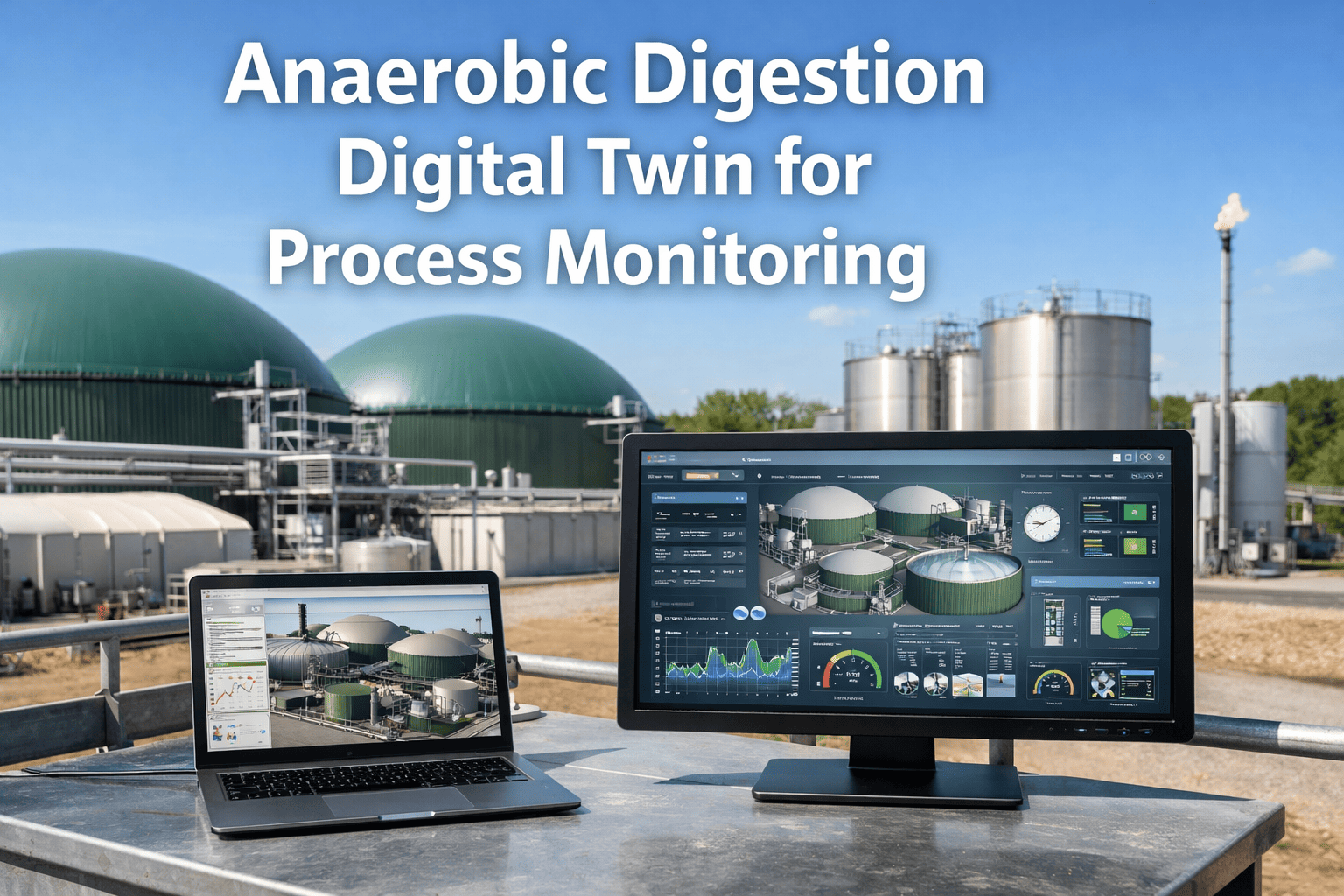
A live, continuously updated digital replica of your underground storage field — reservoir pressure, wellhead conditions, compressor status, and pipeline tie-ins — all in one integrated model. Enables scenario planning, emergency response simulation, and operator training without touching the live field.
Compressor and Well Equipment Health
AI-driven failure prediction for compressor trains, wellhead valves, dehydration units, and metering equipment. Connects to existing vibration, temperature, and flow sensors without new hardware. Delivers 2–6 week failure warnings with root-cause diagnosis and recommended corrective actions.
Sub-Hourly Demand Intelligence
Multi-variable AI demand models trained on weather, grid load, LDC nominations, and historical send-out patterns. Updates every 15 minutes. Integrates directly with your nomination management and scheduling systems to automate the translation of demand signals into optimized injection/withdrawal schedules.
Automated Integrity Management Reporting
Continuous collection, classification, and reporting of PHMSA and API 1170/1171 compliance data. Anomaly detection on pressure test results and mechanical integrity records. One-click audit report generation covering any date range, any well, any equipment group.
Compression Energy Optimization
Real-time monitoring and AI-driven optimization of compression energy consumption across the entire storage field. Identifies inefficient operating points, recommends load balancing across compressor units, and tracks energy cost per Mcf of throughput to enable continuous efficiency improvement.
Zero Cloud Dependency Architecture
iFactory runs on the NVIDIA appliance installed on your plant network. No data leaves your facility. No cloud subscription. No cybersecurity exposure from data egress. Full functionality in air-gapped environments — essential for underground storage facilities with strict data security requirements.
Measured Outcomes Across AI-Optimized Underground Storage Deployments
These figures represent aggregated performance data from underground storage facilities using AI optimization systems — across depleted reservoir, salt cavern, and aquifer storage field types in North American operations.
Technology Stack Comparison: AI vs. Legacy Systems for Underground Gas Storage
Not all digital tools for underground storage deliver the same value. Here is how AI-driven optimization platforms compare to legacy SCADA-only and basic analytics approaches across the metrics that matter most.
| Capability | SCADA Only | Basic Analytics | AI Optimization (iFactory) |
|---|---|---|---|
| Demand Forecast Horizon | Reactive (same-day) | 24–48 hrs (degree-day) | 4–6 hrs ahead (sub-hourly AI) |
| Reservoir Working Gas Visibility | Monthly pressure surveys | Weekly updated static model | Continuous real-time model |
| Compressor Failure Warning | None — failure at shutdown | Basic threshold alarms | 2–6 week predictive warning |
| Injection/Withdrawal Scheduling | Manual dispatcher | Manual with basic support | AI-optimized, auto-generated |
| Compliance Report Generation | Manual — 2–3 days | Semi-automated — hours | Automated — under 60 seconds |
| Energy Cost per Mcf | Untracked | Tracked, not optimized | Tracked and AI-optimized |
| Deployment Timeline | Already installed | 3–6 months | 6–12 weeks to first value |
| Cloud Dependency | None | Typically cloud-hosted | Zero — on-premise appliance |
What Midstream Operations Engineers Are Saying About AI Gas Storage Optimization
The conversation around AI in underground storage has matured significantly in the past 24 months. Here is the professional consensus from operations engineers and storage asset managers who have moved through evaluation to deployment.
The shift that AI forced in our operation was not technical — it was cultural. Our dispatchers had to accept that an algorithm could see demand signals they were missing. The first winter season running AI-optimized injection schedules, we avoided two peak-day shortfall events that would have triggered interruptible curtailments. That was the proof point that ended the internal debate.
For our salt cavern facility, the digital twin was the capability that unlocked real value. We were losing efficiency because our sonar survey data and operational pressure data were never integrated — they lived in separate systems. Once AI connected those streams, our reservoir team could see cavern wall behavior in real time. We caught a geometry issue before it became a production constraint.
The compliance automation was the easiest ROI to quantify for our CFO. Our safety team was spending roughly 15 hours per week just preparing inspection records and compliance documentation. That went to under 2 hours. We passed our last PHMSA review with zero findings — first time in four years.
See AI Gas Storage Optimization Running on a Live Underground Storage Field
iFactory's midstream operations team will walk you through a working deployment — demand forecasting, reservoir digital twin, compressor predictive maintenance, and compliance automation — on your schedule, with your field type as the reference case.
The Bottom Line on AI Gas Storage Optimization Underground
Underground gas storage is at an inflection point. The combination of tightening grid reliability requirements, aging compressor infrastructure, shrinking operations workforces, and increasingly volatile demand patterns has made the traditional approach — manual scheduling, reactive maintenance, static reservoir models — functionally obsolete for competitive storage operators.
AI does not replace the judgment and expertise of experienced storage operations teams. It extends that expertise — giving dispatchers better demand signals, giving reservoir engineers a live model instead of a monthly snapshot, giving maintenance teams weeks of warning instead of zero warning on compressor failures. The result is a storage field that runs closer to its theoretical maximum efficiency, with fewer unplanned events and a compliance record that holds up in any audit.
The operators who are capturing these gains today built their business case on a simple question: what does one avoided peak-day curtailment event cost, compared to the annual cost of an AI system that prevents it? For most U.S. underground storage fields, the math closes in well under 12 months. If you are evaluating AI for your underground storage operation, book a demo with iFactory to see the system running on a field with similar characteristics to yours, with a custom ROI model built for your specific asset.