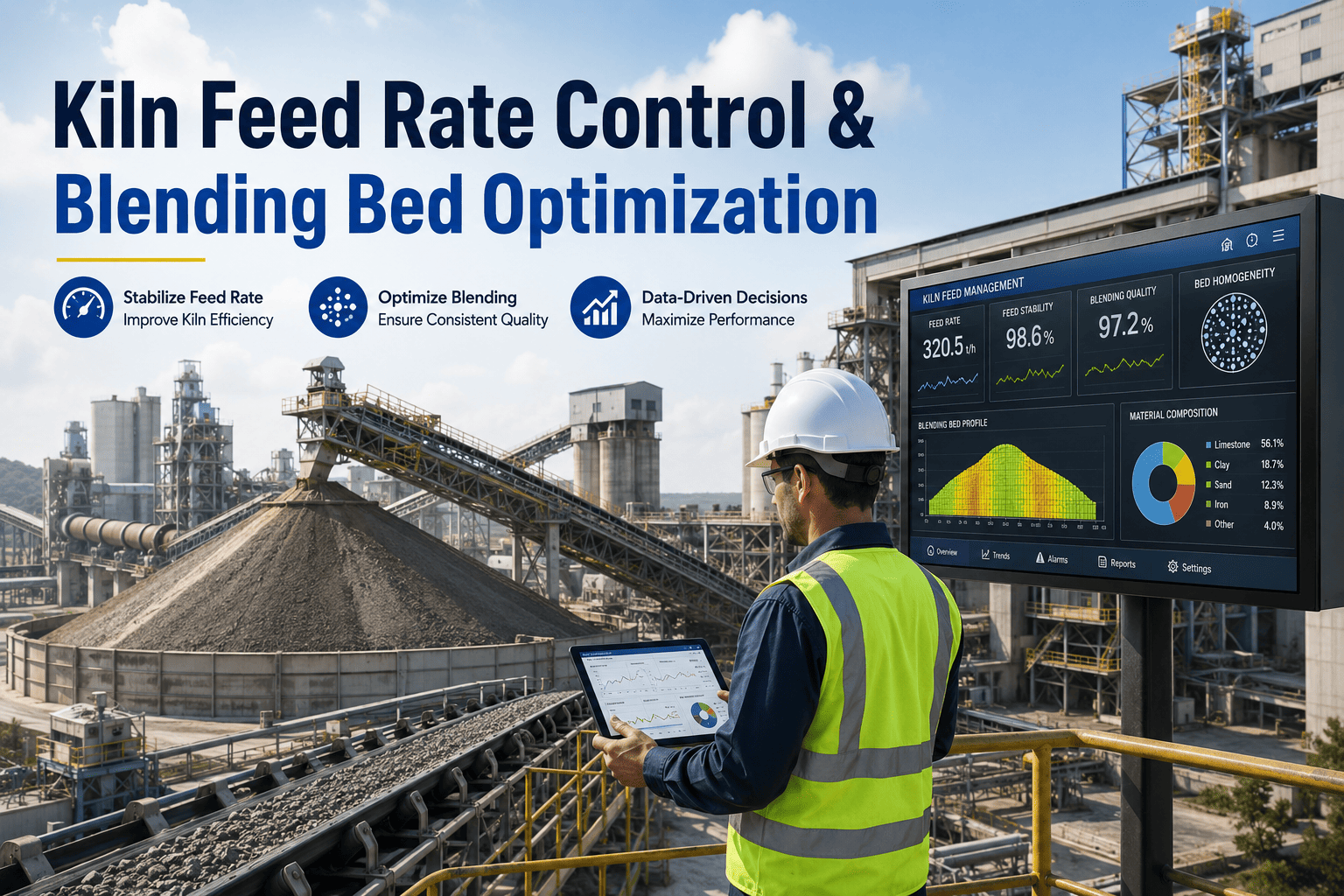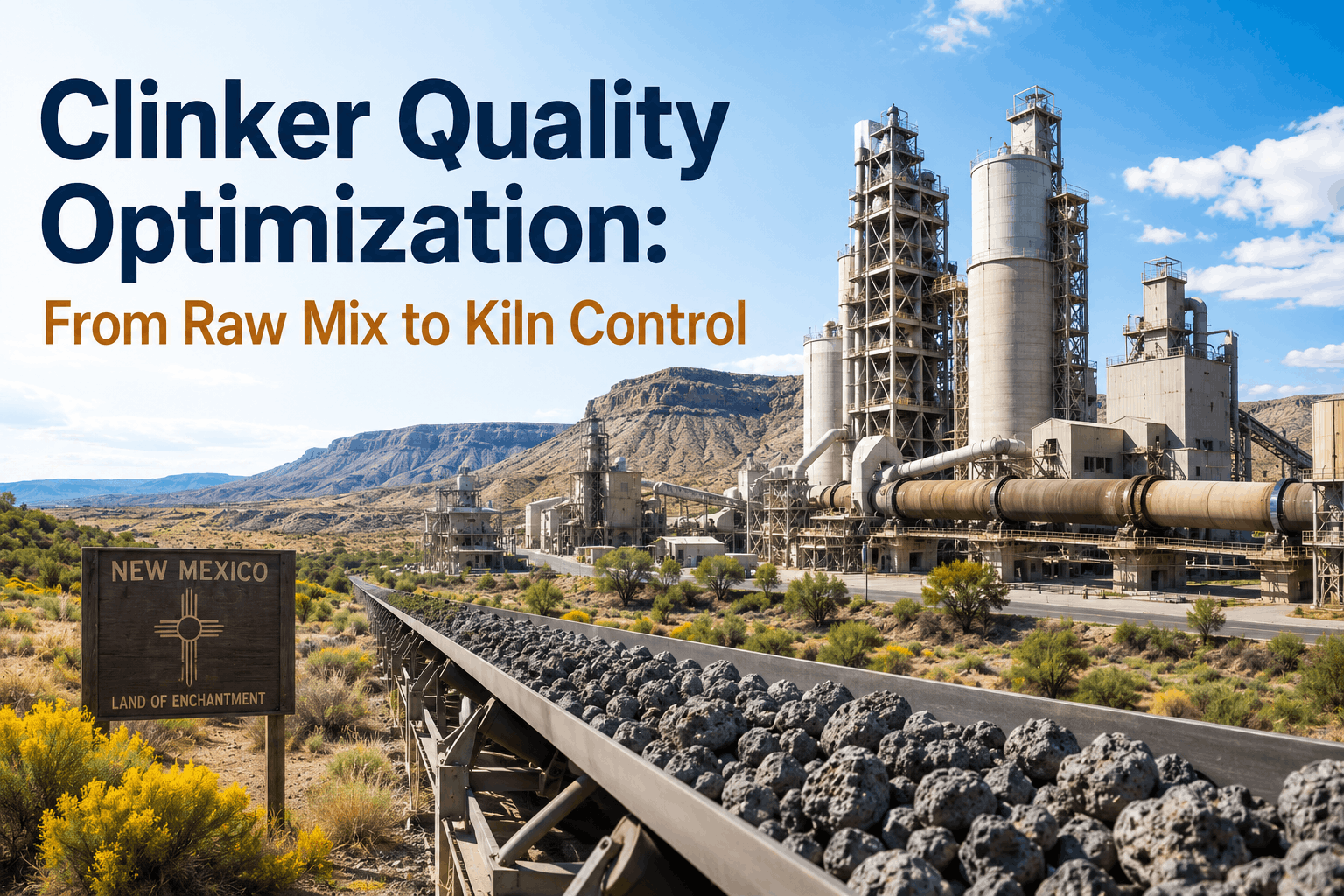
A cement plant can run its raw mill at perfect throughput and still produce clinker that swings between acceptable and marginal from one hour to the next, simply because the limestone, clay, and corrective material feeding the mill vary in chemistry faster than a lab technician can sample and adjust for. Manual raw mix control relies on hourly or shift-based lab results, which means the kiln is often burning a mix that was correct two hours ago but has since drifted on lime saturation factor or silica modulus. iFactory's AI raw mix optimization reads proportioning feeder data and quality lab results continuously, adjusting blend ratios in near real time to hold clinker chemistry inside target bands. Book a Demo to see how the model performs against your own quarry variability.
Hold Lime Saturation Factor and Silica Modulus Inside Target Bands With AI Raw Mix Optimization
iFactory's AI model continuously reads proportioning feeder rates, quarry chemistry variation, and lab XRF results, then recommends blend adjustments before drift in the raw mix becomes drift in the kiln.
Why Manual Raw Mix Control Cannot Keep Pace With Quarry Chemistry
Limestone chemistry varies naturally across a quarry face, and even a well-managed blending bed can only smooth so much of that variation before it reaches the raw mill feeders. Lab sampling on a one or two hour cycle means every adjustment decision is based on chemistry that has already changed by the time the correction reaches the mill, and operators are left chasing a moving target with reactive, manual proportioning changes.
Adjustments based on lab results that are 1 to 2 hours old by the time they reach the mill feeders
LSF variability of 3 to 5 points is common across a typical production week
Operators react to quality alarms after clinker has already been burned off-spec
Continuous feeder and chemistry data feed a model that recommends adjustments every few minutes
LSF variability typically narrows to within 1 to 2 points across the same production week
The model flags a developing drift before it reaches the kiln feed, not after
The Four Parameters the AI Model Optimizes Against
Lime Saturation Factor
Held within the plant's defined target band to stabilize burnability and free lime in the finished clinker.
Silica Modulus
Balanced against fuel availability and kiln coating requirements to protect refractory life.
Alumina Modulus
Managed to control liquid phase formation and clinker nodulization in the burning zone.
Free Lime Prediction
Forecasted ahead of the kiln discharge so corrective action happens before off-spec clinker is produced.
Run the Model Against Your Own Quarry Data Before Committing
iFactory can validate the AI raw mix model against six months of your plant's historical lab and feeder data to show expected variability reduction before any live deployment.
How the AI Raw Mix Model Gets Installed at Your Plant
Historical Data Validation
iFactory trains the model on your plant's own lab and feeder history to confirm accuracy before live deployment.
Feeder and Lab System Integration
Live proportioning feeder rates and XRF or XRD lab results are connected into the model's data pipeline.
Advisory Mode Operation
The model runs alongside existing manual control, issuing recommended blend adjustments for operator review.
Closed-Loop Optimization
Once accuracy is confirmed, the model can be connected directly to the proportioning control system for automated adjustment.
Where Consistent Raw Mix Chemistry Shows Up in Plant Performance
| Impact Area | Driver | Typical Result |
|---|---|---|
| Free Lime Rejects | Tighter LSF control reduces over-burning and under-burning cycles | Fewer off-spec clinker batches |
| Fuel Consumption | Stable burnability reduces kiln temperature correction swings | Lower specific heat consumption |
| Refractory Life | Consistent coating formation from stable silica and alumina modulus | Extended reline intervals |
| Cement Strength Consistency | Reduced clinker chemistry variability improves downstream cement uniformity | Fewer customer quality complaints |
How Accuracy Is Confirmed Before the Model Touches Live Proportioning
Before any recommendation reaches a control system, iFactory validates the model by running it in shadow mode against a full production quarter of historical data, comparing what the model would have recommended against what your lab actually measured after the fact. This backtest gives your quality and process engineering teams a concrete accuracy figure specific to your plant's chemistry variability, rather than a generic performance claim, before advisory mode ever begins.
Backtest Against History
The model's recommended adjustments are compared against your own historical lab results for a full quarter before go-live.
Confidence Scoring
Every recommendation carries a confidence score so operators know when the model is highly certain versus flagging a marginal call.
Ongoing Recalibration
The model is retrained periodically as quarry chemistry, fuel mix, or corrective material sources change over time.
Engineer Override
Process engineers can always override or reject a recommendation, with that decision feeding back into future model tuning.
Quality Manager Perspective After a Season on the AI Model
Our biggest quality headache had always been the lag between lab results and feeder correction. We would see an LSF excursion on the two o'clock sample and know the mix had probably already drifted back by the time anyone adjusted the feeders. Running the AI model in advisory mode for the first eight weeks let our process engineers build trust in the recommendations before we moved to closed loop. Our free lime rejects dropped noticeably in the first full quarter of closed-loop operation. Contact Support walked our lab team through interpreting the model's confidence intervals during that advisory period.
Frequently Asked Questions About AI Raw Mix Optimization
The model typically requires six to twelve months of historical proportioning feeder and lab chemistry data to learn the relationship between raw material inputs and resulting clinker chemistry at your specific plant. Plants with more consistent lab sampling frequency and complete feeder logging tend to see faster model convergence during the validation phase. If your historical data has gaps, iFactory's engineers will identify what additional sampling is needed before training begins.
No new hardware is required if your plant already has an XRF or XRD lab analyzer, since the model is designed to work with standard sampling frequencies rather than requiring continuous online analysis. Plants that do have an online analyzer will see faster model response times because the feedback loop between adjustment and confirmed result is shorter. iFactory's engineers assess your existing lab setup during the initial data validation phase and recommend whether any changes would meaningfully improve performance.
In advisory mode, the AI model generates recommended blend adjustments that appear on the operator's screen for manual review and implementation, allowing the plant to validate the model's accuracy against real operating conditions. In closed-loop mode, the model's recommendations are sent directly to the proportioning control system without manual intervention, which most plants adopt only after several weeks of confirmed advisory mode accuracy. Book a Demo to discuss which starting mode fits your plant's risk tolerance.
Yes, the model is trained on your plant's full raw material mix, including corrective materials such as iron ore, bauxite, or sand, and accounts for the chemistry contribution of each material to the final blend. This is particularly useful for plants that source corrective materials from multiple suppliers with varying chemistry, since the model adjusts its recommendations based on which supplier's material is currently in use. The model can be retrained if a new corrective material source is introduced.
Most plants see measurable reduction in lime saturation factor variability within the first four to eight weeks of advisory mode operation, as operators begin trusting and acting on the model's recommendations more consistently. Full closed-loop benefits, including reduced free lime rejects and more stable fuel consumption, typically become clear over a full production quarter. Reach out through Contact Support if you want a realistic timeline estimate based on your current variability data.
Stop Chasing Chemistry Two Hours After It Has Already Drifted
iFactory's AI raw mix optimization keeps lime saturation factor and silica modulus inside target bands continuously, protecting clinker quality before it reaches the kiln.