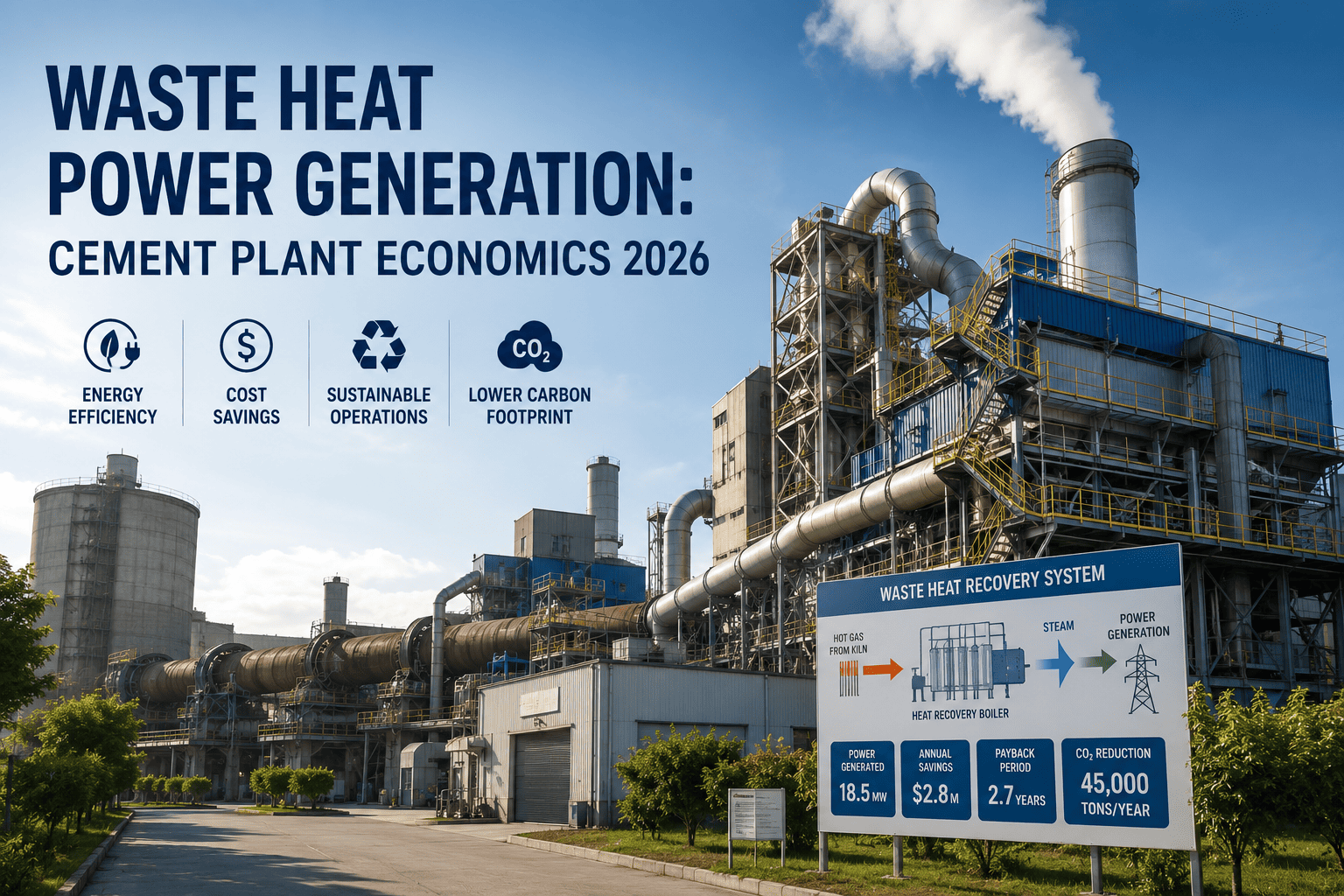
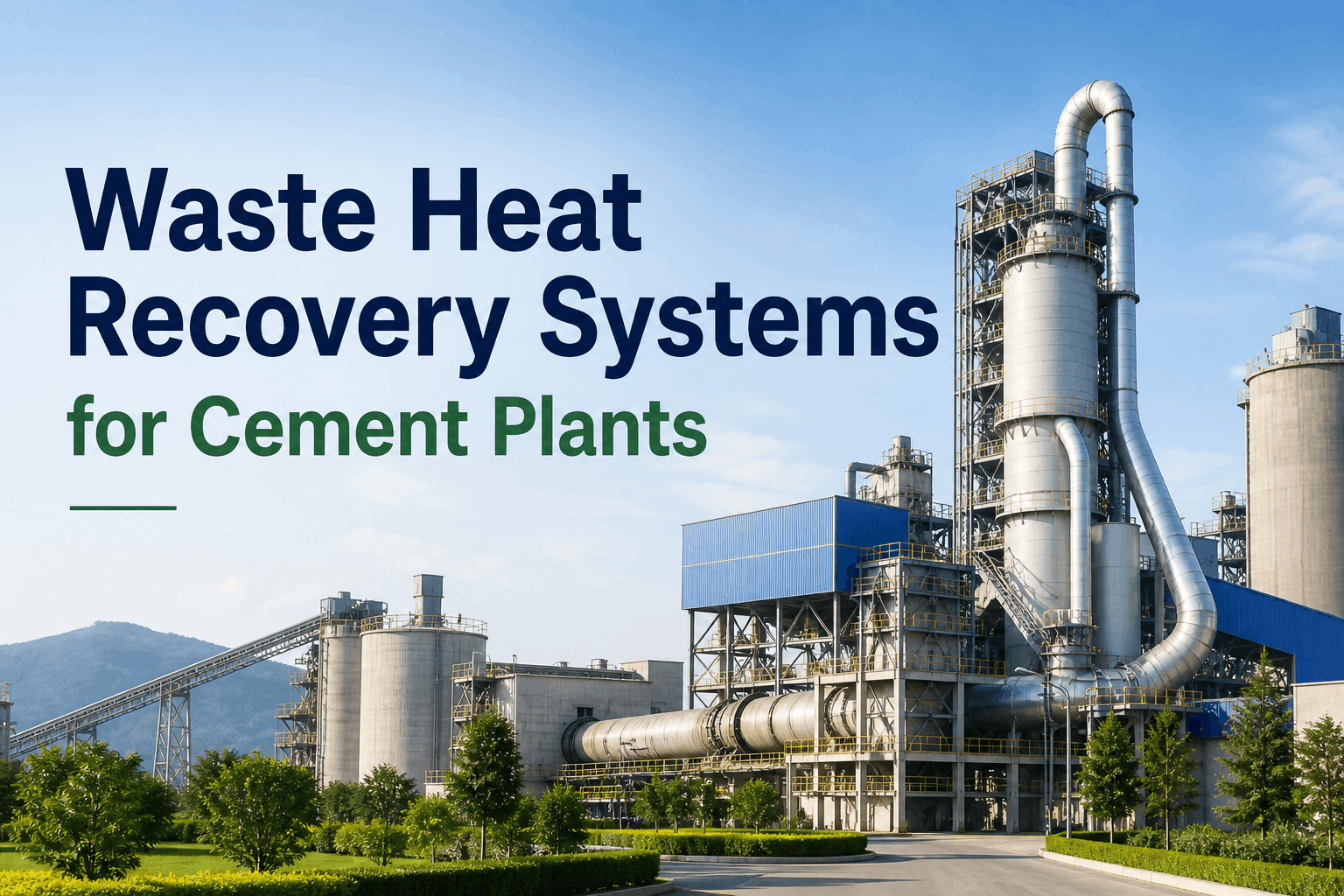
Organic Rankine Cycle systems have become the default choice for cement plant waste heat recovery in the 150 to 350°C range, and for good reason — they are simple, well proven, and carry roughly 40% of the installed base worldwide. But "default" is not the same as "best possible," and two technologies now moving from research papers into actual reference installations are pushing past what ORC and conventional steam cycles can extract from the same exhaust stream. The Kalina cycle has already generated commercial-scale power at cement plants using an ammonia-water working fluid, and supercritical CO2 has just completed its first megawatt-scale industrial pilot in Europe. Neither is a wholesale replacement for ORC yet, but both are worth understanding before your next WHR capital decision, which is exactly the evaluation iFactory's energy engineering team walks plants through.
Two Technologies Chasing the Efficiency ORC Leaves on the Table
Published studies on cement kiln waste heat put the Kalina cycle's thermal efficiency improvement at 20 to 40% over conventional steam-based recovery systems using the same hot gas stream. Supercritical CO2, meanwhile, has moved from theoretical modeling to a real 2 MW installation recovering waste heat directly from a cement plant. Both are aimed at the same problem — squeezing more usable electricity out of low-grade heat that ORC and steam Rankine already handle reasonably well but not optimally.
Kalina Cycle and Supercritical CO2, Side by Side
Both technologies solve the low-grade heat problem differently — one by changing the working fluid, the other by changing the fluid's physical state — and each brings a different set of tradeoffs to a cement plant retrofit.
Kalina Cycle
The Kalina cycle replaces the single working fluid of a steam or organic Rankine cycle with a variable-concentration ammonia-water mixture. Because the mixture boils and condenses across a range of temperatures rather than at one fixed point, it tracks the cooling curve of the exhaust gas far more closely, which is where the 20 to 40% efficiency gain over conventional cycles comes from. A commercial Kalina installation at a cement plant in Pakistan has demonstrated 8.6 MW of output recovering heat from the preheater and clinker cooler at a working fluid temperature of 340°C, giving the technology an actual operating reference rather than a purely theoretical one.
Supercritical CO2 (sCO2)
Above roughly 31°C and its critical pressure, carbon dioxide stops behaving like a distinct gas or liquid and takes on properties of both — low viscosity and high density at once. That combination allows compact, efficient turbomachinery and has driven a European pilot project to install a 2 MW waste-heat-to-power skid directly at a cement plant, the first megawatt-scale sCO2 unit of its kind. Nominal cycle efficiency in published modeling sits around 20.5 to 23%, and the technology is shown to hold close to that efficiency across most part-load operating conditions a real kiln produces.
How the Four Cycles Stack Up
Choosing a WHR cycle is not a single-axis decision. Efficiency matters, but so does moving-part complexity, footprint, working fluid handling, and how proven the technology is at the scale a specific kiln line needs.
| Cycle | Best Suited Temperature | Relative Efficiency | Commercial Maturity |
|---|---|---|---|
| Steam Rankine (SRC) | Above 300°C exhaust | Baseline reference | Fully commercial, decades of installations |
| Organic Rankine (ORC) | 150–350°C exhaust | Comparable to SRC at lower temperatures | Fully commercial, dominant market share |
| Kalina Cycle | Low-to-mid grade heat, ~150–350°C | 20–40% higher than conventional cycles | Commercially referenced, limited installed base |
| Supercritical CO2 (sCO2) | Medium-to-high grade heat | ~20.5–23% nominal, stable at part load | Early demonstration, first MW-scale pilot only recently commissioned |
Where Each Technology Actually Sits on the Path to Commercial
Efficiency numbers from a lab model and efficiency numbers from a plant that has run for a decade are not the same kind of evidence. Here is what each stage of maturity looks like in practice, and where Kalina and sCO2 currently fall.
Energy Engineering Perspective
We get asked about Kalina and sCO2 on almost every WHR scoping call now, usually because someone read a paper citing a 30 or 40% efficiency gain. The number is real under the right conditions, but it is not the only number that matters. A plant with one reference installation to point to and a plant with a hundred are not the same purchase decision, even if the theoretical efficiency looks identical on paper.
— Energy Engineering Lead, cement WHR technology evaluation
thermal efficiency improvement reported for the Kalina cycle over conventional cement WHR systems
scale of the first megawatt-class sCO2 waste-heat-to-power installation at a cement plant
of installed cement WHR capacity worldwide still using conventional ORC systems today
Which Technology Fits Which Plant
Neither Kalina nor sCO2 is a universal upgrade. The right choice depends on exhaust temperature profile, appetite for technology risk, and how much value a few extra efficiency points is actually worth against a smaller reference base.
worth evaluating where exhaust sits in the low-to-mid grade range and the plant can accept ammonia handling procedures in exchange for a meaningful efficiency gain
worth tracking rather than specifying today, given its early demonstration stage, but promising for plants planning a WHR investment several years out
still the lowest-risk choice for a plant that needs proven performance and a wide vendor base today
Not sure which cycle fits your exhaust temperature profile and risk tolerance? Book a technology fit review and bring your preheater and clinker cooler exhaust data.
Evaluate Next-Generation WHR Technology Before You Commit Capital
iFactory's energy engineering team benchmarks Kalina, sCO2, ORC, and steam Rankine against your specific exhaust temperature profile, kiln size, and risk tolerance — so the technology decision is based on your data, not a vendor's efficiency slide. Start with an exhaust profile review. Compare the real options. Then commit with confidence.
Frequently Asked Questions
Is the Kalina cycle proven enough to specify for a new cement WHR project today?
The Kalina cycle has moved beyond pure modeling into commercial operation, with a reference installation at a cement plant generating 8.6 MW from preheater and clinker cooler heat at a working fluid temperature around 340°C. That gives buyers real operating data rather than only theoretical efficiency projections, which places it well ahead of sCO2 in commercial readiness for this application. That said, the installed base is still small compared to ORC and steam Rankine, so a plant considering Kalina should weigh the documented efficiency gain against a narrower pool of reference sites and vendors than the established cycles offer.
Why does supercritical CO2 need such precise temperature control to work?
Carbon dioxide reaches its supercritical state at a relatively low critical temperature, just above 31°C, which is well within the range that ambient conditions and cooling water temperatures can swing through in normal industrial operation. If the CO2 in the cycle drops below that critical point, it can shift toward behaving as a distinct liquid or gas rather than the dense, low-viscosity supercritical fluid the cycle is designed around, which can affect performance and stability. This is the central engineering challenge sCO2 waste heat projects have to solve, and it is a large part of why the technology is still at the pilot and demonstration stage for industrial applications like cement rather than broad commercial deployment.
Does a higher efficiency number always mean a better return on investment?
Not necessarily. A 20 to 40% efficiency improvement is meaningful, but return on investment also depends on capital cost, the price and availability of parts and service for a less common technology, and the operating history available to de-risk the project. A plant evaluating Kalina or sCO2 against ORC should model total cost of ownership over the equipment's expected life, not just the headline efficiency figure, since a technology with a smaller vendor base can carry higher costs for spares and specialized maintenance that offset some of the efficiency gain.
Can an existing ORC-based WHR plant be converted to Kalina or sCO2 later?
In most cases, a full technology swap means replacing the turbine, working fluid system, and much of the balance of plant, since these cycles use fundamentally different working fluids and equipment designs rather than a drop-in component change. It is generally more practical to evaluate Kalina or sCO2 at the point of a new WHR investment or a major life-extension overhaul than to retrofit them onto an operating ORC system. iFactory's engineering team can help model whether a technology change makes sense against your specific overhaul timeline.
How should a plant decide between Kalina, sCO2, and staying with ORC?
The decision comes down to three factors: your exhaust temperature profile, since each cycle has a range where it performs best; your tolerance for technology risk, given the very different reference-installation counts behind each option; and the timeline of your capital decision, since sCO2 in particular is likely to look considerably more proven in a few years than it does today. Book a technology fit review to see how your specific plant profile maps against all four cycles side by side.