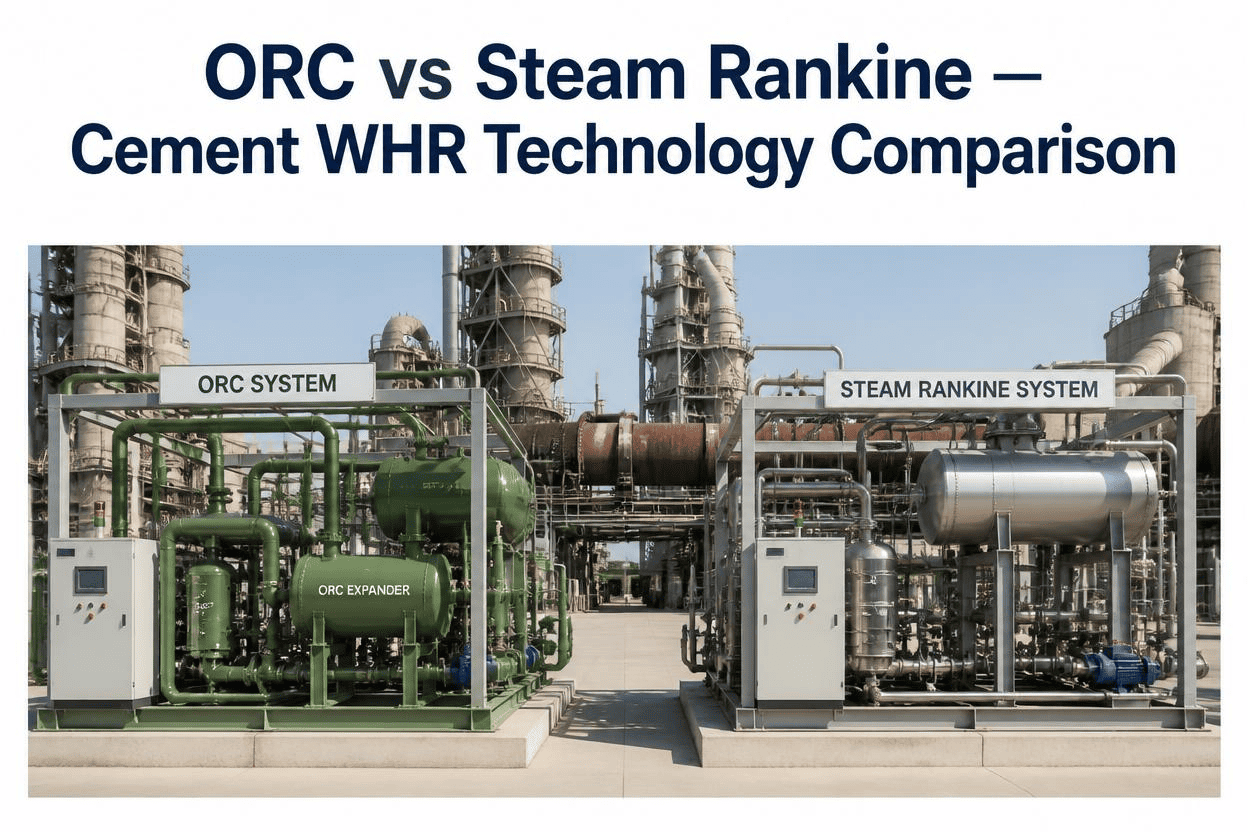
Every cement WHR project eventually comes down to one decision that shapes the entire economics of the system: organic fluid or water, low-pressure turbine or high-pressure steam island. Get this call right and a plant captures nearly every recoverable kilowatt at a sane maintenance cost. Get it wrong and the plant either overspends on a steam system its exhaust gas can't fully justify, or undersizes its output with an ORC package on a line that could have supported far more. This comparison walks through where each technology wins, using the same PH and AQC exhaust streams every cement kiln already produces. If your thermal audit is already done and you're stuck on this exact fork, book a demo to walk through the numbers against your own gas temperature profile.
Why This Decision Gets Made Too Fast
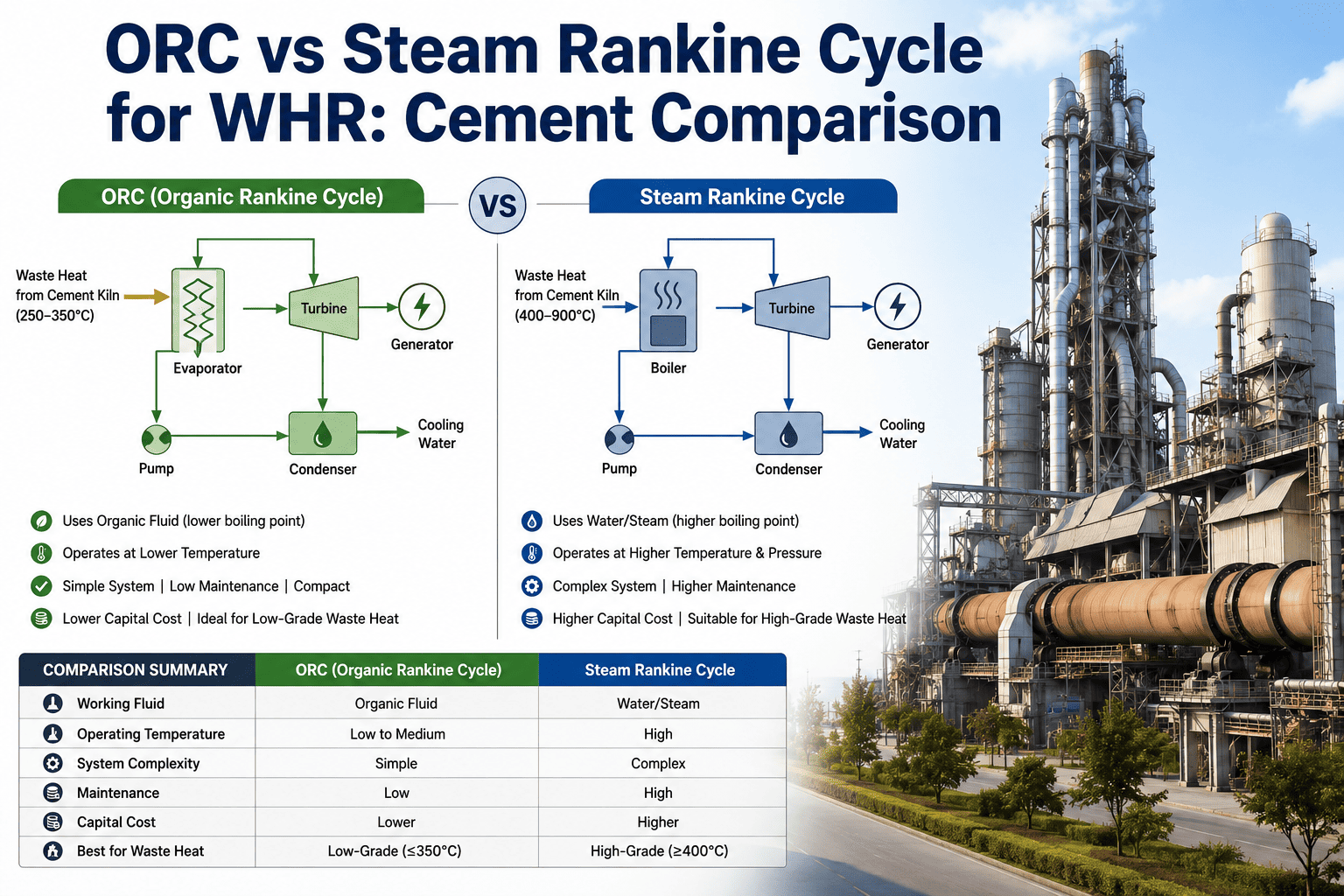
Many plants pick a technology based on what a neighboring cement group installed, not on their own exhaust gas temperature profile. The two cycles convert the same PH and AQC heat into electricity, but the physics that make one efficient at a given temperature can make the other genuinely uncompetitive at that same temperature. Research on cement-specific applications has found that when preheater exhaust drops below roughly 310°C, the organic cycle consistently out-converts a steam cycle, while the reverse tends to hold true above that line. That single threshold is worth more to a feasibility study than almost any other input.
Head-to-Head: Efficiency, Maintenance, Water, and Cost
| Factor | Organic Rankine Cycle (ORC) | Steam Rankine Cycle (SRC) |
|---|---|---|
| Effective temperature range | 75–350°C, strongest below ~310°C | Best above ~300°C, weak below it |
| Working fluid | Organic fluid, lower boiling point | Water, converted to high-pressure steam |
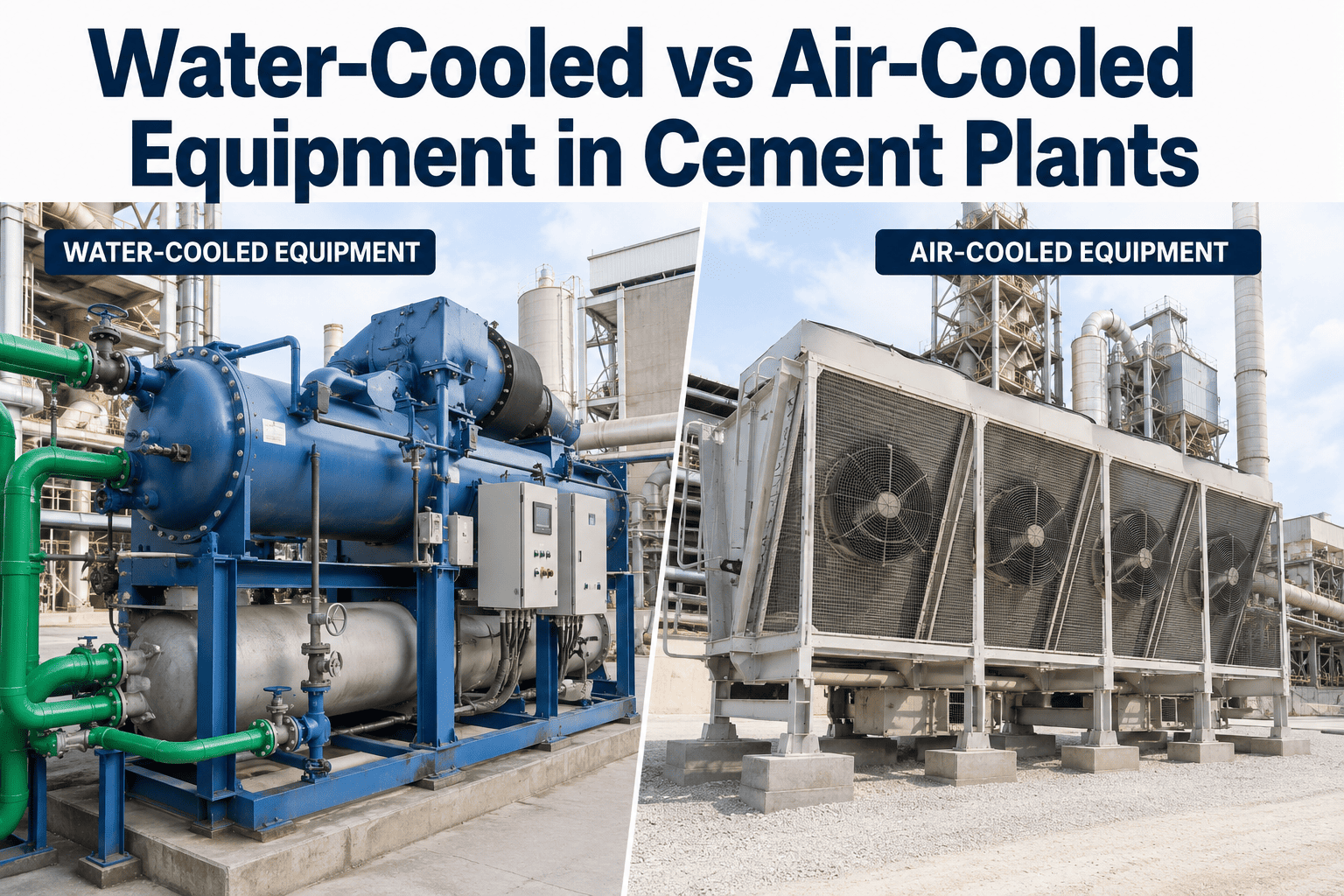
| Water requirement | Minimal to none | Significant — treatment and cooling water needed |
| Part-load efficiency | Higher — matches fluctuating kiln loads well | Drops off more sharply below full load |
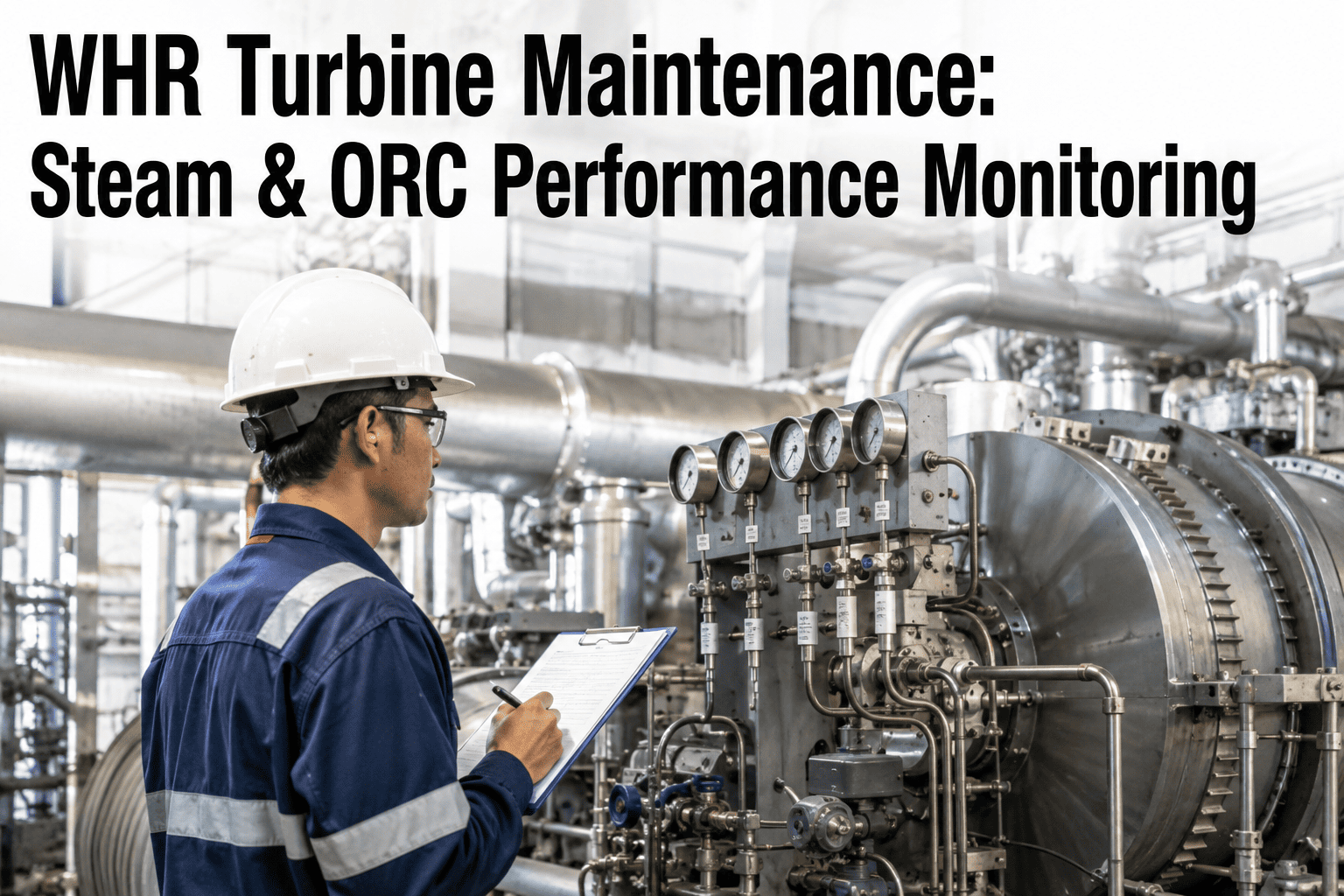
| Maintenance complexity | Lower, largely automated operation | Higher, high-pressure turbine components |
| Typical output ceiling | Better suited to small-to-mid capacity | Scales further at large capacity and high temperature |
| Investment cost pattern | Lower upfront and maintenance cost, per published cement retrofit studies | Higher upfront cost, justified at scale |
Where Each Technology Consistently Wins
What Published Cement Retrofit Data Shows
Case studies retrofitting existing cement lines give a useful reality check against theory. In one widely cited Mazandaran cement plant study, a steam cycle using water as the working fluid delivered more power output than an ORC using an organic fluid at the same site — but the ORC installation still reached a competitive payback period despite the lower output, because its equipment and maintenance costs were meaningfully lower. That is the trade a feasibility study has to weigh explicitly: raw power output against total cost of ownership, not efficiency in isolation.
The Hybrid Option Most Plants Miss
ORC and steam systems are not always an either-or choice. Because AQC air and PH exhaust can sit at different points along the temperature range, some plants run a steam system on the hotter, more consistent stream and an ORC package on the cooler or more variable one — capturing the strengths of both technologies on the same kiln line instead of forcing one cycle to handle two very different heat sources. This hybrid configuration is more common on larger, multi-boiler installations where the added equipment cost is easier to justify against the extra megawatts recovered.
Retrofit Considerations for Existing Kiln Lines
A greenfield kiln can be designed around whichever technology its exhaust profile favors from day one, but most WHR decisions in the cement industry happen on existing lines where physical space, existing ductwork, and current water infrastructure all constrain the choice. Retrofitting a steam Rankine system onto a line that never had one typically means adding water treatment capacity, cooling infrastructure, and a larger equipment footprint than an ORC package would need — which is part of why ORC has become the more common retrofit choice even on plants where a steam system would technically capture slightly more output. The practical question during a retrofit feasibility study is rarely "which cycle is more efficient" in isolation, but "which cycle fits the space, water access, and civil work budget we actually have available." A plant with tight site constraints and no existing water treatment infrastructure will often find ORC pays for itself faster purely on lower installation complexity, even if a steam system's theoretical output ceiling is higher. Conversely, a plant already running water-intensive processes elsewhere, with treatment capacity and skilled steam-system operators on staff, may find the incremental cost of a steam turbine island easier to justify than building an entirely new ORC maintenance competency from scratch.
Total Cost of Ownership Over the System's Lifetime
Sticker price and installation cost tell only part of the ownership story. Over a fifteen-to-twenty-year operating life, the maintenance cost gap between the two technologies compounds meaningfully. ORC systems, with their simpler mechanical design and lack of high-pressure steam components, generally require less specialized maintenance labor and fewer scheduled outages for turbine servicing. Steam systems demand more rigorous water chemistry management, more frequent inspection of high-pressure components, and typically a higher-skilled maintenance team to keep the turbine island running reliably. None of this makes steam the wrong choice — at high, consistent exhaust temperatures its higher raw output can still deliver a better total return even after accounting for the added maintenance burden. But a feasibility study that only compares upfront capital cost between the two technologies is missing a large piece of the real economic picture, and plants that skip this step are the ones most likely to be surprised by their actual operating costs two or three years after commissioning.
A Simple Framework for Making the Call
Strip away the engineering detail and the decision comes down to answering three questions in sequence, in this order. First, where does your average PH and AQC exhaust temperature actually sit relative to the roughly 300–310°C crossover — not the peak temperature during a good production run, but the realistic average across a full operating cycle including load swings. Second, what does your site actually have available in terms of water access and treatment infrastructure, since this can override a purely thermal recommendation if water is genuinely scarce or costly. Third, what does your maintenance team's existing skill set support — a plant with strong rotating-equipment expertise and no appetite for building new competency may lean toward whichever technology matches what they already know how to run well. Most feasibility studies that struggle to land on a clear recommendation are missing one of these three inputs, usually the honest average-temperature figure rather than a best-case reading. Getting that number right from continuous logging, rather than a single commissioning-day measurement, resolves more technology debates than any other single input in the decision.