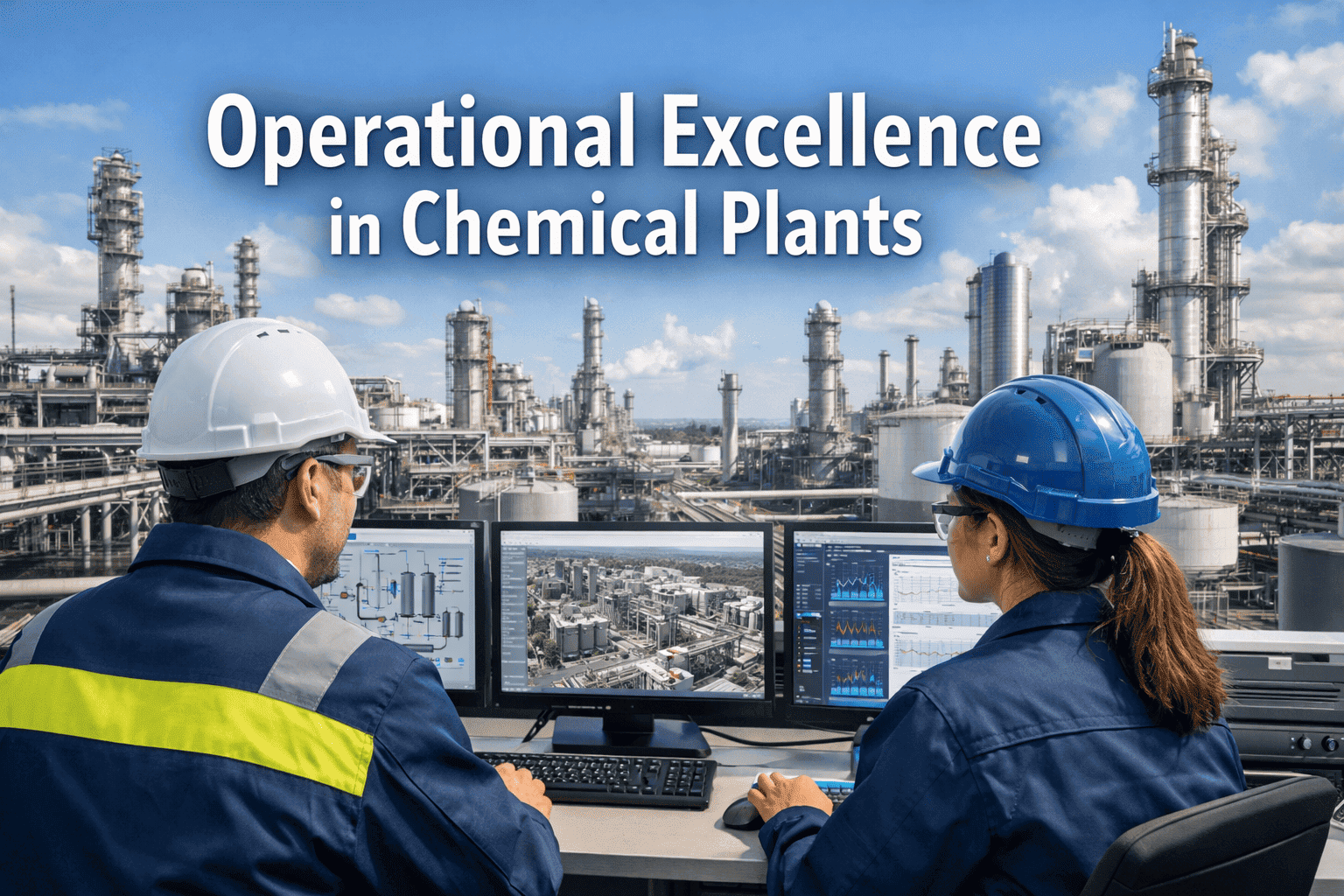
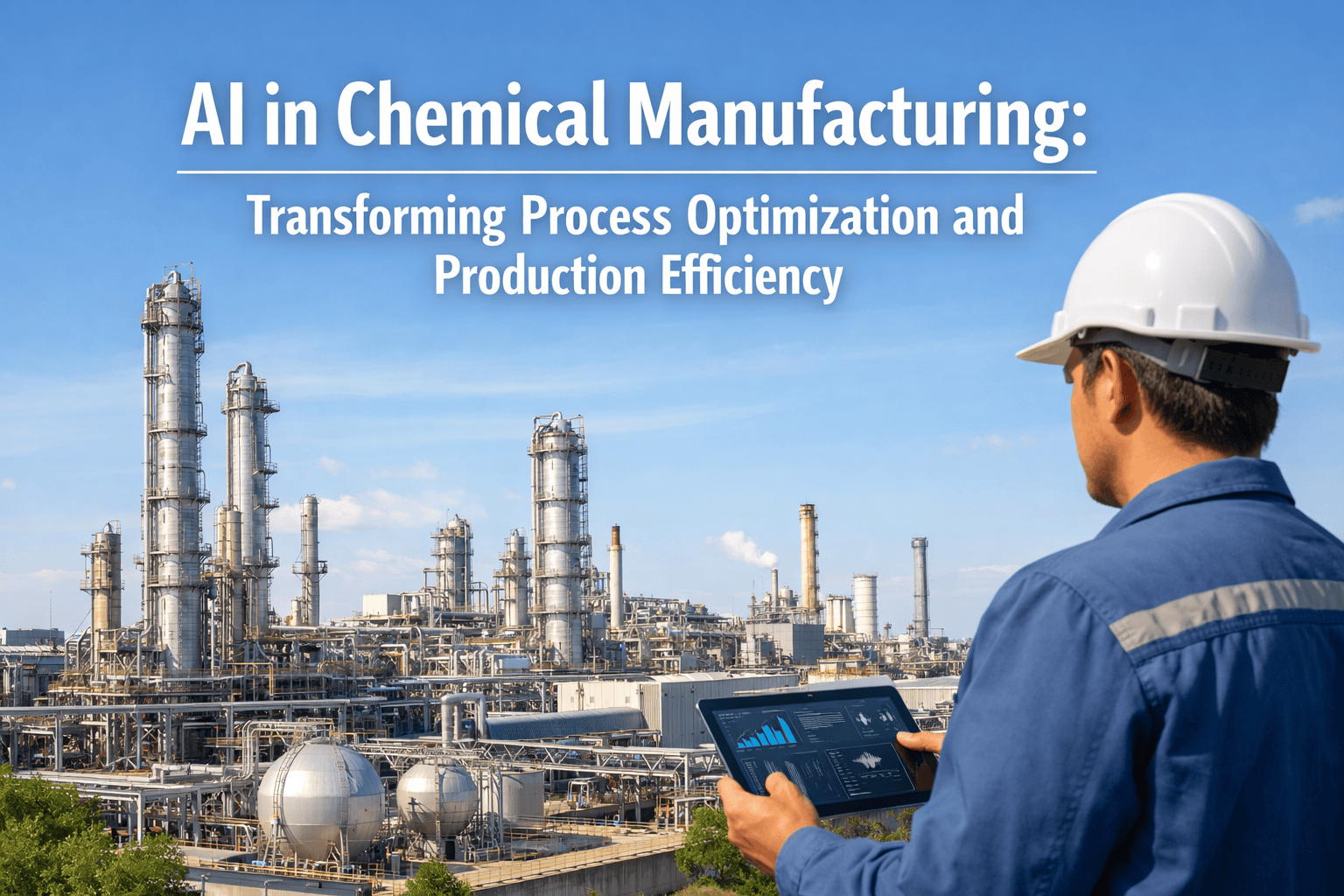
Chemical plant operational excellence requires simultaneous optimization across six competing dimensions — maximizing throughput while minimizing energy consumption, maintaining product quality while reducing raw material costs, improving safety performance while increasing asset utilization, and achieving environmental compliance targets without sacrificing profitability. Traditional improvement programs address these dimensions sequentially through isolated projects (energy audit in Q1, quality improvement in Q2, maintenance optimization in Q3) without understanding their interdependencies or cumulative impact on plant economics. iFactory's operational excellence platform integrates real-time process data, quality measurements, energy consumption, maintenance events, and production schedules into unified analytics that identify the highest-value improvement opportunities, quantify trade-offs between competing objectives, and track performance against industry benchmarks continuously. Book a demo for chemical plant operational excellence.
Throughput Maximization
+8–14%
Energy Efficiency
-12–18%
Quality Improvement
-65% defects
Asset Utilization
+11–16%
Safety Performance
-72% incidents
Six Pillars of Chemical Plant Operational Excellence
Integrated analytics across production, quality, energy, maintenance, safety, and environmental performance.
Focus: Identify and eliminate production bottlenecks, optimize batch cycle times, reduce changeover duration, improve equipment availability. AI analyzes historical production data to determine theoretical maximum throughput vs current performance gap.
Debottlenecking opportunities identified
Cycle time reduction: 6–12%
Changeover optimization: 18–35 min saved
Typical impact: 8–14% throughput increase without capex investment, equivalent to adding production capacity worth $4M–$8M in avoided expansion costs for mid-size plant.
Focus: Optimize steam distribution, reduce compressed air leakage, improve heat recovery efficiency, minimize pumping energy. Real-time energy monitoring per process unit reveals inefficient operating patterns and equipment degradation.
Specific energy consumption tracking
Heat recovery optimization
Utility consumption benchmarking
Typical impact: 12–18% energy cost reduction, 8–11% greenhouse gas emissions decrease. Annual savings: $280K–$650K for plant consuming 150,000 MWh/year at $0.12/kWh.
Focus: Reduce batch rejection rate, minimize off-spec production, improve first-pass yield, tighten process control to reduce variability. Statistical process control with automated alerts when trending toward specification limits.
Real-time quality prediction
Defect root cause analysis
Process capability monitoring (Cpk)
Typical impact: 65% reduction in quality defects, 4.2% improvement in first-pass yield. Value: $180K–$420K annually from reduced rework, scrap, and customer claims for $50M revenue plant.
Focus: Optimize reaction yield, reduce solvent losses, minimize effluent treatment costs, improve raw material utilization. Mass balance tracking identifies material losses that don't end up in product or documented waste streams.
Material balance closure analysis
Yield optimization modeling
Waste generation per unit product
Typical impact: 22–28% reduction in waste generation, 1.8–2.4% yield improvement. Combined value: $320K–$580K annually from reduced raw material consumption and waste disposal costs.
Focus: Increase equipment uptime through predictive maintenance, reduce planned shutdown duration, optimize production scheduling to match demand. OEE (Overall Equipment Effectiveness) tracking across all major assets.
OEE monitoring (Availability × Performance × Quality)
Downtime root cause categorization
Turnaround planning optimization
Typical impact: 11–16% increase in asset utilization, 3.5 days reduction in annual turnaround duration. Revenue impact: $850K–$1.4M annually for plant with $80M capacity-limited revenue.
Focus: Reduce process safety incidents, minimize fugitive emissions, ensure environmental permit compliance, improve hazardous material handling. Automated monitoring of process deviations that create safety risk (pressure excursions, temperature runaway, toxic releases).
Safety incident leading indicators
Emissions monitoring & reporting
Process deviation frequency tracking
Typical impact: 72% reduction in recordable safety incidents, 45% decrease in environmental exceedances. Avoided costs: regulatory fines, workers comp claims, production interruptions from investigations.
Operational Excellence Analytics Dashboard
Three-tier visibility from executive KPI summary to detailed process diagnostics.
Executive Tier
Plant Performance Overview
Production Efficiency
87.4%
↑ 4.2% vs target 83.2%
Specific Energy Cost
$42.8/tonne
↓ $5.4 vs budget $48.2
Quality First-Pass Yield
96.8%
↑ 2.6% vs baseline 94.2%
Asset Utilization (OEE)
82.1%
↑ 6.8% vs industry 75.3%
Operations Tier
Process Unit Deep Dive
Conversion: 94.2% (target 95.0%)
Selectivity: 88.6% (baseline 87.1%)
Energy per batch: 1,840 kWh (budget 1,920 kWh)
Insight: Temperature control improvement in exothermic phase increased selectivity 1.5% while reducing cooling energy 4.2%. Recommend replicating strategy in R-202, R-203.
Engineering Tier
Root Cause Diagnostics
Issue: Distillation column D-301 reflux ratio increased 8% week-over-week, energy consumption up 12%
Root cause 1: Condenser fouling reduced heat transfer coefficient 14% (inlet-outlet ΔT declined from 18°C to 15.5°C)
Root cause 2: Feed composition heavier than spec (42% C10+ vs 38% typical) requires higher reflux for separation
Recommended action: Schedule condenser cleaning within 7 days (energy savings $840/day). Work with procurement to tighten feed spec or adjust pricing for off-spec material.
Integrated Operational Excellence — Not Siloed Projects
Traditional improvement programs optimize one dimension at a time. iFactory reveals trade-offs and interdependencies across all six pillars — enabling decisions that maximize total plant economics rather than sub-optimizing individual metrics.
Example: Increasing reactor temperature 5°C improves conversion 2.1% (throughput gain: $280K/year) but increases energy cost $85K/year and accelerates catalyst deactivation requiring replacement 4 months earlier (cost: $120K). Net value: $75K/year positive. Without integrated analytics, energy team would reject temperature increase based on utility cost alone.
Implementation Approach
Five-phase deployment from baseline assessment to continuous improvement culture in 12–16 weeks.
Baseline Performance Assessment
Measure current performance across all six pillars. Establish KPI definitions, data sources, and calculation methods. Compare performance vs industry benchmarks (NACD, CEFIC, regional associations). Identify 15–20 largest improvement opportunities through Pareto analysis of losses.
Data Integration & Analytics Development
Connect to DCS, LIMS, ERP, energy meters, and maintenance systems. Build automated KPI calculation engines. Develop root cause analysis models for top loss categories. Configure executive, operations, and engineering dashboards with role-specific views.
Quick-Win Projects Execution
Launch 5–8 rapid improvement projects targeting highest-ROI opportunities requiring <60 days implementation. Examples: heat recovery optimization, batch cycle time reduction, quality control tightening. Track progress weekly, validate results, document learnings.
Capability Building & Change Management
Train operations teams on data-driven problem solving. Establish daily/weekly performance review rhythms. Create standard work for using analytics in shift handover, production meetings, and improvement events. Develop internal champions for sustained momentum.
Continuous Improvement System Launch
Deploy performance management processes: monthly strategy deployment, weekly tactical reviews, daily operational huddles. Establish improvement pipeline for long-term projects (capex, process redesign). Configure alerts for performance degradation requiring corrective action.
Measured Results — Chemical Plant Deployments
$2.8M
Average Annual Economic Benefit per Plant
Mid-size specialty chemicals plant (200–400 employees, $80M–$150M revenue)
Benefit Composition
Throughput increase (8–14%)
$1.1M
Energy cost reduction (12–18%)
$480K
Quality/yield improvement
$620K
Waste reduction (22–28%)
$380K
Asset utilization (11–16%)
$220K
9.2 months
Typical Payback Period
3.6×
First-Year ROI Multiple
18 plants
Deployed Chemical Facilities
From the Field
"We ran separate improvement programs — energy team focused on reducing steam consumption, operations focused on maximizing throughput, quality focused on reducing defects. Each team optimized their metric but plant economics didn't improve much because the programs conflicted. Energy team wanted lower reactor temperatures to save steam, operations wanted higher temperatures to increase reaction rate, quality wanted moderate temperatures to minimize side reactions. iFactory showed us that operating at 168°C instead of 165°C increased throughput 3.2% worth $420K annually, increased energy cost $65K, but reduced off-spec batches by 40% worth $180K in rework savings. Net benefit: $535K/year. The integrated view let us make the right decision for total plant economics instead of optimizing individual departments."
Plant Manager
Specialty Chemicals Manufacturing — $120M Annual Revenue
Frequently Asked Questions
QHow does operational excellence differ from traditional continuous improvement programs?
Traditional CI programs (Lean, Six Sigma) focus on individual processes or departments. Operational excellence integrates improvements across all six performance dimensions simultaneously, revealing trade-offs and interdependencies that siloed programs miss. Result: higher total economic impact from coordinated optimization vs sequential projects.
QWhat data sources are required for the analytics platform?
Minimum: DCS/SCADA process data, production records from MES/ERP, quality lab results from LIMS, energy consumption from utility meters. Enhanced: maintenance work orders from CMMS, safety incidents, environmental monitoring, raw material costs. Most chemical plants have 70–85% of required data already available.
QCan the platform benchmark performance against industry standards?
Yes. Built-in benchmarks from chemical industry associations (NACD, CEFIC, ACC) for energy intensity, waste generation, safety rates, and asset utilization. Anonymous peer comparison within iFactory user base (18 plants) available for detailed process-level benchmarking with confidentiality protection.
QWhat level of organizational commitment is needed for success?
Requires executive sponsorship, cross-functional steering team (operations, engineering, maintenance, quality, HSE), and dedicated project manager 50% time during implementation. Post-deployment: performance review rhythms (daily huddles, weekly tactical, monthly strategic) embedded in management system. Typical time investment: 2–3 hours per week per functional leader.
Achieve $2.8M Annual Benefit Through Integrated Operational Excellence
Stop optimizing individual metrics in isolation. iFactory's integrated analytics platform reveals the highest-value improvement opportunities across production, energy, quality, waste, assets, and safety — delivering 3.6× first-year ROI through coordinated optimization.