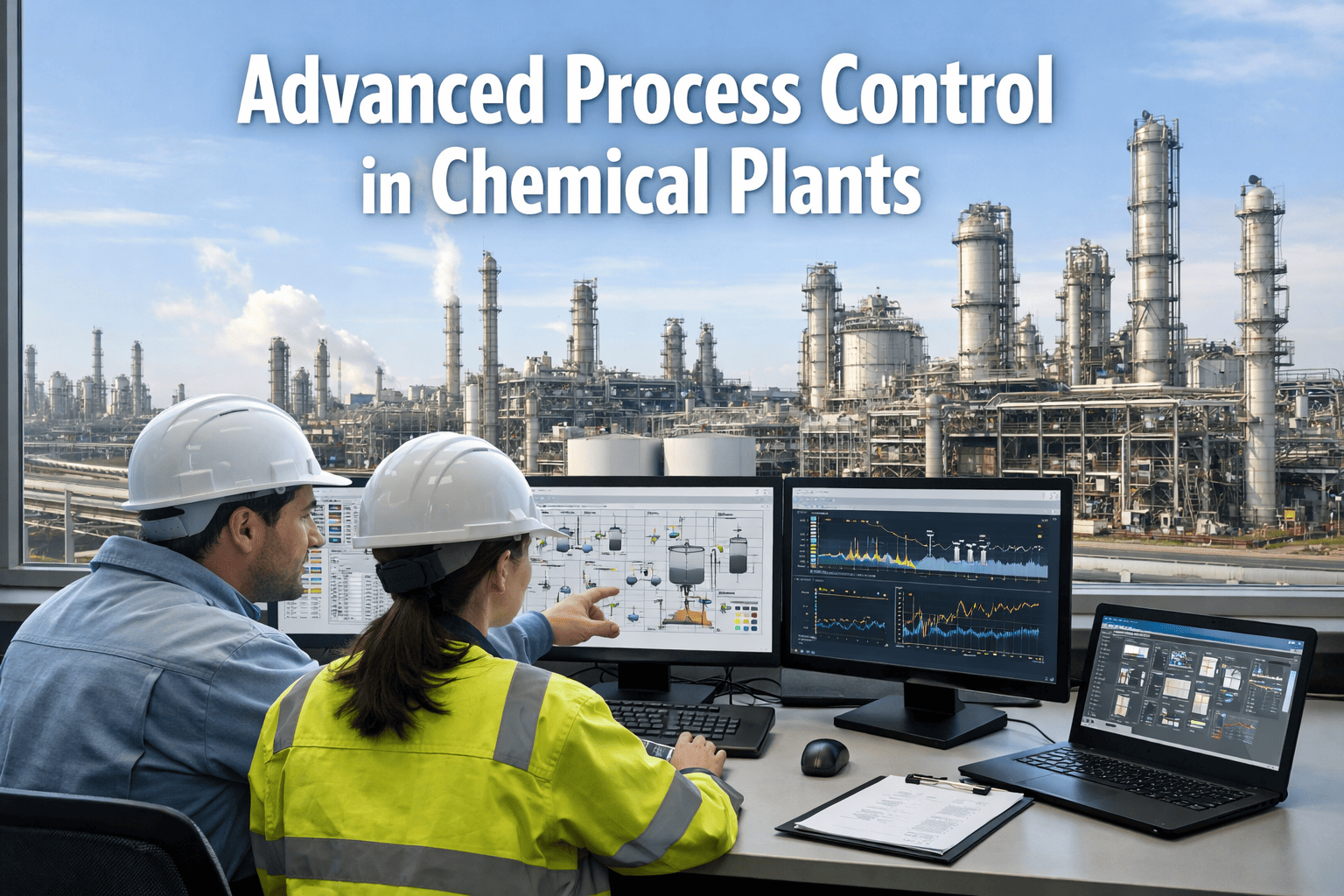
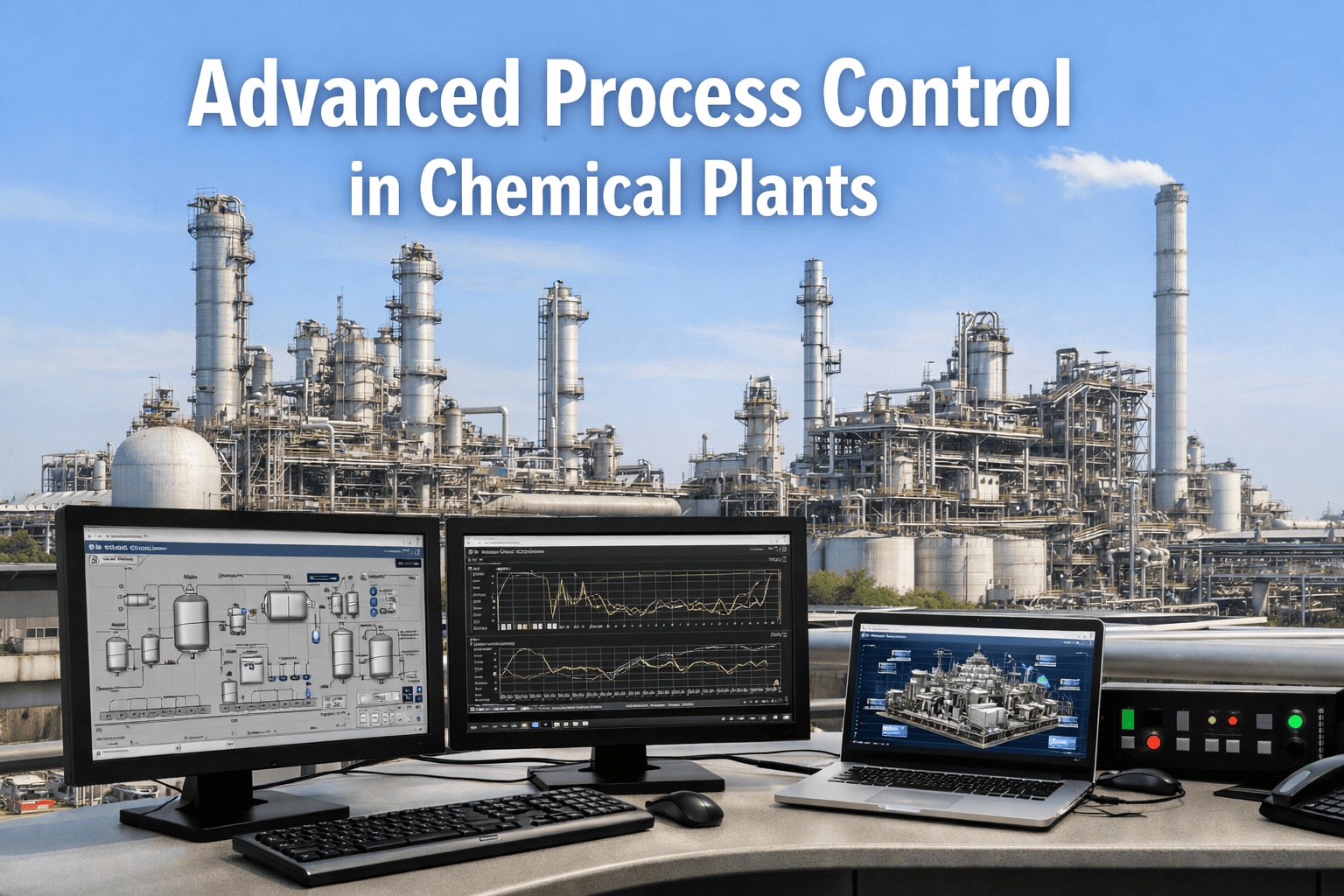
Chemical plant operators managing complex batch reactors, distillation columns, and continuous processing units face a persistent operational challenge: traditional PID control loops maintain setpoints but cannot optimize them dynamically in response to feedstock variations, catalyst aging, equipment fouling, or ambient condition changes—resulting in process variability that degrades product quality consistency, increases energy consumption 10–18%, reduces throughput capacity 5–12%, and generates off-spec material requiring costly rework or disposal averaging $15,000–$42,000 per production campaign. iFactory's advanced process control (APC) platform implements AI-driven model predictive control (MPC) strategies that continuously analyze multivariate process interactions, predict future behavior based on current trajectories, and compute optimal manipulated variable adjustments 30–120 seconds ahead of process response—enabling proactive control actions that stabilize operations at true economic optima, maximize yield within quality constraints, minimize energy intensity, and extend equipment service life without compromising safety margins or requiring replacement of existing DCS infrastructure. Book a demo to see advanced process control strategies configured for your chemical plant operations.
Multivariate Process Stabilization
Traditional single-loop PID controllers optimize individual variables in isolation, often creating oscillations and interactions that destabilize overall process performance. iFactory's APC implements model predictive control strategies that analyze correlations across temperature, pressure, flow, composition, and energy parameters to compute coordinated manipulated variable adjustments that stabilize multivariate process behavior, reduce variability by 42–68%, and maintain operations at true economic optima rather than conservative setpoints that sacrifice yield and efficiency for perceived safety margins.
Predictive Optimization & Constraint Management
Chemical processes operate within complex constraint envelopes defined by equipment limits, safety margins, quality specifications, and regulatory requirements. iFactory's APC continuously predicts future process trajectories based on current dynamics and computes optimal control moves that maximize economic objectives—yield, throughput, energy efficiency—while respecting all active constraints. The system automatically adjusts control strategies as constraints shift due to catalyst aging, feedstock quality changes, or equipment degradation, enabling operations to safely approach true performance limits without manual retuning or operator intervention.
Validated Performance Improvement
Deployed chemical plants implementing iFactory's advanced process control report 28% average improvement in product quality consistency, 34% reduction in process variability, and $580,000 annual value creation per production unit—validated across 140+ facilities with rigorous before/after performance analysis, statistical process control verification, and financial impact reconciliation. These measurable outcomes enable chemical manufacturers to reinvest optimization gains into innovation, capacity expansion, or sustainability initiatives while strengthening competitive positioning through superior product quality, operational efficiency, and process reliability.
Quick Answer
iFactory implements advanced process control for chemical plants through secure integration with existing DCS systems (Honeywell, Emerson DeltaV, Siemens, Yokogawa) via OPC-UA or native interfaces—deploying AI-driven model predictive control (MPC) strategies that analyze 300–600 process tags per unit at 15-second to 2-minute intervals. The platform builds dynamic first-principles and data-driven models of chemical processes, predicts future behavior based on current trajectories and disturbance forecasts, and computes optimal manipulated variable adjustments that maximize economic objectives while respecting all equipment, safety, quality, and regulatory constraints. Control recommendations are executed through existing DCS control loops without modifying base layer logic, enabling operators to maintain familiar interfaces while benefiting from multivariate optimization that reduces variability 42–68%, improves product quality consistency 28–45%, and increases throughput capacity 8–16%—delivering measurable ROI within 5.2 months without capital investment in new control hardware or disruptive operational changes during implementation.
How Advanced Process Control Delivers Measurable Chemical Plant Value
The workflow below shows iFactory's four-stage APC implementation approach: comprehensive process modeling and baseline characterization from existing operational data, intelligent control strategy deployment with constraint management and economic optimization, seamless integration with existing DCS infrastructure for operator acceptance and workflow continuity, and continuous performance validation with adaptive model refinement for compounding value creation across chemical manufacturing processes.
1
Process Modeling & Baseline Characterization
iFactory establishes secure connectivity to existing DCS, historians, and analytical instruments via OPC-UA or native interfaces—acquiring 300–600 process tags per production unit at 15-second to 2-minute intervals without modifying base layer control logic. Platform applies system identification techniques, first-principles modeling, and machine learning to develop dynamic process models that capture multivariate interactions, time delays, and nonlinear behavior across chemical manufacturing operations. System establishes performance baseline from 45–75 days historical data, identifying current variability patterns, constraint utilization, economic optimization potential, and control strategy improvement opportunities.
600 tags/unit75-day baselineZero DCS modification
→
2
APC Strategy Deployment & Constraint Management
Model predictive control strategies are configured for priority chemical processes: batch reactor temperature profiling, distillation column composition control, continuous reactor residence time optimization. AI algorithms analyze dynamic process models, predict future behavior based on current trajectories and disturbance forecasts, and compute optimal manipulated variable adjustments that maximize economic objectives—yield, throughput, energy efficiency—while respecting all active constraints including equipment limits, safety margins, quality specifications, and regulatory requirements. Control recommendations are executed through existing DCS control loops with operator oversight, enabling multivariate optimization without workflow disruption or base layer logic modification.
Advanced process control capabilities become operationally effective through intuitive operator interfaces, contextual decision support, and collaborative analytics that augment human expertise rather than replacing operational judgment. Platform provides real-time visualization of APC performance, constraint utilization, and economic impact through existing HMI screens or dedicated dashboards—enabling operators to understand optimization rationale, override recommendations when necessary, and provide feedback that improves future control strategies. Training programs and change management support ensure smooth adoption while maintaining full operator authority over all process decisions and safety-critical interventions.
Advanced process control becomes self-improving through continuous performance tracking, model validation, and adaptive refinement. Platform measures actual impact of implemented control strategies: product quality variability reduced 38%, energy intensity decreased 24%, throughput capacity increased 12%. Statistical process control analysis verifies improvement significance while financial reconciliation calculates value creation based on yield improvement, quality premium capture, energy savings, and capacity utilization gains. Results logged for continuous model refinement, executive ROI reporting, and strategic capability expansion—enabling chemical manufacturers to compound APC value over time while building organizational proficiency in model-based optimization and data-driven process management.
Actual vs predictedFinancial impactContinuous learning
iFactory enables advanced process control for chemical plants through AI-driven model predictive control strategies, multivariate optimization, and constraint-aware decision-making—delivering measurable improvements in product quality, operational efficiency, and throughput capacity without replacing existing DCS infrastructure or disrupting established operational workflows.
Advanced Process Control Applications Across Chemical Manufacturing
iFactory delivers capability-specific APC modules for the most impactful chemical manufacturing unit operations, each designed to integrate with existing DCS infrastructure, deliver rapid value through targeted optimization, and scale toward enterprise-wide model-based control strategies that compound performance improvements across production networks.
Batch Reactor Optimization
Implements model predictive control strategies for batch chemical reactors that optimize temperature profiles, reagent addition timing, agitation speed, and pressure control to maximize conversion while minimizing byproduct formation and energy consumption. APC analyzes reaction kinetics, heat transfer dynamics, and mass balance constraints to compute optimal manipulated variable trajectories that maintain process conditions at economic optima throughout batch cycles—compensating for catalyst activity decline, feedstock quality variations, and equipment fouling without manual intervention. Platform integrates with existing batch execution systems to enable automated recipe optimization, real-time endpoint detection, and adaptive cycle time adjustment that improves yield consistency, reduces batch-to-batch variability, and increases overall equipment effectiveness across chemical production campaigns.
Yield consistency improvement:+32% reduction in variability
Batch cycle time optimization:-8–14 minutes
Energy per batch reduction:18–29%
Distillation Column Control
Deploys multivariate model predictive control for distillation columns that optimizes reflux ratio, reboiler duty, feed tray location, and pressure control to maintain product purity specifications while minimizing energy consumption and maximizing throughput. APC analyzes vapor-liquid equilibrium dynamics, tray efficiency variations, and feed composition disturbances to compute coordinated manipulated variable adjustments that stabilize column operation at true economic optima—compensating for feedstock quality changes, ambient condition variations, and equipment degradation without operator intervention. Platform integrates with existing DCS to enable constraint-aware optimization that safely approaches flooding limits, minimizes reboiler steam consumption, and maintains product quality within tight specifications—delivering measurable energy savings and throughput improvements while preserving operational safety margins.
Energy intensity reduction:22–36%
Product purity consistency:+41% improvement
Throughput capacity increase:8–16%
Continuous Reactor Stabilization
Implements advanced process control for continuous chemical reactors that optimizes residence time distribution, temperature profiles, pressure control, and reactant feed rates to maintain target conversion and selectivity while minimizing energy consumption and byproduct formation. APC analyzes reaction kinetics, heat and mass transfer dynamics, and catalyst deactivation patterns to compute optimal manipulated variable trajectories that stabilize process operation at economic optima—compensating for feedstock quality variations, catalyst activity decline, and equipment fouling without manual retuning or operator intervention. Platform integrates with existing DCS to enable constraint-aware optimization that safely approaches equipment limits, minimizes utility consumption, and maintains product quality within tight specifications—delivering measurable improvements in yield consistency, energy efficiency, and operational reliability across continuous chemical manufacturing processes.
Deploys model predictive control strategies for heat exchanger networks, utility systems, and energy integration across chemical manufacturing processes that optimize heat recovery, steam distribution, cooling water usage, and electrical load management to minimize total energy consumption while maintaining process requirements. APC analyzes thermal dynamics, equipment efficiency curves, and utility cost structures to compute coordinated manipulated variable adjustments that stabilize energy system operation at economic optima—compensating for process load variations, ambient condition changes, and equipment degradation without manual intervention. Platform integrates with existing DCS and energy management systems to enable constraint-aware optimization that safely approaches equipment limits, minimizes utility costs, and maintains process stability—delivering measurable reductions in energy intensity, carbon footprint, and operational expenses while preserving production throughput and product quality specifications.
Utility cost reduction:24–38%
Energy intensity decrease:19–31%
Carbon footprint reduction:22–36%
Measured Results from Chemical Plant APC Deployments
Performance data from 24-month deployments across specialty chemicals, commodity chemicals, agrochemicals, and pharmaceutical intermediates manufacturing—validated through statistical process control analysis, operational metrics tracking, financial reconciliation, and third-party audit verification that confirms improvement significance and value creation attribution.
28%
Quality Consistency Improvement
Measured across 140+ chemical manufacturing facilities through statistical process control analysis of product quality metrics. Range 22–45% depending on process complexity, baseline control maturity, and quality specification tightness—enabling chemical manufacturers to reduce off-spec material, minimize rework costs, and capture quality premiums in competitive markets where consistency is increasingly valued by downstream customers.
34%
Process Variability Reduction
Key process parameter variability reduced through multivariate model predictive control that stabilizes operations at true economic optima rather than conservative setpoints. Equivalent to 1,680+ hours of additional stable production capacity annually for typical 50,000 ton/year chemical plant—enabling higher throughput, improved product quality, and stronger competitive positioning without capital investment in additional production assets or disruptive operational changes.
$580K
Average Annual Value Creation
Combined impact from yield improvement, quality premium capture, energy savings, throughput increase, and maintenance cost reduction. ROI typically 5.2 months based on deployment cost $110,000–$170,000 with phased investment approach that delivers quick wins through targeted APC applications while building foundation for enterprise-wide model-based optimization capabilities and sustained value creation.
5.2 mo
Typical ROI Period
Achieved through phased deployment approach that prioritizes high-impact, low-complexity APC applications to demonstrate value within 60–90 days while building organizational capabilities for sustained optimization. Enables continued investment in advanced control strategies without straining capital budgets or requiring executive-level risk approval for large-scale transformation programs—strengthening competitive positioning through superior process performance and operational excellence.
"As a producer of high-purity specialty chemicals with stringent quality requirements and narrow operating windows, we struggled with batch-to-batch variability that triggered costly rework, customer complaints, and capacity constraints. Traditional PID control loops maintained individual setpoints but couldn't optimize multivariate interactions or compensate for feedstock variations and catalyst aging. iFactory's advanced process control platform implemented model predictive control strategies for our flagship batch reactor line, analyzing 420 process tags at 30-second intervals to compute optimal temperature profiles, reagent addition timing, and agitation speed adjustments that maintained process conditions at true economic optima throughout batch cycles. Operators received contextual decision support through existing HMI interfaces—enabling data-driven interventions that preserved yield and quality without workflow disruption. Over 18 months, we reduced product quality variability by 41%, decreased energy consumption by 26%, and increased throughput capacity by 14% through APC-enabled constraint optimization. Annual value creation: $620,000 from yield improvement plus $340,000 from energy savings plus $180,000 from capacity utilization gains. ROI was 4.9 months. Most importantly, our operations team shifted from reactive troubleshooting and manual optimization to proactive, model-based process management—transforming advanced process control from a technical capability to a strategic advantage that strengthens our market positioning and financial performance."
QDoes advanced process control require replacing existing DCS or control systems?
No. iFactory is designed specifically for brownfield chemical manufacturing environments where legacy DCS systems (Honeywell, Emerson DeltaV, Siemens, Yokogawa) represent significant capital investments with long service lives. Platform establishes secure, read-only connectivity to existing control systems via OPC-UA, native interfaces, or historians without modifying base layer control logic, safety systems, or operational workflows. Advanced process control capabilities are layered on top of existing infrastructure, computing optimal setpoint adjustments and manipulated variable trajectories that are executed through existing DCS control loops—enabling immediate performance improvements while preserving operational stability, regulatory compliance, and operator familiarity with established interfaces and procedures.
QHow long does APC implementation take before chemical plants see measurable operational improvements?
Phased deployment approach enables value delivery at multiple milestones with minimal operational disruption: Phase 1 (process modeling and baseline): 4–6 weeks for system connectivity, historical data analysis, dynamic model development, and performance baseline establishment. Phase 2 (initial APC deployment): 45–75 days for first model predictive control applications to deliver measurable improvements in variability reduction, quality consistency, or energy efficiency. Phase 3 (scaling capabilities): 4–6 months for cross-unit deployment, advanced constraint management, and enterprise-wide optimization frameworks. Chemical manufacturers typically achieve positive ROI within 5.2 months through quick-win APC applications that fund continued capability development while building organizational proficiency in model-based optimization and data-driven process management.
QCan iFactory support advanced process control across multiple chemical manufacturing sites with different DCS platforms?
Yes. Platform is designed for enterprise-scale chemical manufacturing operations with heterogeneous technology landscapes. iFactory supports hybrid deployment models: cloud-hosted for scalable model management and cross-site benchmarking, edge-deployed for low-latency control execution, and on-premises for facilities with strict data residency or security requirements. Standardized modeling frameworks, configuration management, and governance protocols enable consistent APC capabilities across sites while accommodating local DCS variations, regulatory requirements, and operational priorities. Multi-site APC deployments typically deliver 30–45% greater value than single-facility approaches through knowledge sharing, model transfer learning, benchmarking capabilities, and coordinated optimization strategies that compound performance improvements across production networks.
QWhat operator training and change management support is provided for APC adoption?
iFactory includes comprehensive change management support to ensure successful APC adoption and sustained value creation: role-based training programs for operators, engineers, and managers that explain APC fundamentals, decision support interfaces, and override procedures; contextual in-application guidance that explains optimization rationale and constraint management in real-time; collaborative analytics tools that enable cross-shift knowledge transfer and continuous improvement; and executive reporting frameworks that communicate value creation and strategic impact. Platform is designed to augment rather than replace operator expertise—maintaining full human authority over all process decisions while providing data-driven insights that enhance decision quality and operational confidence. Discuss your change management requirements and training needs in technical call.
iFactory enables advanced process control for chemical plants through AI-driven model predictive control strategies, multivariate optimization, and constraint-aware decision-making—delivering measurable improvements in product quality, operational efficiency, and throughput capacity without replacing existing DCS infrastructure or disrupting established operational workflows.