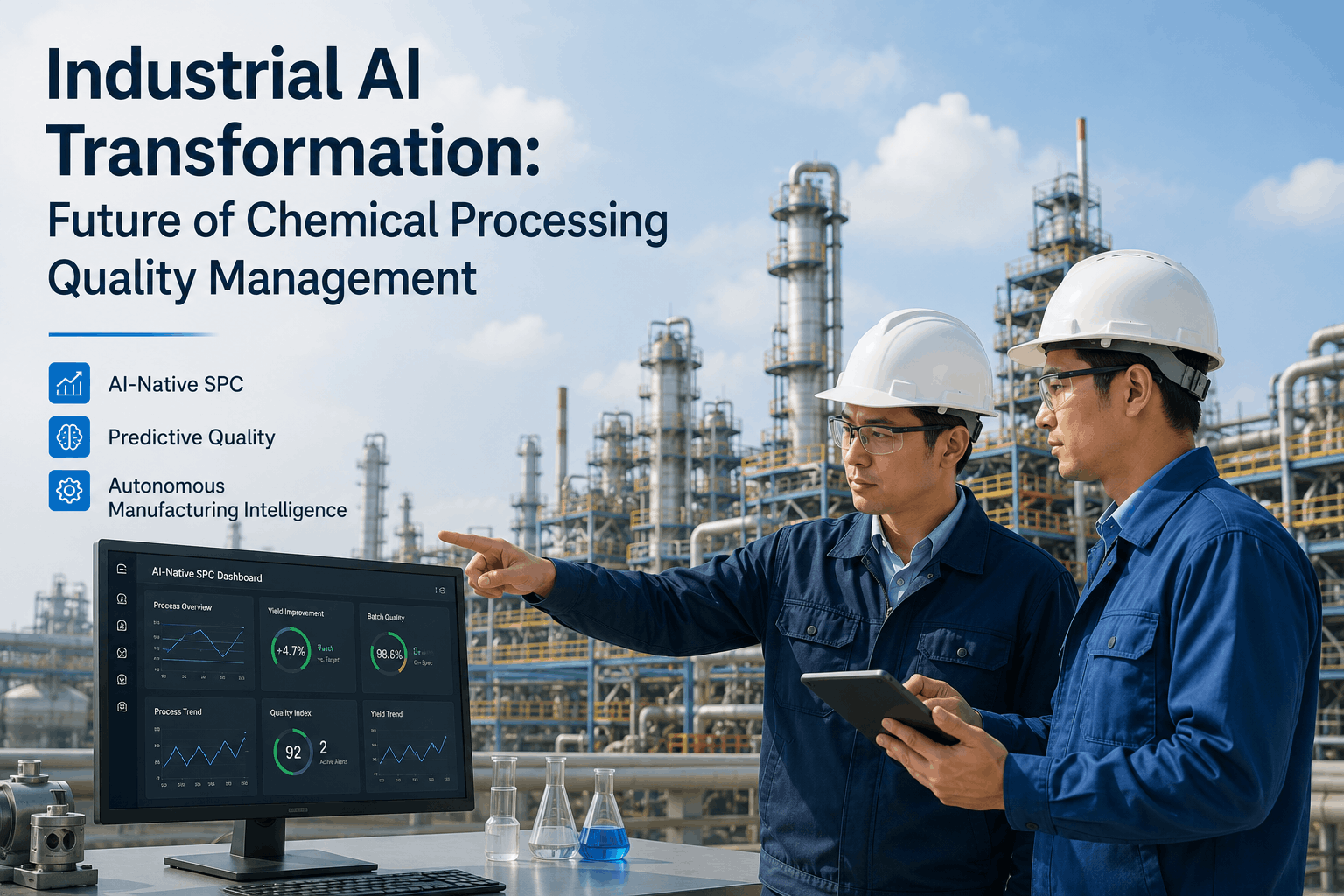
Six months ago, a batch reactor at a specialty chemical plant in Texas drifted 0.3°C above specification for just eight minutes. The SPC system didn't flag it until the next day, after 42,000 gallons of high-viscosity adhesive had already been routed to the hold tank. The rework cost $187,000 and delayed three customer orders. Today, that same reactor runs under an AI-native SPC system that detects micro-deviations in real time, adjusts process parameters before the batch drifts, and delivers a complete quality record to the operator's copilot within seconds of the run ending. Batch quality variance dropped 73% in the first quarter. Here is how that transformation happens.
Industrial AI Transformation for Chemical Processing Batch Quality Control
Replace reactive SPC and legacy MES with an AI-native copilot that detects, predicts, and prevents batch quality deviations in real time—no cloud dependency, no data egress, and a working pilot in 6–12 weeks.
What a 12-Week Pilot Delivers for Batch Quality
These are real results from chemical processors running iFactory as an AI-native overlay on their existing batch control systems. No rip-and-replace. No data leaving the plant network.
AI-Native Batch Quality Control That Replaces Legacy SPC
iFactory absorbs the operational role of legacy plant systems and delivers a single AI-native copilot for every batch quality decision—from recipe execution to final release.
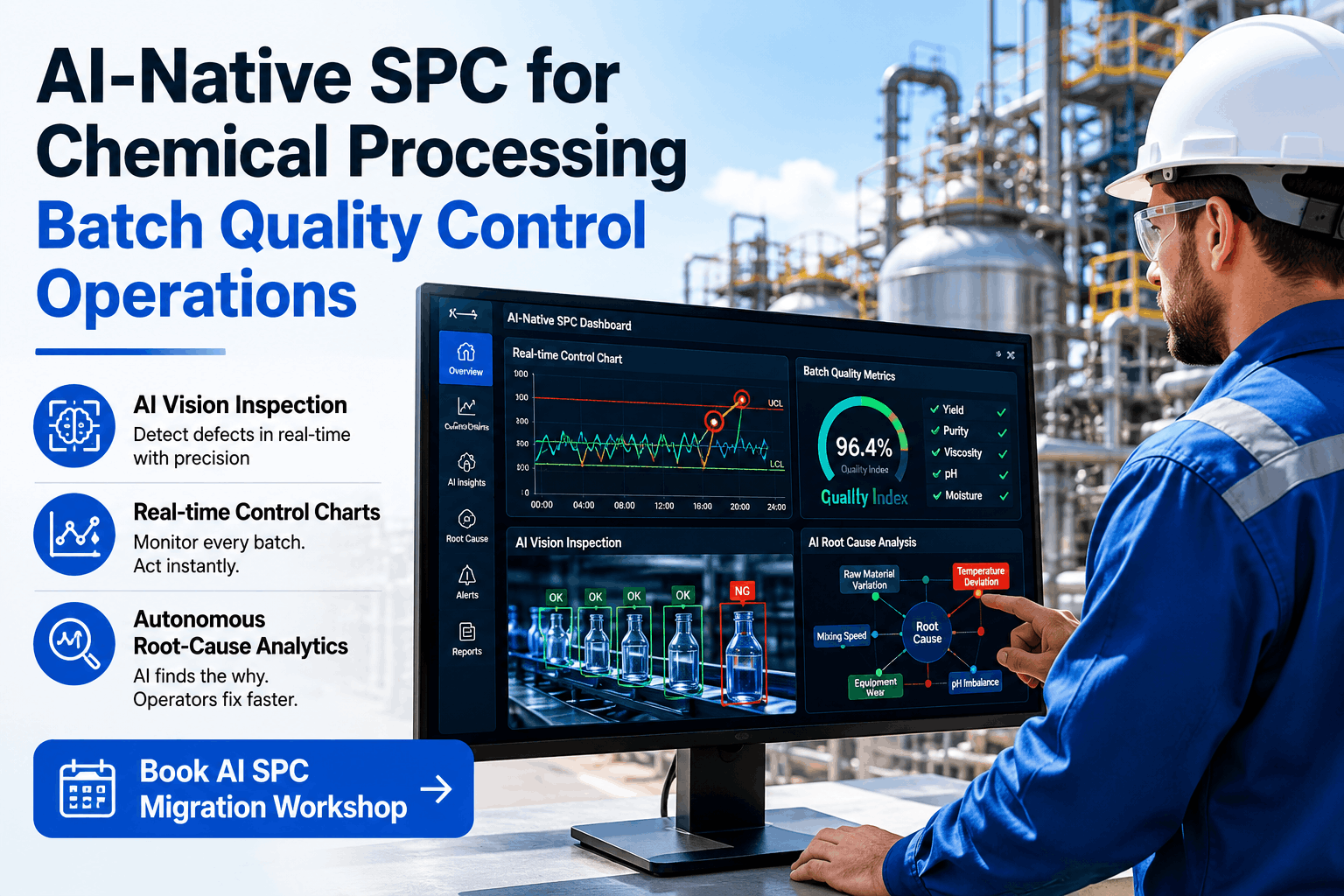
Real-Time AI SPC
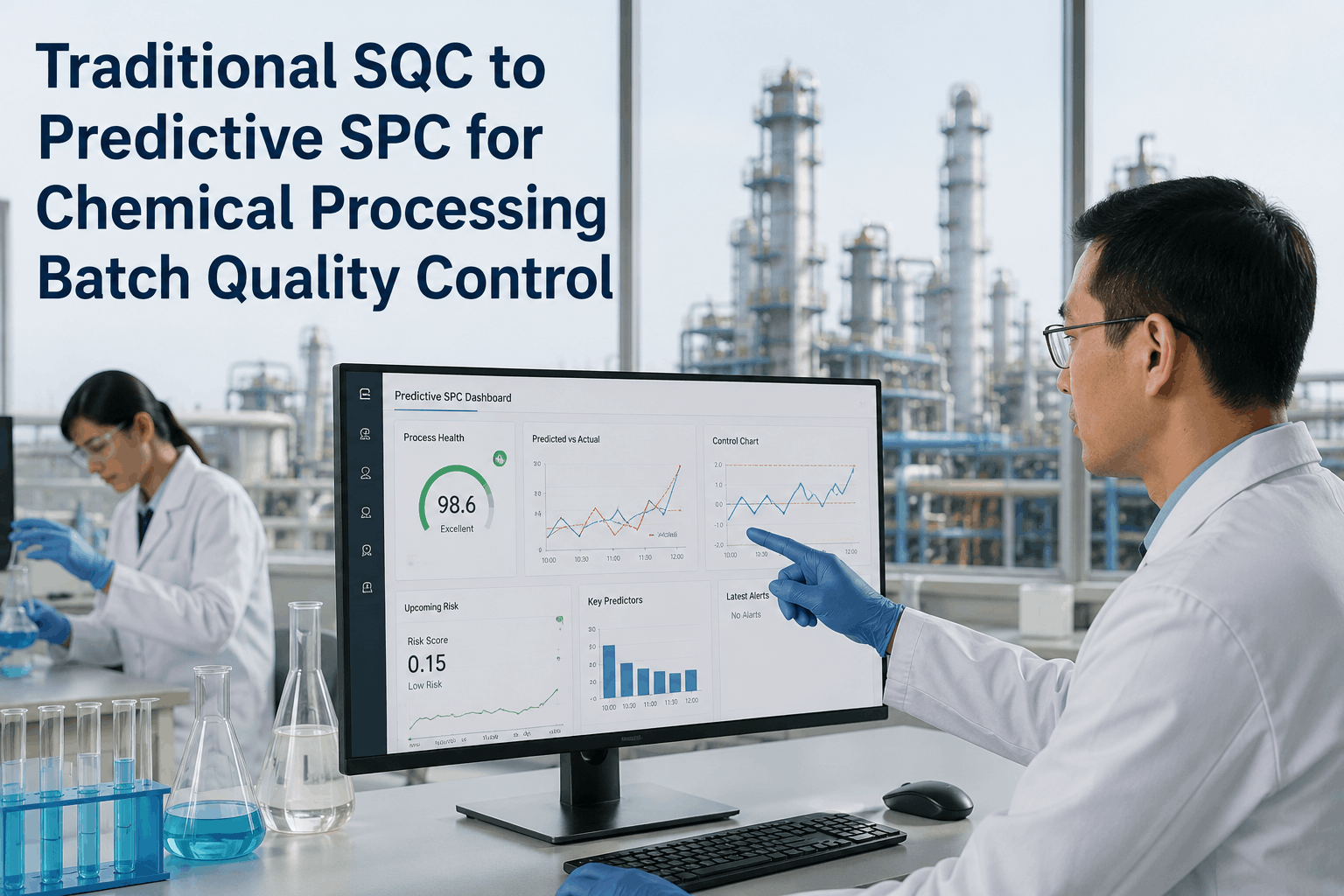
Continuous multivariate monitoring of every batch parameter—temperature, pressure, pH, viscosity, flow rate—against historical golden batches. The copilot flags micro-deviations before they become off-spec events, with no manual control chart review required.
Predictive Deviation Prevention
AI models trained on your plant's batch history predict which runs are trending toward a deviation. The copilot recommends preemptive adjustments—ramp rate, hold time, catalyst feed—and executes them with operator confirmation.
Batch Forensics & Root Cause Analysis
When a deviation does occur, the copilot performs a complete forensic trace across every sensor, every recipe step, and every operator action. Root cause identification drops from hours to seconds, enabling corrective actions within the same shift.
AI-Manufacturing Copilot for Operators
A natural-language interface that answers any batch quality question—"Why did batch 4123 drift?" "Show me the last 10 golden batches for product code A-7." "What should I adjust to meet spec on the next run?"—without requiring a data analyst.
Golden Batch Library & Recipe Optimization
Automatically captures and classifies every successful batch into a golden batch library. The copilot surfaces the optimal recipe parameters for each product code and flags deviations from the proven process window.
Batch Release Automation
Generates a complete, audit-ready quality record for every batch—sensor traces, deviation logs, operator actions, and AI model confidence scores—so the QA team can release product to shipping in minutes instead of hours.
The Cost of Reactive Batch Quality Control
Legacy SPC and MES systems were designed for a world where data was scarce and manual analysis was the only option. In today's chemical processing environment, that latency is a direct cost center.
Off-Spec Batches Cost $150K–$500K Each
A single 40,000-gallon batch of specialty chemical that drifts out of spec represents raw material loss, rework energy cost, hold tank occupancy, and delayed customer shipments. For a mid-size chemical plant running 10–15 batches per day, even a 2% off-spec rate translates to $2M–$5M in annual waste.
SPC Latency Hides Deviations Until It's Too Late
Traditional SPC systems sample every 5–15 minutes and rely on manual control chart review. A deviation that occurs between samples—or that the operator misses on the chart—can propagate for hours before detection. By then, the entire batch is compromised.
Root Cause Analysis Takes 4–8 Hours per Incident
Without AI-native forensics, operators and process engineers must manually cross-reference batch records, sensor logs, and operator shift notes. That time compounds across every deviation, delaying corrective actions and allowing the same root cause to affect multiple batches.
Every day you run reactive SPC is a day of preventable waste and delayed customer shipments. Book a 30-min walkthrough and see how iFactory transforms batch quality in one quarter.
From Data Source to AI Copilot in 6–12 Weeks
iFactory is end-to-end and turnkey. You hand over data-source access, and we deliver a working pilot with AI-native SPC, batch forensics, and operator copilot.
Connect to Existing Data Sources
We ingest batch records, sensor streams, recipe data, and quality lab results from your existing DCS, historian, and LIMS—without any changes to your control system.
Train AI Models on Historical Batches
Our AI-native platform learns the golden batch patterns for each product code, establishing a multivariate baseline for temperature, pressure, viscosity, and every other process parameter.
Deploy Real-Time AI SPC & Copilot
The copilot goes live on the plant network—zero cloud dependency—and begins monitoring every batch in real time, flagging micro-deviations and delivering actionable recommendations to operators.
Pilot to ROI in One Quarter
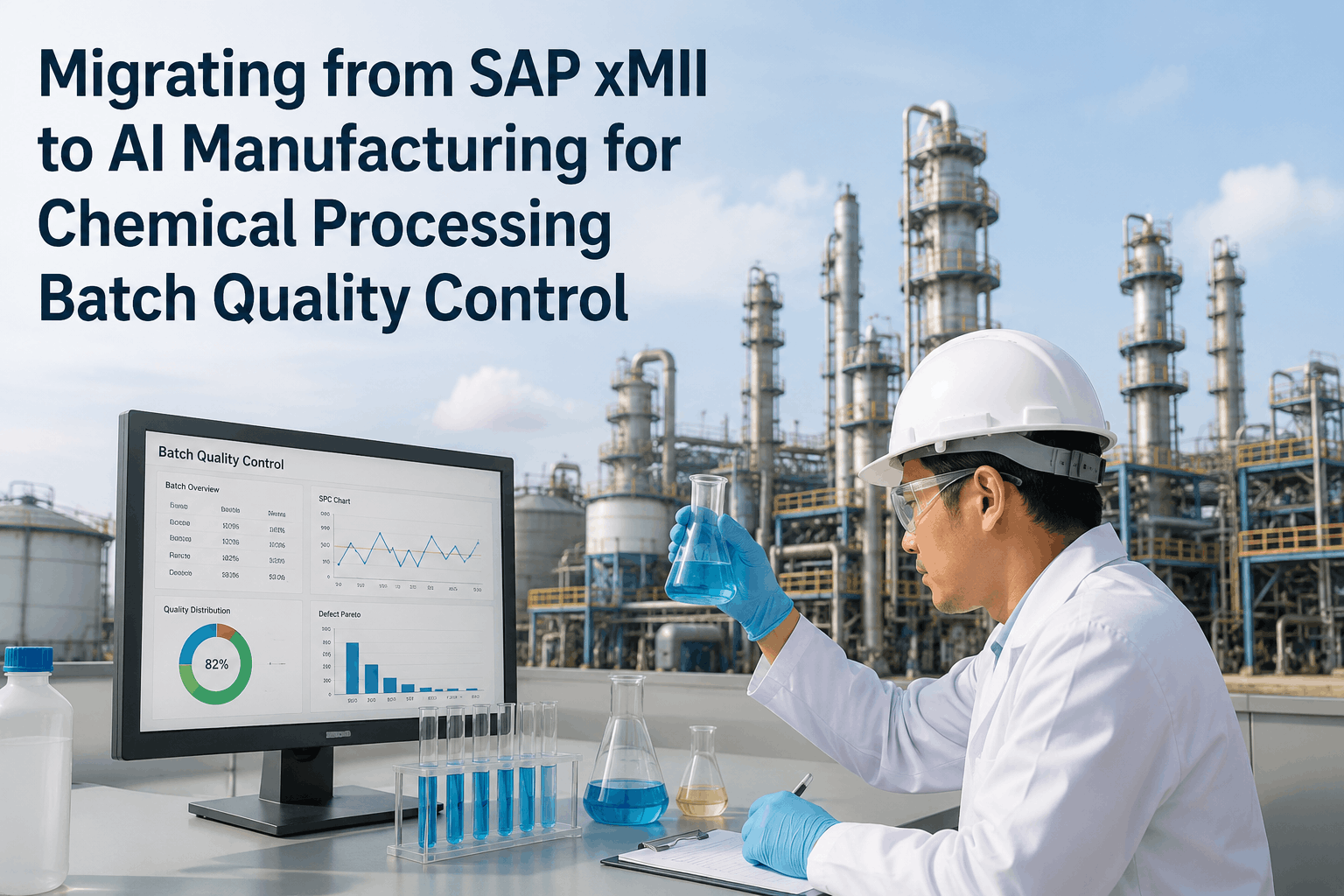
Within 90 days, you have a measurable reduction in batch quality variance, rework cost, and deviation detection latency. The AI-native SPC replaces the operational function of legacy systems like SAP xMII.
Everything You Need for Batch Quality Transformation
End-to-End, Turnkey Deployment
We handle the entire deployment—data ingestion, model training, copilot configuration, and operator training. You provide data-source access; we deliver a working pilot in 6–12 weeks.
On-Premise, Zero Cloud Dependency
iFactory runs on an NVIDIA appliance on your plant network. No data egress, no cloud latency, no third-party data exposure. Your batch quality data stays behind your firewall.
AI-Native SPC That Absorbs Legacy Systems
iFactory absorbs the operational role of SAP xMII and other legacy plant systems—real-time monitoring, SPC, batch analysis, and reporting—without requiring a complex migration project.
Managed Service, 24x7 Support
Your iFactory deployment is backed by a 24x7 managed service team that monitors model performance, handles updates, and ensures the copilot stays accurate as your process evolves.
Batch Quality Control with AI-Native SPC
Stop Reacting to Batch Deviations. Prevent Them.
Book a 30-minute walkthrough and see how iFactory transforms batch quality control with AI-native SPC, real-time deviation prevention, and an operator copilot that replaces legacy systems.