At 2:47 AM in a Texas chemical plant, the third batch of ethylene glycol runs hot. The operator sees a trend on the SPC chart that looks like the shift before last week's off-spec event, but the SAP xMII dashboard hasn't flagged it yet. By the time the alarm fires, the reactor is already 4°C above the control limit. That batch will be downgraded to technical grade, costing $47,000 in lost margin. The plant manager stares at the screen: eight years of xMII SPC configuration, a dozen custom charts, and the system still can't tell a real drift from a sensor hiccup. They need a migration path that doesn't just replicate the old logic but replaces it with something that actually learns.
Migrate from SAP xMII SPC to a self-learning quality system that catches batch deviations before they cost you margin
A structured, 6–12 week migration playbook that replaces legacy xMII SPC logic with AI-native quality control — zero cloud dependency, full on-premise deployment on your plant network.
iFactory is the AI-native manufacturing intelligence platform built for chemical batch quality control
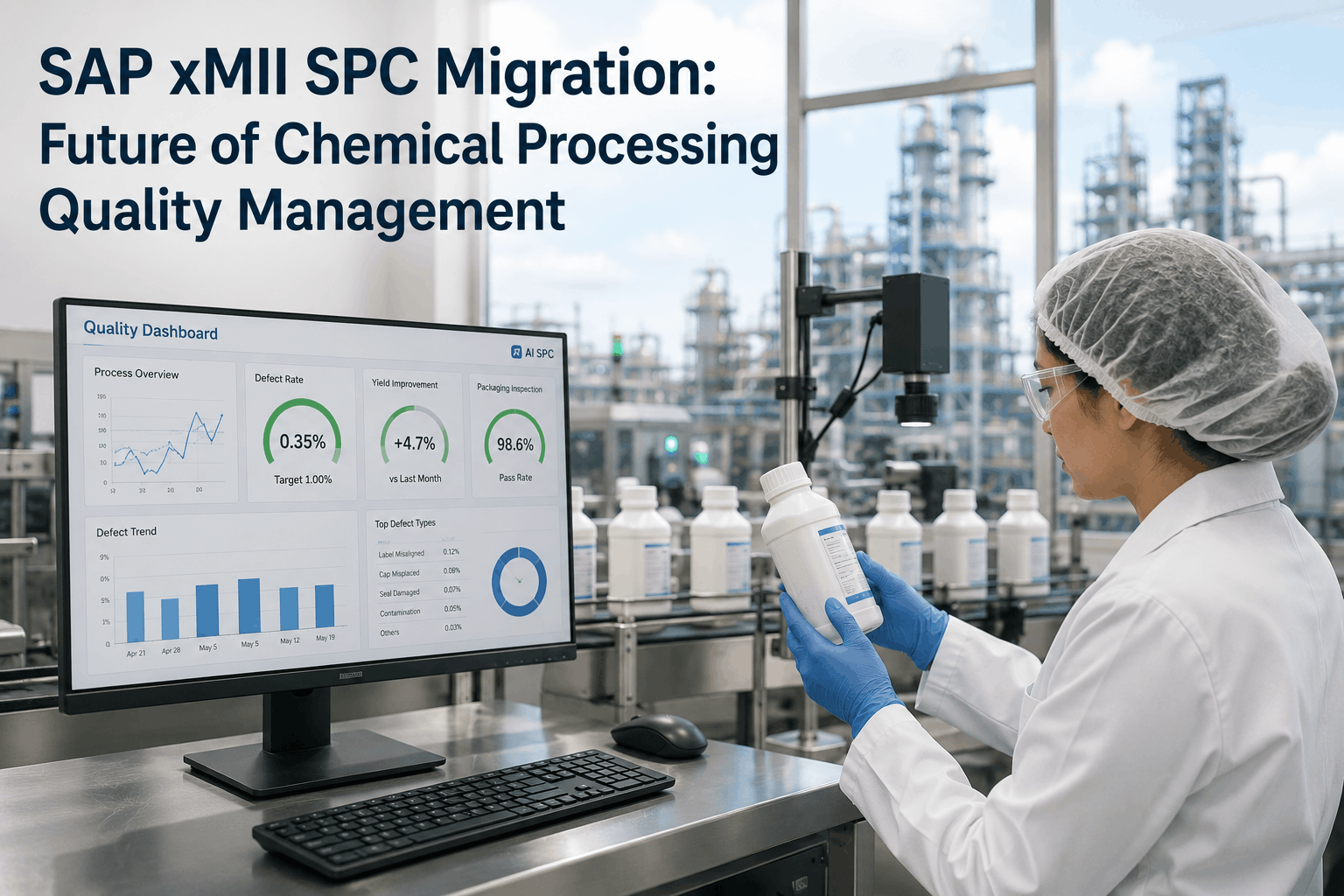
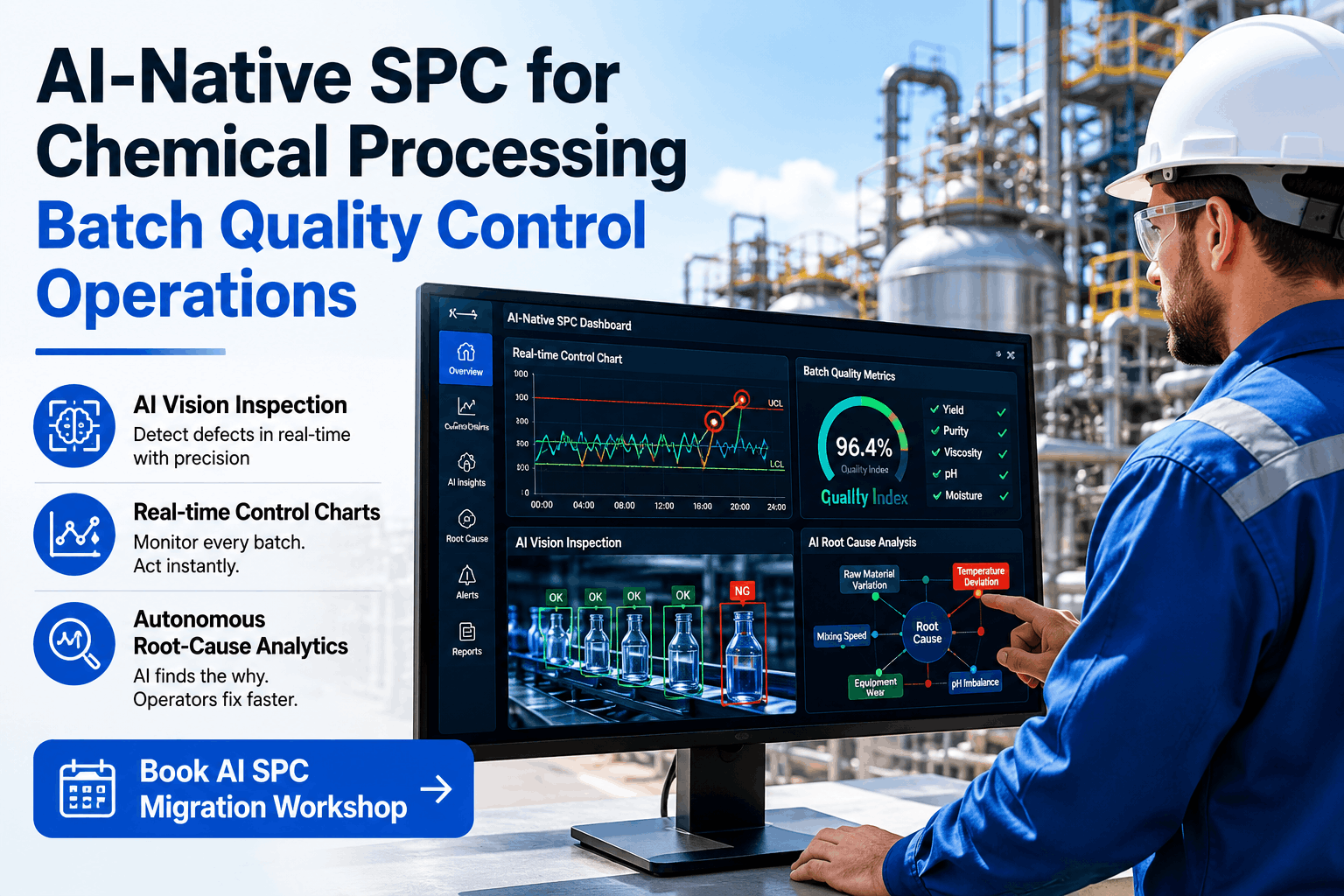
iFactory replaces the rigid, rule-based SPC logic of legacy systems like SAP xMII with a self-learning engine that adapts to your process. It ingests batch data, temperature profiles, pressure curves, and quality lab results, then builds a dynamic statistical model of what "good" looks like for each product grade. When a batch starts to drift, iFactory flags it in real time — before the control limit is breached — and suggests corrective action based on similar past events. The entire system runs on an NVIDIA appliance on your plant network. No cloud, no data egress, no latency.
The migration follows a proven parallel-run strategy: iFactory shadows your existing xMII SPC dashboards for two weeks, learns the process baselines, then gradually assumes the monitoring and alerting role. Plant operators see familiar SPC charts, but now with AI-driven prediction bands and early warnings. The transition is invisible to production — no downtime, no revalidation of control limits.
End-to-end quality intelligence from batch start to lab release
Automated control limit migration
Imports existing xMII SPC configurations, control limits, and alarm rules. Maps them to AI-native models that self-adjust as process conditions shift. No manual re-entry of hundreds of limit sets.
Dynamic SPC with predictive bands
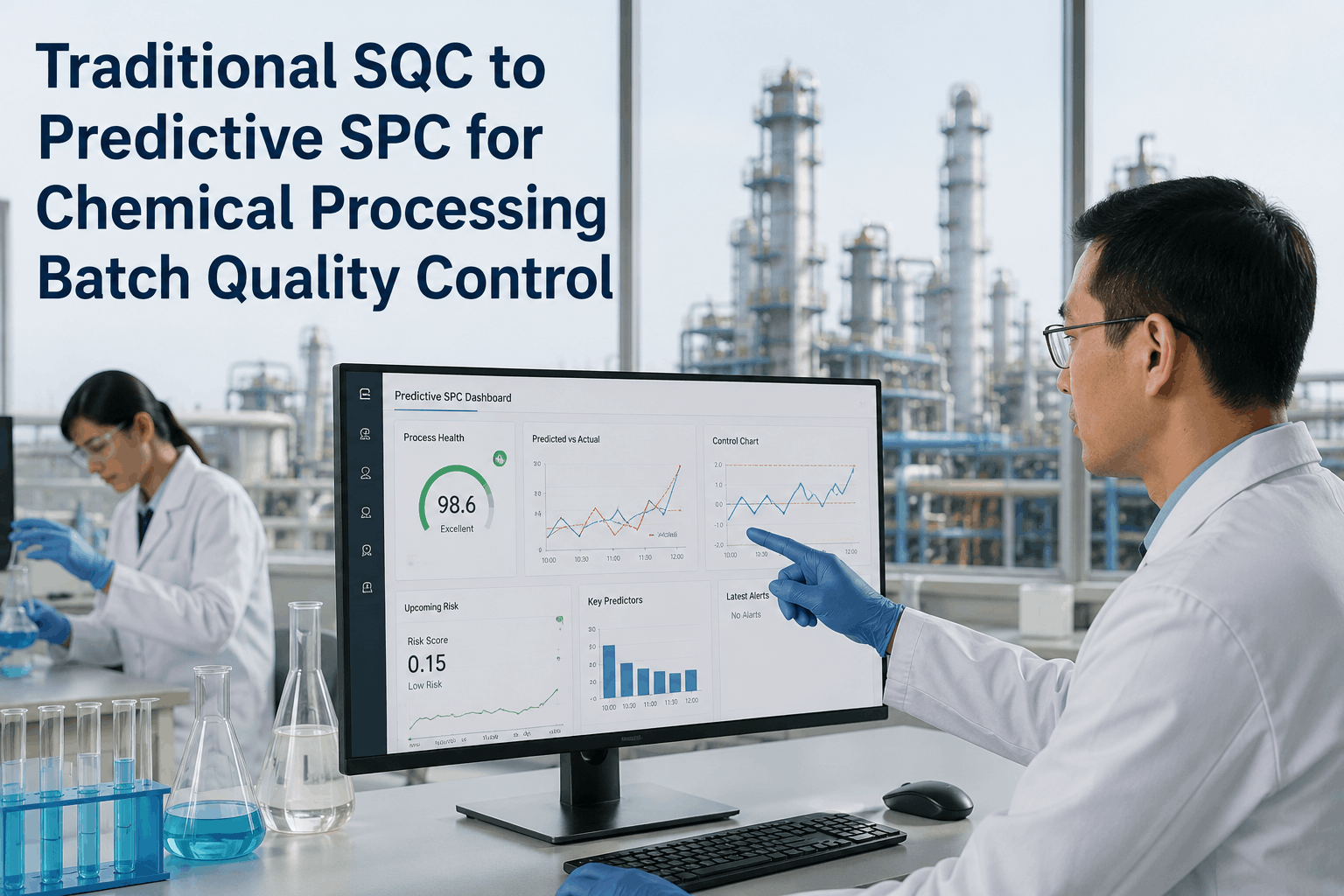
Replaces static X-bar and R charts with dynamic prediction bands that tighten during stable periods and widen during grade transitions. Alarms fire on probability of excursion, not fixed thresholds.
End-to-end batch genealogy
Links every batch to its raw material lots, equipment train, operator shift, and process conditions. Automatically correlates quality deviations to upstream causes — no more manual root cause hunts.
Familiar SPC charts with AI overlays
Operators keep the same Shewhart charts and Western Electric rules they know. iFactory adds a "prediction horizon" line showing where the trend will hit the control limit in minutes, and a recommended action button.
Continuous model retraining
Every batch outcome — pass, rework, or downgrade — feeds back into the quality model. The system learns from your specific process drift patterns, not generic statistical assumptions.
Audit-ready reporting
Generates 21 CFR Part 11 compliant batch records with full traceability of every SPC event, operator response, and model update. Exports directly to your LIMS or MES.
Four-phase migration from legacy xMII to self-learning quality control
Shadow mode & data mapping
iFactory connects to your existing data sources (PI, OSIsoft, SQL Server) and shadows your xMII SPC dashboards for two weeks, learning process baselines and drift patterns without affecting operations.
Control limit migration & validation
Existing control limits, alarm rules, and Western Electric configurations are imported and validated against the AI model. Plant engineers review and approve the mapped limits in a single session.
Parallel run & operator training
Both systems run simultaneously for two weeks. Operators see iFactory's predictions alongside xMII alarms. Discrepancies are reviewed and the AI model is tuned. No production downtime.
Cutover & continuous improvement
xMII is decommissioned or reduced to passive monitoring. iFactory takes over all SPC alerting, batch quality tracking, and compliance reporting. Models continuously retrain on new batch outcomes.
Why legacy SPC fails chemical batch quality control
Static control limits cause false alarms and missed drifts
Fixed X-bar limits that don't account for raw material variability, seasonal temperature changes, or catalyst aging. A typical plant sees 200+ false alarms per week, desensitizing operators to real excursions.
Batch-to-batch correlation is manual and slow
Operators spend 2–3 hours per off-spec event manually cross-referencing batch records, lab results, and process logs. By the time the root cause is found, three more batches may be compromised.
No predictive capability — alarms fire after the damage
xMII SPC detects excursions when they cross a limit, not when the trend starts. For exothermic reactions, a 2°C drift over 30 minutes means the batch is already unstable by the time the alarm sounds.
What chemical plants achieve with self-learning SPC
Your xMII SPC migration doesn't have to be a multi-year project with custom coding and endless validation cycles. Book a 30-min walkthrough and we'll show you a live migration from a chemical plant that did it in 8 weeks.
Common questions about SAP xMII SPC migration
Your SAP xMII SPC migration starts with a 30-minute conversation
We'll review your current SPC configuration, data sources, and batch quality challenges. You'll see a live demo of the self-learning quality system running on real chemical plant data. No obligation, no sales pitch — just a clear path to better batch quality control.