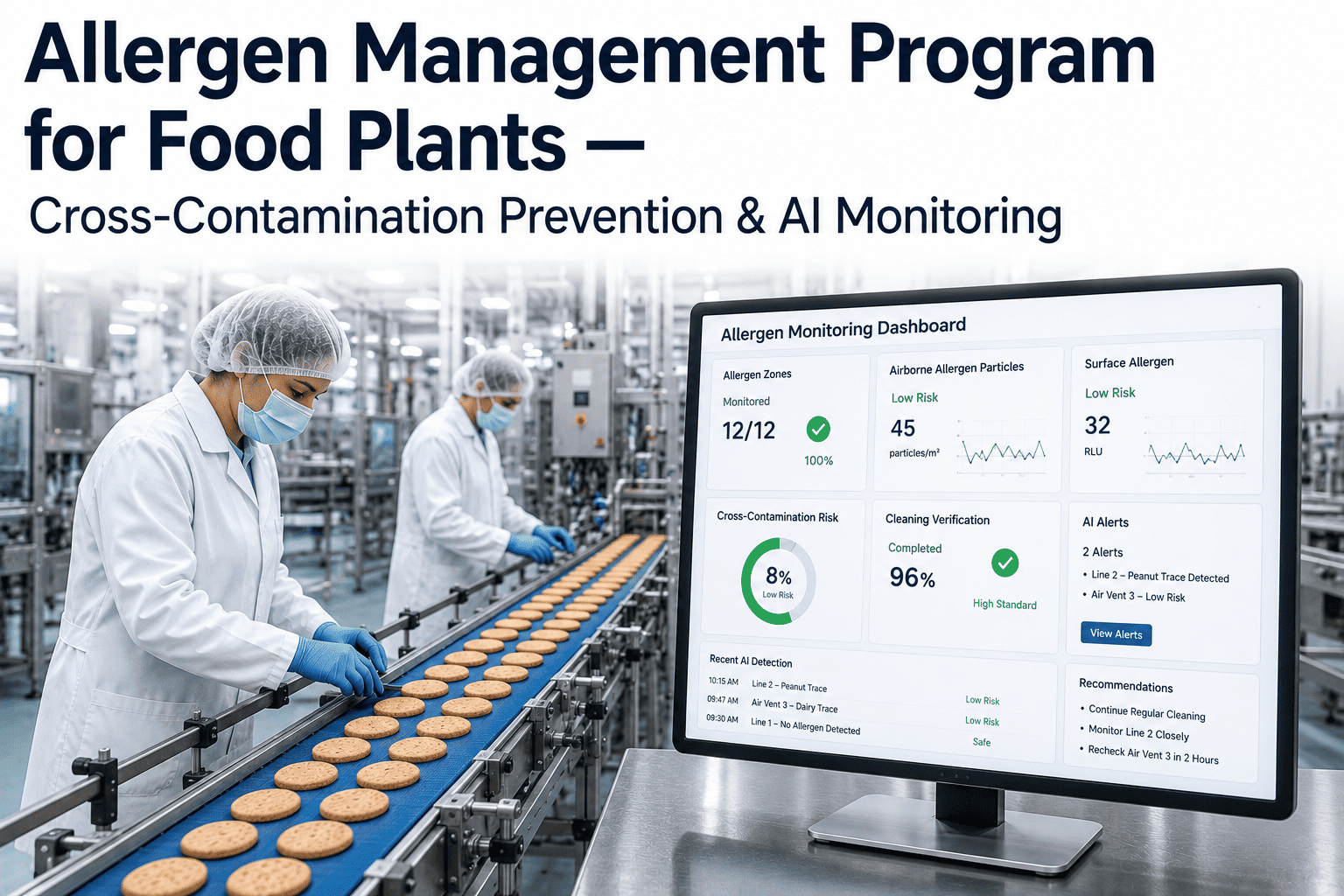
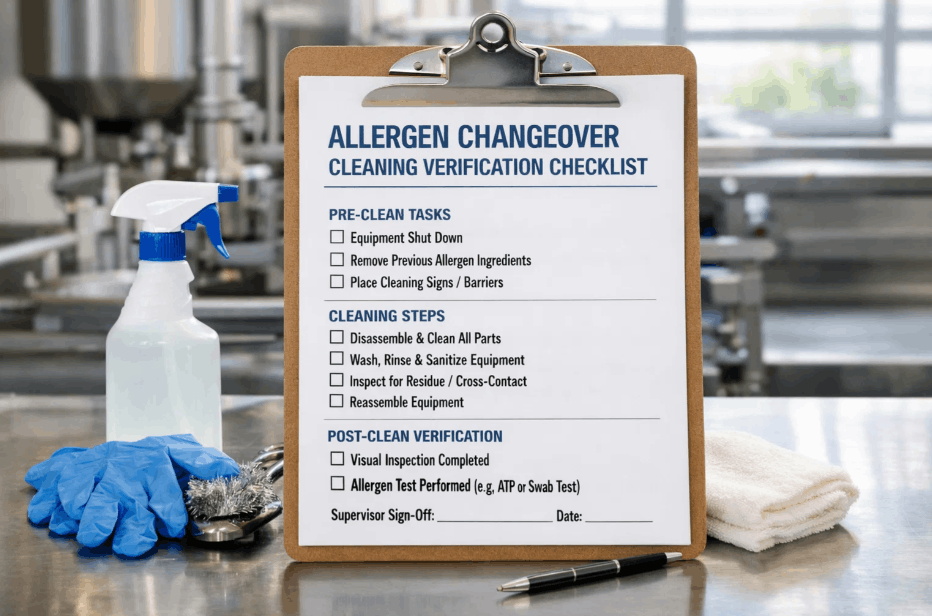
Allergen control in food manufacturing is no longer a compliance checkbox — it is a mission-critical operational system. With the FDA reporting that allergen mislabeling remains the leading cause of food recalls year after year, food safety managers face mounting pressure to close the gaps that allow cross-contamination to occur during changeovers, cleaning cycles, and multi-allergen production runs. The consequences of a single allergen incident extend far beyond a product recall: they include regulatory enforcement actions, brand damage that takes years to reverse, and — most critically — serious harm to consumers with life-threatening allergies. AI-driven allergen management platforms are fundamentally changing how food manufacturers approach this challenge by automating the processes that have historically depended on manual documentation, human memory, and paper-based checklists that fail under production pressure.
ALLERGEN CONTROL · FOOD MANUFACTURING · AI-DRIVEN
See How AI-Driven Allergen Management Eliminates Cross-Contamination Risk
iFactory's AI-driven platform automates allergen changeover checklists, cleaning verification, production sequencing, and compliance documentation — purpose-built for food safety managers who cannot afford a gap in their allergen program.
What Is Allergen Cross-Contamination and Why Does It Still Happen in 2026?
Allergen cross-contamination occurs when an allergenic ingredient or residue unintentionally contacts a product that should be allergen-free. Despite decades of HACCP training and GFSI scheme requirements, cross-contamination events continue to drive a disproportionate share of food recalls globally. The reason is structural: most allergen control programs rely on manual processes — paper changeover checklists, verbal confirmation of cleaning completion, and spreadsheet-based production scheduling — that introduce human error at every step.
Food safety managers overseeing multi-allergen production facilities know the pressure points intimately. A line changeover from a peanut-containing product to a peanut-free SKU requires verified cleaning at every surface contact point, updated allergen status in production records, and a controlled production sequence that prevents re-introduction of allergen risk before the clean run completes. When any one of these steps is performed incorrectly or documented after the fact, the allergen firewall breaks down — often invisibly, until a consumer complaint or audit surfaces the gap. AI-driven allergen management systems close these gaps by replacing manual verification with automated, sensor-confirmed, digitally documented control workflows.
34%
of all FDA food recalls attributed to undeclared allergens annually
91%
reduction in allergen documentation errors with automated changeover systems
8 min
average allergen trace time with AI-driven traceability vs. 4–24 hours manually
Top 14
FDA-recognized major allergens now requiring real-time production control
Root Cause Analysis
The Four Root Causes of Allergen Cross-Contamination in Food Plants
Understanding why allergen cross-contamination occurs is the prerequisite to preventing it. Food safety managers who have investigated allergen incidents consistently identify four operational failure modes that account for the overwhelming majority of events. AI-driven allergen control platforms are specifically designed to address each of these failure modes systematically — not through additional training programs or procedural overlays, but through automation that removes the human error vector entirely.
01
Inadequate Allergen Cleaning Verification
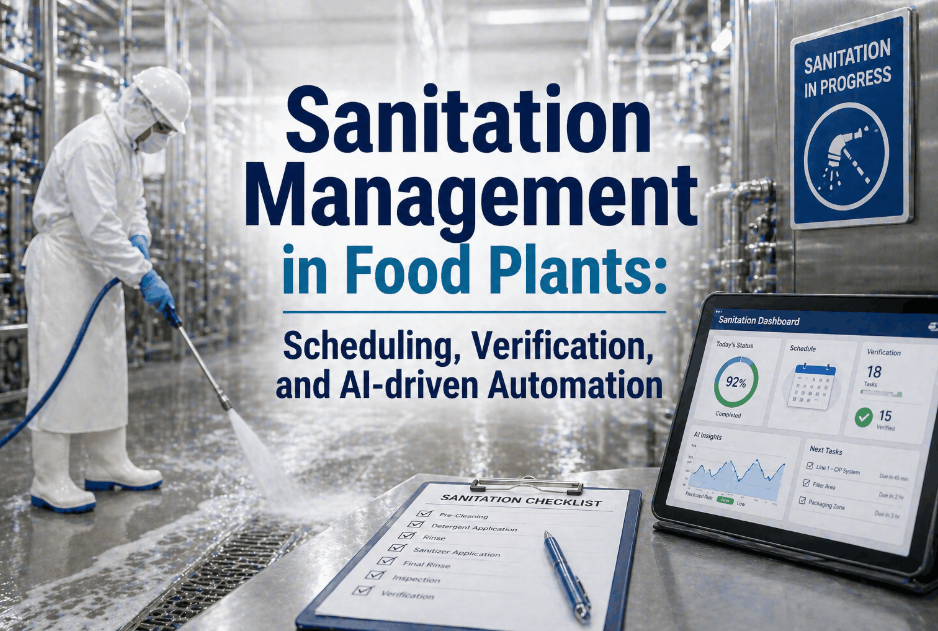
Manual cleaning verification relies on visual inspection and paper sign-off — methods that are subjective, time-pressured, and impossible to audit objectively after the fact. Swab testing confirms cleaning effectiveness but is often performed inconsistently or skipped under production schedule pressure. AI-driven allergen cleaning verification integrates ATP testing results, swab test data, and equipment sensor readings into a unified digital record that creates an objective, time-stamped cleaning confirmation before production is authorized to proceed.
02
Uncontrolled Production Sequencing
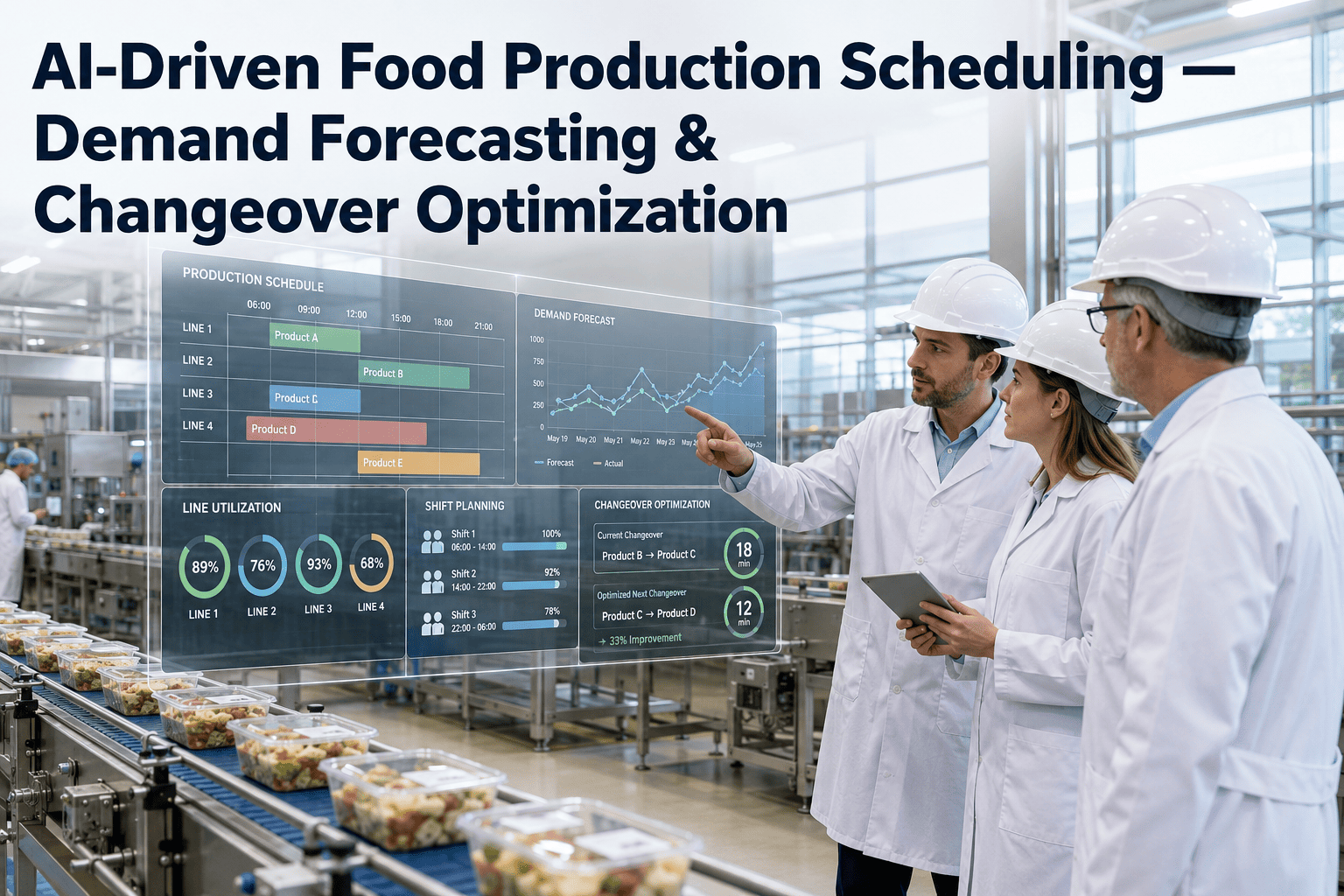
Scheduling allergen-containing and allergen-free production runs without a controlled sequencing logic is one of the most common root causes of cross-contamination events. When production planning systems operate independently from allergen control data, schedulers may inadvertently create allergen exposure windows — placing a nut-containing run immediately before a nut-free run on a line with insufficient cleaning time in the schedule. AI-driven production sequencing allergen management automatically flags scheduling conflicts and enforces allergen-controlled run sequences before production orders are released to the floor.
03
Incomplete Allergen Changeover Checklists
Paper-based and static digital allergen changeover checklists are completed retrospectively rather than in real time — meaning the checklist is filled out after the changeover is complete rather than as each step is performed and verified. This creates a documentation record that reflects intent rather than actual execution. Dynamic, step-gated digital changeover workflows that require verified completion of each control point before the next step is unlocked eliminate this gap by making it structurally impossible to skip or backdate changeover documentation.
04
Fragmented Allergen Recall Documentation
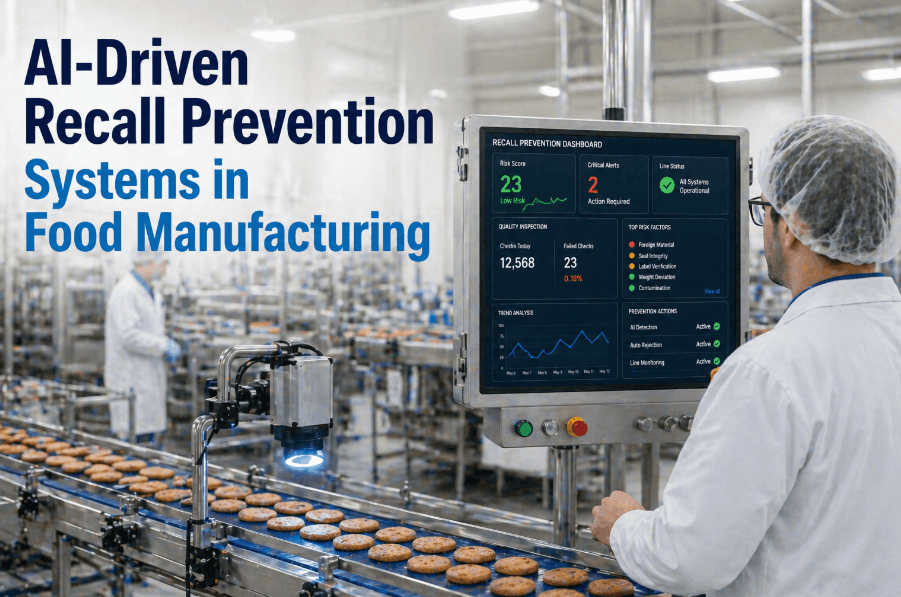
When an allergen incident occurs, the speed and completeness of the response depends entirely on how quickly affected lots can be identified and isolated. Food manufacturers operating paper-based or semi-digital traceability systems require 4–24 hours to assemble the lot traceability and distribution records needed to execute a targeted recall. AI-driven allergen recall documentation platforms reduce this to under 8 minutes by maintaining a continuously updated digital traceability chain that links production records, allergen status, cleaning verification, and distribution data in a single query-ready system.
Platform Capabilities
How AI-Driven Allergen Management Works: Five Core Capabilities
A genuine food allergen program powered by AI-driven technology does not simply digitize existing paper processes — it fundamentally redesigns the control architecture to prevent failures rather than document them after they occur. Food safety managers evaluating AI-driven allergen management platforms should assess every candidate system against these five capability dimensions to determine whether the platform delivers real-time prevention or retrospective recording.
If you want to see how iFactory's platform performs across each of these dimensions in a live food manufacturing environment, you can Book a Demo with our food safety team for a detailed walkthrough.
01
Real-Time Allergen Status Tracking Across All Production Lines
AI-driven allergen management platforms maintain a live allergen status map of every production line, piece of shared equipment, and utility system across the facility. When a line transitions from an allergen-containing to an allergen-free run, the platform tracks cleaning verification status, flags incomplete steps, and prevents production authorization until allergen clearance is confirmed. This real-time visibility gives food safety managers an accurate, continuously updated picture of allergen risk across the entire plant floor — not a snapshot assembled at the end of a shift from paper records.
02
Automated Allergen Changeover Checklists with Step-Gated Verification
Dynamic digital allergen changeover checklists are automatically generated based on the specific allergen transition — from peanut-containing to peanut-free, from gluten-containing to gluten-free — and the equipment configuration of the affected line. Each checklist step is locked until the previous step is verified with objective evidence: equipment sensor confirmation, swab test result entry, or supervisor sign-off with timestamp. Backdating is structurally prevented. Every changeover creates an immutable digital audit trail that satisfies GFSI scheme documentation requirements and FSMA 204 recordkeeping obligations without additional manual effort.
03
AI-Powered Allergen Cleaning Verification with ATP Integration
Allergen cleaning food manufacturing environments require objective verification that cleaning protocols have removed allergenic residues to below detectable thresholds. AI-driven platforms integrate ATP luminometer readings, protein swab test results, and visual inspection records into a unified cleaning verification workflow that automatically calculates pass/fail status against facility-defined thresholds. Trend analysis on cleaning effectiveness data identifies equipment or line areas where allergen residue removal is consistently marginal — enabling targeted cleaning protocol improvements before they result in an allergen incident. Leading facilities are now
Booking Demos to see this integrated verification workflow in action.
04
Allergen-Aware Production Sequencing and Schedule Validation
Integration between the AI-driven allergen management platform and the production scheduling system enables automatic validation of every production order against allergen sequencing rules before the order is released to the floor. The system identifies scheduling conflicts — such as insufficient cleaning windows between allergen-containing and allergen-free runs — and surfaces them to production planners before they become floor-level problems. Allergen sequencing rules can be configured at the facility level to reflect the specific allergen matrix, equipment sharing patterns, and cleaning protocol time requirements of each production environment.
05
Instant Allergen Recall Documentation and Lot Traceability
When an allergen incident is suspected or confirmed, the speed of the recall response is determined by the completeness and accessibility of allergen recall documentation. AI-driven traceability platforms maintain a continuously updated digital chain linking raw material allergen declarations, lot numbers, production records, allergen cleaning verification events, and distribution records. A full forward and backward lot trace — identifying every affected product lot and where it was distributed — is generated in under 8 minutes. This capability transforms a recall from a multi-day crisis into a controlled, precisely targeted response that minimizes consumer exposure and regulatory exposure simultaneously.
Performance Benchmark
AI-Driven vs. Manual Allergen Control: 2026 Performance Comparison
The following benchmark reflects operational data from food manufacturing facilities operating manual, semi-digital, and fully AI-driven allergen control food manufacturing programs. The performance gap between manual allergen management and AI-driven platforms has widened considerably since 2022, reflecting both the maturation of AI prediction and verification capabilities and the growing regulatory and commercial consequences of allergen management failures.
Allergen Management Performance Benchmark — 2026
Regulatory Compliance
Allergen Compliance Requirements Food Safety Managers Must Address in 2026
The regulatory environment governing food allergen compliance has tightened significantly over the past three years. Food safety managers must navigate an increasingly complex web of federal, state, and international allergen labeling and control requirements — while simultaneously satisfying GFSI scheme-specific documentation standards that vary by customer and certification body. Understanding the specific compliance requirements that AI-driven allergen management platforms address is essential for building the business case for investment.
Food safety managers ready to see how these compliance requirements map to specific platform capabilities can Book a Demo for a compliance-focused walkthrough tailored to their current certification scheme.
FSMA 204 Traceability Rule
The FDA's FSMA 204 traceability requirements mandate electronic recordkeeping for Critical Tracking Events (CTEs) including transformation, creation, and shipping of foods on the Food Traceability List. Many top allergens appear on this list. AI-driven platforms generate CTE records automatically as production and distribution events occur — satisfying FSMA 204 as a byproduct of normal allergen control operations rather than as a separate compliance burden.
FALCPA and FASTER Act Requirements
The Food Allergen Labeling and Consumer Protection Act and the FASTER Act expanded the list of major food allergens recognized by the FDA to 14, adding sesame as of January 2023. Food manufacturers must maintain documented evidence that production controls prevent undeclared allergen contamination of labeled products. AI-driven allergen control platforms generate this documentation automatically for every production run, creating an audit-ready compliance record without manual assembly.
GFSI Scheme Allergen Control Requirements
SQF, BRC, FSSC 22000, and IFS all include specific allergen control requirements covering risk assessment, cleaning validation, changeover procedures, and allergen labeling verification. Certification audits increasingly require objective evidence of control effectiveness — not just documented procedures. AI-driven platforms provide the objective, time-stamped, sensor-verified records that auditors require to confirm that allergen controls are operating as designed rather than simply documented as such.
Retail Customer Allergen Specifications
Major retail customers — particularly those with own-label programs — are imposing allergen management specifications that exceed minimum regulatory requirements. Real-time production data sharing, allergen cleaning verification records, and lot-level traceability documentation are increasingly required as conditions of preferred supplier status. Manufacturers with AI-driven food plant allergen safety infrastructure are satisfying these customer requirements as a standard output of their production operations.
Implementation Roadmap
Building an AI-Driven Allergen Control Program: A Strategic Implementation Guide
Deploying an AI-driven food allergen program requires a sequenced implementation approach that delivers measurable risk reduction at each phase. Food safety managers who attempt to deploy every capability simultaneously across all facilities consistently encounter adoption challenges that slow ROI realization. The following roadmap reflects implementation patterns validated across food manufacturing operations ranging from single-site bakeries to twelve-facility multi-allergen networks.
Phase 1
Allergen Risk Assessment and Current State Mapping (Weeks 1–4)
Conduct a comprehensive allergen risk assessment across all products, production lines, and shared equipment. Map every allergen transition point — every changeover scenario, every shared utensil, every shared utility system — and classify each by contamination risk level. Identify the documentation gaps between current paper-based processes and the objective verification standard required by GFSI schemes and FSMA 204. This baseline assessment becomes the blueprint for the AI-driven platform configuration in subsequent phases. Food safety managers who want a facilitated assessment framework can
Book a Demo to access iFactory's structured allergen risk assessment methodology.
Outcome: Allergen risk map, documentation gap analysis, platform configuration blueprint
Phase 2
Digital Changeover and Cleaning Verification Activation (Weeks 5–12)
Deploy dynamic digital allergen changeover checklists for all high-risk allergen transitions at pilot facilities. Integrate ATP testing and swab test workflows into the platform's cleaning verification module. Train production and QA teams on the step-gated verification workflow. Measure changeover documentation compliance rate and cleaning verification pass rate against the pre-deployment baseline established in Phase 1. The goal at this phase is objective, real-time verification of every allergen changeover — replacing retrospective paper documentation with locked, time-stamped digital records.
Outcome: Digital changeover workflows live, ATP integration active, objective verification baseline established
Phase 3
Production Sequencing Integration and Scheduling Validation (Weeks 13–20)
Connect the allergen management platform to the production scheduling system and activate allergen sequencing rule validation. Define allergen conflict rules for every allergen-line combination and establish the cleaning time requirements that must be satisfied before a conflicting production sequence is authorized. Enable automatic pre-release validation of production orders against allergen sequencing rules. Extend pilot facility deployment to remaining facilities using the validated configuration template. This phase eliminates the scheduling-driven allergen risk that reactive systems cannot detect until after production has begun.
Outcome: Pre-release scheduling validation active, allergen sequencing conflicts prevented at source
Phase 4
Enterprise Traceability and Recall Readiness (Week 21+)
With all facilities connected and allergen control data flowing into the platform, activate enterprise-wide lot traceability and recall readiness capabilities. Conduct mock recall exercises to validate that affected lot identification and distribution tracing can be completed within the 8-minute target. Integrate supplier allergen declaration management to extend traceability upstream to raw material receipt. Establish structured quarterly allergen program performance reviews using platform analytics to drive continuous improvement in cleaning effectiveness, changeover compliance, and sequencing adherence across the network.
Outcome: Full enterprise allergen traceability, sub-8-minute recall readiness, continuous improvement program active
Frequently Asked Questions
Allergen Control in Food Manufacturing — Frequently Asked Questions
What is the most common cause of allergen cross-contamination in food manufacturing?
Inadequate cleaning verification during allergen changeovers is the leading root cause. AI-driven platforms integrate ATP testing and sensor data to provide objective, real-time confirmation that allergenic residues have been removed before production proceeds.
How does AI-driven allergen management reduce allergen recall risk?
AI platforms maintain a digital traceability chain linking raw materials to production and distribution. This allows affected lots to be traced in under 8 minutes, minimizing consumer exposure and over-recall costs compared to 4–24 hour manual processes.
Can AI-driven allergen platforms integrate with existing production systems?
Yes. Purpose-built allergen platforms integrate with existing ERP, MES, and SCADA systems without requiring infrastructure replacements. The intelligence layer simply sits above existing systems to activate control workflows.
How does allergen production sequencing work in an AI-driven platform?
The platform automatically validates scheduled production sequences against facility-specific allergen rules. It flags potential conflicts before orders are released to the floor, preventing allergen exposure windows from occurring.
What GFSI schemes does AI-driven allergen documentation satisfy?
AI-driven platforms generate objective, time-stamped verification records satisfying SQF Edition 9, BRC Issue 9, FSSC 22000 Version 6, and IFS Food Version 8. This significantly reduces audit preparation time for multi-scheme operations.
What ROI can food manufacturers expect from allergen management automation?
ROI is generated through avoided recall costs, reduced audit preparation labor, and optimized changeover scheduling. Most food manufacturers with 3–6 allergen-containing lines achieve full ROI within 10–16 months.
ALLERGEN CONTROL · CROSS-CONTAMINATION PREVENTION · AI-DRIVEN 2026
Deploy AI-Driven Allergen Control Across Your Food Manufacturing Operation
iFactory's purpose-built allergen management platform automates changeover checklists, cleaning verification, production sequencing, and recall documentation — giving food safety managers the real-time control and audit-ready records they need to protect consumers and satisfy every regulatory and customer requirement.