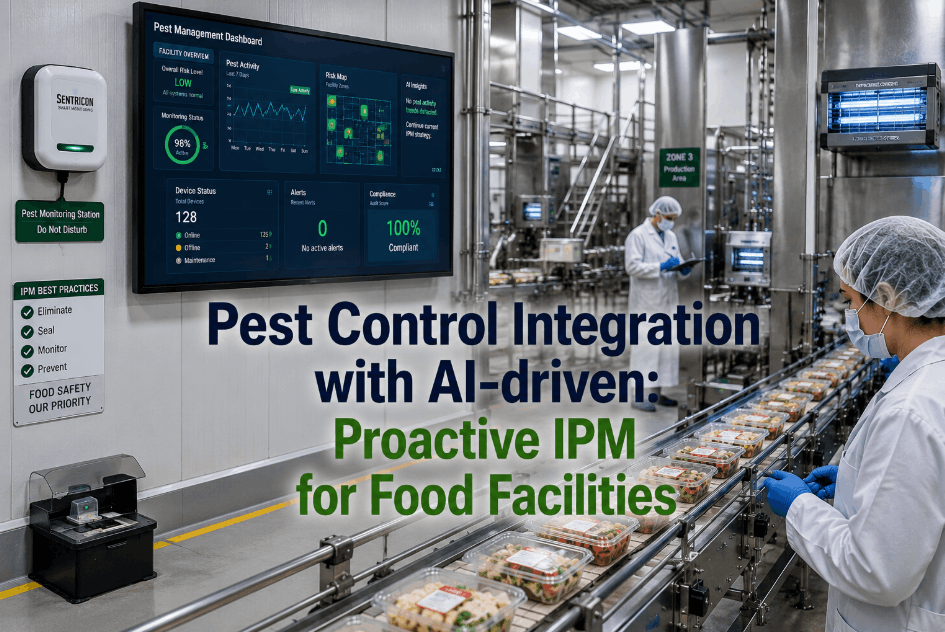
In the strictly regulated environment of food manufacturing, pest control is not just about placing traps — it is a critical intersection of sanitation, structural maintenance, and regulatory compliance. A single pest sighting during a GFSI or SQF audit can lead to immediate certification suspension, while unaddressed structural gaps can cost facilities upwards of $100,000 in product waste and regulatory fines. In 2026, the most resilient food plants are moving beyond manual paper logs by deploying AI-powered Integrated Pest Management (IPM) software that connects pest device data directly to maintenance work orders. This is not just a trap-checking service. It is a strategic transformation of how food manufacturers close the "Structural Gaps" that pests exploit, ensuring 100% audit-readiness and a proactive defense against contamination. To see how AI-driven pest control and maintenance integration works, Book a Demo with the iFactory team today.
IPM INTEGRATION · STRUCTURAL EXCLUSION
Is Your Facility Truly Pest-Proof or Just "Trapped"?
Integrate pest device tracking with structural maintenance workflows. Close entry points before they become audit failures with automated work orders and digital documentation.
94%
Reduction in pest sightings achieved through automated structural exclusion work orders
100%
Digital audit-readiness for SQF, BRCGS, and AIB International pest control requirements
$0
Cost of manual logbook management through automated cloud-based device tracking and mapping
2.4×
Faster closure rates for structural pest vulnerabilities compared to disconnected paper systems
The Integrated Pest Management (IPM) Schedule: Every Interval Explained
Pest control in food manufacturing requires a multi-layered defense strategy that spans from daily sanitation checks to annual program overhauls. Modern standards require a tiered inspection schedule: weekly visual scans of entry points, monthly functional checks of all pest devices, and quarterly deep-dives into the building's structural integrity. Understanding which tasks fall under which interval — and proving they were completed — is the foundation of a defensible food safety program. Facilities looking to automate this complex exclusion schedule can Book a Demo today.
Visual scan of perimeter door sweeps and dock seals
Check sanitation levels in high-risk trash/waste areas
Inspect external vegetation for pest nesting sites
Verify interior light trap functionality and catch trays
Weekly structural checks identify "Day One" entry points before pests establish a foothold inside the plant
Full device inspection (Rodent stations, pheromone traps)
Replace bait/glue boards and log device health
Map device activity trends to identify hotspots
Audit pest contractor logbook for compliance gaps
Test remote-monitoring sensors in hard-to-reach areas
Monthly trend analysis is mandatory for GFSI compliance — a missing trend report is a major audit non-conformity
Quarterly
Maintenance Team
Detailed structural audit (Wall penetrations, roof vents)
Inspect floor drains for organic buildup and fly risk
Verify seal integrity of utility conduits and pipes
Audit "Pest-Proofing" of new equipment installations
Quarterly structural maintenance is the "Exclusion" pillar of IPM — closing entry points is more effective than trapping
Deep-clean of all light trap housings and reflectors
Full program review with Food Safety Manager
Review SDS and chemical usage for approved listings
Training of facility staff on pest sighting reporting
Inspect roof-level HVAC intakes for bird/insect entry
Semi-annual reviews ensure the pest chemical program aligns with current food-grade safety standards
Complete IPM program re-assessment and risk mapping
Verify technician licenses and insurance certificates
Full facility floor-to-roof structural integrity test
Annual trend report submission to regulatory bodies
Verify digital logbook integrity and cloud backup
The annual audit is the final validation that your integrated maintenance and pest program is legally defensible
Component-Level Maintenance: What Each Part of the Pest Defense Requires
A pest defense system is only as strong as its weakest structural point. A maintenance program that only focuses on checking traps will consistently miss the "Invisible Entry Points" in the building envelope. These are the six components that account for the majority of pest-related audit failures in food manufacturing. To see how iFactory tracks these specific exclusion points, Book a Demo with our safety team today.
Monthly
Full device check — verify station is anchored, replace bait blocks, and check for signs of activity or tampering
Quarterly
Map verification — ensure all station locations match the master facility pest map for audit compliance
Annual
Station replacement — replace cracked or damaged housings that could compromise bait safety
CMMS trigger: Device-level barcodes ensure technicians physically scan every station during the monthly audit
Weekly
Check catch trays — identify insect types and volume to trigger immediate sanitation work orders if needed
Monthly
Replace glue boards and verify bulb intensity — UV bulbs lose efficacy over time and must be tracked per unit
Annual
Full bulb replacement — schedule annual UV bulb swaps to maintain peak attractant intensity during peak fly season
CMMS trigger: Flying insect trend mapping identifies "Open Door" events that require dock seal maintenance
Weekly
Light-gap test — inspect doors from the inside with lights off; any visible light indicates a pest entry point
Monthly
Inspect dock leveler brushes and side seals for wear, tearing, or detachment from the frame
Quarterly
Proactive replacement of worn sweeps — pests can squeeze through a gap as small as 1/4 inch
CMMS trigger: A "Failed Pest Audit" for sightings triggers an immediate structural seal inspection work order
Monthly
Check utility conduit seals for cracking, shrinkage, or rodent gnawing on sealant materials
Quarterly
Inspect HVAC ductwork and roof vents for screen integrity — prevent bird and insect entry at height
Immediate
Any new equipment installation requires "Seal Verification" before the project is marked complete
CMMS trigger: Capital project checklists must include a "Pest Exclusion Verification" step for final sign-off
Weekly
Inspect drain baskets and traps for organic buildup that serves as a breeding ground for Drain Flies
Monthly
Apply approved biological drain cleaners to eliminate biofilm hotspots that traditional sanitation misses
Quarterly
Check drain cover integrity — ensuring no gaps exist for rodent entry from the municipal sewer system
CMMS trigger: Sanitation cycles are cross-referenced with fly-trap activity to identify cleaning frequency gaps
Weekly
Inspect 18-inch "No Vegetation Zone" around the building perimeter for weeds, debris, or nesting signs
Monthly
Trim branches to ensure no vegetation touches the building walls or roof, preventing insect "bridges"
Semi-Annual
Inspect gravel/stone perimeter integrity — refill areas where drainage or foot traffic has exposed the soil
CMMS trigger: Landscaping work orders are scheduled to prevent "Overgrowth Risk" before it attracts pests
iFactory CMMS for Food Safety Compliance
Stop Managing Pest Audits on Paper Logbooks
iFactory auto-generates structural exclusion work orders and device inspection tasks — with QR-code verification, photo documentation, and audit-ready trend reports that satisfy SQF, BRCGS, and FDA requirements.
Documentation: The Compliance Evidence Food Safety Audits Actually Require
In food manufacturing, "If it isn't documented, it didn't happen." This is never more true than during a pest control audit. Safety standards require that all device checks, structural repairs, and chemical applications be documented and retained on-site. This documentation must be available to the auditor, fire marshal, and health officials upon request. In the event of a sighting, your documentation is your only defense to prove that the incident was an isolated event rather than a systemic program failure. You can Book a Demo to see our digital audit-ready logbooks.
01
Device Activity Trend Reports
Monthly or quarterly data showing catch counts per device. Essential for identifying chronic problem areas and proving that the facility is taking proactive corrective actions.
02
Technician Credentials & SDS
Up-to-date licenses, insurance, and Safety Data Sheets for all chemicals used on-site. Every chemical application must be linked to an approved SDS in the digital vault.
03
Structural Deficiency Log
A detailed record of every wall gap, torn seal, or broken screen found, with a corresponding maintenance work order and completion date to prove the entry point was closed.
04
Pest Sighting & Action Log
Employee reports of pest sightings must be logged with the immediate corrective action taken. Proves the facility has a "Culture of Food Safety" where every staff member is a monitor.
05
Approved Pest Map
A timestamped, digital map showing the exact location of every pest device in the facility. Proves that the trap population matches the design specified in the IPM program.
06
Chemical Application Records
Exact dates, times, amounts, and EPA registration numbers for any chemical treatments. Must be digitally linked to the specific location of application for total traceability.
Common Pest Compliance Violations and How to Prevent Them
Violation
How It Happens
Consequence
Prevention
Missing Device Checks
Traps in hard-to-reach areas (behind pallets) are skipped by the technician but logged as "Checked"
Audit non-conformity — treated as a gap in the program integrity and could mask a major infestation
iFactory with QR-code scanning at each trap — ensures the technician was physically at the device to log the check.
Book a Demo to see field verification.
Open Structural Gaps
Maintenance team unaware of "Pest Exclusion" standards — uses foam instead of metal mesh for pipe seals
Immediate audit failure — rodents chew through foam in minutes, rendering the seal useless
Automated structural exclusion work orders with "Repair Standard" checklists — ensures only approved materials are used
Lapsed Technician Licenses
Third-party contractor license expires — facility fails to audit the PCO's documentation folder
Major audit failure — any chemical application by an unlicensed technician is a legal and regulatory violation
Digital credential vault with expiration alerts — iFactory notifies the Food Safety Manager 30 days before a license expires
Unlogged "Open Door" Events
Dock doors left open for ventilation during summer without screens or air curtains
Attracts flying insects and birds — results in immediate "Sighting" violation during internal or external audits
Door-sensor integration triggers "Pest Risk" alerts in the CMMS when dock doors remain open beyond a set threshold
Frequently Asked Questions
How does a CMMS help with "Structural Exclusion" specifically?
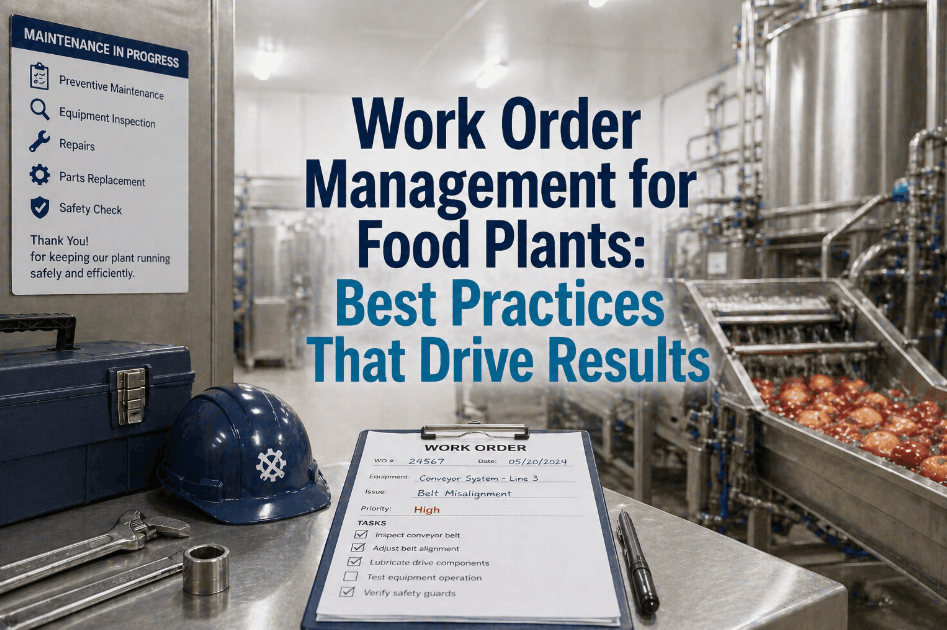
A CMMS transforms pest control from a "trap-checking" service into a "structural-maintenance" workflow. When a technician finds a gap or a broken seal, they trigger a "Structural Deficiency" work order in the CMMS. This work order is assigned to the maintenance team, tracked for completion, and automatically added to the audit-ready pest log. This proves to auditors that the facility is proactively closing entry points rather than just reacting to pests.
Can we use iFactory if we have a third-party pest control contractor?
Yes. In fact, iFactory is most powerful when used with external contractors. You can grant "Technician Access" to your PCO, allowing them to scan device QR codes and log activity directly into your system. This eliminates the need for paper logbooks and gives you real-time visibility into their performance and your facility's pest trends. You can
Book a Demo to see contractor integration.
What are the specific requirements for "Pest Maps" in GFSI audits?
GFSI standards (like SQF and BRCGS) require an accurate, up-to-date map of all pest control devices, categorized by type (e.g., bait stations, ILTs, pheromone traps). The map must be timestamped and reflect the actual current layout of the facility. iFactory's digital mapping tool allows you to update device locations instantly and generates a compliant, high-resolution map for auditors with a single click.
How does "Trend Analysis" impact my maintenance budget?
Trend analysis identifies where pests are most active. If data shows high activity near a specific dock door, it indicates a failed seal or a sanitation gap in that area. By focusing your maintenance budget on these "Bad Actor" zones, you can eliminate the root cause of pest entry rather than spending money on excessive chemical treatments. This data-driven approach typically reduces chemical spend by 20-30%.
Can we automate the generation of corrective actions after a failed device check?
Yes. In iFactory, any pest device check logged as "Failed" or "High Activity" can automatically trigger a Corrective and Preventive Action (CAPA) work order. This work order is instantly routed to the maintenance or sanitation team, ensuring the root cause (like a structural gap or sanitation lapse) is addressed within the required audit timeframe. You can
Book a Demo to see CAPA automation.
How does iFactory ensure the digital pest log is audit-proof and tamper-evident?
Our digital logbook uses timestamped, encrypted entries that cannot be backdated or modified after submission. Every entry includes the technician's digital signature and, if configured, GPS or QR-code proof of presence. This provides a "Golden Thread" of evidence that satisfies the strictest SQF and BRCGS requirements for data integrity and prevents the "Lazy Logging" common with paper systems.
Full IPM & Structural Compliance Automation
Every Entry Point. Every Device. Every Audit Record — Automatically.
iFactory builds your pest exclusion schedule into automated work orders — weekly through annual — with device-level tracking, deficiency management, and documentation that satisfies any GFSI, SQF, or FDA review.





-inspection-checklist.png)
