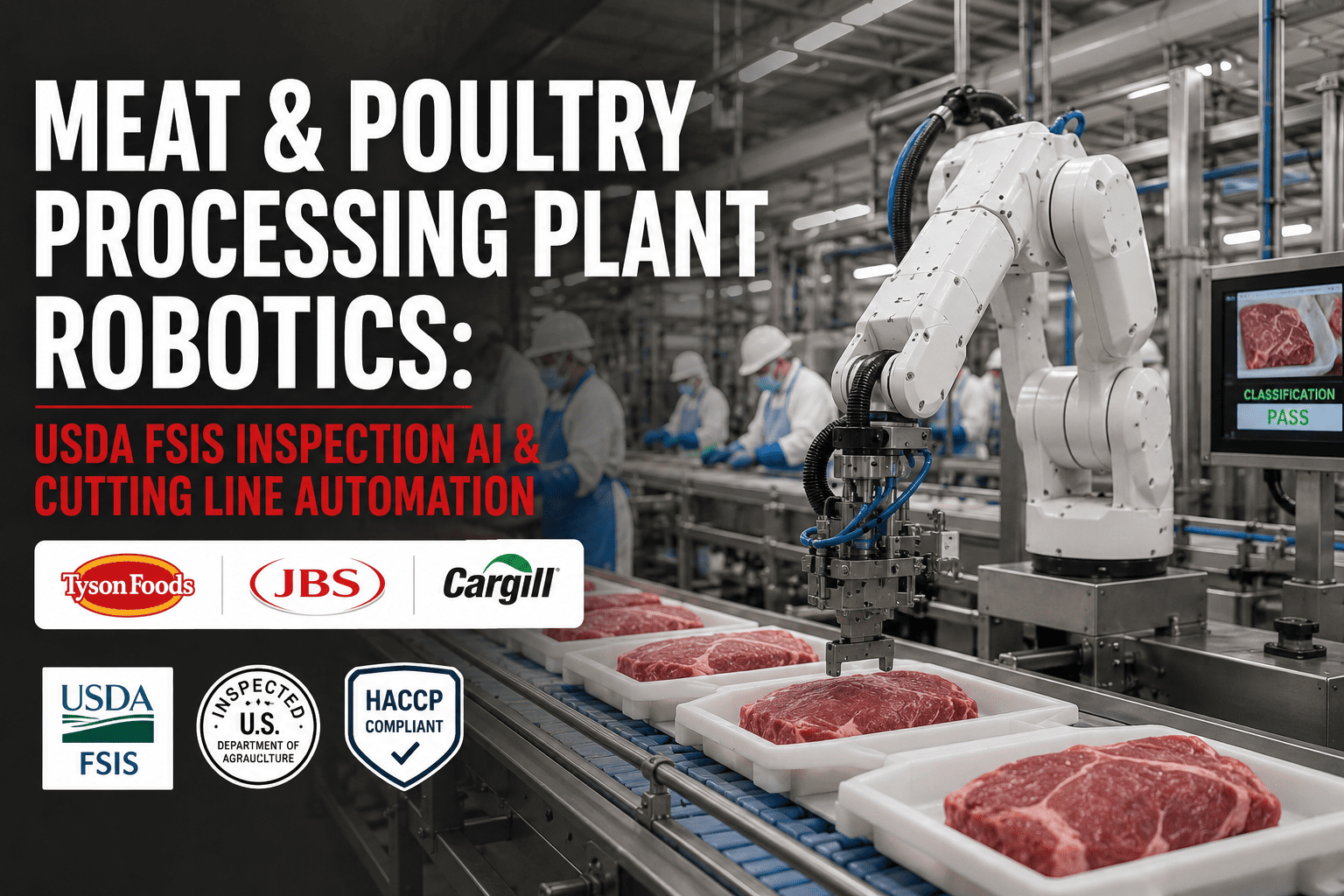
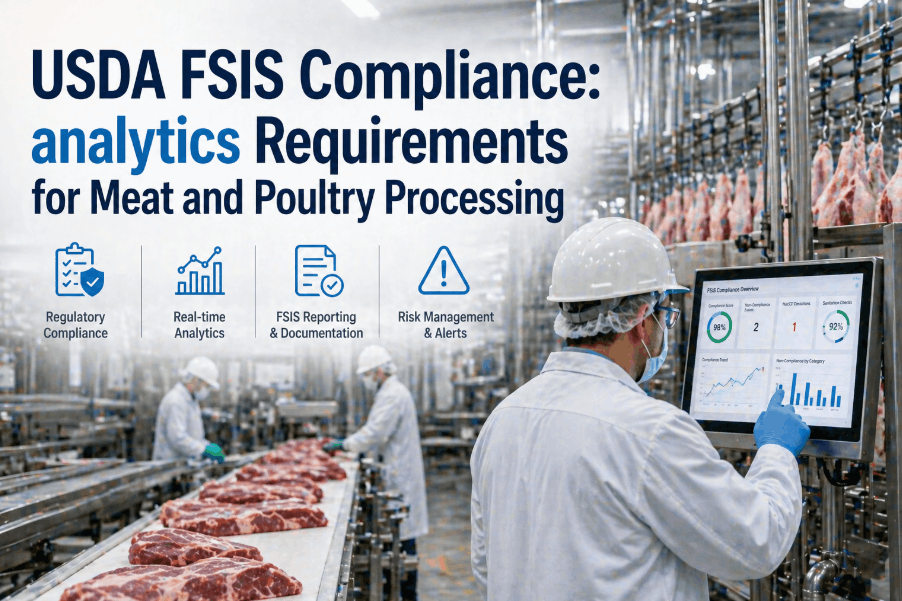
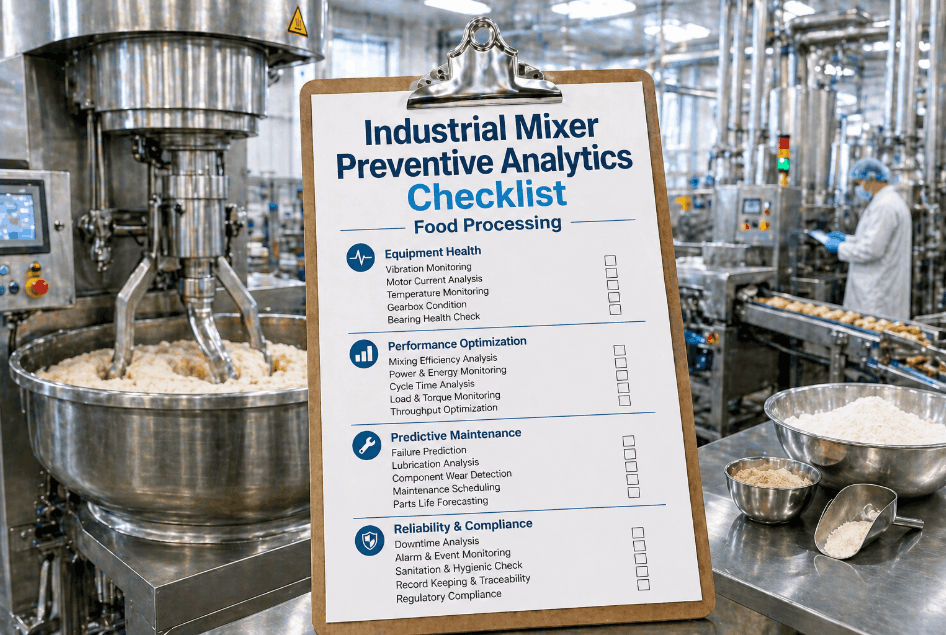
In the high-tonnage world of meat processing, equipment reliability is not just an operational goal — it is a non-negotiable requirement for food safety and regulatory compliance. From industrial grinders and high-speed slicers to vacuum tumblers and automated smokehouses, the thermal and mechanical stresses on these assets are extreme. A single hour of unplanned downtime in a meat facility can cost upwards of $300,000 in lost throughput and product spoilage, while a failure in sanitary design can lead to devastating USDA non-compliance events. In 2026, the most competitive meat plants are eliminating these risks by deploying AI-powered work order management systems that automate preventive maintenance (PM) schedules, track blade-sharpening cycles in real-time, and ensure 100% audit-readiness for FSMA and GFSI standards. This is not just a repair log. It is a strategic transformation of how meat processors protect their margins, their workforce, and the integrity of the food chain. To see how AI-driven meat processing equipment optimization works, Book a Demo with the iFactory team today.
Automate Your Meat Plant Maintenance from Day One
iFactory handles the full work order lifecycle — intake, triage, assignment, SLA tracking, completion, and compliance documentation — automatically. No coordination overhead. No missed requests. Book a Demo with our meat plant operations team.
Why Meat Processing Maintenance Fails at Scale
The failure patterns in meat processing are consistent: high-moisture environments, aggressive sanitation chemicals, and intensive thermal cycling accelerate component wear. These are the six failure patterns that drive meat plants to digital work order systems — and the operational cost attached to each. You can Book a Demo to see our failure-mode prevention dashboard.
Cross-Contamination via Seal Failure
Bearings and seals in grinders and tumblers degrade under high-pressure washdowns. Untracked wear leads to lubricant leakage into the product zone, triggering immediate batch disposal and USDA violations.
Cost: $50,000+ per incident in wasted raw material and sanitation labor
Inefficient Slicer Blade Sharpening
Relying on "Technician Feel" for blade changes leads to inconsistent yields and increased product giveaway. Without digital wear tracking, blades are either changed too early or too late.
Cost: 3–5% yield loss in high-speed slicing operations annually
Critical thermal sensors in smokehouses drift over time due to high-heat exposure. If not calibrated on a strict PM schedule, internal temperatures may not meet lethality standards.
Cost: Potential multi-million dollar recall risk and brand damage
Hydraulic Leakage in Press Systems
Forming presses and injectors rely on complex hydraulics. Undetected pinhole leaks are invisible until they cause a total system failure or contaminate the production floor.
Cost: 12+ hours of unplanned downtime per major hydraulic failure
Metal Detector "Blindness"
Metal detectors that pass startup tests but fail mid-shift due to unlogged sensitivity drift. Without automated verification work orders, physical hazards can enter the final packaging stream.
Cost: Immediate shutdown of the packaging line and 100% product re-inspection
Compliance Records Missing for FSMA
Paper-based PM logs for critical equipment often have "Gaps" — missing signatures or unlogged repairs. These gaps are primary targets for FDA and USDA auditors.
Cost: Audit non-conformance, plant suspension, and legal liability
The Complete Maintenance Lifecycle — Step by Step
A structured work order system moves every meat processing repair through the same seven stages, automatically, with every handoff documented and every SLA clock running. Book a Demo to see this lifecycle running in iFactory for your meat plant today.
Request Intake & QR Tagging
Technician portal, QR scan, or automated equipment alert
Every request enters through a single channel. Technicians scan QR codes on grinders or slicers to report issues immediately. All intake methods convert to a structured work order with asset-specific technical data and timestamp pre-filled.
Output: Structured work order with unique ID, asset reference, and submission timestamp
Automated Triage and Priority Assignment
AI assigns P1–P4 priority based on asset criticality
Rules configured by equipment type automatically classify each request. A smokehouse lethality fault triggers P1 immediately. A cosmetic repair on a non-food-contact surface is marked P4. Priority inflation is eliminated.
Output: Priority level assigned, SLA clock started, escalation rules armed
Technician Assignment and Notification
Auto-routed by skill, availability, and location
The system assigns the work order to the right technician based on skill match (e.g., thermal for smokers). P1 and P2 work orders trigger immediate push notifications. Managers see routing happen in real time on the dashboard.
Output: Assignment confirmed, technician notified via mobile app
SLA Clock and Escalation Monitoring
Live tracking with pre-breach alerts before violations occur
Every open work order has a live SLA countdown. As a request approaches its deadline, automated alerts go to the supervisor. If a P1 urgent request is not acknowledged within 30 minutes, it automatically escalates to the Plant Manager.
Output: Pre-breach alerts sent, escalation triggered if unacknowledged
Sanitary Execution and Documentation
Mobile checklist, photo evidence, and sanitary sign-off
Technicians follow mobile checklists including mandatory sanitation steps. Completion is documented on the spot: photos uploaded, parts used recorded, and time logged. Everything captured in the field, satisfying USDA/FDA requirements.
Output: Completion record with photos, parts record, and sanitary verification
Quality Assurance (QA) Verification
Mandatory sign-off before equipment release
When the technician marks the work order complete, a notification goes to the QA supervisor. The equipment cannot be released back to production until the hygiene and safety checks are verified digitally.
Output: QA verification captured, equipment released back to production
Compliance Record and Asset History Update
Audit-ready documentation generated automatically
The completed work order becomes a permanent, searchable record attached to the asset. It includes the service date, technician, photos, and sign-off chain. This satisfies any USDA, FSMA, or GFSI audit review.
Output: Audit-ready compliance record, asset history updated
SLA Tiers: The Industry Benchmarks for Meat Processing
Different asset failures carry different consequence levels. Here are the four priority tiers used by high-performing meat processing plants. Book a Demo to see how iFactory enforces these tiers automatically.
Priority
Examples
Acknowledgement
Resolution Target
Compliance
P1 Emergency
Smokehouse fire, major leak, metal detector failure
Under 15 min
Under 2 hours
95%+
P2 Urgent
Blade breakage, tumbler vacuum loss, injector blockage
Under 60 min
Same shift
90–95%
P3 High
Conveyor wear, guard repairs, sensor drift
Within 4 hours
Next clean window
85%+
P4 Routine
Scheduled PMs, cosmetic fixes, upgrades
Next bus. day
Within 7 days
80%+
The 5 KPIs Every Meat Plant Should Be Tracking
A work order system turns maintenance data into operational intelligence. These are the five metrics that separate reactive meat plants from proactive. Book a Demo to see all five tracked automatically.
SLA Compliance Rate
On-time / Total Work Orders
Tracks overall programme health. Below 80% indicates a systemic resource gap or prioritization failure. High compliance ensures that critical food safety equipment never remains offline beyond safe limits.
First-Time Fix Rate
Resolved on visit 1 / Total closed
Low FTFR reveals parts gaps or poor access to asset history. Preparing technicians with digital SOPs and parts lists before they arrive at a meat slicer or grinder is key to boosting this metric.
Planned-to-Reactive Ratio
PM Tasks / Total Work Orders
Industry Target
80% Planned
Reactive work costs 4.8x more due to emergency labor and expedited shipping. Shifting to an 80/20 ratio saves 25–40% total maintenance costs and stabilizes production throughput.
Sanitation Rework Rate
QA Failures / Total Repairs
Measures how often maintenance hygiene requires re-sanitation. High rework rates indicate that technicians are not following post-repair sanitary SOPs correctly, risking cross-contamination.
Mean Time to Repair (MTTR)
Total Repair Time / Total WOs
Tracks technical efficiency and readiness. MTTR reduction is achieved by centralizing technical drawings and previous failure data, allowing for faster diagnostics in cold meat-room environments.
Implementation: Rolling Out iFactory in Your Meat Facility
Week 1
Asset Digitalization & Tagging
Tag every grinder, slicer, and smokehouse with industrial QR codes. Upload all manual service logs and technical drawings to the digital asset register. Establish P1–P4 priority rules.
Weeks 2–3
Configure Assignment Rules and SLA Clocks
Map technician skills to equipment categories. Set up auto-assignment and pre-breach alerts. Train technicians on mobile execution: photo upload, parts recording, and sign-off.
Month 2
Activate PM Scheduling Alongside Reactive Work
Load your PM schedule into the system. PM work orders should auto-generate on the configured interval and enter the same queue. Review first-month compliance data.
Month 3 onward
Use Data to Optimize — Not Just Report
Surfaces patterns: which assets generate repeat repairs, which SLA tiers are missed, and which technicians are most efficient. Compliance records export automatically.
Stop Tracking USDA Compliance on Paper Logbooks
iFactory auto-generates your sanitary checklists and PM records — with digital signatures and photo evidence that satisfy every auditor. Book a Demo to digitize your meat plant today.
Frequently Asked Questions
Does iFactory handle USDA-required sanitary maintenance checklists?
Yes. iFactory includes a specialized "Sanitary Design" checklist module. For every work order performed on a food-contact asset like a meat grinder, the system enforces a mandatory post-repair cleaning and inspection step. The equipment cannot be released back to production until a photo of the clean equipment and a digital sign-off from the hygiene supervisor are captured.
Book a Demo to see sanitary checklists.
How does blade-sharpening tracking work in the work order system?
For slicers and grinders, iFactory tracks "Cycle Counts" or "Operating Hours" through integration or manual logs. When a blade hits its pre-set wear threshold, the system automatically triggers a PM work order for sharpening or replacement. This prevents yield loss and ensures consistent product quality.
Can we manage external contractor work orders for smokehouse calibrations?
Absolutely. You can assign work orders directly to your external contractors via the "Partner Portal." They can log their time, upload calibration certificates, and sign off on tasks just like an internal technician. This ensures your smokehouse compliance documentation is centralized in one place.
How does iFactory improve the Mean Time to Repair (MTTR) for meat slicers?
iFactory reduces MTTR by providing technicians with immediate access to technical drawings, previous repair history, and specific safety SOPs through QR-code scanning. This eliminates diagnostic guesswork and ensures that the technician arrives with the correct parts and tools required for that specific high-speed slicer model.
Book a Demo to see mobile MTTR reduction.
What is "Metal Detector Blindness" and how does the software prevent it?
Metal detector blindness occurs when a unit passes startup tests but drifts out of sensitivity mid-shift. iFactory prevents this by scheduling mandatory sensitivity verification work orders at specific intervals throughout the day. These tasks require photo-proof of test-piece detection, ensuring a complete audit trail for food safety compliance.
How does iFactory handle spare parts inventory for meat grinders and slicers?
iFactory integrates spare parts management directly into the work order workflow. When a technician opens a repair task for a specific grinder, the system automatically shows the current inventory of blades, seals, and bearings. Parts used are deducted in real-time, and low-stock alerts trigger automated reordering to ensure you never face downtime due to a missing critical component.
Every Missed Meat Equipment Repair Has a Cost. Automate Now.
iFactory handles intake, triage, assignment, SLA enforcement, mobile execution, and compliance documentation — automatically. Live in under 5 days. No implementation fees and no setup costs.