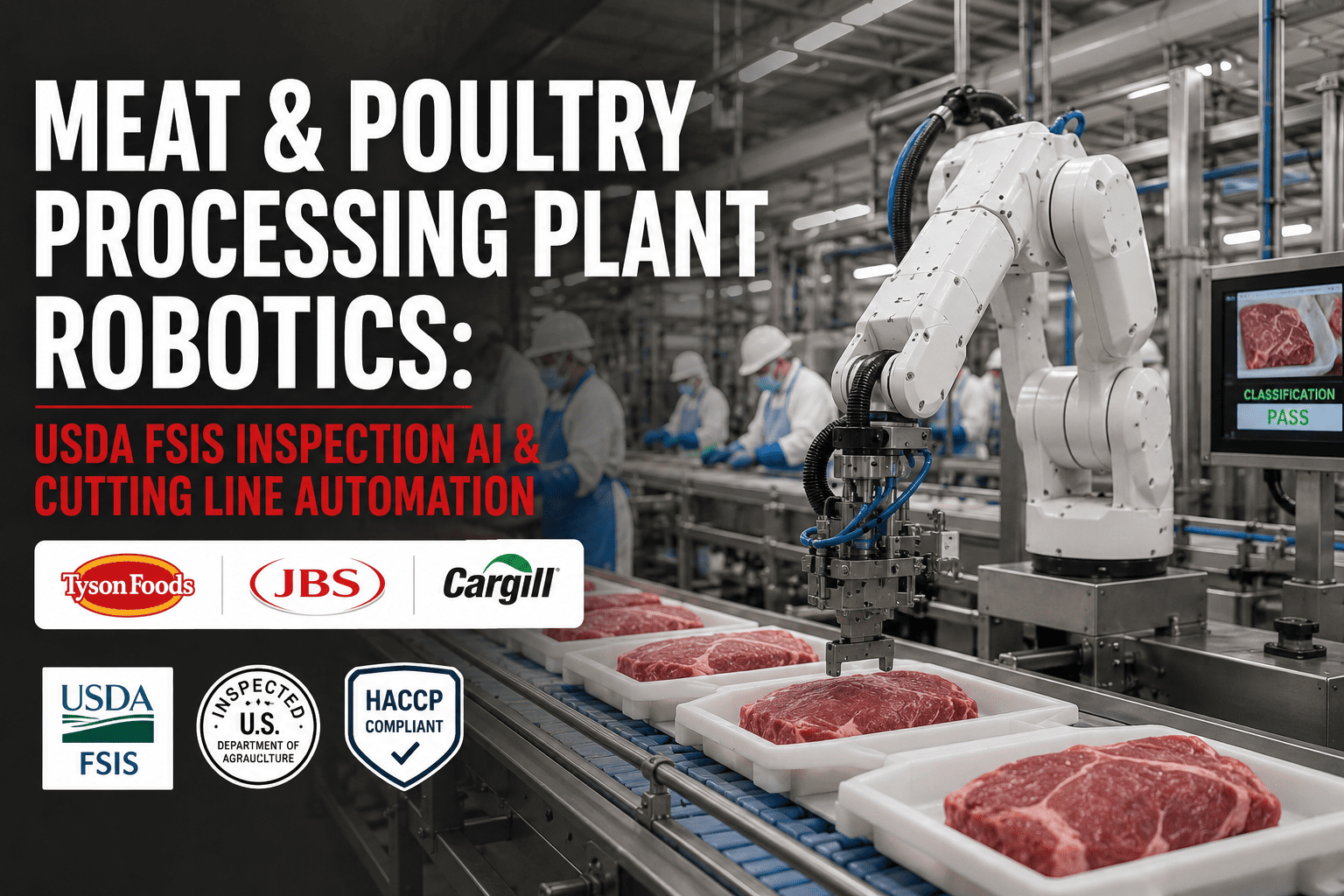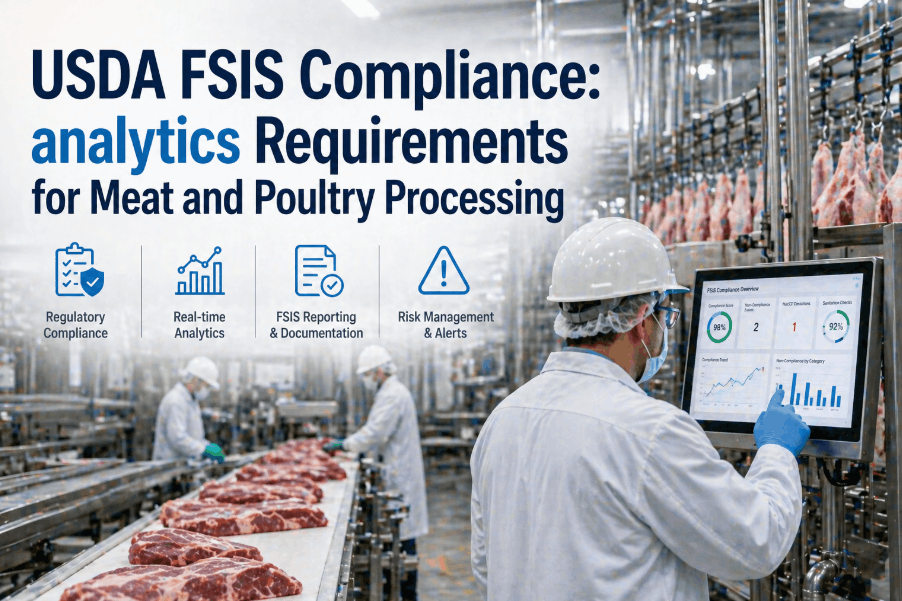
USDA FSIS compliance analytics requirements are reshaping how meat and poultry processing facilities document, verify, and audit their regulatory posture in 2026. Plants operating without automated FSIS compliance documentation systems face compounding risk — inspection citations, production holds, and export market access failures that manual recordkeeping cannot prevent. The three regulatory pillars that drive FSIS enforcement actions — sanitary design validation, HACCP prerequisite program documentation, and pre-operational inspection verification — each demand a different analytical framework to close the compliance gap. If your facility is ready to move from reactive USDA inspection responses to proactive compliance intelligence, Book a Demo to see how iFactory's AI-driven compliance analytics platform protects meat and poultry plants from FSIS enforcement risk.
What USDA FSIS Analytics Requirements Actually Cover in Meat and Poultry Processing
Understanding the Regulatory Scope Behind FSIS Compliance Documentation Obligations
USDA FSIS compliance analytics requirements span a significantly broader documentation surface than most quality directors account for during audit preparation. The Federal Meat Inspection Act and the Poultry Products Inspection Act impose continuous recordkeeping obligations on every critical control point, sanitation standard operating procedure, and corrective action event — not merely during scheduled USDA inspection windows. FSIS verification activities, including in-plant inspector observations, HACCP record audits, and microbiological sampling programs under the Salmonella and Listeria monocytogenes performance standards, create a continuous regulatory exposure that requires automated, timestamped documentation to defend. Facilities running paper-based compliance systems expose themselves to the documentation gaps that trigger NR (Noncompliance Record) escalations.
FSIS Compliance Documentation Requirements: The Four Core Pillars
Mapping USDA Inspection Analytics Obligations to Specific Regulatory Frameworks
Meat and poultry processing plants subject to FSIS jurisdiction must maintain continuous, defensible documentation across four distinct regulatory frameworks simultaneously. Each pillar carries its own record retention requirements, corrective action documentation standards, and verification protocols — and each creates a unique NR exposure profile when analytics systems fail to capture real-time process deviations. AI-driven FSIS compliance platforms consolidate these four documentation streams into a single, audit-ready evidence layer that survives regulatory scrutiny. Quality directors can Book a Demo to benchmark their current documentation posture against FSIS enforcement patterns in comparable processing categories.
HACCP Prerequisite Program Analytics in Meat and Poultry Plants
How AI-Driven HACCP Prerequisite Monitoring Closes the FSIS Documentation Gap
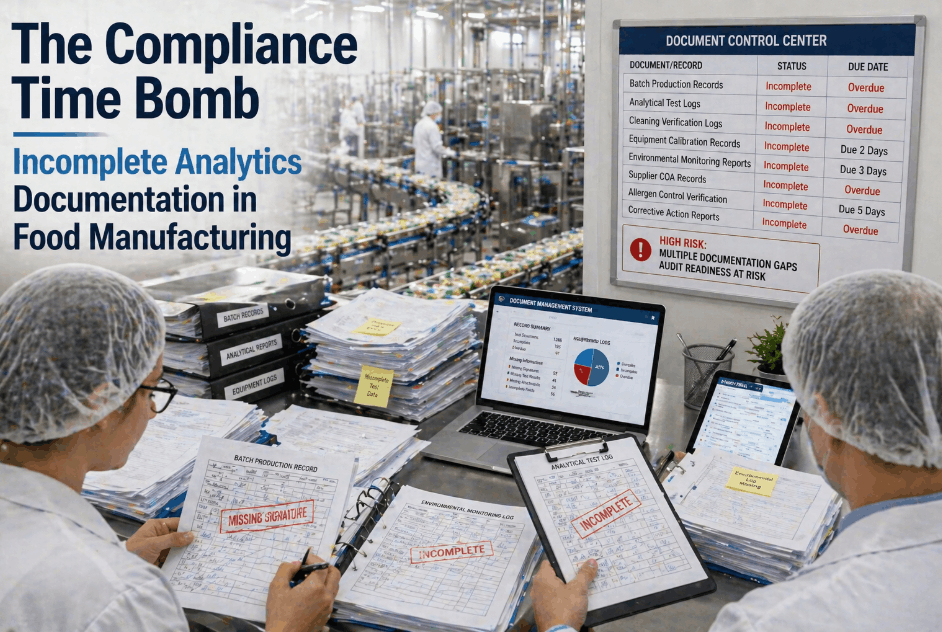
HACCP prerequisite programs — including pest control, allergen management, temperature monitoring, supplier verification, and employee hygiene programs — represent the largest documentation surface area in a USDA-regulated meat or poultry plant. Compliance directors managing multi-shift operations across large processing floors face an inherent documentation completeness risk with manual systems: observation gaps, late entries, and corrective action records that reference general procedures rather than specific deviations. AI-driven HACCP prerequisite analytics eliminate these gaps by continuously capturing process condition data and automatically flagging prerequisite program deviations for immediate supervisor response and documentation. Operations teams operating under enhanced FSIS scrutiny following prior NR citations can Book a Demo to see accelerated compliance posture recovery through automated prerequisite analytics.
Pre-Operational Inspection Analytics: Closing the SSOP Documentation Gap
Why USDA Pre-Op Inspection Records Remain the Highest-Citation FSIS Compliance Category
SSOP pre-operational inspection documentation is the single most frequently cited FSIS compliance deficiency category across meat and poultry establishments — not because plants fail to conduct pre-op inspections, but because documentation completeness, timeliness, and corrective action trail integrity consistently fail to meet the evidentiary standard that FSIS in-plant inspectors apply. A pre-op inspection completed at 5:47 AM but recorded at 6:23 AM after production start constitutes a documentable SSOP failure under FSIS enforcement protocols, regardless of the actual sanitation outcome. AI-driven pre-op inspection platforms generate timestamped, supervisor-verified inspection records in real time — with photographic documentation, corrective action workflow integration, and automatic production hold gates when open pre-op deficiencies remain unresolved. Compliance directors seeking to eliminate recurring SSOP citation patterns can Book a Demo for a live walkthrough of the iFactory pre-op analytics module.
AI-Driven FSIS Compliance Documentation: The Enforcement-Defense Platform
How Meat and Poultry Plants Use AI Analytics to Reduce FSIS Citation Frequency and Severity
The shift from manual to AI-driven FSIS compliance documentation generates immediate, measurable enforcement-defense value across three dimensions: citation frequency reduction through real-time documentation completeness, citation severity reduction through corrective action trail integrity, and appeal success rate improvement through tamper-evident record authenticity. FSIS enforcement escalation — from NR citation to Notice of Intended Enforcement (NOIE) to suspension — is driven by documentation deficiency patterns that AI platforms structurally eliminate. Compliance directors managing establishments with recent enforcement history or elevated FSIS scrutiny will find the fastest path to normalized regulatory relationships through automated documentation restoration. Facilities navigating active FSIS compliance challenges can Book a Demo to model an accelerated documentation remediation pathway with the iFactory regulatory team.
Building the Business Case for AI FSIS Compliance Investment
Quantifying the Financial Return on USDA Compliance Analytics Technology for Plant Leadership
The financial case for AI-driven FSIS compliance analytics is built on four compounding value streams: regulatory enforcement cost avoidance, production hold duration reduction, recall liability exposure compression, and export market access protection. Plants operating under active FSIS corrective action requests face a direct, quantifiable daily cost from restricted production categories and elevated in-plant inspector presence. AI compliance platforms eliminate the documentation conditions that trigger and sustain these enforcement states — generating a financial return that dwarfs the platform investment within the first operational quarter in most mid-scale processing environments.
Frequently Asked Questions
What HACCP records does FSIS require meat and poultry plants to maintain under 9 CFR 417?
Under 9 CFR 417.5, establishments must maintain records covering CCP monitoring, critical limit deviations, corrective actions, and verification activities — accurate, dated, and signed by the responsible employee. Retention minimums are one year for refrigerated products and two years for shelf-stable or frozen. AI compliance platforms ensure these records meet FSIS evidentiary standards through real-time automated capture.
How often does FSIS conduct HACCP verification activities in meat and poultry establishments?
FSIS in-plant inspectors conduct HACCP verification continuously — reviewing records, observing CCP monitoring, and auditing corrective actions daily, not on a scheduled calendar. Comprehensive Food Safety Assessments (FSAs) evaluate the entire HACCP system periodically. AI documentation platforms ensure your establishment is audit-ready at all times.
What is the FSIS enforcement escalation pathway from NR citation to suspension?
Individual NRs accumulate into a pattern that triggers a Regulatory Control Action (RCA) or Notice of Intended Enforcement (NOIE). Failure to achieve documented corrective compliance within the NOIE timeline results in suspension of inspection — halting plant operations. AI compliance analytics interrupt this escalation by eliminating the recurring documentation deficiencies that drive NR accumulation.
Can AI FSIS compliance platforms integrate with existing MES and ERP systems in meat processing plants?
Yes. AI FSIS compliance platforms integrate bi-directionally with SAP, Oracle, Microsoft Dynamics, and major MES platforms via standard API and OPC-UA connections. Compliance records flow directly into quality and regulatory reporting modules, while production plan data enables shift-level compliance monitoring against FSIS performance standard thresholds.
How long does implementation of an AI FSIS compliance documentation system take?
For a facility with four to twelve monitored lines and existing sensor infrastructure, implementation runs four to eight weeks from kickoff to live real-time FSIS compliance dashboards. This covers data connection, HACCP plan digitization, SSOP workflow configuration, ERP integration, and team onboarding — with zero production interruption at any stage.
Does USDA FSIS compliance analytics require new equipment investment in existing meat plants?
No. The majority of FSIS documentation deficiencies are addressable through AI-driven workflow and record management improvements on existing infrastructure — not capital equipment replacement. Sensor retrofitting for temperature and CIP monitoring is typically the only hardware component, with minimal investment relative to the enforcement risk exposure it eliminates.