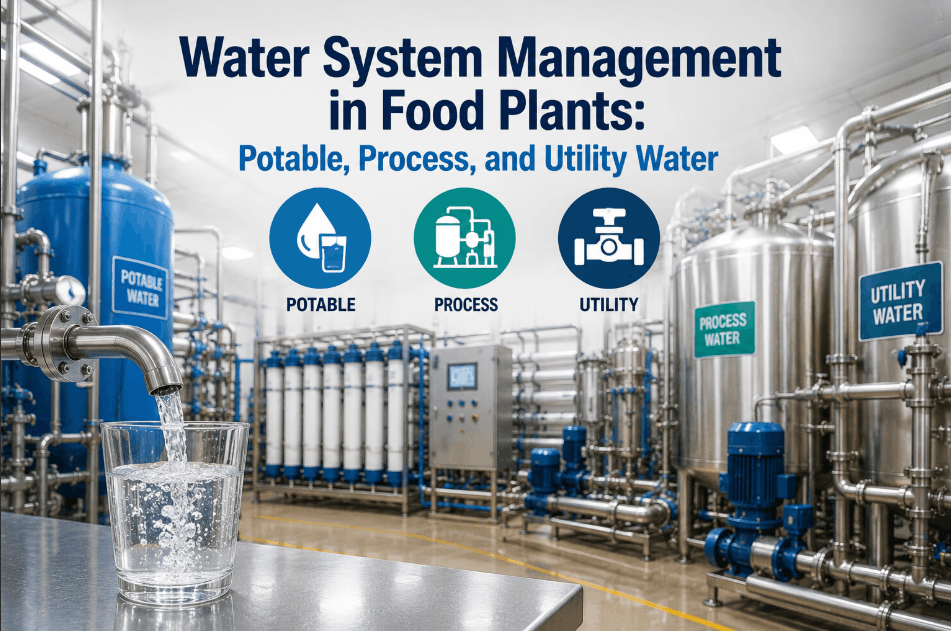
Water is the lifeblood of food manufacturing, serving as a critical ingredient, a primary cleaning agent, and a vital utility for steam and cooling systems. However, unpredicted failures in water treatment infrastructure cost food processors an average of $150,000 per hour in lost throughput and compromised product safety. In 2026, the leading food factories are moving beyond manual testing and reactive service by deploying AI-powered water treatment maintenance software that predicts RO membrane fouling, optimizes chemical dosing, and ensures 100% compliance with FDA water quality standards. This is not just a filtration upgrade. It is a strategic transformation of how food manufacturers control utility costs, protect consumer health, and build sustainable production environments. To see how AI-driven water system optimization works inside a live food manufacturing environment, Book a Demo with the iFactory team today.
Why Traditional Water System Maintenance Fails Food Processors in 2026
The Hidden Cost of Reactive Water Utility Management
Most food manufacturers still manage water treatment systems through a combination of manual grab-samples, fixed-interval membrane cleaning, and reactive chemical adjustments — causing critical treatment steps to be either over-treated (wasting chemicals) or under-treated (risking contamination). Traditional SCADA systems track what flows through a pipe but cannot predict when an RO membrane will foul or when a UV bulb will lose disinfection efficacy. Seasonal water source variability, microbiological spikes, and tightening environmental regulations make this gap increasingly expensive: the cost of a missed disinfection cycle is now measured in product recalls, wasted raw material, and regulatory fines. Manufacturers ready to close this gap can Book a Demo and see how AI-driven water intelligence eliminates reactive quality risk from day one.
How AI Transforms Water Quality Monitoring in Food Manufacturing
From Manual Grab-Sampling to Predictive Water Analytics
The fundamental shift that AI water monitoring software introduces to utility management is the move from reactive testing to predictive quality intelligence. AI-driven systems identify the digital signatures of mineral scaling, biological fouling, and chemical imbalances before they impact water purity. Machine learning models continuously analyze sensor data from RO units, UV reactors, and chemical dosing pumps, cross-referencing it against influent water source variability to produce a dynamic quality signal that adjusts automatically as production cycles and raw water conditions shift. Utilities directors looking to deploy this capability can Book a Demo and see live water quality models built from real food manufacturing influent data.
The Five Core Capabilities of AI-Powered Water Treatment Optimization
What Modern Water Utility Maintenance Software Actually Delivers
A purpose-built AI water optimization platform for food processing is not a simple sensor upgrade. It is a connected intelligence layer that links influent quality, filtration health, chemical inventory, and compliance reporting into a single decision-support framework. The five capabilities below represent the operational architecture that separates leading water analytics platforms from legacy SCADA tools. Utilities engineers and plant directors considering this capability shift can Book a Demo to walk through a live configuration mapped to their specific treatment train.
AI Water Monitoring vs. Traditional Manual Testing: A Capability Comparison
Evaluating Water Utility Management Platforms for 2026 Production Requirements
The table below maps critical capability dimensions across three categories of water management systems currently deployed in food manufacturing — from legacy manual testing to purpose-built AI-driven platforms designed for predictive quality control and utility optimization.
| Water System Capability | Manual Grab-Sampling | Standard SCADA | AI Water Platform |
|---|---|---|---|
| Quality Forecasting Method | None / Reactive | Real-Time Alerts | Predictive Analytics |
| RO Membrane Cleaning | Fixed Calendar | Pressure-Based | AI Fouling Prediction |
| Chemical Dosing Precision | Manual Adjust | Flow-Proportional | Dynamic Quality Sync |
| UV Disinfection Tracking | Hours Logged | Intensity Alarm | Predictive Life AI |
| Audit Compliance Record | Paper Logs | Digital Database | Automated Verification |
| Boiler Water Softening | Periodic Testing | Timer-Based | Continuous Capacity AI |
| Waste Discharge Risk | Post-Event Only | Current Level Only | Predictive Penalty Alert |
| Sustainability Analytics | Not Tracked | Volume Tracked | Optimization Dashboard |
Six Water Treatment Gaps That AI Closes in Food Manufacturing
Where Traditional Water Control Creates Hidden Production Risk
Understanding the urgency of AI-driven water optimization requires examining the specific failure modes that traditional water utilities management creates in food plant environments. Each gap below represents a documented quality risk scenario — and the mechanism by which modern water intelligence platforms eliminate it. To assess which gaps represent the greatest financial exposure in your facility, Book a Demo for a live water system gap analysis with the iFactory engineering team.
Measured Results: AI Water System Optimization in Food Processing
Documented Financial Outcomes Across Enterprise Water Management Deployments
Connecting Water Optimization to Food Safety and Sustainability
How AI Water Intelligence Strengthens the Entire Manufacturing Value Chain
The value of water treatment maintenance software extends well beyond the utility house — when water quality is driven by predictive data, cleaning cycles are more effective, steam quality is more consistent, and product safety risks decline sharply. For multi-site enterprises, AI-powered water management with centralized visibility allows for benchmarking across facilities, identifying optimization opportunities where one plant's successful treatment strategy can be scaled to others, delivering an additional 12 to 18 percent in enterprise-wide water savings. To see how this works in practice, Book a Demo and review a live water quality dashboard configuration for your facility.
Building the Business Case for AI Water System Investment
Translating Water Intelligence Into Executive Financial Language
The most effective approach to securing executive approval for AI water optimization investment is grounding the business case in three measurable scenarios every food processing CFO recognizes: the cost of the last quality-related downtime event, the annual spend on water treatment chemicals, and the risk of regulatory non-compliance surcharges. In virtually every high-tonnage food facility, these three numbers sum to a payback case that outpaces platform investment within the first year — typically without needing to calculate the additional gains from boiler efficiency and membrane life extension.
Implementation Architecture: Deploying AI Water Optimization in Food Factories
Integration Without Utility Disruption
A common concern among utilities engineers evaluating water maintenance software is integration complexity — but purpose-built platforms are designed to layer over existing PLCs and water controllers through standard industrial protocols without requiring any downtime. The standard deployment delivers live AI quality forecasting and RO fouling analytics within six to eight weeks: the first phase ingests historical quality logs, the second activates predictive models on real-time sensor data, and the third connects dosing recommendations to active treatment cycles — completing the digital quality loop most food plants have never previously achieved. Utilities directors ready to begin can Book a Demo to walk through a deployment timeline built around their specific infrastructure.
Frequently Asked Questions
What is AI water treatment maintenance in food manufacturing?
AI water maintenance uses machine learning models trained on water quality data and system performance records to dynamically forecast fouling, optimize chemical feed rates, and predict component failure. Unlike manual testing, AI-driven platforms provide continuous, predictive visibility into water purity and utility efficiency.
How does predictive RO fouling analytics differ from traditional pressure monitoring?
Traditional monitoring triggers an alarm *after* fouling has occurred. Predictive analytics identifies the early digital signatures of mineral scaling or bio-fouling in RO membranes weeks in advance, allowing for planned cleaning cycles that prevent salt passage and extend the operational life of the membranes.
How quickly can food manufacturers expect ROI from AI water optimization?
Most deployments deliver measurable financial outcomes within 90 days — with chemical spend reduction and discharge penalty prevention generating immediate returns. Full platform payback, including membrane life extension and audit compliance automation, is typically achieved within 12 months.
Does AI water management require replacing existing water controllers?
No. AI water platforms layer over existing PLCs, SCADA systems, and water controllers through standard industrial protocols — adding a predictive intelligence layer without needing to replace foundational treatment hardware. Most integrations are completed with zero utility downtime.
What data does an AI water optimization platform require?
The core requirements are historical water quality logs, a list of treatment assets (RO, UV, Softeners), and current chemical dosing records. Real-time sensor data for flow, pressure, and quality parameters (pH, TDS, ORP) unlocks the full predictive capability of the platform.
How does AI dosing optimization handle water source variability?
AI models incorporate real-time influent quality data, automatically adjusting chemical feed rates as turbidity or organic load fluctuates. This dynamic responsiveness ensures that water quality remains consistent even when municipal or well-water sources show significant seasonal variability.
Can AI water optimization help with wastewater compliance?
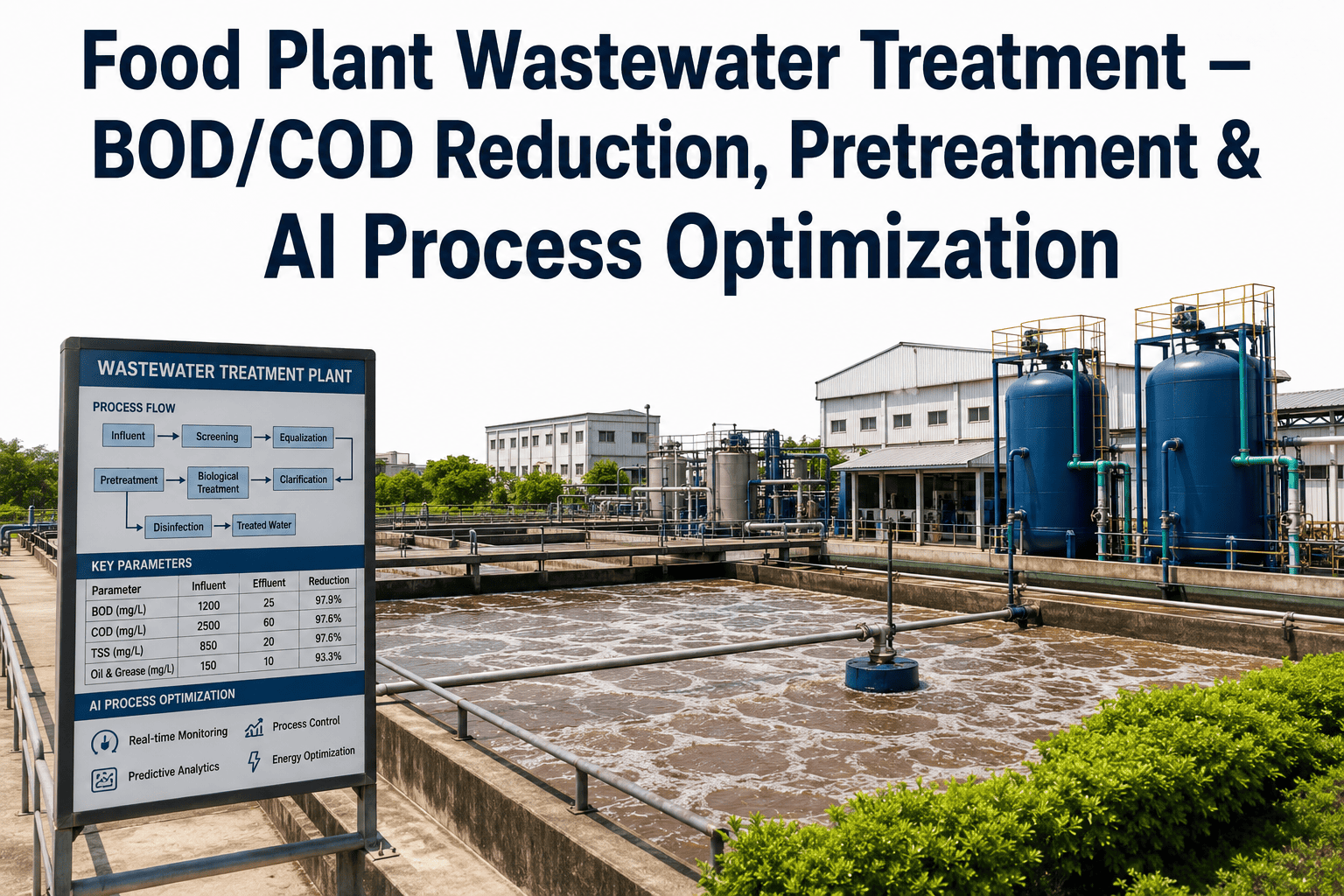
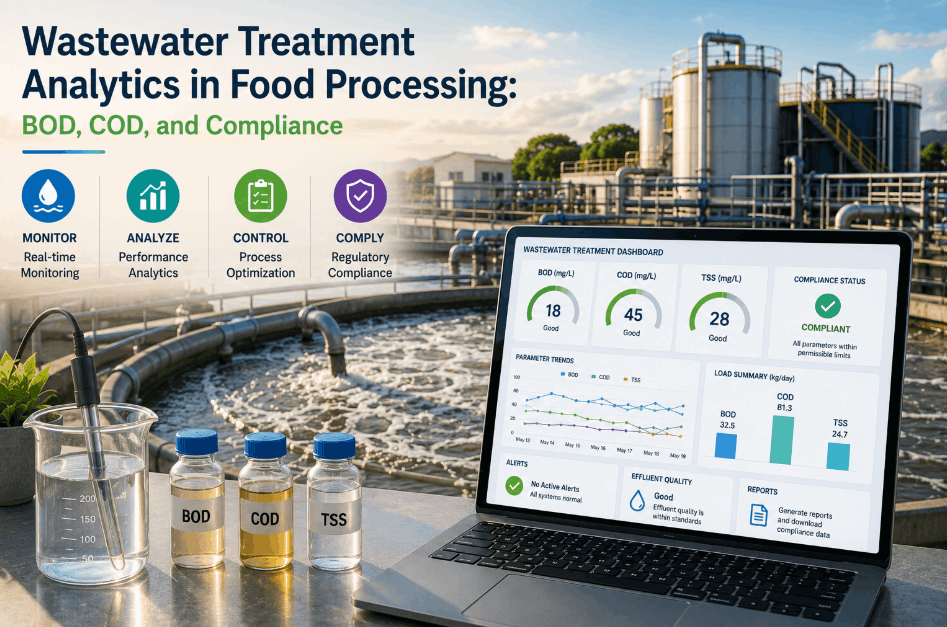
Yes. By monitoring outgoing organic load and chemical residuals, AI-driven pre-treatment analytics identifies discharge limit breaches before water leaves the plant. This allows for automated pre-treatment corrections that prevent the expensive municipal surcharges associated with high-BOD discharge.
How does the platform ensure data integrity for water quality audits?
Automated water maintenance platforms provide a tamper-proof, continuous digital record of all quality parameters and treatment actions. This replaces error-prone manual logs and ensures that the facility can prove 100% adherence to safety standards during any regulatory or customer audit.