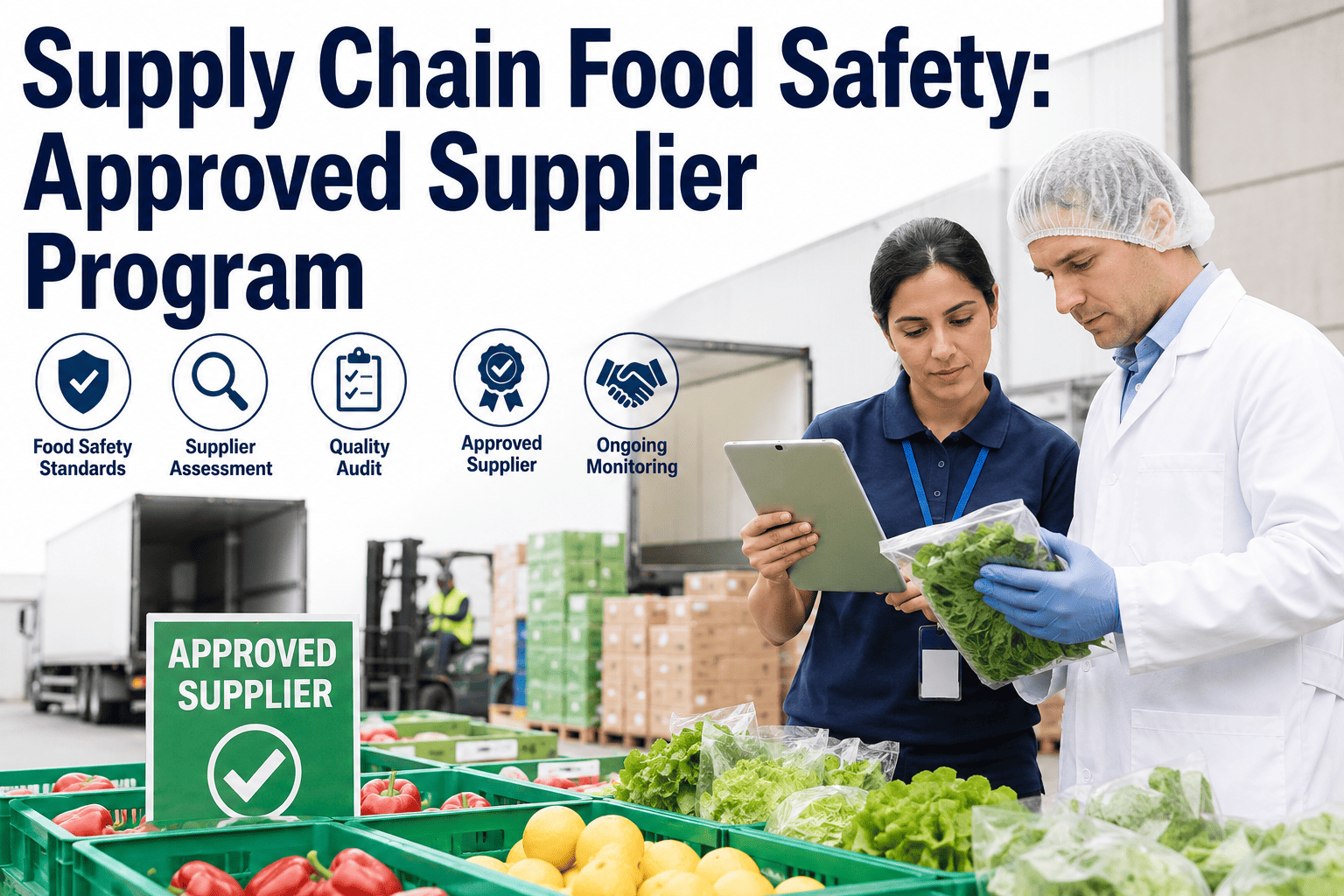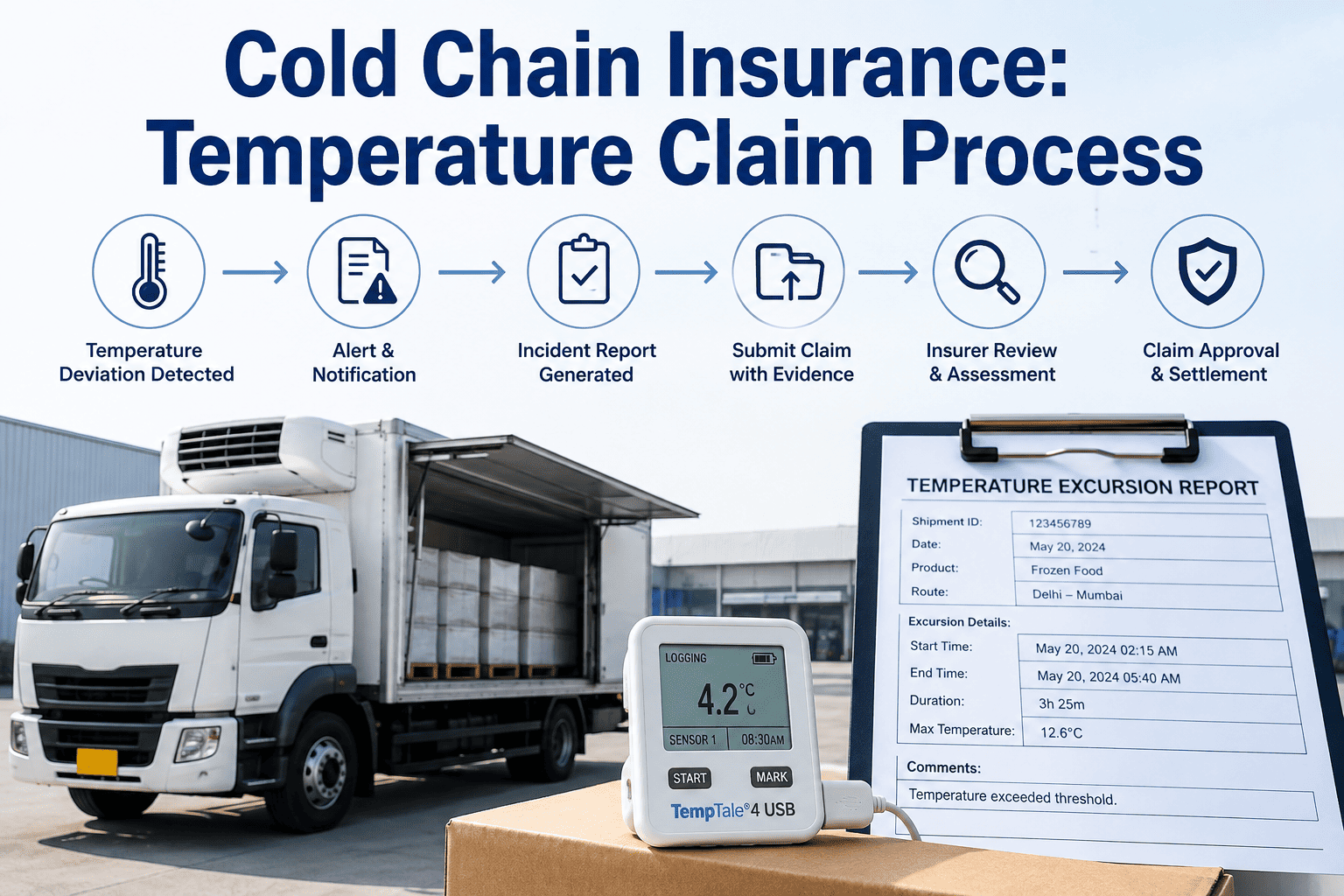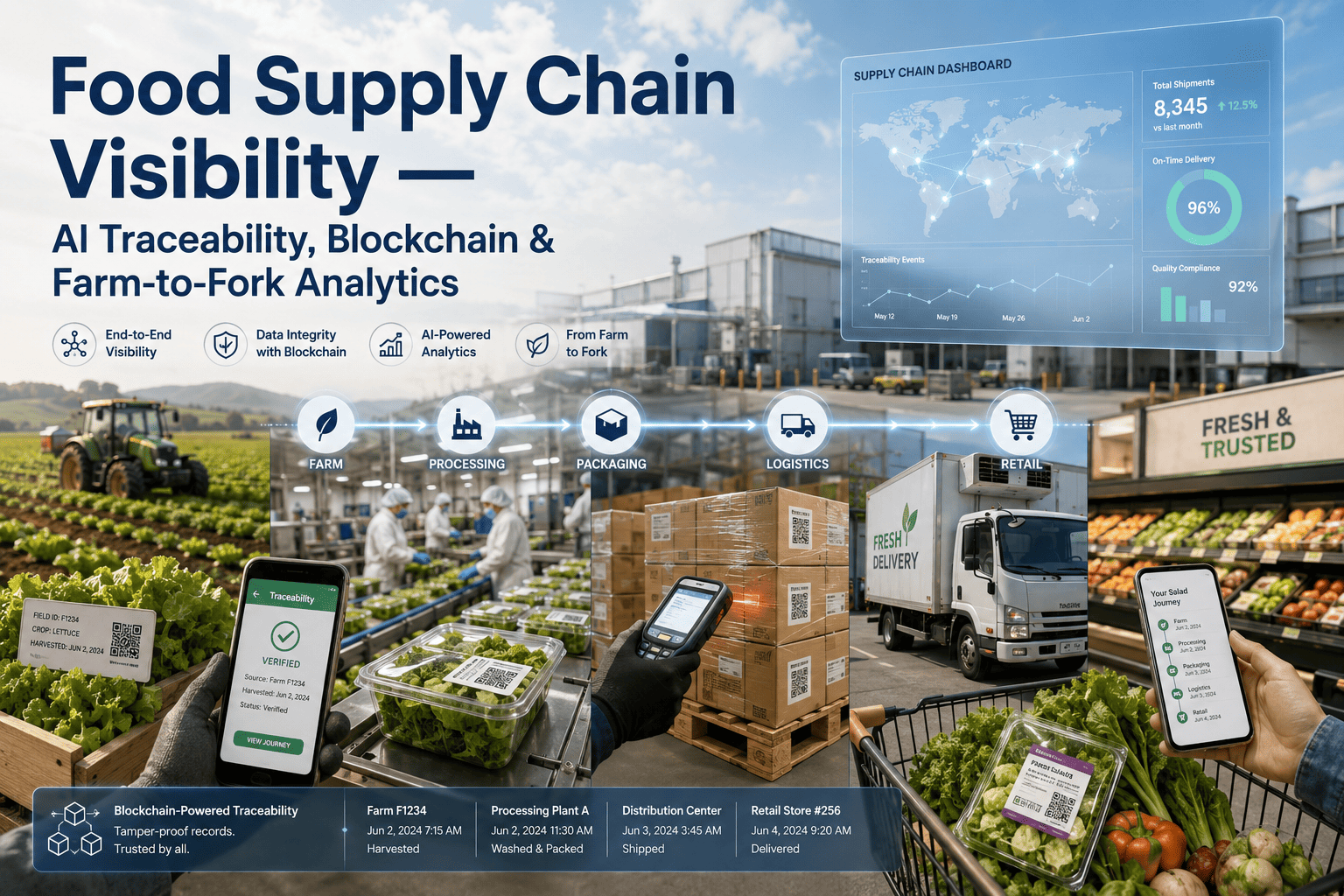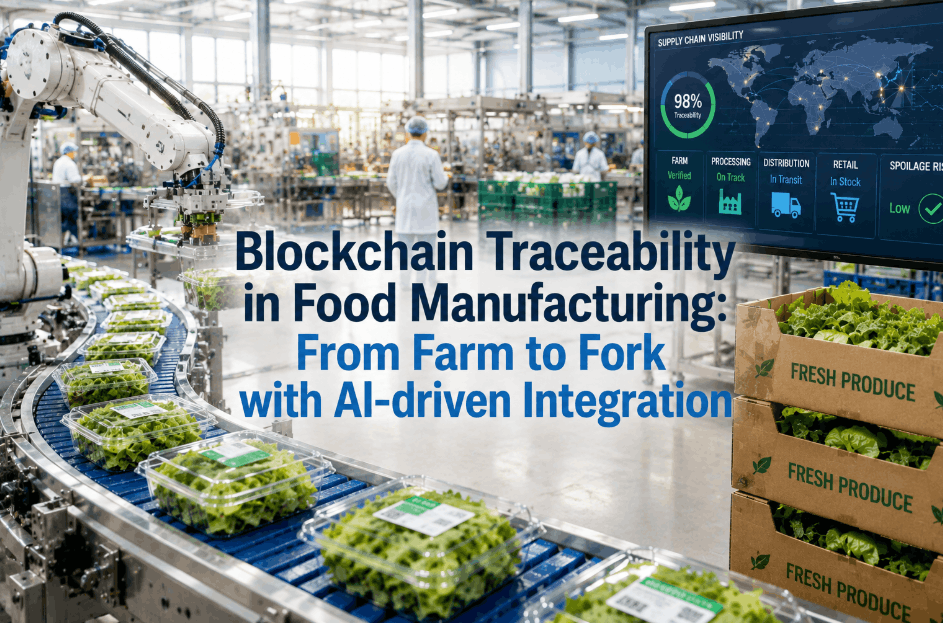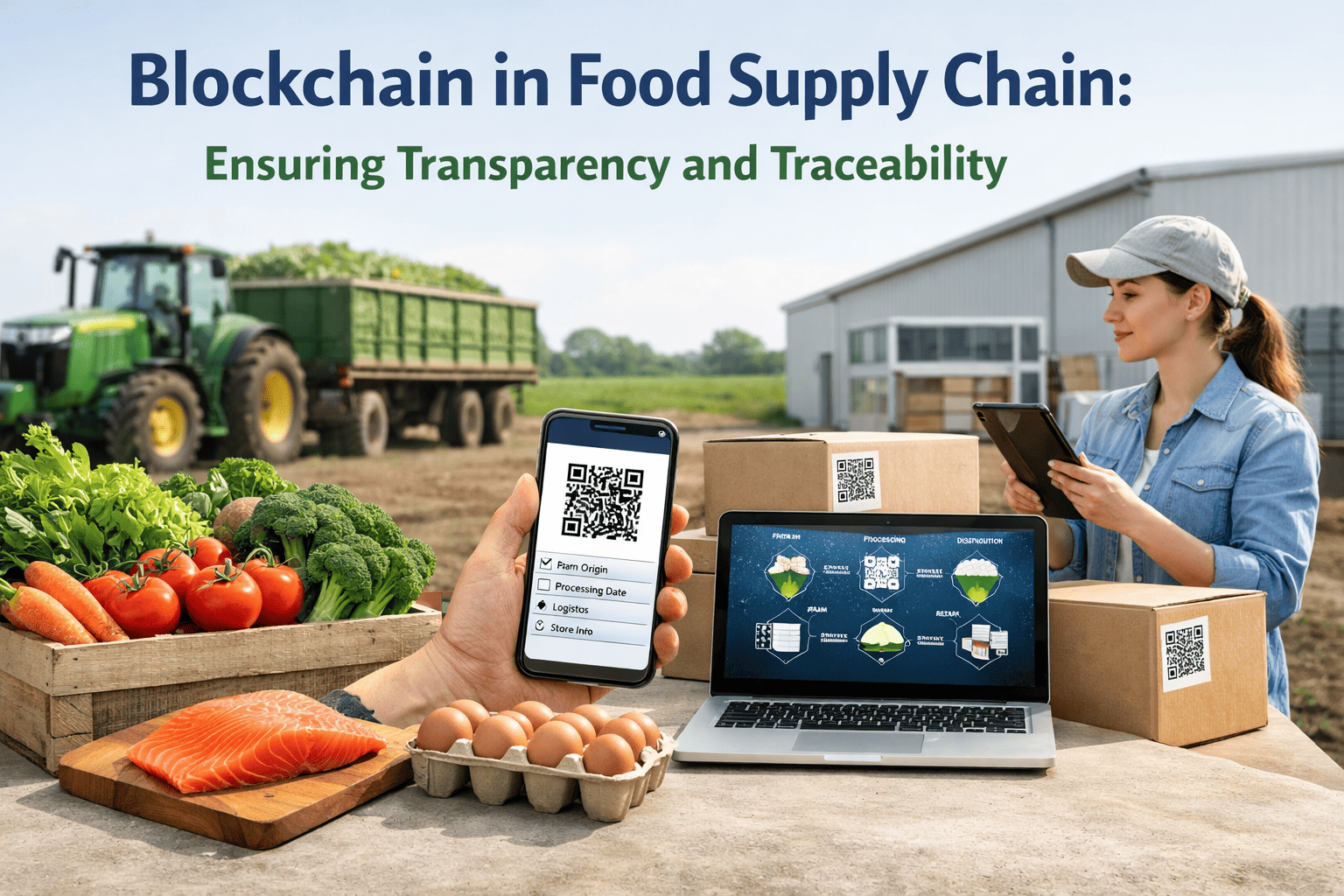
Every year, 600 million people get sick from contaminated food — and when a crisis hits, the first question is always the same: where did it come from? Traditional supply chains can't answer fast enough. Blockchain changes that equation permanently. By creating an immutable, shared ledger that every supply chain participant writes to and none can alter, blockchain compresses trace-back timelines from weeks to seconds and eliminates the trust gaps that let contaminated products reach consumers. In 2026, the global blockchain-in-food market has crossed $1.5 billion, with adoption accelerating as FSMA 204 enforcement, retailer mandates, and consumer transparency expectations converge. This guide breaks down how blockchain is rewiring food supply chain transparency — what's real, what's hype, and what food manufacturers need to act on now. Book a free demo to see how iFactory integrates blockchain-ready traceability into your operations.
Why Traditional Food Supply Chains Are Failing
The global food chain is one of the most fragmented, opaque, and fraud-vulnerable systems in modern commerce. Here's the scale of the breakdown.
| Challenge | Scale | Why It Persists | Source |
|---|---|---|---|
| Food Fraud (Global) | $40 Billion/Year | Opaque supply chains make origin verification nearly impossible with paper records | FDA / Grocery Mfrs. Association |
| Average Trace-Back Time (Manual) | 7+ Days | Fragmented records across suppliers, distributors, and retailers require phone/email chains | FDA Pilot Studies |
| Foodborne Illness (Global) | 600 Million/Year | Slow traceability means contaminated products stay in circulation for days or weeks | WHO |
| Average Recall Cost | $10M+ | Without precise lot tracking, recalls must sweep entire product lines — not just affected batches | Industry Research |
| Supply Chain Nodes per Product | 20–40 Handoffs | Each handoff is a potential data gap — temperature excursions, mislabeling, and substitution go unrecorded | IBM Food Trust Data |
| Consumer Trust in Food Labels | Only 37% Trust | Repeated fraud scandals (horsemeat, olive oil, honey) have eroded confidence in self-reported claims | Label Insight / FMI Survey |
| Mislabeled Seafood (U.S.) | 20–32% of Samples | Species substitution is profitable and virtually undetectable without origin-verified chain of custody | Oceana |
| FSMA 204 Record Deadline | 24 Hours | Most supply chains can't assemble complete traceability records in 24 hours using manual systems | FDA |
How Blockchain Works in the Food Supply Chain
Strip away the crypto hype — in food supply chains, blockchain is fundamentally a shared, tamper-proof database that solves a specific trust problem between parties who don't fully trust each other.
Immutable Record Creation
Every time food changes hands — harvested, processed, packed, shipped, received — the responsible party records the event on a shared ledger. Once written, the record cannot be altered or deleted by any single participant, creating a permanent, auditable chain of custody.
Decentralized Verification
No single company controls the data. Every supply chain participant — farmer, processor, distributor, retailer — holds a copy of the ledger. Consensus protocols ensure all copies stay synchronized, making unilateral data tampering mathematically impossible.
Smart Contract Automation
Self-executing contracts trigger actions automatically when predefined conditions are met — releasing payment when a shipment is verified, flagging a lot when temperature thresholds are breached, or blocking distribution when a hold order is issued.
Paper Trail vs. Blockchain-Enabled Supply Chain
The difference isn't incremental — it's structural. Blockchain doesn't just speed up existing processes; it replaces the trust model entirely.
| Capability | Traditional Supply Chain | Blockchain-Enabled with iFactory |
|---|---|---|
| Trace-Back Speed | 7+ days — manual phone/email chain | 2.2 seconds — instant ledger query |
| Data Integrity | Editable — records can be altered after the fact | Immutable — cryptographically sealed at creation |
| Fraud Detection | Discovered months or years later (if at all) | Flagged in real-time via anomaly detection |
| Recall Precision | Broad — entire product categories pulled | Surgical — exact affected lots at exact locations |
| Supplier Verification | Self-reported certifications — trust-based | Verified on-chain — third-party validated |
| Consumer Transparency | Label claims with no verifiable proof | QR-scannable proof of origin, handling, and certifications |
| Regulatory Compliance | Weeks of manual assembly for audits | Always audit-ready — instant electronic export |
| Multi-Party Trust | Each party maintains separate records — disputes common | Single shared truth — consensus-validated |
7 Ways Blockchain Is Transforming the Food Supply Chain
These aren't theoretical pilots — these are production-deployed blockchain applications delivering measurable outcomes in food supply chains right now.
End-to-End Provenance Tracking
Every ingredient's journey — from the specific farm, harvest date, and growing conditions through every processing step and distribution node — recorded on an immutable ledger accessible to all authorized parties in real-time.
Rapid Recall Containment
When contamination is detected, blockchain queries identify every affected lot, every downstream recipient, and every retail location in seconds — not days. Recalls target only what's actually affected, reducing waste by up to 80%.
Food Fraud Prevention
Blockchain makes ingredient substitution, origin falsification, and certification fraud exponentially harder. Every claim — organic, fair-trade, region-of-origin — is backed by an on-chain record trail that cannot be retroactively fabricated.
Cold Chain Integrity Verification
IoT temperature sensors write directly to the blockchain at every handoff point. Smart contracts automatically flag shipments that breach temperature thresholds — creating indisputable evidence of cold chain compliance or violation.
Supplier Compliance & Scoring
On-chain records of delivery accuracy, COA compliance, defect rates, and audit results create transparent, tamper-proof supplier scorecards. Poor performers can't hide behind selective reporting or disputed data.
Smart Contract Payments & Settlements
Automated payment triggers when goods are verified received, temperature-compliant, and quality-confirmed — eliminating payment disputes, reducing invoice processing by 70%, and accelerating supplier cash flow.
Consumer-Facing Transparency
QR codes on packaging link consumers directly to the blockchain record — showing the exact farm, processing facility, shipping route, and handling conditions for the specific product in their hands. Transparency becomes a brand asset.
Blockchain Adoption Across Food Categories
Different food sectors face different transparency and fraud risks — here's where blockchain is gaining the fastest traction and why.
| Food Category | Primary Blockchain Use Case | Key Driver | Adoption Stage |
|---|---|---|---|
| Fresh Produce & Leafy Greens | Rapid trace-back for pathogen contamination events | FSMA 204 Food Traceability List — mandatory compliance | Production |
| Seafood | Species verification and origin authentication | 20–32% mislabeling rate — consumer and regulatory pressure | Production |
| Meat & Poultry | Farm-to-shelf provenance and cold chain verification | E. coli / Salmonella recall frequency and severity | Scaling |
| Dairy | Raw milk sourcing transparency and pasteurization verification | Multi-supplier aggregation makes trace-back complex | Scaling |
| Organic & Specialty | Certification authenticity and premium claim verification | $40B+ fraud market — organic fraud is highly profitable | Production |
| Coffee & Cocoa | Fair-trade and single-origin provenance for premium brands | Consumer willingness to pay 15–20% more for verified origin | Scaling |
| Infant Formula | Full-chain custody verification and contamination prevention | Zero-tolerance regulatory environment — consumer safety paramount | Production |
The Blockchain-in-Food Market Is Accelerating
Regulatory mandates, retailer requirements, and consumer demand are converging to make blockchain a supply chain necessity — not an experiment.
| Year | Market Size | Key Catalyst |
|---|---|---|
| 2023 | $780 Million | Early enterprise pilots by Walmart, Nestlé, Carrefour establish viability |
| 2025 | $1.2 Billion | FSMA 204 enforcement drives digital traceability investment surge |
| 2026 | $1.5 Billion | Mid-market adoption accelerates as platform costs decrease 40% |
| 2030 (proj.) | $8.4 Billion | Global regulatory harmonization + AI-blockchain convergence matures |
Sources: MarketsandMarkets, Grand View Research — 31.5% CAGR projected through 2030.
Regulatory Mandates
FSMA 204, EU Farm-to-Fork Strategy, and China's food safety blockchain pilots are creating compliance-driven demand across every major market.
Retailer Requirements
Walmart, Kroger, Costco, and Carrefour increasingly require blockchain-verified traceability from suppliers — non-compliance means lost shelf space.
Consumer Transparency
71% of consumers say they'd switch brands for better supply chain transparency. QR-scannable provenance data is becoming a competitive differentiator.
Platform Cost Reduction
Enterprise blockchain-as-a-service platforms have cut deployment costs by 60% since 2022 — making blockchain accessible to mid-size food manufacturers for the first time.
What Blockchain Delivers to Your Bottom Line
Blockchain in food isn't just about compliance and trust — the financial returns are substantial and measurable from the first year of deployment.
Recall Scope Reduction
Pinpoint affected lots at exact locations in seconds — recall only what's actually contaminated instead of pulling entire product categories off shelves.
Faster Dispute Resolution
Shared immutable records eliminate the finger-pointing that drags out supplier disputes for weeks. On-chain data provides single-source-of-truth resolution.
Premium Price Capture
Verified provenance — organic, single-origin, fair-trade — backed by blockchain proof commands measurably higher prices from transparency-conscious consumers.
Invoice Processing Reduction
Smart contract auto-payments triggered by verified delivery and quality confirmation eliminate manual invoice matching and payment disputes.
Audit Preparation Time Saved
Always-ready blockchain records replace weeks of manual document assembly. Compliance data is electronic, sortable, and instantly exportable for regulators.
Food Waste Reduction
Better visibility into shelf life, handling conditions, and inventory location enables smarter routing, reducing spoilage across the distribution network.
Trust Isn't Built on Promises — It's Built on Proof
In 30 minutes, we'll show you how iFactory connects your traceability data to blockchain-ready infrastructure — creating an immutable, audit-ready supply chain record without replacing your existing systems.
Blockchain in Food: Separating Signal from Noise
Not everything you hear about blockchain in food is accurate. Here's what's real, what's overpromised, and what manufacturers actually need to know.
Myth: Blockchain alone guarantees food safety
Reality: Blockchain ensures data integrity — it guarantees that records haven't been tampered with. But it cannot verify the accuracy of what was entered in the first place. Blockchain must be paired with IoT sensors, validated testing, and robust quality systems to ensure the data being recorded is truthful. The chain is only as honest as its inputs.
Fact: Blockchain compresses trace-back from days to seconds
Proven: Walmart's mango trace-back pilot reduced identification time from 7 days to 2.2 seconds. This is consistently reproducible across blockchain-enabled food chains because the data structure eliminates the sequential phone/email queries that create delays in traditional tracing.
Myth: You need cryptocurrency to use blockchain
Reality: Enterprise food supply chain blockchains are permissioned, private networks — not public crypto chains. They use consensus mechanisms that don't require mining, tokens, or cryptocurrency. Platforms like Hyperledger Fabric are purpose-built for supply chain use cases with no crypto component.
Fact: Blockchain makes food fraud exponentially harder
Proven: Immutable records mean that falsifying origin, organic status, or species requires compromising multiple independent nodes simultaneously — a practically impossible task. On-chain certification verification catches fraudulent claims that self-reported paper systems miss entirely.
Myth: Blockchain is too expensive for mid-size manufacturers
Reality: Blockchain-as-a-service platforms have cut deployment costs by 60% since 2022. iFactory's integration approach means you don't need to build your own blockchain infrastructure — you connect your existing traceability data to shared ledger networks through standard APIs.
Fact: Major retailers are making blockchain traceability mandatory
Proven: Walmart requires blockchain-tracked provenance for leafy greens suppliers. Carrefour has blockchain-verified products across 30+ categories. Costco and Kroger are expanding blockchain requirements. Supplier compliance isn't optional — it's a condition of doing business.
Blockchain Deployment Roadmap for Food Manufacturers
You don't need to build a blockchain from scratch. A phased approach that layers blockchain onto your existing traceability systems delivers value at every stage.
| Phase | Timeline | What You Do | What You Get |
|---|---|---|---|
| 1 — Digitize & Assess | Weeks 1–6 | Ensure digital traceability foundation is in place — lot tracking, CTE/KDE capture, sensor data collection across your critical product lines | Blockchain-ready data infrastructure + gap analysis |
| 2 — Pilot Chain | Weeks 7–16 | Connect one high-priority product line to a blockchain network — record CTEs on-chain, integrate key suppliers, and validate data flow | Working blockchain trace-back on pilot SKUs + supplier onboarding |
| 3 — Scale & Integrate | Months 5–10 | Expand blockchain coverage across all product lines, integrate smart contracts for payments and quality gating, launch consumer-facing QR transparency | Full-chain blockchain traceability + consumer transparency + smart contracts |
| 4 — Optimize & Monetize | Month 11+ | Leverage blockchain data for premium positioning, predictive supply chain analytics, cross-network collaboration, and sustainability reporting | Competitive advantage + premium pricing + automated compliance |
Who Benefits Most from Blockchain Traceability
Blockchain delivers the highest ROI for organizations facing specific supply chain trust, complexity, and compliance challenges.
Multi-Tier Supply Chains
If your product passes through 10+ handoffs between farm and consumer, blockchain eliminates the data gaps and trust deficits that multiply at every transfer point.
Premium & Certified Products
Organic, fair-trade, non-GMO, single-origin — if your margin depends on provenance claims, blockchain provides the verifiable proof that justifies premium pricing.
High-Risk / High-Recall Categories
Fresh produce, seafood, meat, and ready-to-eat products face the highest contamination and recall risks. Blockchain's instant trace-back is a direct risk reduction tool.
Global Export Operations
Cross-border food trade requires compliance with multiple regulatory frameworks. Blockchain creates a universal record format that satisfies FDA, EU, and international audit requirements simultaneously.
Blockchain in Food: Questions Answered
Practical answers to the questions food manufacturers are actually asking about blockchain adoption.
Q: Do we need to replace our current traceability system to use blockchain?
No. Blockchain layers on top of your existing traceability infrastructure. iFactory connects your current lot tracking, sensor data, and quality systems to blockchain networks through standard APIs — your existing data becomes blockchain-verified without system replacement. Think of it as adding an immutable trust layer to data you're already collecting.
Q: How do we get suppliers to participate in a blockchain network?
Start with your highest-risk or highest-value supply chain partners. Most enterprise blockchain platforms provide simple web or mobile interfaces for supplier data entry — no technical expertise required. As retailers increasingly mandate blockchain compliance, supplier participation shifts from optional to expected. iFactory's onboarding tools get most suppliers operational within 1–2 weeks.
Q: Is blockchain data truly tamper-proof?
Yes — once data is written to the blockchain, it cannot be altered or deleted by any single party. Changing a record would require simultaneously compromising the majority of network nodes, which is mathematically impractical on properly configured networks. However, blockchain guarantees data immutability, not data accuracy — that's why pairing blockchain with IoT sensors and validated quality systems matters.
Q: What's the difference between public and private (permissioned) blockchain?
Public blockchains (like Ethereum) are open to anyone — useful for cryptocurrency but impractical for food supply chains due to speed, cost, and data privacy concerns. Permissioned blockchains (like Hyperledger Fabric) restrict participation to approved supply chain partners, offer faster transaction speeds, lower costs, and keep proprietary business data visible only to authorized parties.
Q: How does blockchain help with FSMA 204 compliance?
FSMA 204 requires electronic, sortable traceability records producible to the FDA within 24 hours. Blockchain inherently stores CTEs and KDEs in a digital, timestamped, immutable format — making compliance automatic rather than manual. Book a demo to see how iFactory aligns blockchain traceability with FSMA 204 requirements.
Q: What does blockchain implementation cost for a mid-size food manufacturer?
With blockchain-as-a-service platforms, deployment costs have dropped to $25,000–$75,000 for initial integration, depending on supply chain complexity and number of partner nodes. Ongoing costs run $500–$2,000/month for network participation. Most manufacturers achieve positive ROI within 12–18 months through recall cost reduction, audit savings, and premium price capture alone.
Every Product Has a History. Blockchain Makes It Provable.
From farm-to-fork provenance and rapid recall containment to consumer transparency and smart contract automation — iFactory brings blockchain-ready traceability to food manufacturers who refuse to leave trust to chance.