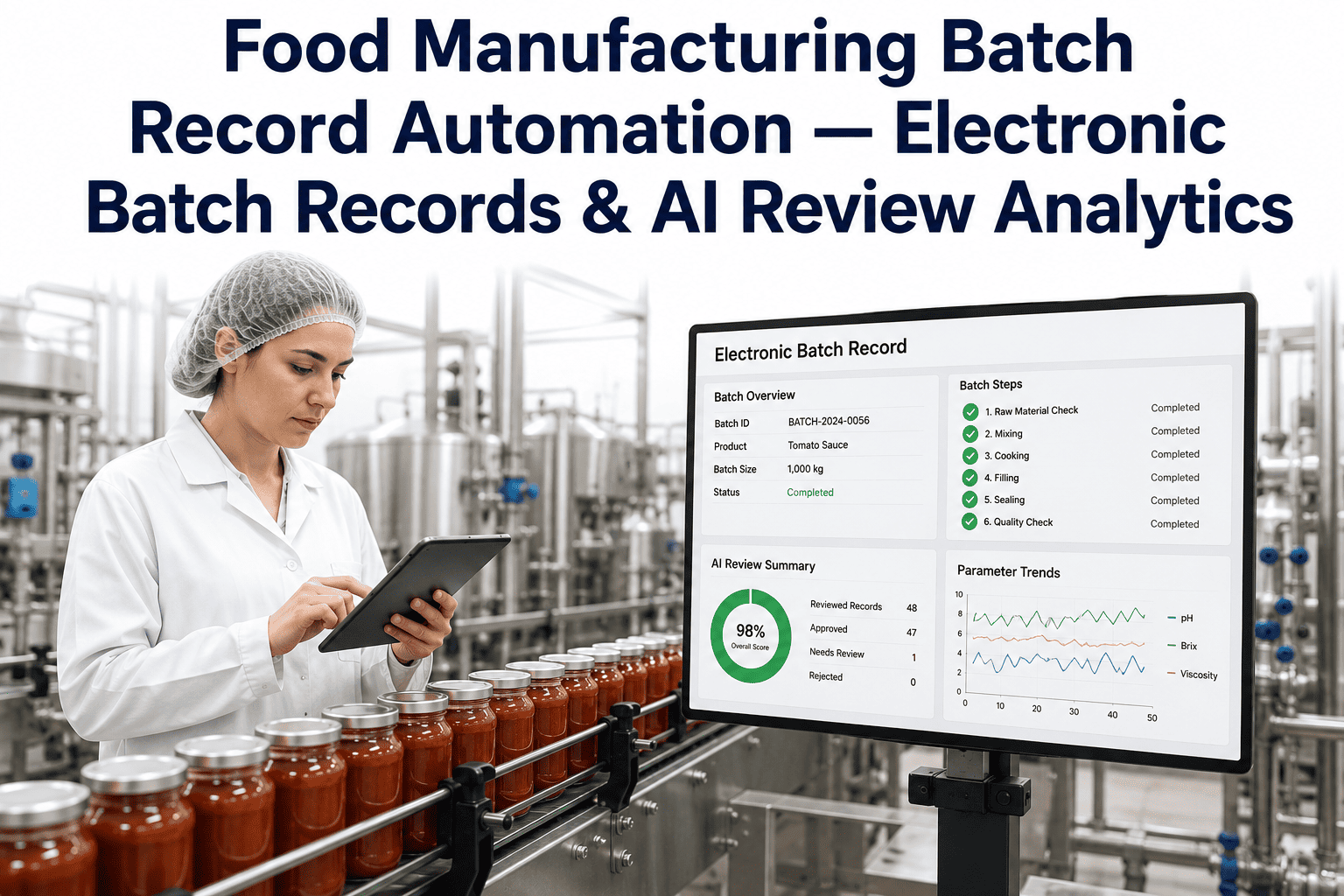
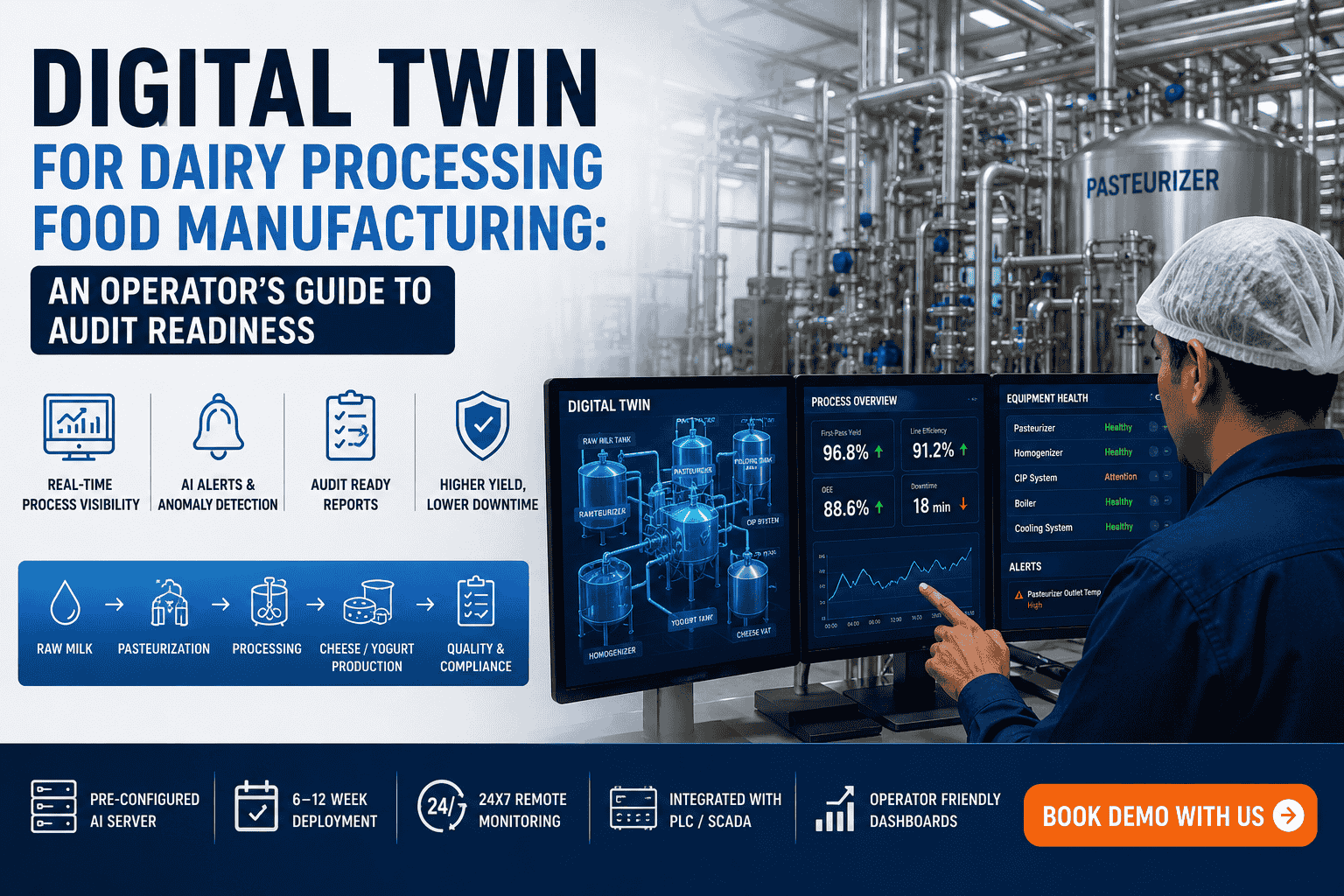
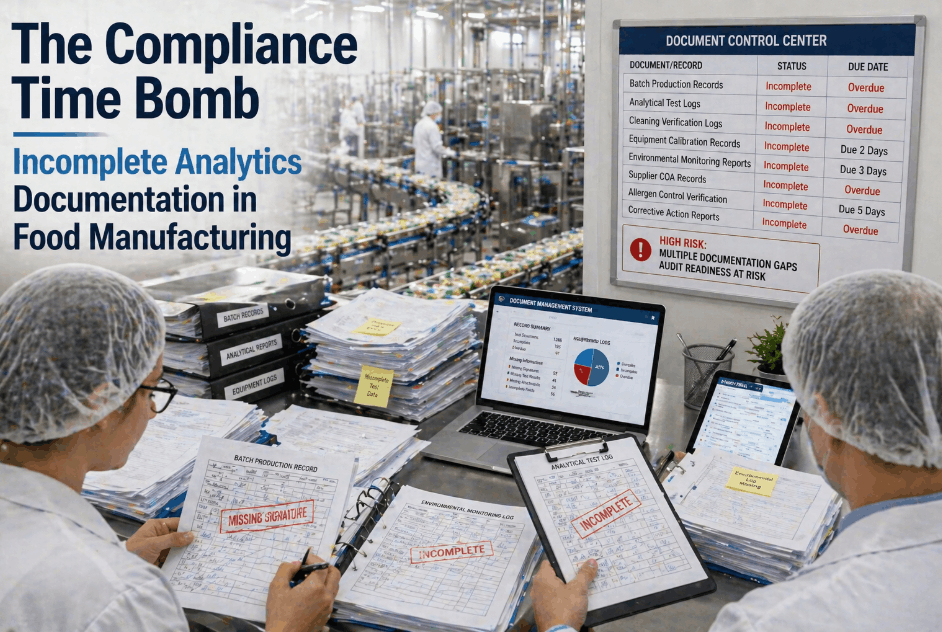
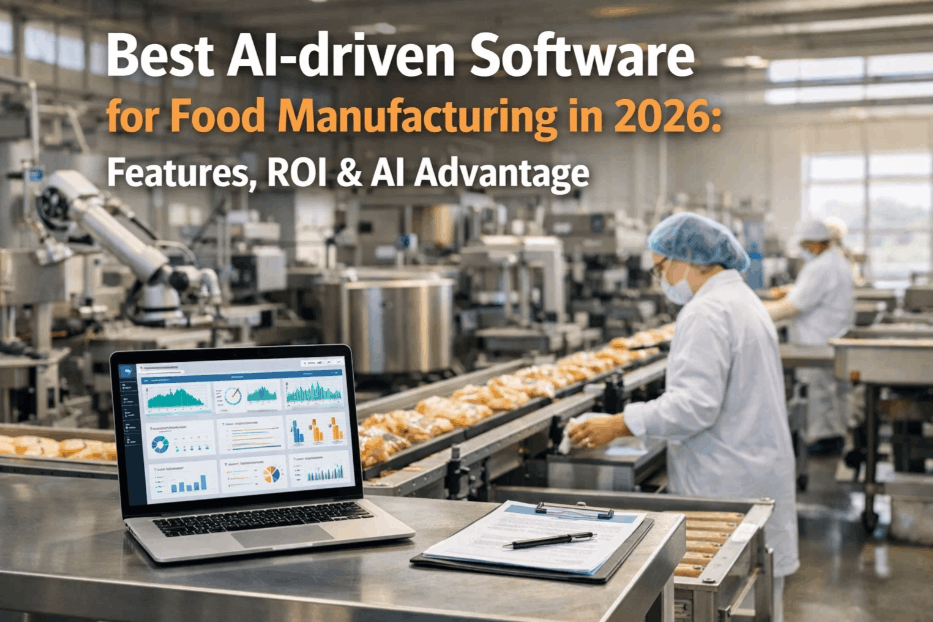
21 CFR Part 11 compliance for food plant AI-driven systems is no longer a back-burner regulatory concern — it is a front-line operational requirement for any FDA-regulated food manufacturer deploying digital records, electronic signatures, or AI-powered quality platforms. As food plants accelerate their shift from paper-based logs to AI-driven analytics, the intersection of Title 21 Code of Federal Regulations Part 11 and modern manufacturing intelligence systems has become one of the most technically demanding compliance domains in the industry. This guide breaks down what Part 11 requires, how it applies to AI-driven food plant environments, and how to build a compliant electronic records infrastructure that satisfies FDA auditors while enabling the operational gains that digital transformation promises.
Is Your AI-Driven Food Plant 21 CFR Part 11 Ready?
See how iFactory's compliance tracking module delivers audit-ready electronic records, validated e-signatures, and complete audit trails for FDA-regulated food manufacturing environments.
What Is 21 CFR Part 11 and Why Does It Apply to Food Plant AI Systems?
21 CFR Part 11 is the FDA regulation that establishes the criteria under which electronic records and electronic signatures are considered trustworthy, reliable, and equivalent to paper records and handwritten signatures. Originally finalized in 1997, the regulation has grown dramatically in scope as food manufacturers replace paper-based quality systems with digital platforms, AI-driven analytics engines, and cloud-hosted compliance dashboards. Any food plant using software to create, modify, maintain, archive, retrieve, or transmit records required under FDA regulations — including HACCP plans, calibration logs, batch records, and corrective action documentation — falls squarely within Part 11's jurisdiction.
The regulation's relevance to AI-driven food manufacturing systems is not hypothetical. When an AI platform automatically generates a deviation report, flags a checkweigher calibration drift, or logs a corrective action workflow, it is creating electronic records subject to Part 11 requirements. If those records are used to satisfy FDA-mandated documentation requirements — and in most food plants they are — the entire system generating, storing, and signing those records must be validated and compliant. Understanding this scope is the first step to building a defensible compliance posture, and food plant teams can book a demo with iFactory to assess their current electronic records infrastructure against Part 11 requirements in a structured gap analysis.
Electronic Records
Any combination of text, graphics, data, audio, pictorial, or other information representation in digital form that is created, modified, maintained, archived, retrieved, or distributed by a computer system. This includes AI-generated quality reports, automated calibration logs, and digital batch records.
Electronic Signatures
A computer data compilation of any symbol or series of symbols executed, adopted, or authorized by an individual to be the legally binding equivalent of the individual's handwritten signature. Must include the signer's printed name, date/time, and the meaning of the signature.
Audit Trails
Secure, computer-generated, time-stamped electronic records that independently record the date and time of operator entries and actions that create, modify, or delete electronic records. Audit trails must be retained for at least as long as the records they document.
System Validation
Computer systems used to create, modify, or maintain Part 11 records must be validated to ensure accuracy, reliability, consistent performance, and the ability to discern invalid or altered records. Validation documentation must be maintained throughout the system's lifecycle.
21 CFR Part 11 Technical and Procedural Requirements for Food Manufacturing AI
Part 11 compliance requirements split into two categories: technical controls embedded in the software system itself, and procedural controls governing how operators and administrators use the system. For AI-driven food plant platforms, both categories present unique challenges because the system is performing automated actions — generating records, triggering alerts, closing workflows — that traditionally required human initiation. The FDA's position is clear: automated actions do not exempt a system from Part 11; they extend its scope.
Technical Controls Required for Part 11 Compliant Food AI Systems
Technical controls form the foundation of any Part 11 compliant food plant AI deployment. The regulation requires validation of systems to ensure accuracy and reliability; the ability to generate accurate and complete copies of records; protection of records to enable their accurate and ready retrieval throughout the records retention period; limiting system access to authorized individuals; use of secure, computer-generated, time-stamped audit trails; and use of authority checks to ensure only authorized individuals can use the system, electronically sign a record, access the operation or computer system input or output device, alter a record, or perform the operation at hand. Food manufacturers who have deployed AI-driven analytics platforms can book a demo to see exactly how iFactory's architecture satisfies each of these technical control requirements without requiring custom development work from the plant's IT team.
Procedural Controls and Operator Training Requirements
Procedural controls under Part 11 require food plants to establish and adhere to written policies that hold individuals accountable for actions initiated under their electronic signatures. For AI-driven platforms, this means every operator must have documented training records validating their competency. Book a Demo to see how our training management module tracks and validates operator education automatically.
| Part 11 Requirement | Section Reference | Applicability to AI Systems | Compliance Approach | Audit Risk if Missing |
|---|---|---|---|---|
| System Validation | §11.10(a) | All AI-generated records | IQ/OQ/PQ documentation package | High |
| Audit Trail | §11.10(e) | Every create/modify/delete action | Immutable system-level logging | High |
| Access Controls | §11.10(d) | All user and system accounts | Role-based access with MFA | High |
| Electronic Signatures | §11.50 | All approval workflows | Biometric or username/password + PIN | Medium |
| Signature Manifestation | §11.50(a) | All signed electronic records | Name, date/time, and meaning displayed | Medium |
| Record Retention | §11.10(c) | All FDA-required records | Tamper-evident archival with retrieval | High |
| Operator Training | §11.10(i) | All system users | Documented training records in-system | Lower |
Designing a Part 11 Compliant Electronic Records System for Food Plant AI
Building a Part 11 compliant electronic records architecture for an AI-driven food manufacturing environment requires deliberate design decisions at the data layer, application layer, and infrastructure layer simultaneously. Many food plants discover Part 11 gaps only during FDA inspections, at which point the remediation cost — in both engineering effort and operational disruption — far exceeds the investment of building compliance in from the start. A compliant architecture begins with the understanding that electronic records must be attributable, legible, contemporaneous, original, and accurate — the ALCOA principles that FDA inspectors use as their primary assessment framework during GMP audits.
Immutable Audit Trail Design for AI-Generated Food Records
The audit trail requirement under §11.10(e) is the technical control most frequently cited in FDA 483 observations for food manufacturing facilities using digital systems. An FDA-compliant audit trail must capture the date and time of operator entries, the identity of the individual making each entry, the specific data element changed, and the before and after values for any modification. For AI-driven systems, this extends to automated record generation: when an AI platform automatically creates a calibration deviation record or closes a CAPA workflow based on sensor data, the audit trail must capture not just the human approval but the full chain of automated actions that preceded it. Food plant compliance teams who want to assess their current audit trail architecture against this standard can book a demo with iFactory to review how the platform's immutable logging layer satisfies §11.10(e) for both human-initiated and AI-generated records.
Electronic Signature Workflows for Food Manufacturing AI Platforms
Electronic signature compliance under Part 11 requires food plants to establish that e-signatures are the legally binding equivalent of handwritten signatures. Every approval action—signing off on a batch record or CAPA—must capture the signer's full name, date/time, and meaning. Book a Demo to review our multi-factor authentication (MFA) signature workflows designed for FDA compliance.
Scope Assessment
Identify all electronic records created, modified, or maintained by your AI platform that are required under FDA food regulations. Map each record type to its governing regulation (21 CFR Parts 110, 117, 120, 123, etc.) and confirm Part 11 applicability.
Gap Analysis
Conduct a technical gap analysis comparing your current AI system's capabilities against all §11.10 technical controls and §11.300 procedural controls. Document gaps with severity ratings and remediation priorities.
System Validation
Execute a formal computer system validation (CSV) protocol including Installation Qualification (IQ), Operational Qualification (OQ), and Performance Qualification (PQ). Validation documentation must be maintained for the life of the system plus the applicable record retention period.
SOPs and Training
Establish written procedures for e-signature issuance, audit trail monitoring, and system security reviews. Train all users with documented records. Book a Demo to download our template SOP package for Part 11 compliance.
Ongoing Monitoring
Implement periodic audit trail reviews, access control audits, and system performance evaluations. Document all system changes through a formal change control process and re-validate as necessary when changes could affect Part 11 compliance.
Top 21 CFR Part 11 Violations Found in Food Plant AI Deployments
FDA inspection data and industry compliance consulting experience reveal a consistent pattern of Part 11 deficiencies in food manufacturing facilities that have deployed digital analytics platforms without formal Part 11 implementation planning. Understanding the most common violations — and how purpose-built food plant AI platforms eliminate them — is essential for quality managers preparing for FDA inspections or building new digital compliance infrastructure.
Deploying AI platforms without activating or validating the audit trail function. Records are created but modifications are not logged. FDA considers all records generated by a non-audited system suspect.
Multiple operators sharing a single login credential, making individual attribution of electronic records and signatures impossible. Directly violates §11.300 requiring e-signatures to be unique to one individual.
Software updates, configuration changes, and new module deployments implemented without re-qualification. Any system change that could affect record integrity requires documented change control and re-validation assessment.
E-signatures that capture only a username or initials without the full printed name, date and time of signing, and meaning of the signature as required under §11.50(a). Common in ERP systems not purpose-built for FDA compliance.
Operating a computer system that generates FDA-required records without any formal computer system validation documentation. Absence of IQ/OQ/PQ protocols is cited in nearly every FDA 483 observation involving electronic records.
Electronic records stored in formats or systems that cannot guarantee integrity, authenticity, or retrievability over the required retention period. Cloud-hosted platforms without data sovereignty controls present particular risk for multi-year retention requirements.
Food plants that recognize one or more of these gaps in their current AI platform deployment can initiate a structured remediation by scheduling a compliance review session — teams frequently book a demo with iFactory specifically to work through their existing Part 11 gap inventory against a platform that has been designed from inception to meet all §11.10 and §11.300 requirements without custom compliance development work from the plant's quality team.
Computer System Validation for Food Plant AI: IQ, OQ, and PQ Requirements
Computer system validation (CSV) is the cornerstone of 21 CFR Part 11 compliance for any AI-driven food manufacturing platform. The FDA expects food manufacturers to validate computer systems that create, modify, maintain, or transmit electronic records to ensure accuracy, reliability, consistent performance, and the ability to discern invalid or altered records. For AI platforms specifically, validation must address not only the core software functions but also the AI algorithms that generate records, the data pipelines that feed sensor data into the system, and the integration interfaces connecting the AI platform to ERP, MES, and LIMS systems.
Installation Qualification (IQ) for Food Plant AI Systems
IQ documentation establishes that the AI-driven food plant system has been installed according to its approved design specifications and the vendor's recommendations. For cloud-hosted SaaS platforms, IQ documentation must cover the configuration of the production environment, the activation of all required compliance features (audit trails, access controls, e-signature modules), network security controls, and the verified version of software deployed. IQ is not a one-time activity; any significant infrastructure change, platform upgrade, or environment migration requires IQ re-execution and documentation. Food quality teams planning their first Part 11 compliant AI deployment can book a demo with iFactory to review the vendor-supplied IQ template package included with every enterprise deployment.
Operational Qualification (OQ) and Performance Qualification (PQ)
OQ establishes that the AI system operates according to functional specifications, while PQ demonstrates consistent performance under actual production condition. PQ for AI-driven systems must also address algorithm performance, confirming reproducible outputs that meet integrity standards. Book a Demo to see our automated OQ/PQ testing protocols.
Build a Fully Compliant Part 11 Infrastructure for Your Food Plant AI
iFactory delivers pre-validated electronic records, immutable audit trails, and compliant e-signature workflows — purpose-built for FDA-regulated food manufacturing environments.
Implementing 21 CFR Part 11 Compliance Across Your Food Plant AI Ecosystem
Part 11 implementation in a food manufacturing environment is rarely a clean-slate exercise. Most food plants arrive at formal compliance implementation having already deployed some digital tools — dashboards, ERP modules, sensor historians, quality management systems — that generate FDA-required records without full Part 11 controls in place. The implementation strategy must therefore address both new system deployment and the remediation of existing digital records infrastructure, prioritizing by audit risk and the criticality of the records involved.
Prioritizing Part 11 Remediation by Record Type and Audit Exposure
HACCP plan records, preventive controls monitoring data, and pathogen testing records under 21 CFR Part 117 carry the highest inspection priority and should be addressed first in any Part 11 remediation program. Calibration records, equipment cleaning logs, and supplier verification records represent the second tier. Book a Demo to walk through a record-type prioritization exercise using actual plant data.
Hybrid Paper-Digital Environments and Part 11 Transitional Compliance
Many food plants operate in a transitional state where some records are paper-based and others are electronic — and where the same underlying data may exist in both formats. The FDA's guidance on hybrid systems is clear: the electronic system must meet Part 11 requirements for the records it generates, and the paper system must continue to meet its applicable GMP requirements. The danger in hybrid environments is that electronic records are sometimes treated as supplementary to paper records, leading plants to believe they are exempt from Part 11 because the "official" record is still paper. This position has been consistently rejected by FDA investigators. If a computer system generates a record that is presented to FDA as evidence of compliance, that system is subject to Part 11 regardless of whether a paper version also exists.
21 CFR Part 11 Food Plant AI Compliance — Frequently Asked Questions
Does 21 CFR Part 11 apply to all food manufacturers?
Yes. Part 11 applies to all FDA-regulated industries, including food. Any plant using digital systems for HACCP, FSMA, or calibration logs must comply. Book a Demo to check your applicability.
What is the difference between open and closed systems?
Closed systems are controlled by those responsible for records (on-premise). Open systems are not (public cloud) and require extra encryption and digital signature standards.
How long must electronic food records be retained?
Retention is set by the governing food regulation (e.g., 2 years for FSMA). Part 11 requires systems to accurately reproduce these records throughout that entire period.
Are SaaS platforms automatically Part 11 compliant?
No. Compliance is the manufacturer's responsibility. You must validate the SaaS platform in your specific environment and establish internal SOPs. Book a Demo to review our validation package.
Can AI-generated records satisfy FDA requirements?
Yes, if properly validated with audit trails and access controls. Human review/e-signature is still required for records that mandate responsible oversight. Book a Demo to see AI record generation in action.
What happens during a Part 11 violation during an inspection?
Violations lead to FDA Form 483 observations, warning letters, or injunctions. In severe cases, it can invalidate all electronic records during product liability or recall events.