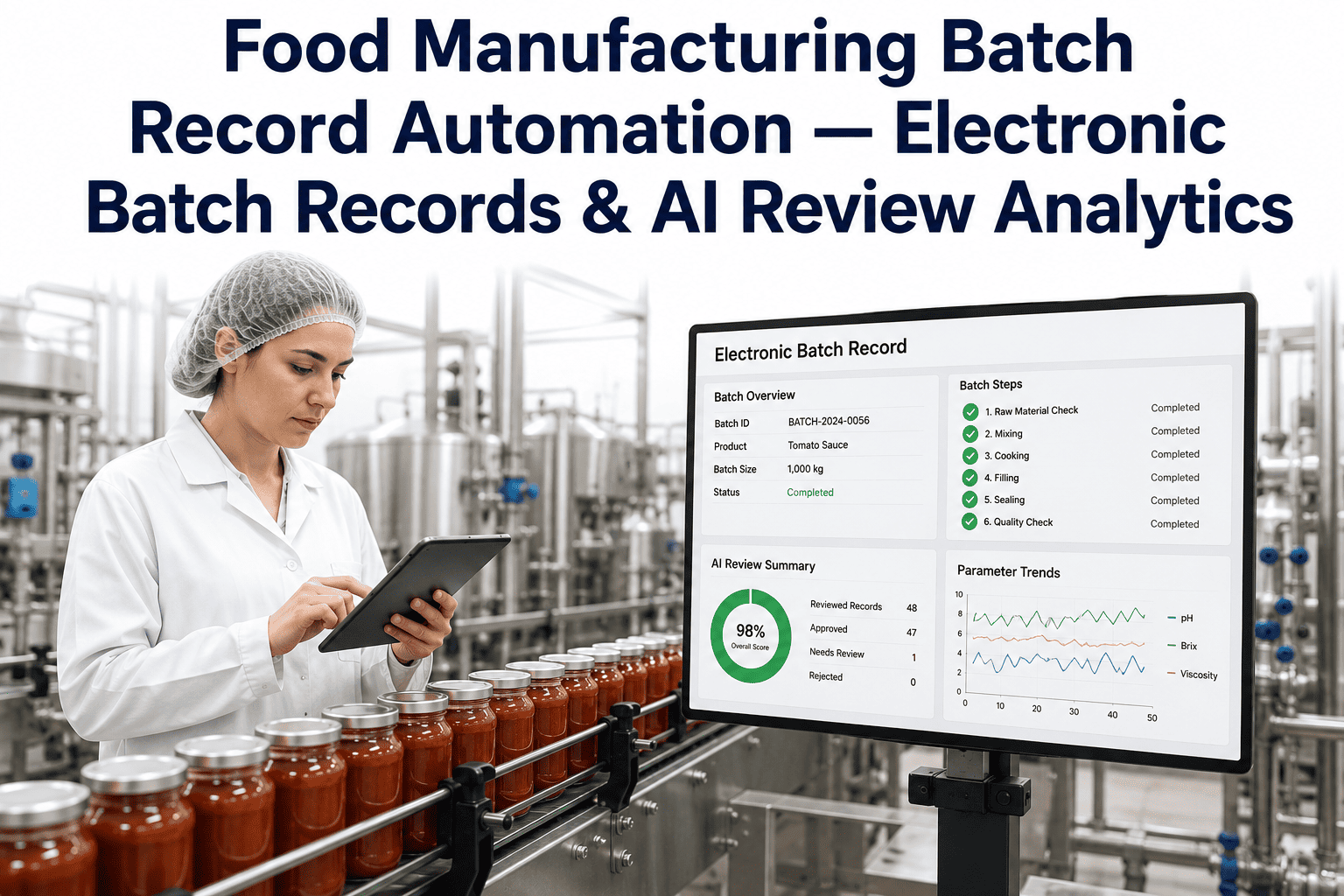
In the high-stakes environment of modern food manufacturing, the reliance on paper-based batch records introduces significant risk—from transcription errors and incomplete documentation to delayed batch release and costly regulatory non-compliance. The transition to electronic batch records (EBR) powered by artificial intelligence is no longer a futuristic concept but an operational imperative for plant managers seeking to enhance traceability, accelerate throughput, and ensure unwavering quality. This comprehensive guide dives deep into the architecture of AI-driven batch record automation, exploring how advanced analytics transform exception-based review, automatic data capture, and intelligent batch release. For decision-makers ready to eliminate manual bottlenecks and achieve true digital maturity, understanding these technologies is critical. Book a Demo to see how iFactory's platform can revolutionize your batch management workflow.
Transform Batch Record Management with AI
Eliminate paper, reduce review time by 70%, and achieve real-time batch release with intelligent automation.
The Critical Role of Batch Records in Food Manufacturing
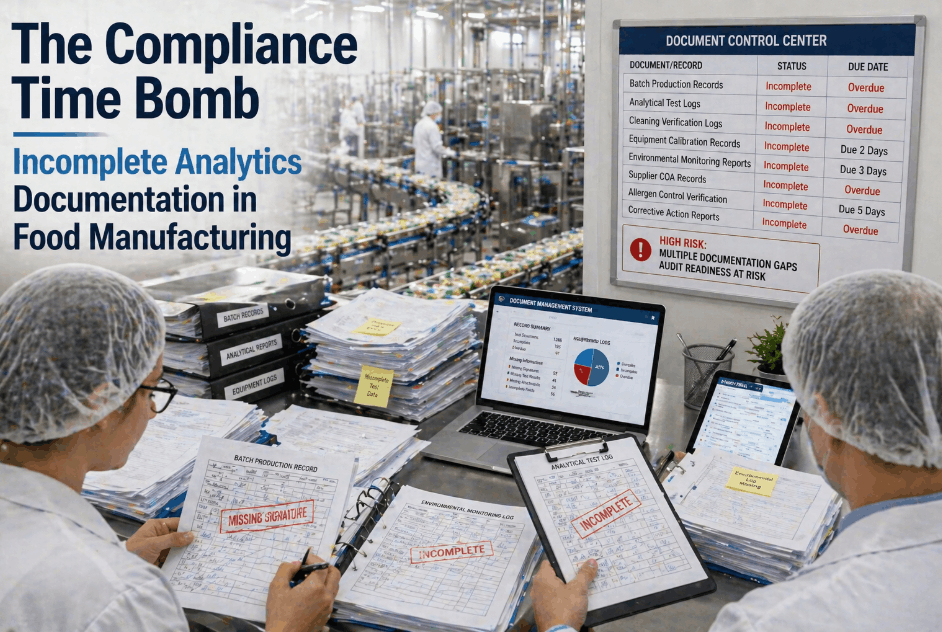
Batch records serve as the legal and operational backbone of food production, documenting every ingredient, process parameter, and quality check from raw material reception to finished product release. In traditional paper-based systems, these records are prone to human error, illegible handwriting, and time-consuming manual data entry. The consequences of inaccuracies can be severe—product recalls, regulatory fines, and brand damage. Electronic batch records (EBR) digitize this entire process, enabling real-time data capture from sensors, operators, and lab instruments. With AI analytics, the system can automatically flag deviations, predict potential quality issues, and accelerate batch release by focusing human review only on exceptions. This shift not only improves efficiency but also provides a complete, auditable digital trail that satisfies FDA, USDA, and global food safety standards.
Real-Time Data Capture
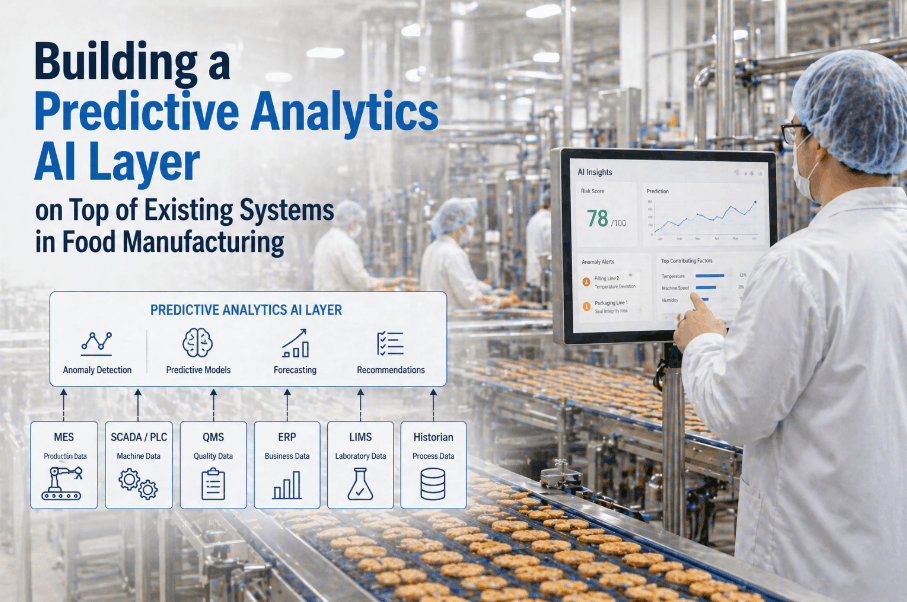
Automatically collect process parameters from PLCs, SCADA, and IoT sensors, eliminating manual transcription and ensuring data integrity from the start of production.
Exception-Based Review
AI algorithms analyze batch data against predefined specifications, flagging only out-of-spec conditions for human review, reducing review workload by up to 70%.
Intelligent Batch Release
Automated workflows route batches for release once all criteria are met, with AI-driven predictive models identifying potential quality issues before they impact production.
From Paper to Digital: The EBR Migration Journey
Transitioning from paper to electronic batch records requires a structured approach that balances operational continuity with technological advancement. The first step involves a comprehensive audit of existing batch record templates, identifying all data points, signatures, and review steps. Next, a digital twin of the batch process is created, mapping each parameter to sensor inputs or manual entry fields. Integration with existing MES, ERP, and LIMS systems ensures seamless data flow. During the pilot phase, a single production line is digitized, allowing operators and quality teams to adapt to the new interface. AI models are trained on historical data to recognize patterns and anomalies. Finally, a phased rollout across all lines, with continuous feedback loops, ensures minimal disruption. The result is a unified digital ecosystem where batch records are created, reviewed, and released in real time, with full traceability and audit readiness.
AI-Powered Exception Management: Beyond Simple Alarms
Traditional exception management relies on static thresholds that generate alarms for any deviation, leading to alarm fatigue and missed critical events. AI-driven exception management uses machine learning models that understand process context—distinguishing between normal process variability and true anomalies. For example, a temperature spike during a sterilization cycle might be acceptable if it occurs within a specific time window, but the same spike during cooling could indicate a sensor failure. AI models can also predict when a deviation is likely to occur based on upstream conditions, enabling proactive adjustments. This intelligent filtering reduces false positives by over 60%, allowing quality teams to focus on genuine issues. Moreover, the system automatically documents the rationale for each decision, creating a rich audit trail that satisfies regulatory requirements and supports continuous improvement initiatives.
Key Metrics: Paper vs. AI-Driven EBR
| Metric | Paper Batch Records | AI Electronic Batch Records |
|---|---|---|
| Batch Review Time | 4-8 hours | 1-2 hours |
| Data Entry Errors | 3-5% | <0.1% |
| Batch Release Cycle | 24-48 hours | 2-4 hours |
| Audit Preparation Time | Days | Minutes |
| Regulatory Compliance Rate | 85-90% | 99.9%+ |
Designing an Electronic Batch Record System for Food Manufacturing
An effective EBR system must be designed with the unique requirements of food manufacturing in mind. Unlike pharmaceutical batch records, food batch records often involve variable raw material properties, multiple production lines, and complex recipes that change frequently. The system should support flexible template creation, allowing batch records to be dynamically generated based on the product, line, and customer specifications. Integration with weigh scales, metal detectors, and vision systems ensures automatic capture of critical quality attributes. Role-based access controls ensure that only authorized personnel can approve deviations or release batches. The system must also handle hold and quarantine workflows, automatically blocking batches that fail quality checks. With AI analytics, the EBR system can continuously learn from historical data, optimizing review rules and predicting potential failures before they occur. This level of sophistication transforms batch records from a compliance burden into a strategic asset for operational excellence.
Implementation Readiness Assessment
Step-by-Step EBR Implementation Timeline
Phase 1: Assessment & Planning
Audit existing batch record processes, identify data sources, and define KPIs for success. Duration: 2-4 weeks.
Phase 2: System Design & Integration
Configure EBR templates, integrate with MES/ERP, and set up data capture points. Duration: 4-6 weeks.
Phase 3: AI Model Training
Train anomaly detection models on historical batch data, validate against known deviations. Duration: 3-5 weeks.
Phase 4: Pilot Deployment
Roll out on one production line, gather feedback, and refine workflows. Duration: 2-3 weeks.
Phase 5: Full Rollout & Optimization
Deploy across all lines, monitor performance, and continuously improve AI models. Duration: 4-8 weeks.
Ready to Eliminate Paper Batch Records?
Accelerate batch release, reduce errors, and achieve full regulatory compliance with AI-driven EBR. Schedule your personalized demo today.
Regulatory Compliance and Audit Readiness
Food manufacturers must comply with a complex web of regulations including FDA's FSMA, USDA's HACCP, and global standards like ISO 22000 and BRCGS. Electronic batch records provide a robust framework for meeting these requirements through automated data integrity checks, electronic signatures, and immutable audit trails. AI analytics further enhance compliance by continuously monitoring batch data for patterns that might indicate systemic issues, such as recurring temperature deviations in a specific oven. The system can automatically generate compliance reports, flagging any records that require additional review before regulatory submission. During an audit, plant managers can retrieve complete batch histories in minutes, demonstrating full traceability from raw material to finished product. This level of preparedness not only reduces audit stress but also builds trust with customers and regulatory bodies.
Automated Data Integrity
21 CFR Part 11 compliant electronic signatures, audit trails, and data encryption ensure that batch records are tamper-proof and legally admissible.
Real-Time Deviation Alerts
AI algorithms instantly notify quality teams of any deviation, enabling immediate corrective actions and preventing non-compliant product from advancing.
Continuous Improvement
Historical batch data is analyzed to identify trends, optimize processes, and reduce variability, driving long-term quality improvements.
Frequently Asked Questions
How does AI improve batch record review compared to traditional methods?
AI improves batch record review by automatically analyzing every data point against dynamic specifications, flagging only exceptions for human attention. Traditional review requires quality personnel to manually scan hundreds of pages, a process that is time-consuming and error-prone. AI models can learn from historical data to distinguish between normal process variability and true anomalies, reducing false alarms by over 60%. The system also provides a confidence score for each batch, allowing reviewers to prioritize high-risk batches. This approach reduces review time by up to 70% and ensures that no critical deviation is missed. For more details on implementing AI review, visit our support page.
What are the key challenges in transitioning from paper to electronic batch records?
The transition from paper to electronic batch records involves several challenges, including resistance to change from operators accustomed to paper, integration with legacy systems, and the need for robust data governance. Operators may be skeptical of new interfaces, requiring comprehensive training and change management programs. Technical challenges include ensuring that all data sources—from manual entries to automated sensors—are correctly mapped and validated. Data migration from existing paper records to a digital format can be labor-intensive but is critical for historical trend analysis. Additionally, maintaining compliance during the transition requires careful planning to avoid gaps in documentation. A phased approach, starting with a pilot line, helps mitigate these risks. For a detailed migration guide, contact our team.
How does AI-driven batch release work in practice?
AI-driven batch release uses predictive models to assess batch quality in real time, based on data from process parameters, in-process testing, and environmental monitoring. The system continuously evaluates whether the batch meets all predefined specifications and flags any deviations for review. Once all criteria are satisfied, the system automatically routes the batch for release, generating the necessary documentation and electronic signatures. If the AI detects a potential quality issue—such as a trend indicating that a batch might fail stability tests—it can hold the batch for additional testing or review. This proactive approach prevents non-compliant product from reaching customers and reduces the time to release by up to 80%. To see a live demonstration, book a demo.
What is exception-based review and why is it important?
Exception-based review is a methodology where only batches or data points that deviate from established specifications are subjected to detailed human review. In traditional batch record review, every parameter is checked manually, leading to significant time and resource consumption. With AI-driven exception-based review, the system automatically validates all data against dynamic rules, flagging only anomalies for human attention. This approach dramatically reduces review workload, allowing quality teams to focus on critical issues. It also ensures consistent application of review criteria, eliminating human bias and fatigue. Exception-based review is particularly valuable in high-volume food manufacturing where hundreds of batches are produced daily. For implementation best practices, explore our resources.
How does electronic batch record integration with existing MES/ERP systems work?
Integration with existing MES and ERP systems is achieved through standard APIs and middleware that facilitate real-time data exchange. The EBR system pulls process data from MES (e.g., temperatures, pressures, weights) and sends batch status updates to ERP (e.g., inventory consumption, batch release confirmation). This bidirectional flow ensures that all systems are synchronized, eliminating data silos and manual re-entry. The integration also enables automated workflows, such as triggering a quality hold in ERP when a deviation is detected in the EBR system. Data mapping and validation are critical to ensure consistency across systems. Most modern EBR platforms offer pre-built connectors for popular MES and ERP systems, simplifying the integration process. For technical specifications, visit our integration page.
Transform Your Batch Management Today
Join leading food manufacturers who have eliminated paper batch records and achieved unprecedented efficiency with AI-driven automation. Your journey to digital excellence starts here.