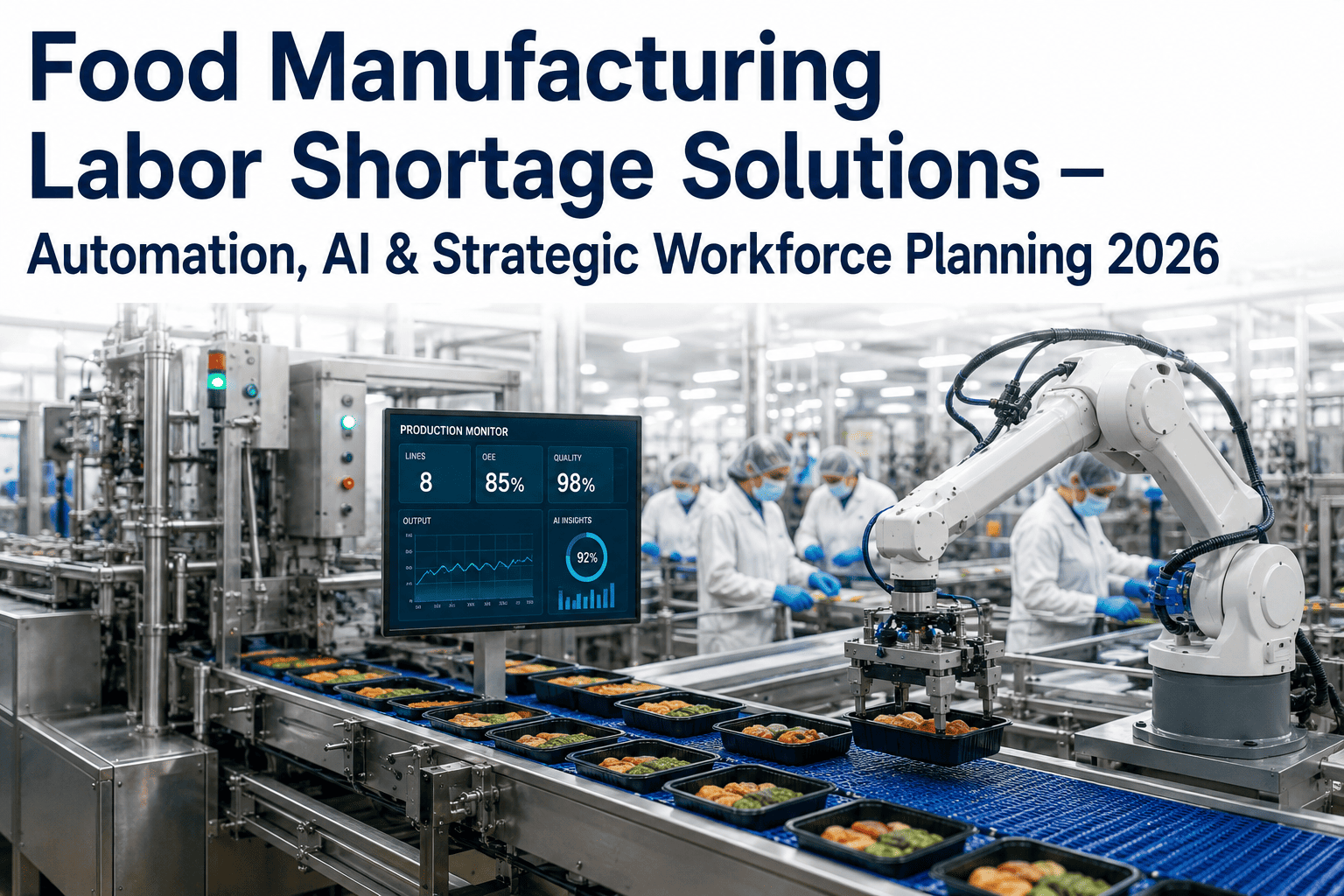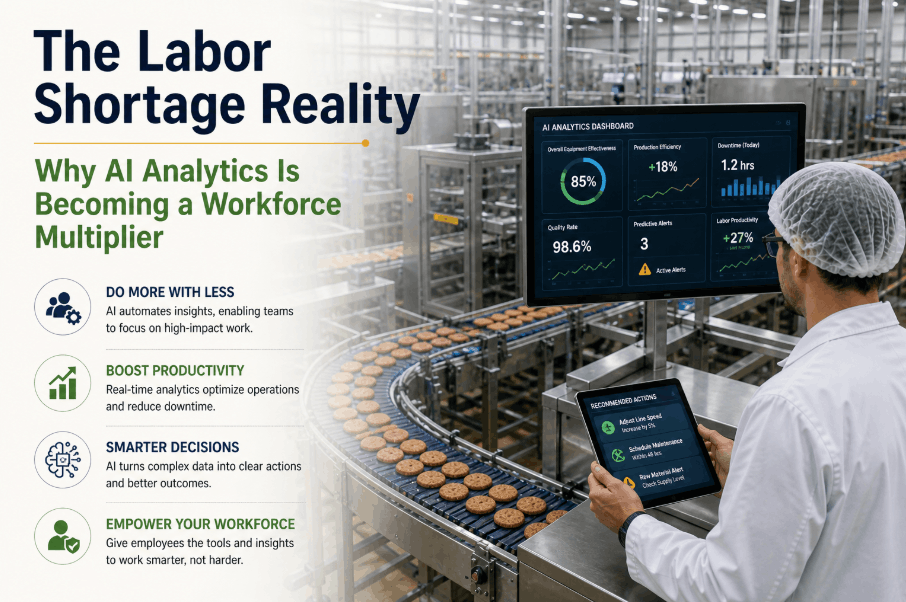
The food manufacturing labor crisis of 2026 has transitioned from a temporary shortage to a permanent operational constraint, with open technical roles remaining unfilled for an average of 180+ days. As the aging workforce retires and tribal knowledge disappears, plants are forced to operate with 30-40% fewer technicians than historical baselines. Traditional recruitment efforts are no longer sufficient; the path forward requires a shift from manual labor dependency to AI-driven automation systems that augment existing staff. By integrating AI-powered analytics and digital work order systems, forward-thinking manufacturers are doubling technician productivity and maintaining continuous production despite headcount gaps. Food plant leaders looking to stabilize their operations can schedule a workforce efficiency audit to identify automation opportunities today.
Why Traditional Staffing Models Are Failing Food Manufacturers in 2026
The "Great Technical Retirement" has stripped food plants of their most experienced mechanical and electrical specialists, leaving a massive secondary gap: the loss of critical institutional knowledge. When a plant depends on a few "senior experts" to manually diagnose faults and manage maintenance logs, the entire operation is one resignation away from a catastrophic downtime event. Without a digital system to capture, standardize, and automate these workflows, labor shortages translate directly into lost uptime.
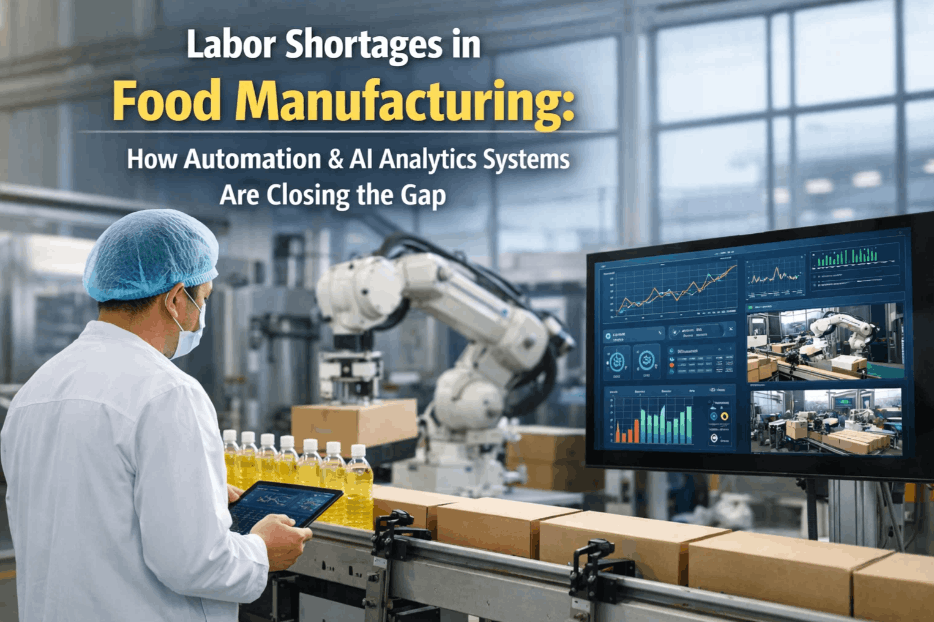
AI-driven equipment analytics automation addresses the labor crisis by converting human expertise into system logic. Instead of technicians spending hours wandering the floor for inspections, the system directs them to the exact asset requiring attention based on real-time health data — ensuring that a reduced workforce can manage 2x the equipment load without increasing burnout or safety risk.
Technicians spend up to 40% of their shift on paperwork and manual data entry. Digital automation eliminates these "non-value-added" hours, effectively adding a new technician to the team for every three currently on staff.
New hires often lack the 10+ years of experience needed for complex F&B machinery. AI-guided work orders provide step-by-step visual instructions, allowing junior techs to perform at senior levels from day one.
High-turnover plants are stuck in a "fix-it-when-it-breaks" loop that requires constant emergency staffing. Predictive analytics shift the workload to planned hours, reducing the need for costly overtime and contractor support.
Standard Operating Procedures (SOPs) buried in binders are invisible to the floor. AI-driven platforms centralize all asset history and maintenance playbooks, ensuring knowledge stays in the plant even when people move on.
How AI-Driven Platforms Automate Workforce Productivity and Close the Headcount Gap
Maximizing technician efficiency requires an analytics infrastructure that removes all friction from the work cycle. This means every technician starts their shift with a prioritized, data-backed task list, has the correct parts ready, and follows a validated process that minimizes error. Book a demo with iFactory to see how AI-driven automation converts your labor data into a high-performance roadmap.
Automated AI Task Prioritization
The platform analyzes asset criticality, real-time sensor data, and production schedules to automatically build technician task queues. This ensures your limited labor is always focused on the issues that present the highest risk to production uptime, not just the easiest tasks to complete.
AI-Guided "Super-Tech" Workflows
When a technician opens a work order, the system provides AI-recommended troubleshooting steps based on historical failure patterns. This "digital mentorship" significantly reduces Mean Time to Repair (MTTR) and allows smaller teams to maintain higher equipment availability.
Predictive Labor Scheduling Optimization
AI monitors machine usage and health trends to predict when maintenance will be required weeks in advance. This allows managers to schedule heavy workloads during low-production windows, eliminating the labor "crunch" that happens during unplanned emergency repairs.
Automated Compliance & Reporting
As technicians complete work in the mobile app, the system automatically generates compliance logs, audit trails, and KPI reports. This removes the administrative burden from supervisors, allowing them to spend more time coaching the floor and less time in the office.
Continuous Skills Development Integration
The platform tracks technician performance data to identify specific skill gaps. This data is used to serve targeted training videos and interactive guides directly within work orders, creating a self-improving workforce that grows in capability every shift.
Manual Labor vs. AI-Driven Workforce Optimization: The Productivity Comparison
The delta between a traditionally staffed plant and an AI-augmented plant is most visible in workforce scaling. The following table illustrates how AI-driven automation changes the labor math for common food processing operation tasks and the resulting impact on plant-wide efficiency.
| Operational Function | Manual Staffing Approach | AI-Driven Automation Benefit | Labor Hour Savings | Workforce Impact |
|---|---|---|---|---|
| Equipment Inspections | Technicians walk lines at fixed intervals | Condition-based alerts (IoT) | 10–15 Hours Down per Week | Fewer techs cover more area |
| Work Order Generation | Manual entry after supervisor review | Automatic trigger on fault signature | 5 Hours per Week per Lead | Eliminates clerical bottlenecks |
| Troubleshooting / Repair | Manual lookup of manuals & history | AI-generated diagnosis & playbooks | 35% Reduction in MTTR | Faster recovery with junior staff |
| Compliance Logging | Paper-based logs and manual filing | Automatic timestamped digital records | 20+ Hours per Week (Total) | Zero "admin" time for technicians |
| Parts Management | Physical inventory checks for kits | Auto-reservation based on work plan | 8 Hours per Week per Planner | Reduces downtime due to missing parts |
| Audit Preparation | Days of searching binders & archives | One-click exportable audit packages | 80–100 Hours per Audit Cycle | Removes stress from management |
| Training & Onboarding | Weeks of shoulder-to-shoulder shadowing | Digital guides & AR-linked visuals | 50% Faster Time-to-Competency | Rapidly scale new frontline hires |
The AI-Augmented Workforce: What Machines Deliver That Paper Cannot
In a labor-constrained environment, your digital platform must do more than just record information — it must actively assist the technician in performing their job. This difference in philosophy separates basic CMMS systems from high-performance AI analytics platforms. Plants that recognize this shift are the only ones scaling throughput without scaling headcount. Talk to our specialists to audit your existing digital workflows.
Work orders don't just say "Fix Pump" — they include real-time vibration data, previous maintenance notes, and required safety gear list automatically based on the asset state.
Stop spending your Friday afternoon building reports. AI-driven systems provide real-time visibility into labor utilization, MTTR, and PM compliance across every shift and production line.
Every "senior trick" and troubleshooting shortcut is documented as a comment or video in the asset record — ensuring your plant's intelligence is never lost during a turnover event.
Technicians keep their hands on the tools and their eyes on the machine. Large-format mobile interfaces with voice-to-text input ensure that documentation happens as a side-effect of work.
Managers can see which technician is working on which asset at any moment — allowing for rapid reassignment when an high-priority line stoppage occurs.
Integrated video calls and photo sharing allow an off-site senior engineer to "look through the eyes" of a junior tech on the floor, solving complex issues without travel delays.
Building the AI-Powered Workforce: A Phased Roadmap for Labor Optimization
Moving from a labor-heavy manual operation to an optimized, AI-augmented facility is a structured journey. The following roadmap reflects the implementation approach used by F&B plants to stabilize their workforce through technology. Leading plants Schedule a labor optimization assessment to jumpstart this transition.
Workforce Audit & Workflow Mapping
Identify where technician time is being wasted (paperwork, parts hunting, travel). Map your existing asset hierarchy and maintenance playbooks to the AI platform. This creates the digital foundation for all future automation wins.
Standardized Digital Work Order Deployment
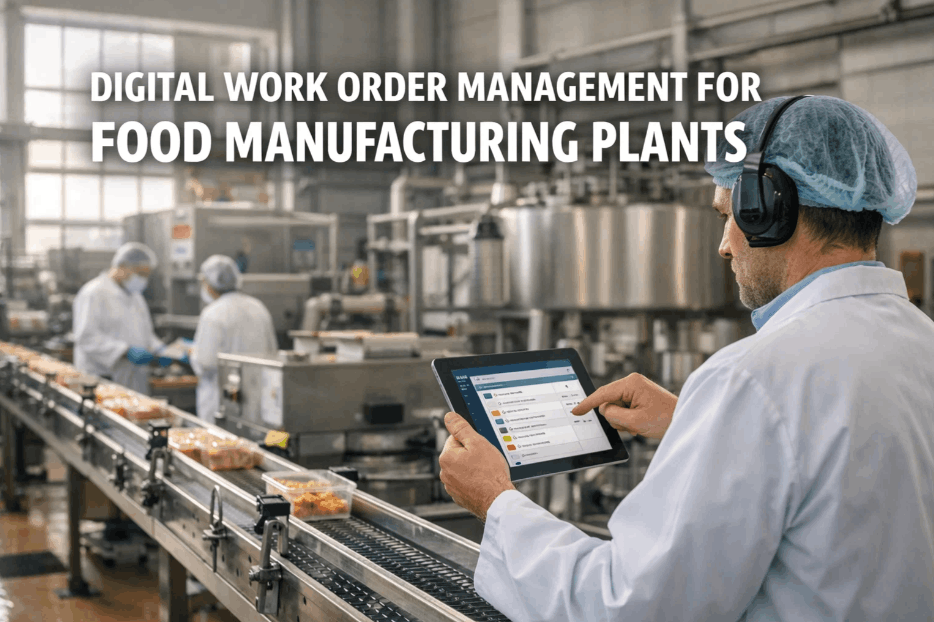
Replace paper PMs with mobile-first digital work orders. Activate AI-guided troubleshooting and asset history lookup. This phase typically delivers a 15-20% boost in technician productivity through better organization alone.
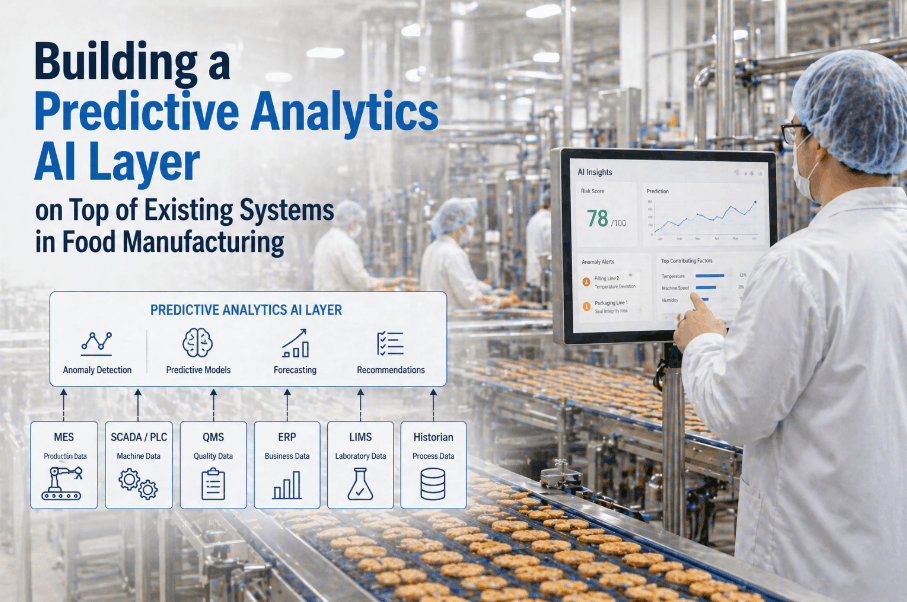
IoT Integration & Predictive Alerting Go-Live
Connect your most critical machinery to the AI platform. Shift from calendar-based maintenance to condition-based alerts. This reduces the total "maintenance hours" needed per year by eliminating unnecessary PM tasks.
AI-Driven Capacity Planning & Labor Optimization
Use AI models to project future equipment-driven labor demand. Optimize shift schedules and technician assignments based on predicted downtime and production priorities — effectively "smoothing" the labor load.
The Knowledge-Driven Plant: Full Ecosystem Automation
Integrate labor analytics with your ERP and HR systems. Continuous skills gap analysis and automated training modules ensure your remaining workforce is continuously evolving into higher-value roles.
Automation & AI KPIs: Measuring the Impact of Labor Optimization
You cannot manage what you do not measure. In a labor shortage, your KPIs should focus on the *yield* of your existing hours. The following indicators track how effectively your AI system is closing the workforce gap.
Labor Optimization Across Food Manufacturing Segments
Labor challenges differ by process. A meat processing plant with high turnover needs "rapid onboarding" tools, while a highly automated beverage facility needs "advanced diagnostics" for complex PLC logic. book a demo with iFactory to see segment-specific labor automation in action.
High labor turnover and harsh environments require rugged, voice-controlled mobile apps and rapid training visual guides to keep sanitation and maintenance on schedule with rotating crews.
Complex CIP systems and aseptic packaging lines require high-level technical skills. AI diagnostics allow fewer specialized technicians to manage the intricate balance of flow and temperature control.
Dusty environments and continuous throughput lines benefit from predictive maintenance that identifies motor and bearing wear early, reducing the need for emergency late-night repair shifts.
High-speed packaging lines require millisecond accuracy. AI monitoring of rejection patterns allows technicians to tune filler and labeler performance proactively, avoiding massive product scrap labor hours.
Cold storage technician shortages are acute. AI-driven remote monitoring and condition-based refrigeration maintenance reduce the need for physical inspections in deep-freeze environments.
Detailed changeover procedures for allergens are labor-intensive. Automated changeover checklists and AI-optimized sanitation scheduling reduce sanitation downtime by up to 40%.
Frequently Asked Questions: AI, Automation & the Labor Shortage
AI doesn't replace the veteran; it captures their best troubleshooting methods into a digital playbook. This allows a technician with 2 years of experience to solve complex problems with the same accuracy as a veteran, effectively scaling your existing expertise across the entire team.
In 2026, automation is about augmentation, not reduction. Most food plants have a 20–30% vacancy rate that they cannot fill. AI systems are designed to close this existing gap and help the current team handle the workload without working excessive overtime.
By embedding training videos, visual checklists, and real-time failure diagnostics directly into work orders. Technicians learn "on the job" with the support of a digital mentor, reducing formal classroom time by 60% and getting them independent on the floor much faster.
No. iFactory is designed for the floor, not the office. With large-format mobile layouts, voice commands, and "swipe-to-complete" actions, the system is as easy to use as a consumer messaging app, ensuring high adoption rates from all age groups.
Most plants report ROI within 6–9 months through reduced overtime pay, elimination of third-party contractor costs, and a 15–25% boost in production uptime driven by more efficient maintenance response times.