-inspection-checklist.png)
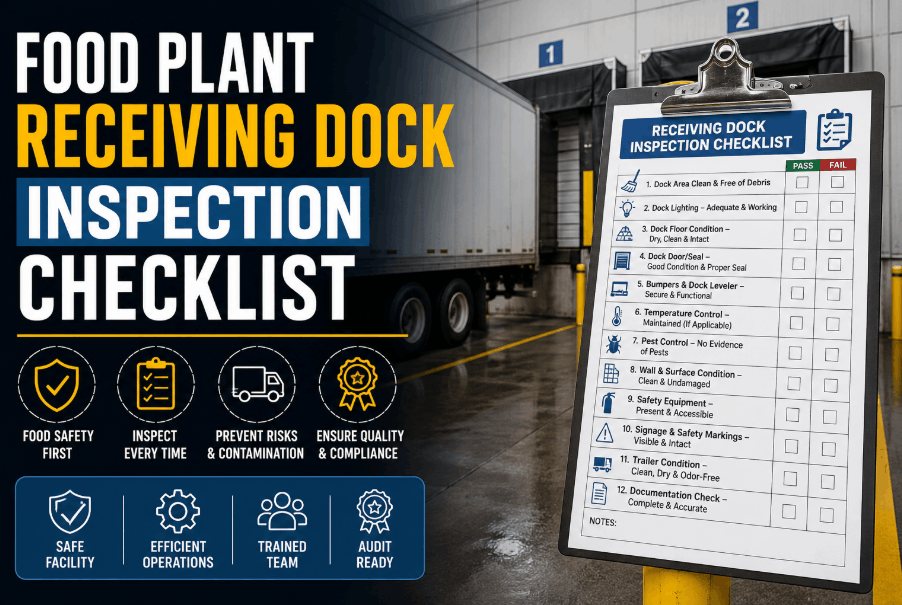
Pests in a food manufacturing facility are not just a nuisance — they are a critical food safety hazard capable of triggering mass recalls, regulatory shutdowns, and irreparable brand damage. Rodents, cockroaches, and stored product insects contaminate food contact surfaces with pathogens including Salmonella, E. coli, and Leptospira. A robust Integrated Pest Management (IPM) program is a mandatory prerequisite under FSMA 21 CFR Part 117, SQF Edition 9, BRCGS Issue 9, and FSSC 22000 — going far beyond routine pesticide application to include documented monitoring, structural exclusion, and corrective action chains. Book a Demo to automate your bait station logs, trap trend analysis, and pest activity escalation workflows in every zone of your facility.
Why Documented IPM Programs Are Mandatory in Food Plants
Pest Activity = Automatic Audit Failure
Active rodent or insect evidence found during a BRCGS or SQF audit in a Zone 1 (food contact) area is an automatic Critical Non-Conformance — resulting in immediate certificate suspension. A single rodent dropping found on a production line during an FDA inspection can trigger a full facility shutdown order. Book a Demo to digitize your trap monitoring logs and catch activity spikes before an auditor does.
IPM Requires Documentation, Not Just Treatment
Modern food safety standards have moved beyond reactive pest control. An IPM program requires documented proof of preventive actions — building seal inspections, vegetation management, employee GMP training, and trend analysis of catch rates — that demonstrate a proactive, systems-based approach to pest prevention across the entire facility perimeter and interior zones.
Benefits of Digital IPM Program Management
Catch-Rate Trend Visualization
Visualize pest activity heat maps by zone, month, and device type. Identify chronic problem locations and justify targeted corrective actions to auditors with hard data.
Automated Corrective Action Triggers
Define activity thresholds for each zone. When a trap exceeds your facility's internal action level, iFactory automatically creates a high-priority work order and notifies your QA team.
PCO Report Digital Filing
Upload and store monthly PCO service reports directly within iFactory, accessible in seconds during FDA, SQF, or BRCGS audits — with no paper binders required.
Building Seal Deficiency Tracking
Log structural deficiencies from your exclusion walk with photos and GPS-tagged locations. Track each open gap from discovery through repair verification and close-out.
Multi-Facility IPM Dashboard
Compare pest pressure scores across your manufacturing network. Corporate food safety teams gain instant visibility into which facilities require intervention before an audit event.
Regulatory & Insurance Compliance
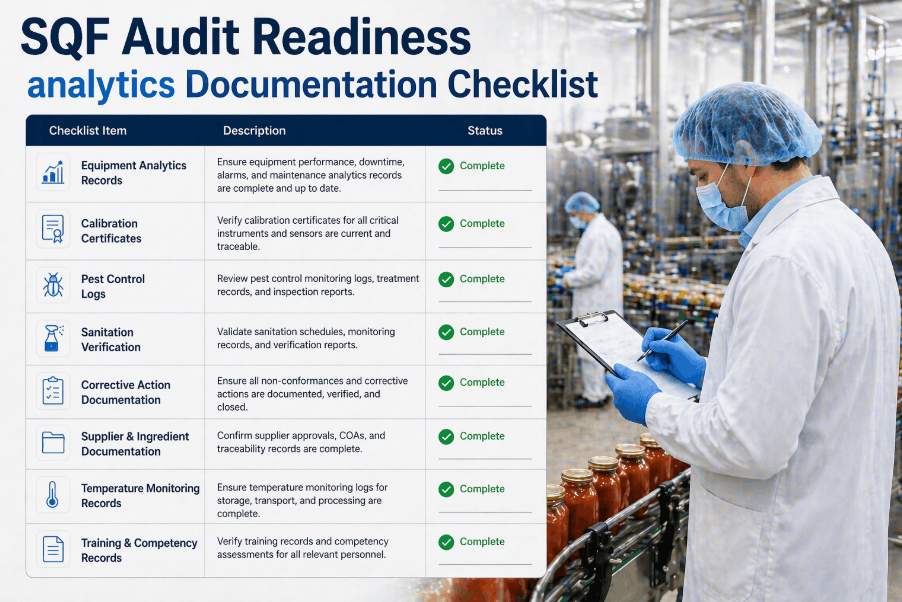
Generate complete IPM program documentation packages — including site maps, service records, and corrective actions — that satisfy FDA, USDA, FM Global, and GFSI requirements simultaneously.
Integrated Pest Management FAQs
Under FSMA and GFSI schemes, food facilities are required to have a documented IPM program — not just a licensed pest control operator on retainer — to demonstrate a preventive, risk-based management approach.
Book a Demo to see how iFactory transforms your paper-based pest logs into a fully digital, GFSI-ready IPM compliance program.
High-risk areas such as raw material receiving, waste compactor rooms, and exterior dumpster zones may require weekly inspection intervals to detect early rodent pressure before it becomes an infestation.
All inspection results — including zero-activity findings — must be documented to demonstrate an active, ongoing monitoring program to auditors and regulatory inspectors.
Vegetation within 18 inches of the building exterior, stacked pallets against outer walls, and grease trap overflows at exterior drain points are also high-priority inspection targets for any BRCGS or SQF auditor.
A documented monthly perimeter exclusion walk — with dated photographic evidence of all findings and their resolution — is the single most effective defense against an IPM-related audit finding.
German cockroaches are the next critical risk, particularly in warm, moist processing areas, as they carry multiple enteric pathogens and are notoriously difficult to eliminate once established inside equipment voids.
Stored product insects — including flour beetles, grain weevils, and Indianmeal moths — pose a significant risk of product destruction and are typically introduced via incoming raw material shipments rather than structural entry points.
Interior rodent management relies exclusively on mechanical traps (snap traps, multi-capture traps) placed in tamper-resistant stations along interior perimeter walls — never in open production areas or near food contact surfaces.
Rodenticide bait stations are restricted to the exterior perimeter, with a clear buffer zone between the outermost station and any building access point to prevent rodents from dying inside the facility after consuming bait.
Trend analysis reports showing catch-rate data by zone, all corrective actions triggered by activity spikes, and evidence of building exclusion inspections and follow-up repairs are also mandatory review items.
Book a Demo to see how iFactory generates audit-ready IPM documentation packages — including site maps, service records, and corrective action logs — in under 60 seconds.