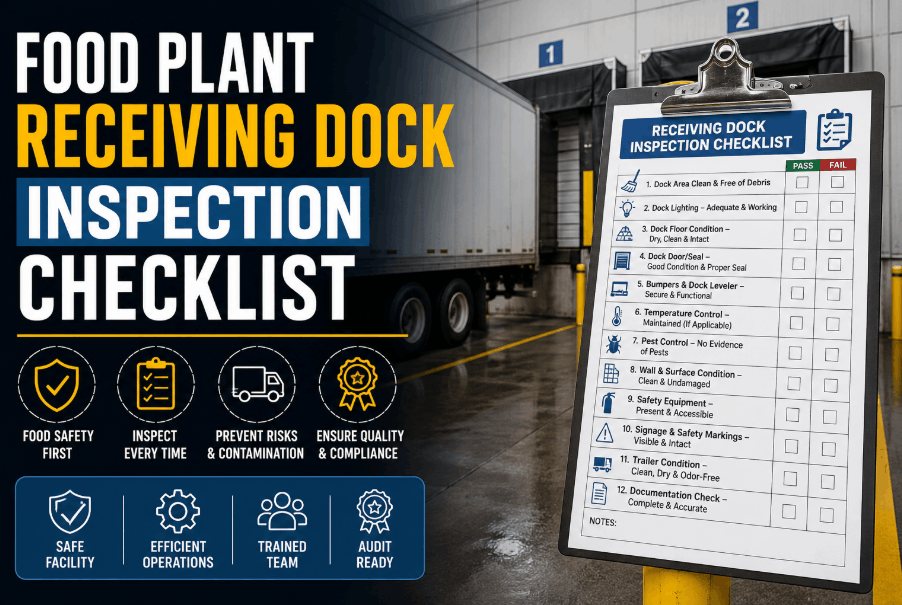
Food Plant Receiving Dock Inspection Checklist

By Josh Turley on May 11, 2026

food-plant-receiving-dock-inspection-checklist

Food plant receiving dock analytics is the first line of defense in protecting facility biosecurity, maintaining the cold chain, and ensuring FSMA-compliant supply chain transparency. In high-volume receiving environments, the failure to detect a pre-existing pest infestation in a trailer or a 5°F thermal drift in inbound raw materials can lead to systemic contamination and massive production losses. Book a Demo to automate your receiving dock inspections, track real-time inbound temperatures, and generate audit-ready supplier verification and FSMA documentation for every shipment.

Automate Food Plant Receiving Dock Analytics Monitor inbound product temperatures, track trailer cleanliness, log dock leveler mechanical health, and generate automated SQF receiving records for your entire facility.

1. Transport Vehicle Integrity & Cleanliness Analytics

Monitor the sanitary condition of inbound trailers and containers. Prevent biosecurity breaches by identifying structural damage and pest evidence before unloading begins. Book a Demo to integrate photographic verification into your receiving workflow.

2. Inbound Product Thermal Compliance & Cold Chain

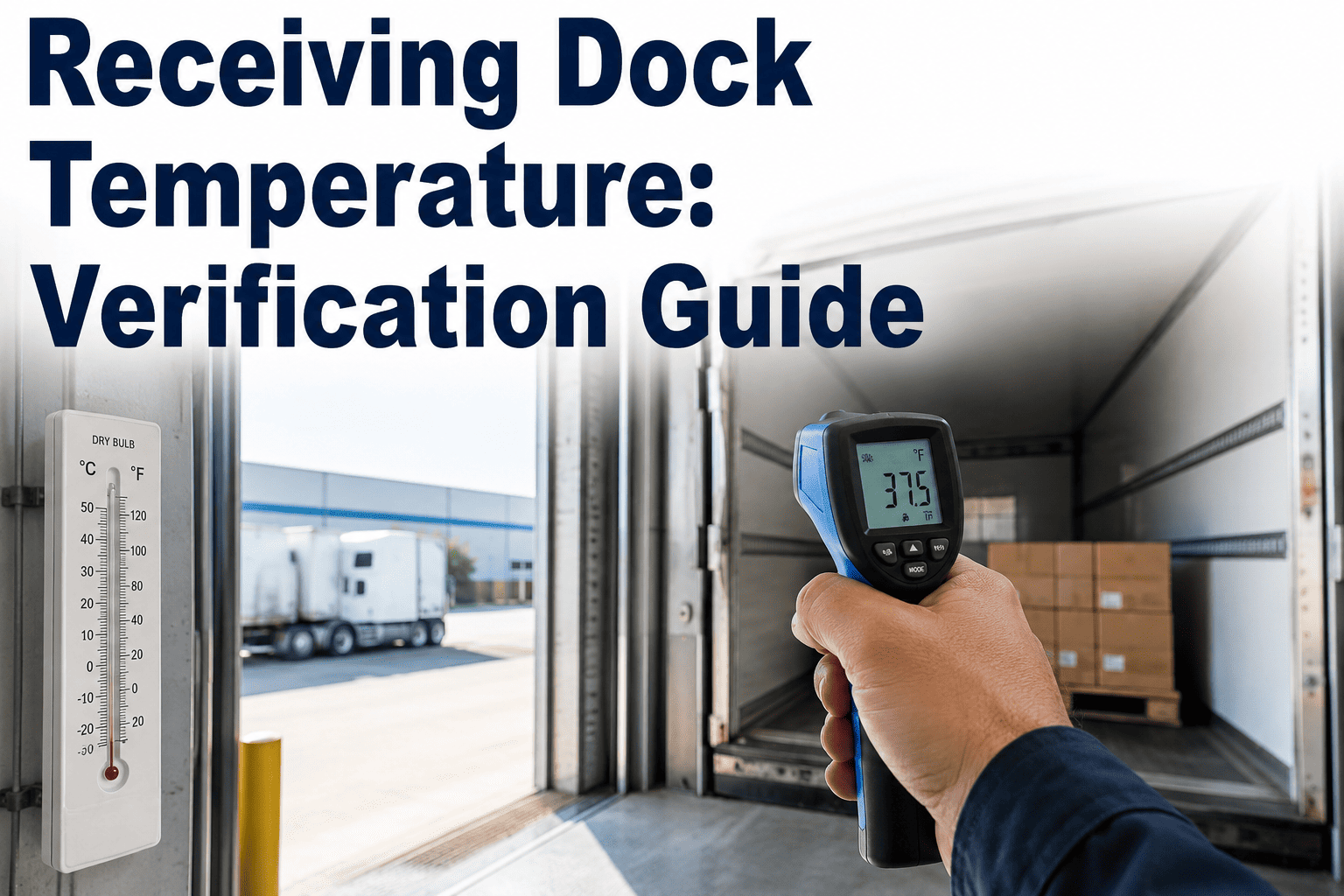
Verify that perishable raw materials meet critical temperature specifications. Prevent shelf-life degradation by identifying thermal abuse during transit. Book a Demo to log automated inbound thermal records.

3. Dock Door & Thermal Seal Performance Analytics

Monitor energy loss and environmental sealing at the loading bay. Prevent humidity and pest ingress through real-time door analytics. Book a Demo to track dock seal thermal efficiency.

4. Dock Leveler & Mechanical Asset Reliability

Maintain mechanical safety and uptime for high-volume receiving. Prevent operator injury through regular hydraulic and restraint audits. Book a Demo to track dock equipment PM.

5. Pallet & Secondary Packaging Integrity Inspection

Verify that inbound packaging protects product quality. Prevent cross-contamination from damaged pallets or leaking chemicals. Book a Demo to log packaging non-conformances.

6. Supplier Verification & COA (Certificate of Analysis) Archival

Verify that inbound raw materials match quality specifications. Prevent regulatory gaps through automated documentation matching. Book a Demo to digitize your supplier COA logs.

7. Receiving Zone Hygiene & Pest Mitigation Analytics

Maintain a sterile receiving environment to prevent contamination. Prevent pest ingress through regular drain and ILT audits. Book a Demo to track dock-zone sanitation.

8. Internal Transport Equipment (Forklift/Jack) Analytics

Maintain mechanical safety and sanitation for receiving equipment. Prevent downtime and accidents through regular motor and battery audits. Book a Demo to track forklift maintenance logs.

9. FSMA & SQF Digital Receiving Compliance Analytics

Centralize receiving documentation for rapid audit response. Ensure all FSMA and SQF logs are complete and timestamped. Book a Demo to digitize your receiving compliance logs.
Digitize Your Receiving Dock Analytics Program iFactory auto-schedules dock equipment maintenance, tracks inbound thermal compliance, logs SQF supplier data, and generates audit-ready FSMA records for your entire facility.

Frequently Asked Questions — Food Plant Receiving Dock Analytics

1. What is the standard protocol for an inbound thermal non-conformance?
If any part of the load exceeds the critical limit (e.g., >40°F for refrigerated raw materials), the shipment should be immediately placed on hold. A secondary core temperature check should be performed on multiple pallets. QC must review the Transit Data Logger (TDL) to determine the duration of the deviation before accepting or rejecting the load.
2. Why are dock seals and shelters critical for food safety?
Dock seals create a compression-tight envelope between the trailer and the facility. Inadequate sealing allows outdoor air, humidity, and pests (rodents/flies) to enter the dock area directly. In refrigerated docks, failing seals cause massive energy loss and condensation on floors, which can harbor Listeria.
3. Can digital trailer inspection logs replace paper-based checklists?
Yes. Digital logs are preferred by SQF and FSMA auditors because they include immutable timestamps and photographic evidence. iFactory allows receiving teams to snap photos of trailer cleanliness or pest evidence directly into the compliance record, eliminating documentation gaps.
4. How often should dock levelers and vehicle restraints be maintained?
High-volume docks should have a quarterly PM schedule for levelers (lubrication and hydraulic check) and a daily safety check for vehicle restraints. Restraint signal-light synchronization is a critical safety item that must be verified every shift.
5. What is the role of Approved Supplier Lists (ASL) in the receiving process?
Per FSMA and GFSI standards, raw materials can only be accepted from suppliers who have been vetted and approved by the corporate food safety team. receiving dock analytics must cross-reference every inbound shipment against the ASL to prevent unauthorized or unvetted materials from entering the production stream.
Start Your Receiving Compliance Program Today Join food plant operators automating maintenance scheduling, tracking inbound thermal health, managing FSMA logs, and passing audits with complete, timestamped analytics documentation for every shipment.

Share This Story, Choose Your Platform!