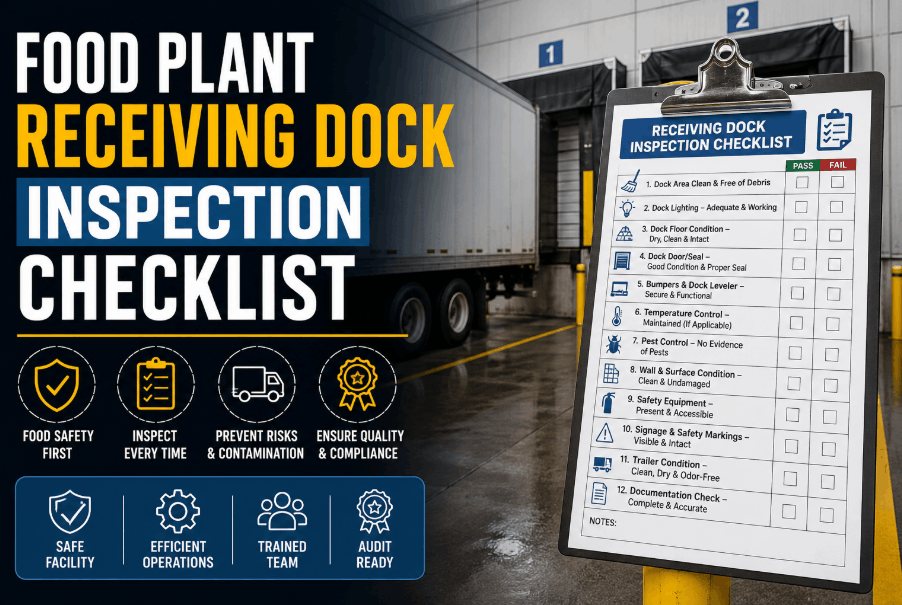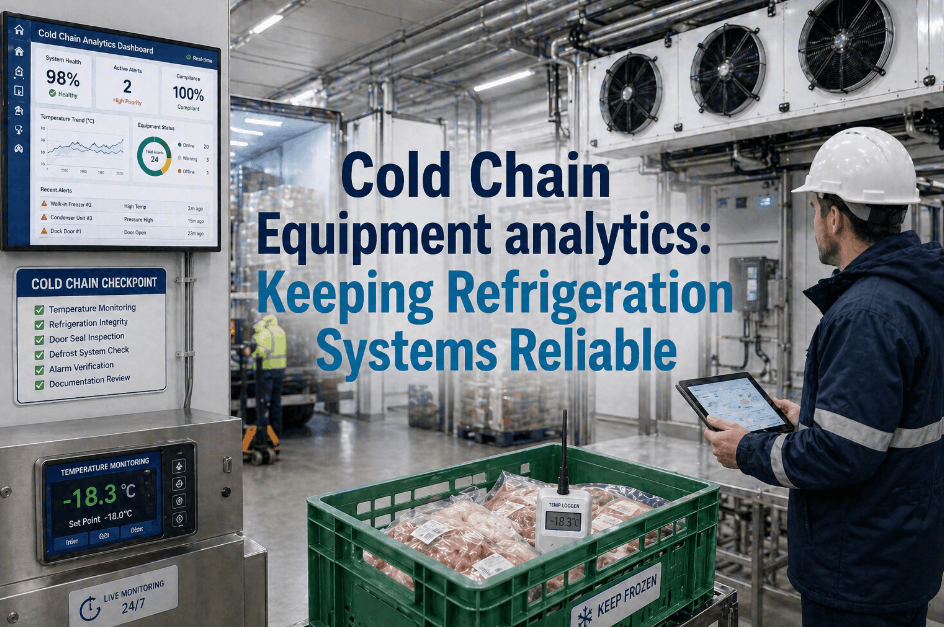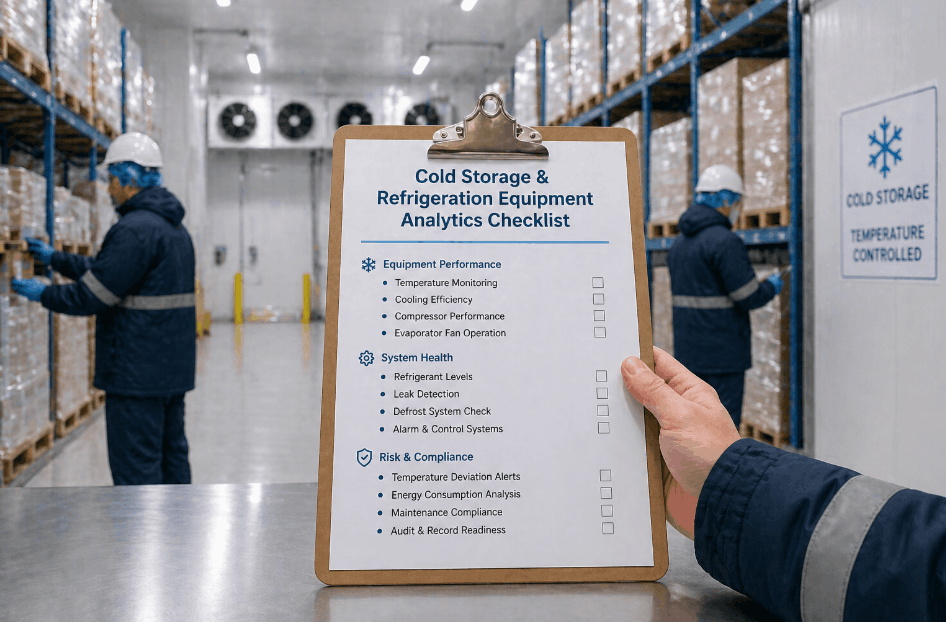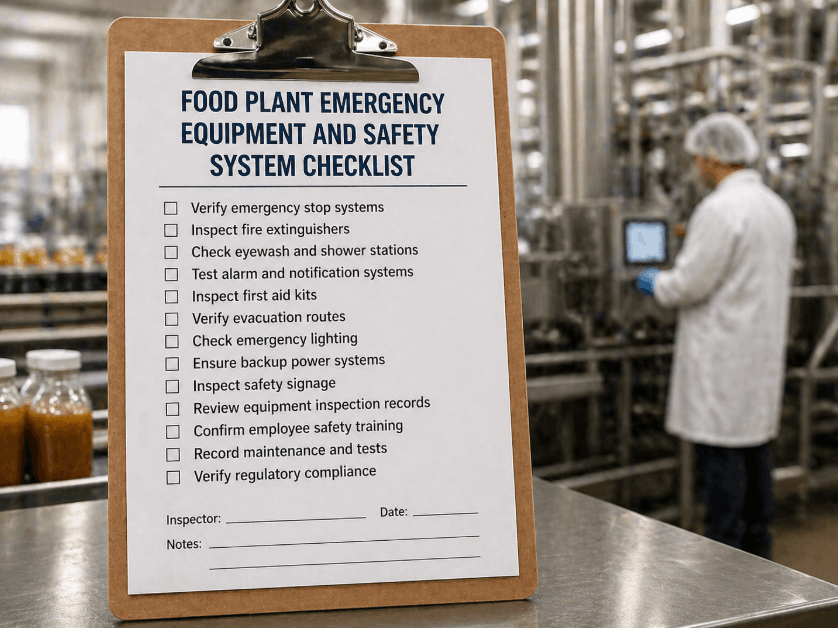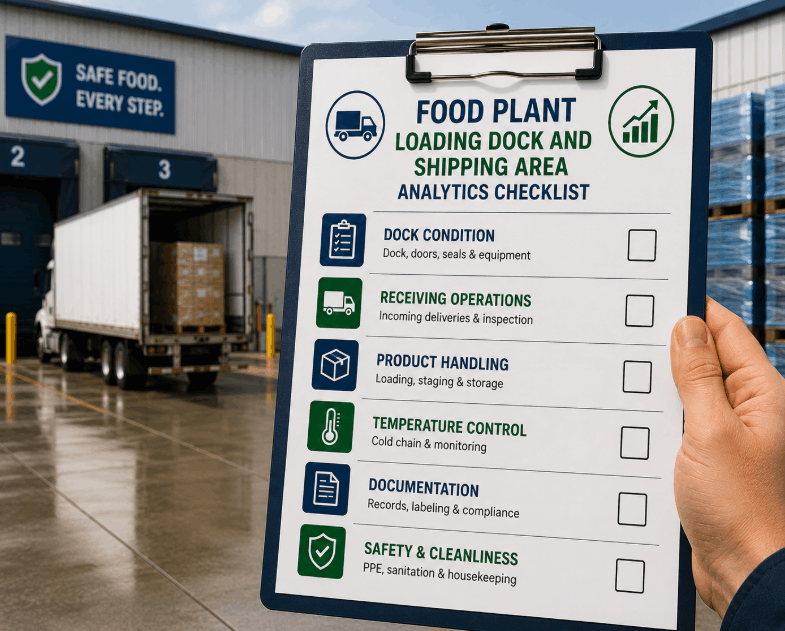
Food plant loading dock and shipping area analytics is the critical final gatekeeper in the "Farm-to-Fork" safety continuum, where failures in thermal sealing or mechanical asset reliability can compromise finished product quality during the transition to distribution. In high-volume shipping environments, the loss of cold chain integrity at the dock door or an undetected hydraulic failure in a vehicle restraint can lead to expensive product rejections and severe safety incidents. Book a Demo to see how ifactory's preventive analytics platform digitizes shipping dock inspections, automates cold chain handoff tracking, and provides real-time alerts for dock asset failures across your entire facility.
Why Shipping Area Analytics are Critical for Finished Goods Quality
Thermal Escape and Humidity Ingress Compromise Product Stability
The loading dock is the largest thermal opening in a food facility, where failing seals or slow-cycling doors allow conditioned air to escape and outside humidity to enter. This environmental shock triggers condensation on finished goods packaging, leading to label damage, corrugated weakening, and potential mold growth. Implementing ifactory's shipping analytics identifies thermal leaks in real-time, allowing maintenance to prioritize seal replacements before they impact warehouse energy costs and product shelf-life.
Mechanical Asset Failure Causes Bottlenecks During Peak Release
A failed dock leveler or vehicle restraint during a peak shipping window can stall an entire distribution schedule, leading to "trapped" inventory and missed customer delivery windows. ifactory identifies the early-stage frequency signatures of motor wear and hydraulic pressure loss, transitioning your dock maintenance from reactive repairs to predictive uptime. This data-driven approach ensures that your highest-volume shipping lanes are always operational when the transport fleet arrives.
Benefits of Digital Loading Dock and Shipping Analytics
Zero Finished Goods Cold Chain Failures
Real-time monitoring of trailer pre-cooling and staging-time limits ensures that 100% of finished goods leave the plant within thermal specifications — eliminating the product rejection risks that compromise customer relationships and brand value.
100% FSMA and GFSI Documentation Compliance
Automated archival of outbound seal numbers, temperature logs, and driver handoff signatures provides an immutable, timestamped dossier for every shipment — satisfying regulatory requirements and recall simulations with total accuracy.
25% Reduction in Warehouse Energy Loss
By identifying inefficient dock seals and slow-cycling high-speed doors, ifactory's analytics engine reduces the "conditioned air" loss that spikes refrigeration energy costs and causes humidity-driven condensation in storage areas.
Elimination of Packaging and Label Degradation
Active monitoring of shipping-zone humidity prevent the moisture-buildup that causes corrugated weakening and label-peeling — ensuring that your product arrives at the retail shelf in pristine, merchantable condition.
15% Recovery in Shipping Handoff Throughput
Predictive analytics on dock levelers and vehicle restraints identify mechanical wear before it leads to a breakdown — allowing for planned maintenance that keeps shipping lanes open during critical quarterly or holiday surges.
Audit-Ready Traceability and Recall Security
Digital lot-code linkage between the finished pallet and the outbound manifest ensures 100% traceability for every shipment — allowing your team to respond to regulatory inquiries or recall events in minutes rather than days.