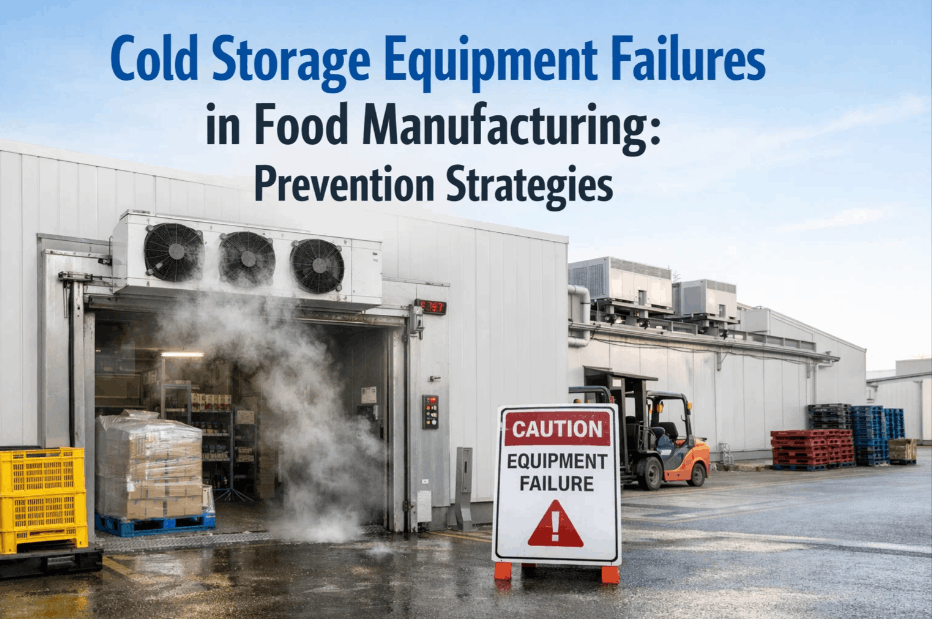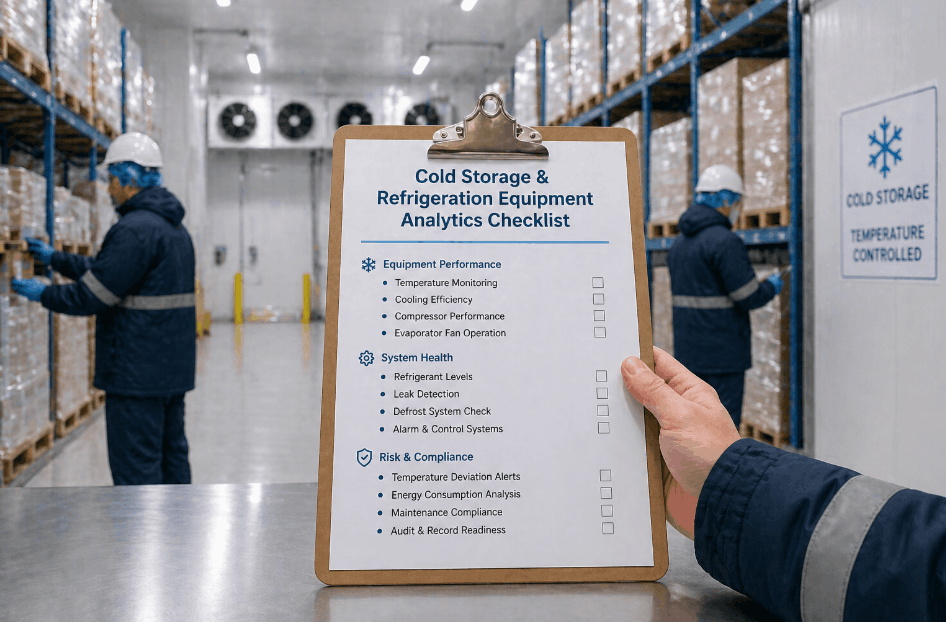
Cold storage and refrigeration systems are the backbone of food safety in every manufacturing and processing facility — silently maintaining the precise temperature conditions that separate compliant, market-ready product from spoilage and regulatory violation. A single compressor fault, sensor drift, door seal failure, or refrigerant leak can collapse your cold chain integrity within hours, resulting in product loss, FSMA violations, or a forced market withdrawal. Implementing a structured cold storage and refrigeration equipment analytics checklist is not optional — it is a foundational requirement for HACCP, GFSI, and FDA Preventive Controls compliance. Book a Demo to see how AI-driven analytics workflows replace reactive maintenance with predictive cold chain protection across every refrigeration asset in your facility.
Why Cold Storage Analytics Is Critical in Food Manufacturing
Temperature Excursion Prevention at Every Storage Zone
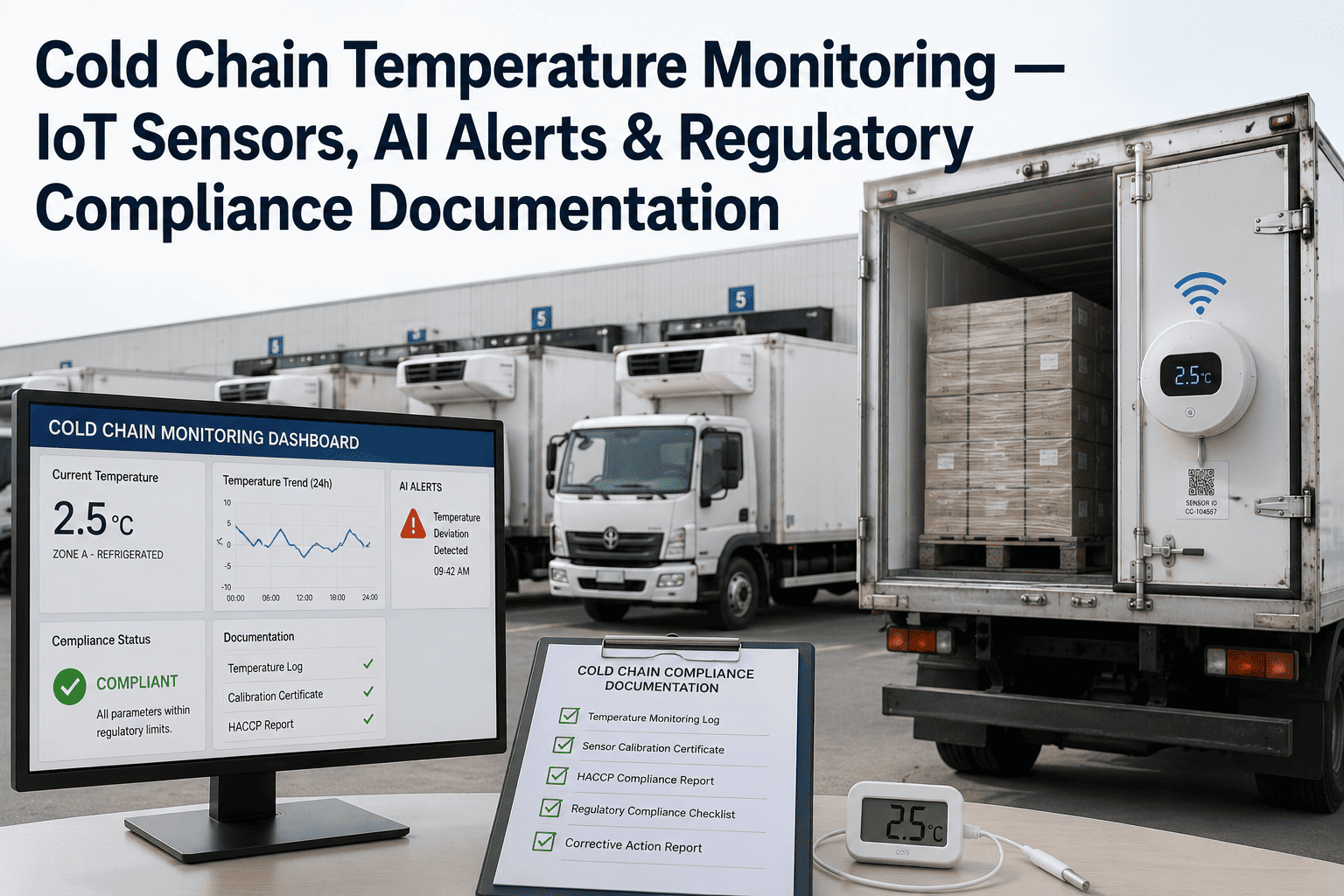
Even a brief temperature rise above the critical control point threshold can render entire batches of perishable product non-compliant. Continuous sensor-based analytics detect excursions in real time, triggering immediate alerts before product integrity is compromised. Proactively Book a Demo to see how automated temperature logging eliminates manual log sheets and provides unbroken cold chain documentation.
Compressor Failure and Unplanned Refrigeration Downtime
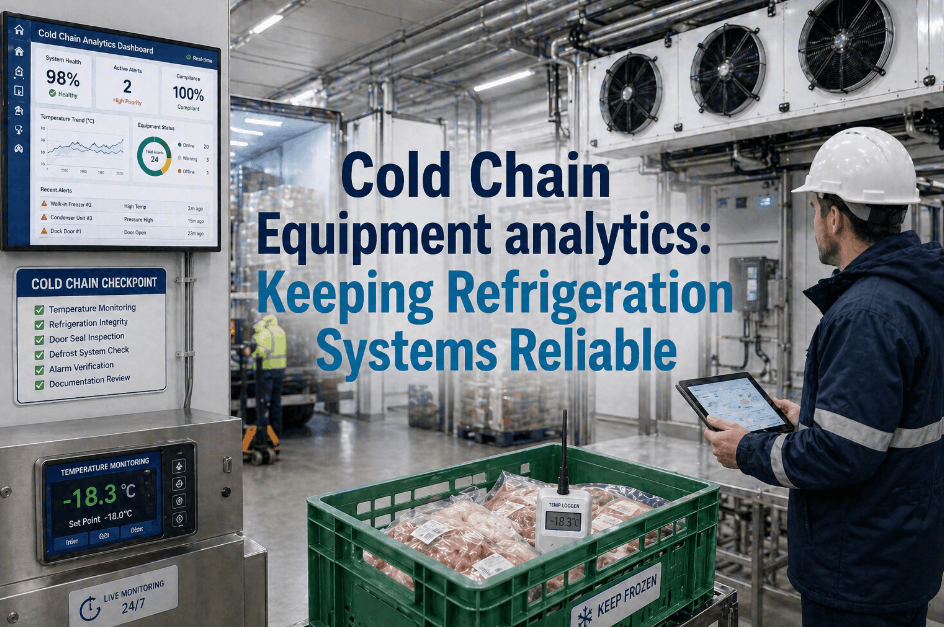
Refrigeration compressor failures are among the most costly unplanned events in food manufacturing — combining product loss, emergency service costs, and potential regulatory reporting obligations. Structured analytics cycles on suction pressure, discharge temperature, and motor amperage provide early warning of compressor degradation weeks before catastrophic failure occurs.
Benefits of Digital Cold Storage Analytics Management
Continuous Cold Chain Integrity
Automated sensor analytics provide unbroken temperature records that prove cold chain compliance to FDA, USDA, and third-party GFSI auditors — eliminating the documentation gaps that manual log sheets inevitably create.
Early Compressor Failure Detection
Trending compressor motor amperage, suction pressure, and discharge temperature identifies mechanical degradation weeks before failure — preventing the product loss and emergency service costs associated with unplanned refrigeration downtime.
HACCP & FDA Audit Readiness
Timestamped digital analytics logs with sensor ID, asset reference, and calibration status satisfy FSMA Preventive Controls critical limit monitoring requirements and GFSI scheme documentation standards simultaneously.
Reduced Energy & Refrigerant Consumption
Structured condenser fouling inspections, door seal monitoring, and defrost cycle performance analytics extend refrigeration system efficiency — reducing compressor runtime, energy cost, and refrigerant top-up frequency by 20–35%.
Multi-Zone Compliance Visibility
Centralized dashboards give food safety and maintenance managers real-time compliance status across every cold room, blast chiller, and refrigerated line in the facility — eliminating temperature blind spots in multi-shift environments.
Predictive Maintenance Work Order Triggers
Automated alerts based on analytics trends — rising pull-down times, increasing compressor amperage, or recurring temperature excursions — generate corrective work orders before component failure occurs, eliminating reactive cold chain repair cycles.
Cold Storage Analytics FAQs
Critical safety cutouts, defrost cycle performance, and sensor calibration must be checked and logged on a scheduled basis to satisfy FSMA Preventive Controls and GFSI certification monitoring requirements.
In food plants, high door traffic during peak processing shifts and inadequate strip curtain maintenance are also significant contributing factors to recurring temperature excursions.
Facilities operating in the EU must comply with F-Gas Regulation requirements, which mandate documented leak checks at intervals determined by system refrigerant charge size, with records maintained for a minimum of five years.
Short-cycling is typically caused by refrigerant undercharge, oversized compressor capacity relative to the current load, or a malfunctioning pressure control that is set too close to its differential range.
Cloud-based digital records remain accessible during audits regardless of on-site system availability and support instant multi-site reporting for food manufacturers operating across multiple facilities.
Beyond temperature control risk, icing on the evaporator creates meltwater that can drip onto exposed food or food contact surfaces below if drain pans overflow during an uncontrolled defrost event, introducing a direct contamination pathway.