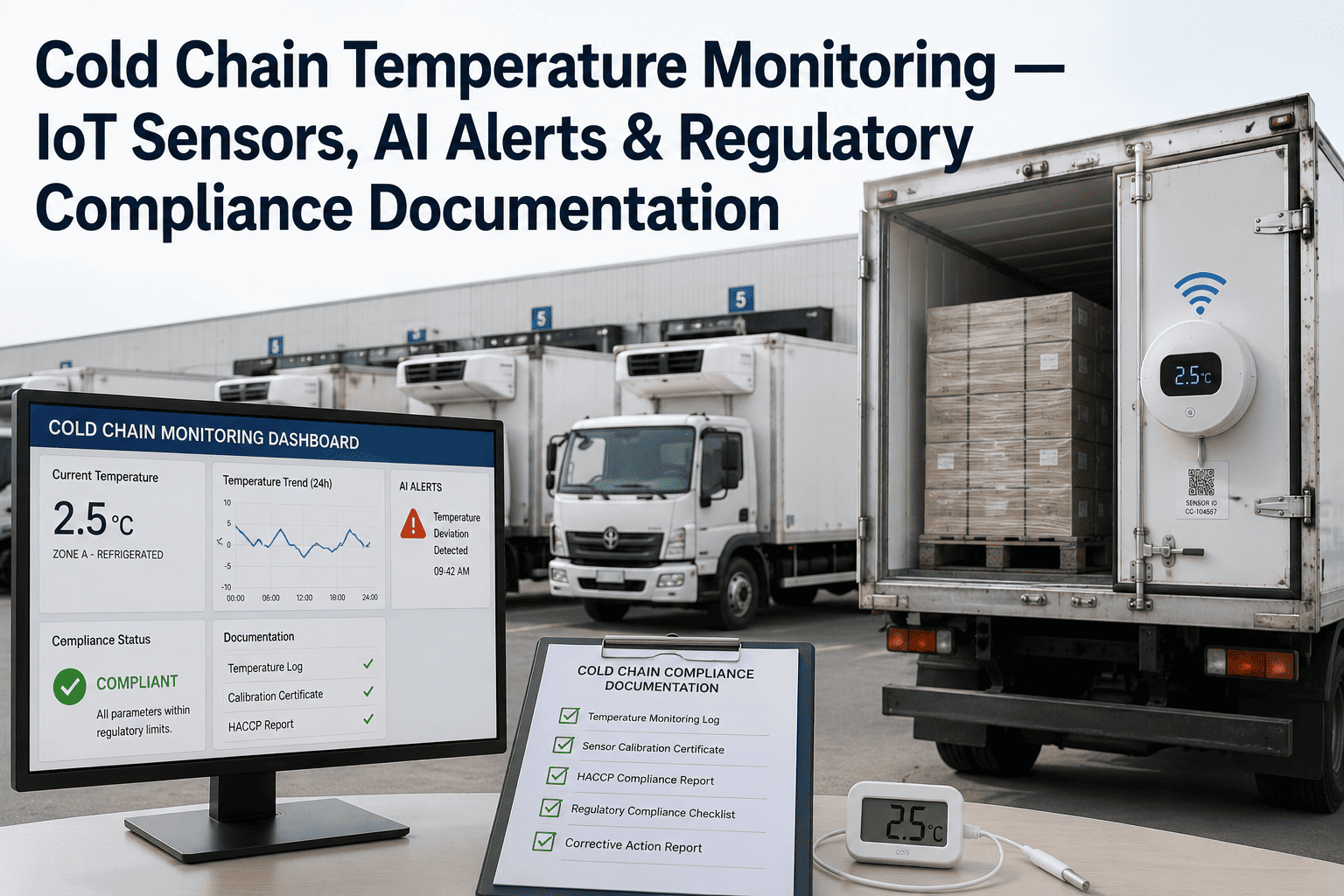
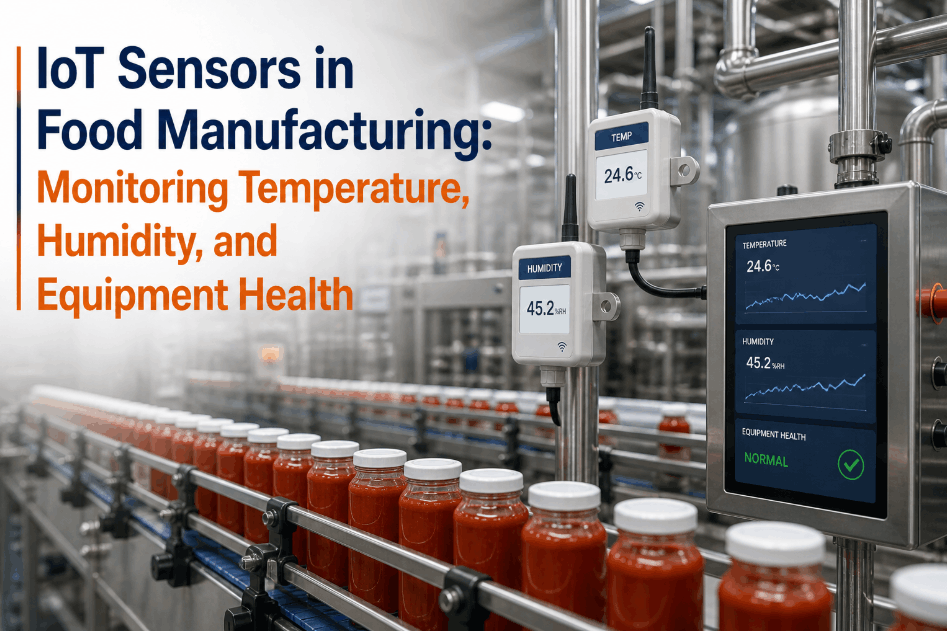
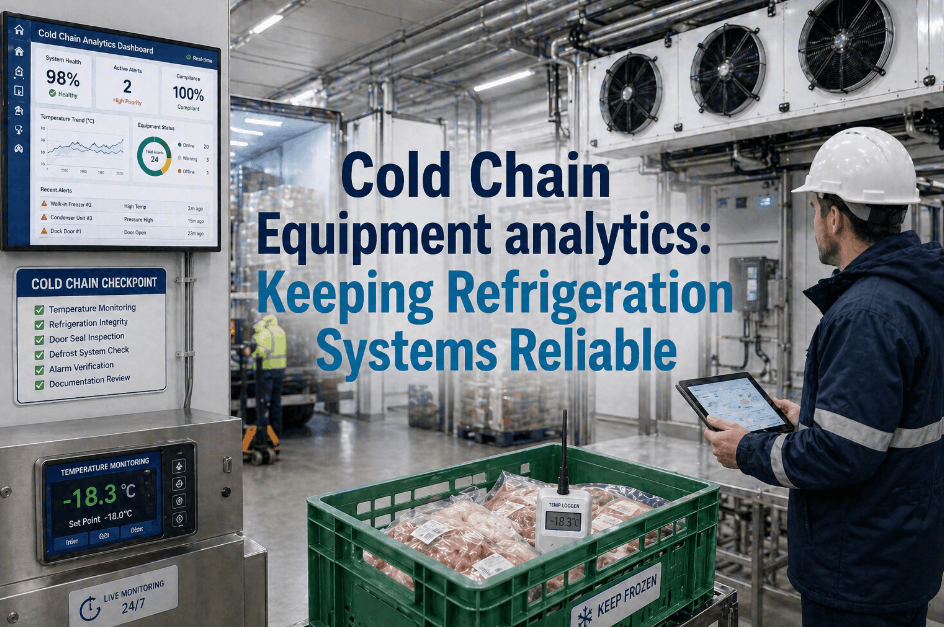
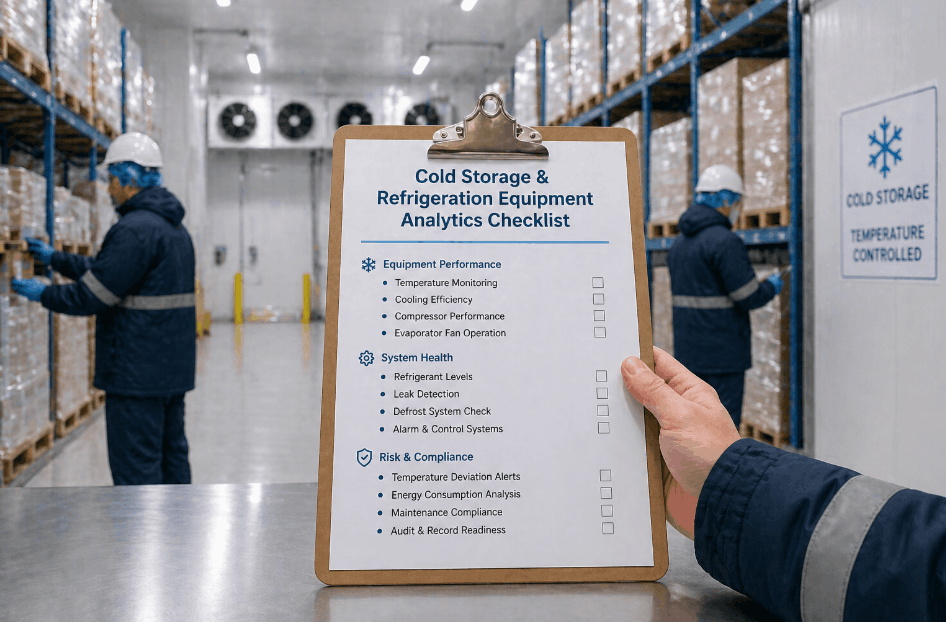
Cold chain equipment failures are rarely sudden — refrigeration compressors telegraph their decline through rising current draw weeks before they trip offline, blast freezer coils signal fouling through progressive pressure drop long before pull-down times lengthen, and walk-in cooler door gaskets leak latent heat for months before a temperature excursion forces a product hold. Cold chain analytics for food manufacturing intercepts these deterioration signals before they become spoilage events, regulatory violations, or insurance claims. iFactory's IoT sensor integration connects directly to your refrigeration assets, walk-in coolers, blast freezers, and chilled transport docks — scoring equipment health continuously and surfacing maintenance intelligence that protects product safety from receiving dock to shipping bay. Book a demo to see how AI-driven cold chain monitoring transforms temperature risk management across your entire facility.
Protect Every Pallet. Prevent Every Excursion.
iFactory's cold chain IoT analytics detects refrigeration deterioration weeks before failure — eliminating temperature excursions, preventing costly spoilage, and keeping your compliance documentation continuous and audit-ready.
Why Cold Chain Integrity Failures Cost More Than Refrigeration Repairs
A failed compressor on a blast freezer isn't a $4,000 repair problem — it's a $40,000 to $400,000 product safety event depending on the inventory value in that cell at the moment of failure. Cold chain equipment failures trigger product destruction, regulatory notification under FDA's FSMA traceability rules, retailer chargebacks for noncompliant shipments, and potential recall exposure if temperature-compromised product reaches consumers. The economic case for cold chain analytics food manufacturers need isn't built on maintenance cost savings alone — it's built on eliminating the catastrophic tail-risk scenarios that traditional time-based PM schedules cannot prevent. IoT temperature monitoring for food production closes the gap between scheduled inspections and continuous condition awareness, giving operations and quality teams the advance warning that transforms temperature risk from an insurance problem into a managed process.
The Cold Chain Equipment Failure Cascade: From Compressor to Consumer Risk
Cold chain failures rarely occur in isolation. Refrigeration system degradation creates a cascade: a fouling condenser forces the compressor to run hotter and longer, accelerating bearing wear and increasing current draw. The overworked compressor begins cycling more frequently, reducing its ability to maintain setpoint temperatures during peak load periods — doors opening during receiving, warm product loading during processing handoffs. Temperature excursion prevention requires catching the equipment deterioration before it reaches the point where ambient conditions challenge the system's reduced capacity.
iFactory's cold chain IoT sensors monitor compressor current signatures, suction and discharge pressure differentials, superheat values, and condenser approach temperatures simultaneously — building a composite health picture that detects the onset of this cascade 3 to 8 weeks before the system fails to maintain compliance temperatures. Maintenance teams receive a structured work order with fault classification and parts list weeks before a product safety event becomes possible. Book a demo to see cascade detection applied to your refrigeration architecture.
Critical Cold Chain Assets Monitored by iFactory IoT Integration
Effective cold storage equipment PM requires monitoring every asset class in the temperature-controlled pathway — from the dock refrigeration doors that cycle hundreds of times daily to the blast freezers where product quality is locked in during initial freeze-down. The following equipment categories represent the highest consequence cold chain monitoring priorities in food manufacturing and distribution environments.
| Cold Chain Asset | Key Monitored Parameters | Failure Modes Detected | Detection Lead Time |
|---|---|---|---|
| Walk-In Coolers & Freezers | Compressor current, suction pressure, evaporator temp, door open cycles | Compressor wear, refrigerant leak, gasket failure, evaporator frosting | 3–7 weeks |
| Blast Freezers | Pull-down time, discharge pressure, fan motor current, coil temp differential | Coil fouling, fan bearing degradation, refrigerant undercharge, evaporator blockage | 2–5 weeks |
| Refrigerated Receiving Docks | Door seal temperature, ambient infiltration rate, compressor cycle frequency | Dock door seal failure, strip curtain degradation, air curtain motor wear | 1–3 weeks |
| Chilled Processing Rooms | Room temperature differential, HVAC unit current, airflow velocity, humidity | Air handler bearing failure, coil fouling, damper actuator wear | 3–6 weeks |
| Cold Storage Rack Refrigeration | Zone-level temperature uniformity, condensing unit pressure ratio, valve cycle data | Expansion valve failure, liquid line restriction, uneven cooling distribution | 2–4 weeks |
| Refrigerated Transport Staging | Pre-cool temperature, trailer hook-up duration, setpoint deviation logs | Insufficient pre-conditioning, door seal failure, unit capacity degradation | 1–2 weeks |
IoT Temperature Monitoring for Food: How Continuous Sensing Replaces Spot-Check Vulnerability
Traditional cold chain compliance depends on spot-check temperature logging — a technician with a calibrated probe recording a single data point at a scheduled interval. The fundamental problem with spot-check monitoring is that temperature excursions don't schedule themselves around inspection windows. A compressor that struggles during afternoon peak-load periods — when dock traffic is highest and product movement is most frequent — may appear fully compliant during a morning inspection and then fail to maintain setpoint during the 6-hour unmonitored afternoon production window.
iFactory's cold chain IoT sensors record temperature, pressure, and equipment health data at continuous intervals — capturing the afternoon load-peak performance degradation that spot checks systematically miss. When compressor performance drops below the threshold needed to maintain compliance temperatures under realistic operating load conditions, the platform generates an alert and initiates a predictive maintenance work order — before any product temperature excursion occurs. Book a demo to compare continuous monitoring coverage against your current inspection protocol.
Cold Chain AI-Driven Analytics: Moving From Temperature Alarms to Predictive Intelligence
Basic temperature alarm systems tell you that a cold storage temperature excursion has already occurred — after product safety has already been compromised. Cold chain AI-driven analytics operates upstream of the excursion, detecting the equipment deterioration patterns that predict excursion risk weeks before the system loses compliance temperature capability.
Refrigerant Leak Early Detection
Progressive refrigerant loss produces a characteristic signature in suction pressure trends and superheat values weeks before system capacity drops to excursion-risk levels. AI models detect this leak signature and trigger inspection before product safety is at risk — eliminating the reactive scenario where a technician discovers low charge after a temperature alarm has already fired.
Condenser Fouling Efficiency Monitoring
Condenser coil fouling from dust, grease, and debris accumulation progressively increases compressor head pressure and energy consumption. iFactory tracks condensing pressure trends against ambient temperature baselines, identifying fouling-driven efficiency degradation weeks before the compressor reaches thermal limit conditions during summer peak loads.
Evaporator Frost Load Analytics
Defrost cycle inefficiency causes progressive evaporator frost accumulation that reduces airflow, impairs heat transfer, and eventually causes room temperature stratification — the precursor to zone-level excursions in walk-in freezers. AI pattern analysis on defrost cycle performance detects frost load buildup and triggers proactive drain pan and heating element inspection.
Compressor Remaining Useful Life Prediction
Compressor motor current signature analysis identifies winding degradation, bearing wear, and valve leakage developing over months — predicting remaining useful life with sufficient lead time for scheduled compressor replacement during a planned production downtime window rather than an emergency breakdown during peak production season.
Refrigeration Compliance Food Documentation: Automated Audit Trails From IoT Sensor Data
FSMA, HACCP, BRC, SQF, and major retailer supplier codes all require documented evidence that cold chain equipment maintained compliance temperatures throughout every production and storage period. Manual logbook systems create documentation gaps, transcription errors, and audit vulnerabilities — particularly for multi-shift operations where handoff documentation discipline varies.
iFactory's IoT integration produces continuous, tamper-resistant sensor logs that satisfy cold chain documentation requirements for every major food safety regulatory framework. Every temperature reading, every equipment alert, every maintenance work order, and every corrective action is automatically timestamped and stored in an immutable audit trail. When a customer audit or regulatory inspection requires cold chain integrity documentation for a specific date range or SKU production batch, the complete evidence package is available in seconds — not hours of manual logbook reconciliation. Book a demo to review the compliance documentation output format for your applicable certification standard.
Walk-In Cooler and Blast Freezer Analytics: The Highest-Consequence Cold Chain Assets
Walk-in coolers and blast freezers represent the highest product-value concentration points in most food manufacturing facilities — and therefore the highest consequence cold chain monitoring priorities. A walk-in freezer holding $200,000 of finished goods inventory that loses refrigeration capacity during a weekend with no monitoring coverage represents a catastrophic exposure that dwarfs the annual cost of comprehensive IoT sensor coverage.
iFactory's blast freezer analytics monitors pull-down time performance against baseline benchmarks — the most sensitive leading indicator of refrigeration system capacity degradation. When pull-down times begin extending beyond historical norms for equivalent product loads and ambient temperatures, the AI model flags the developing capacity issue and initiates a structured inspection before any individual product batch fails to achieve the required core temperature within the validated freeze-down window. Walk-in cooler analytics similarly tracks door open frequency, compressor runtime ratios, and zone temperature uniformity to detect infiltration issues, gasket failures, and refrigeration capacity shortfalls before product safety is compromised. Book a demo to explore asset-specific monitoring configurations for your cold storage inventory.
Cold Chain Predictive Maintenance Implementation: A Phase-Based Deployment Approach
Successful cold storage equipment PM programs deploy IoT monitoring in priority sequence — beginning with the highest product-value and highest regulatory consequence assets and expanding systematically to full cold chain coverage. The following phased approach delivers measurable spoilage risk reduction and compliance documentation value at each stage.
Primary Cold Storage and Blast Freezer Coverage
Deploy IoT sensors on walk-in freezers, walk-in coolers, and blast freezers holding finished goods or high-value raw materials. Configure compressor health monitoring, temperature continuous logging, and automated excursion-risk alerting. Establish CMMS integration for work order auto-generation. This phase eliminates the highest product-value spoilage risk scenarios and produces immediate compliance documentation coverage for critical cold storage assets.
Processing Room and Dock Refrigeration Monitoring
Expand sensor coverage to chilled processing rooms, refrigerated receiving docks, and product staging areas. Enable infiltration rate tracking and door-cycle analytics that identify passive temperature risk from operational practices in addition to equipment deterioration. Configure zone-level temperature uniformity monitoring for multi-rack cold storage environments.
Transport Staging and Distribution Integration
Extend cold chain IoT monitoring to refrigerated trailer staging, pre-conditioning verification, and outbound shipment temperature confirmation. Integrate transport temperature data with production batch records to create end-to-end cold chain documentation from receiving dock through distribution departure — the complete traceability record that FSMA Rule 204 and major retailer audit programs increasingly require.
Facility-Wide Cold Chain Digital Twin and Lifecycle Planning
Integrate full cold chain sensor data with refrigeration asset lifecycle management, energy efficiency benchmarking, and capital replacement forecasting. ML-predicted remaining useful life models for every monitored compressor and refrigeration system feed multi-year capital expenditure planning — eliminating emergency capital requests driven by unexpected cold chain asset failures during peak production seasons.
Energy Efficiency and Cold Chain Analytics: The Dual ROI of Refrigeration Intelligence
Cold chain analytics for food manufacturing delivers a second financial return stream beyond spoilage prevention: refrigeration energy cost reduction. Refrigeration systems typically represent 30 to 50 percent of total facility energy consumption in food manufacturing, and degraded equipment operating outside optimal efficiency parameters can consume 20 to 40 percent more energy than a properly maintained system without triggering any temperature alarms.
iFactory tracks energy consumption per unit of refrigeration output — identifying compressors, condensing units, and air handlers operating at reduced efficiency due to fouling, refrigerant undercharge, or component wear. Maintenance interventions triggered by efficiency degradation analytics restore rated performance, reducing utility costs while simultaneously improving the temperature stability margin that protects product safety during demand peaks. For large cold storage facilities, efficiency optimization analytics alone often delivers ROI that fully funds the platform cost — making spoilage prevention and compliance documentation pure additional benefit.
See iFactory Cold Chain Analytics in Action
Connect with our team to explore how IoT sensor integration monitors your refrigeration assets, prevents temperature excursions, and automates compliance documentation across your facility.
Frequently Asked Questions: Cold Chain Equipment Analytics
How does iFactory detect refrigerant leaks before temperature excursions occur?
iFactory monitors suction pressure trends, superheat values, and compressor runtime ratios continuously. Refrigerant loss produces a characteristic multi-parameter signature — falling suction pressure, rising superheat, increasing compressor runtime — that the AI model detects 3 to 6 weeks before system capacity drops to excursion-risk levels. Book a demo to review refrigerant leak detection benchmarks for your refrigeration system types.
What compliance documentation does iFactory generate for cold chain regulatory audits?
iFactory produces continuous, timestamped sensor logs for temperature, pressure, and equipment health parameters — satisfying HACCP CCP monitoring documentation requirements and FSMA temperature records obligations. Every maintenance alert, work order, and corrective action is automatically logged with timestamps, creating an unbroken audit trail for FDA, USDA, BRC, and SQF inspection requirements.
Can iFactory monitor both refrigeration equipment health and product temperature simultaneously?
Yes. iFactory integrates refrigeration system health sensors — compressor current, pressure transducers, temperature probes on coils and discharge lines — with product-zone ambient temperature sensors to provide both equipment condition intelligence and compliance temperature documentation from a unified platform and dashboard.
How long does cold chain IoT sensor installation take, and does it require production shutdown?
Most cold chain sensor installations are completed using non-invasive clamp-on current transformers, surface-mount temperature probes, and wireless pressure transducers — requiring no refrigeration system disassembly and no production or cold storage downtime. A typical walk-in cooler or blast freezer sensor deployment is completed within a single shift.
What is the typical ROI timeline for cold chain predictive analytics in food manufacturing?
Most iFactory cold chain customers achieve full cost recovery within 6 to 12 months. For facilities with high-value cold storage inventory, a single prevented temperature excursion event — avoiding product destruction, regulatory notification, and retailer chargebacks — often exceeds the full annual platform cost by a significant multiple.
Ready to Eliminate Cold Chain Temperature Risk Across Your Facility?
iFactory's cold chain IoT analytics platform monitors every refrigeration asset from receiving dock to shipping bay — detecting equipment deterioration 3 to 8 weeks before failure, maintaining continuous compliance documentation, and protecting product safety and profitability from the first sensor connection.