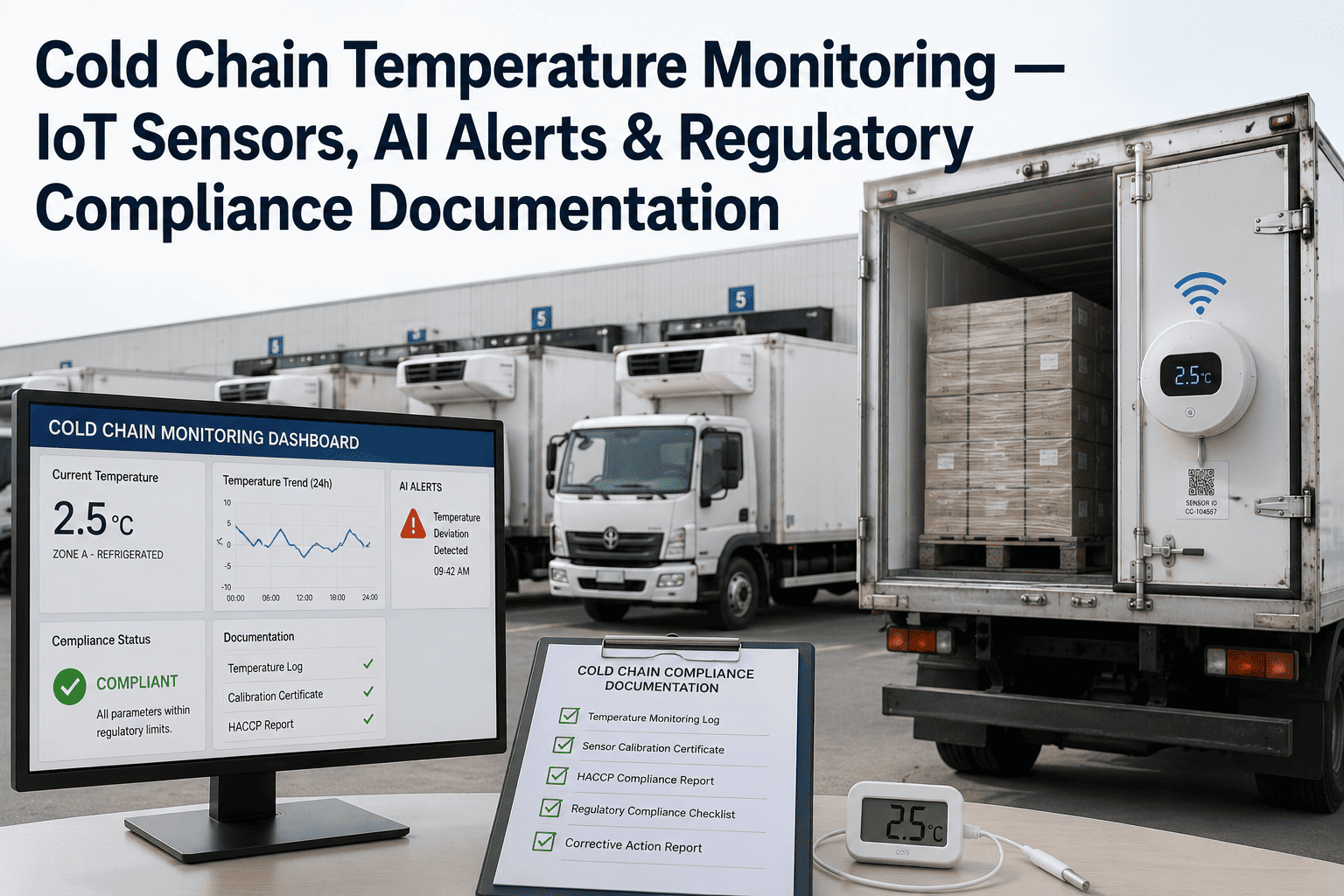
Choosing a temperature monitoring system is one of the highest-stakes technology decisions a food safety team will make, because that single choice determines whether a critical deviation is caught within minutes or only discovered after product has already left the dock. Plants evaluating a new system are usually weighing several decisions at once — wired sensor networks against wireless mesh deployments, cloud-hosted platforms against servers kept on-site, and a system sized for one facility against one built to scale across a growing multi-site network. Each of these choices carries real tradeoffs in installation cost, data reliability, and how quickly a deviation reaches the person who can act on it. The sections below walk through each decision point so a plant can match the system to its actual production environment rather than defaulting to whatever a single vendor happens to sell. For a deeper technical comparison of deployment models, iFactory's support documentation covers configuration options in more detail.
01 / Why the Wrong System Costs More Than the Right One
A temperature monitoring system that looks inexpensive on a purchase order can become extraordinarily costly in practice if it fails to catch a deviation before product is shipped, stored, or served. The real cost of a monitoring system is not the hardware price tag — it is the combined cost of false confidence, delayed alerts, and manual verification work that a poorly matched system creates every single shift. A system chosen without regard to facility layout, staff workflow, or growth plans frequently ends up supplemented with spreadsheets, paper logs, and manual spot-checks within the first year, which defeats the purpose of automating the process at all. Getting the underlying architecture decisions right up front — wired versus wireless, cloud versus local, single-site versus multi-site — prevents this slow drift back toward manual work. Plants that skip this evaluation step tend to discover the mismatch only after a near-miss deviation, at which point the fix requires ripping out and replacing infrastructure that was only recently installed, an expense that dwarfs the cost of a proper evaluation up front. A short internal review comparing facility layout, staffing patterns, and internet reliability against the candidate systems on the market almost always pays for itself well before the first year of operation is complete.
02 / Wired Sensors vs. Wireless Mesh Networks
Wired temperature sensors have been the default in food plants for decades because they offer a stable, interference-free connection and rarely suffer from battery failure, making them well suited to fixed equipment such as walk-in coolers, blast chillers, and cook tanks that are not expected to move. The tradeoff is installation cost and flexibility — running conduit and cable through an active production facility is disruptive, expensive, and difficult to reconfigure later if the layout changes. Wireless mesh networks solve the flexibility problem by allowing sensors to be placed anywhere within range and relocated without rewiring, which matters considerably for facilities that reconfigure lines seasonally or that are still finalizing their equipment layout. The commonly cited concern with wireless — signal interference from metal equipment and refrigeration units — has largely been addressed in current-generation mesh systems that self-heal around a lost node by rerouting through neighboring sensors. Battery life has also improved considerably, with most current wireless sensors rated for multi-year operation under normal reporting intervals, which reduces the maintenance burden that earlier wireless deployments were criticized for. In practice, the decision often comes down less to which technology is objectively better and more to how frequently a facility expects its physical layout to change over the life of the system.
Best suited to fixed, permanent equipment that will not be relocated or reconfigured
Lower risk of signal interference or battery-related data gaps over long monitoring periods
Higher upfront installation labor cost, particularly in existing facilities with finished walls
Faster deployment with sensors placed and relocated without any facility rewiring
Self-healing mesh topology maintains coverage even if an individual node loses signal
Requires a battery replacement and signal strength monitoring routine as part of maintenance
03 / Cloud-Hosted vs. On-Premise Platforms
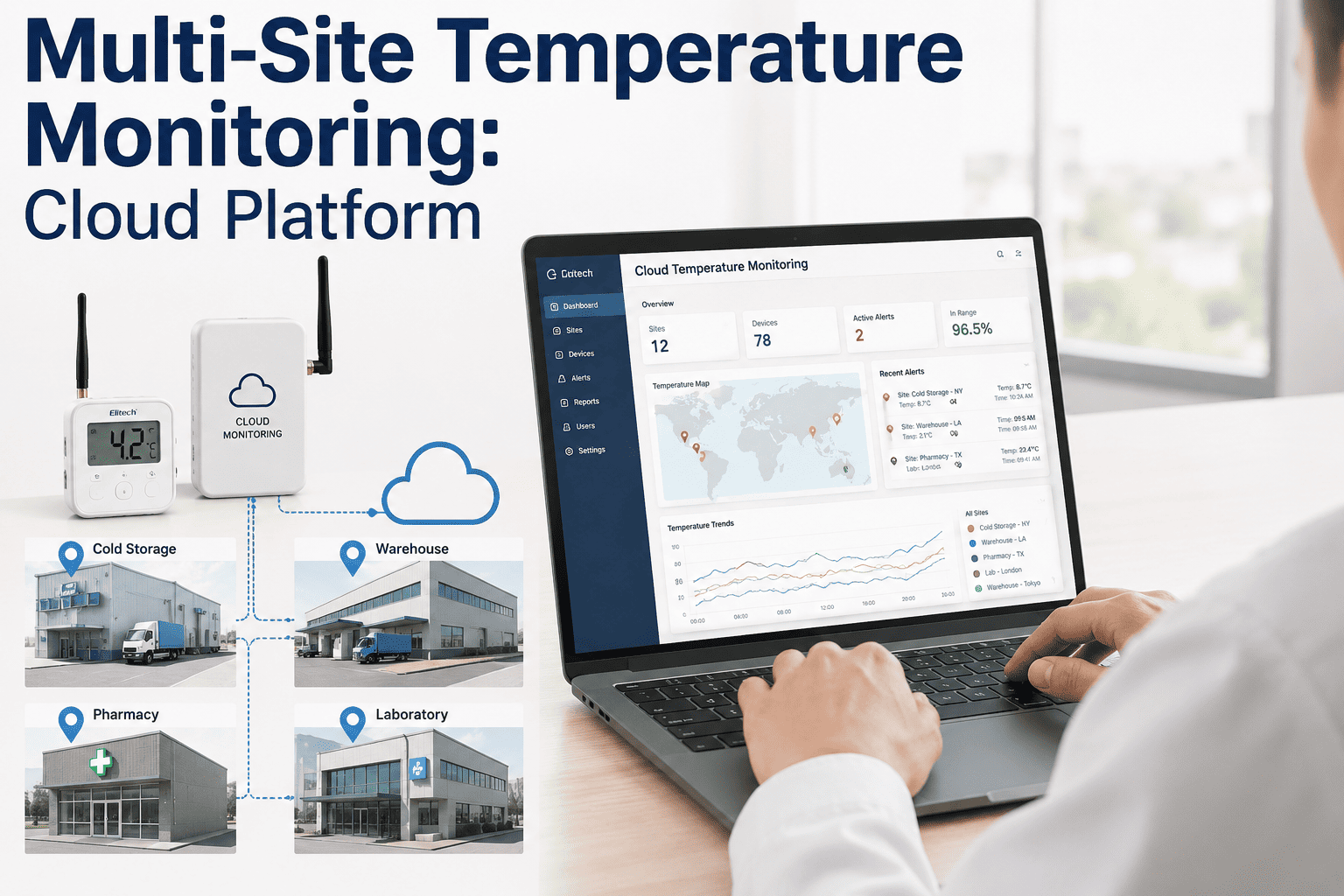
Cloud-hosted monitoring platforms have become the more common choice for new deployments because they remove the burden of maintaining local servers, they update automatically, and they allow food safety managers to check readings from a phone regardless of which building they are standing in. On-premise platforms remain relevant for facilities operating in areas with unreliable internet connectivity, or for organizations with internal policies requiring data to stay within a facility's own network for regulatory or security reasons. The decision often comes down to internet reliability at the specific site and how the organization's IT policy treats third-party data hosting, rather than a universal right answer.
| Consideration | Cloud-Hosted | On-Premise |
|---|---|---|
| Setup Time | Fast — no server hardware to configure | Slower — requires local server setup |
| Remote Access | Available from any device with internet | Typically limited to local network access |
| Internet Dependency | Requires stable connectivity for live data | Functions independently of internet uptime |
| Maintenance | Handled by the platform provider | Managed by internal IT staff |
| Multi-Site Visibility | Centralized dashboard across locations | Requires additional integration work |
04 / Single-Site Simplicity vs. Multi-Site Standardization
A system built for a single facility can afford to be simple, with alerts routed to a small group of local staff and reports generated on demand for that one location. The moment a company adds a second or third facility, that simplicity becomes a liability unless the underlying platform was designed to standardize monitoring across sites from the start. Multi-site standardization means every facility uses the same critical limits taxonomy, the same alert escalation logic, and the same reporting format, so a regional quality director can compare performance across plants without reconciling different systems and definitions.
05 / A Practical Decision Framework
Rather than starting from a vendor's feature list, the more reliable approach is to start from the facility's own constraints and let those constraints narrow the field of viable systems. A short set of honest questions about current infrastructure, growth plans, and internet reliability typically eliminates most mismatched options before a single demo is booked.
Is internet connectivity at this facility reliable enough to depend on for real-time cloud alerting, or does the site need local buffering during outages?
Will the equipment layout being monitored stay fixed for years, or is reconfiguration likely enough to favor wireless flexibility?
Does the organization have concrete plans to add facilities within the next two to three years that this system will need to support?
Who needs to see alerts and reports — local staff only, or a regional and corporate quality team as well?
What happens during a power outage or internet disruption — does the system keep recording locally, or does it stop capturing data entirely until service is restored?
How much of the existing sensor investment, if any, needs to carry forward into the new system rather than being replaced outright?
06 / Implementation Without Disrupting Production
However well matched a system is on paper, a rollout that disrupts active production lines will meet resistance from operations staff regardless of the long-term benefit. Successful implementations typically phase sensor installation around planned downtime, validate readings against existing manual logs for an overlap period before decommissioning the paper process, and train shift staff on the new alert workflow before the old process is retired. Running both systems in parallel briefly costs a little extra time but prevents the credibility damage of a rollout that produces a false alarm or a missed deviation during the cutover period. It is also worth assigning a single internal owner for the rollout rather than leaving it split across shifts, since inconsistent sensor placement or alert configuration between shifts is one of the most common sources of early confidence problems with a new system. Documenting the final sensor map, alert thresholds, and escalation contacts as part of the rollout gives new staff a reference point long after the original implementation team has moved on to other projects.
07 / Sustaining Value After Go-Live
The value of a temperature monitoring system compounds over time only if the data is actually used — for trend analysis, for equipment maintenance planning, and for demonstrating compliance during audits — rather than sitting unreviewed until an inspector asks for it. Facilities that get the most long-term value schedule a regular review of monitoring data, use recurring near-limit trends to schedule preventive maintenance before a full deviation occurs, and treat the system as a live operational tool rather than a compliance box that was checked once at installation. This shift in mindset — from viewing the system purely as an alert mechanism to treating it as an ongoing source of operational insight — is usually what separates facilities that see a strong long-term return from those that let the system fade into the background after the initial rollout enthusiasm wears off. Assigning ownership of the monthly data review to a specific role, rather than leaving it as an informal task, keeps this habit alive well past the first year.
08 / Conclusion — Match the System to the Facility, Not the Other Way Around
There is no single best temperature monitoring architecture that fits every food facility — the right choice depends on internet reliability, equipment permanence, staffing model, and growth plans specific to that plant. Facilities that work through wired versus wireless, cloud versus local, and single-site versus multi-site questions honestly before purchasing tend to avoid the costly mid-life system replacements that come from choosing based on price or brand recognition alone. Book a demo to walk through which architecture fits your facility's specific constraints.
Frequently Asked Questions — Temperature Monitoring Systems
Yes, and in practice most facilities end up doing exactly this rather than choosing one architecture exclusively. Fixed, high-value equipment such as walk-in coolers and blast chillers is commonly wired for maximum reliability, while wireless sensors cover areas that are reconfigured more frequently or where running conduit would be prohibitively expensive. A monitoring platform designed to support both sensor types under one dashboard avoids the fragmentation that comes from running two entirely separate systems side by side, and it allows a facility to expand coverage incrementally as budget allows rather than committing fully to one architecture on day one.
It matters more than most facilities initially assume, because a cloud platform that loses connectivity during an internet outage cannot alert local staff to a deviation happening in that exact window, which is precisely when local monitoring matters most. Well-designed cloud systems address this with local data buffering that stores readings during an outage and syncs once connectivity returns, along with local audible or visual alerts that do not depend on internet access to fire. Facilities in areas with historically unreliable connectivity should specifically ask any vendor how the system behaves during an outage rather than assuming standard cloud behavior applies.
Timelines vary with facility count and how different each site's current process is, but organizations typically need three to six months to standardize critical limits, alert logic, and reporting formats across an existing group of facilities that were previously running independent processes. Greenfield facilities added to an already-standardized network onboard considerably faster, often within a few weeks, because the taxonomy and workflow are already defined and simply need to be replicated. Starting the standardization conversation before a second facility opens, rather than after several sites are already running inconsistent processes, meaningfully shortens this timeline.
On-premise systems remain a legitimate choice for a meaningful subset of facilities, particularly those in regions with unreliable internet infrastructure, those under specific regulatory or contractual requirements to keep data within an internal network, or those with existing IT infrastructure investment they intend to continue using. Cloud has become the more common default for new deployments because it removes server maintenance burden and enables remote access, but it has not made on-premise obsolete for facilities where those specific conditions apply. The right answer depends on the facility's actual connectivity and compliance situation rather than a general industry trend.
The standard approach is running the new system in parallel with existing manual logs or a legacy system for a defined overlap period, typically two to four weeks, and comparing readings directly against the known-reliable process before decommissioning it. This overlap period surfaces sensor placement issues, calibration discrepancies, and alert threshold problems while the safety net of the old process is still in place, rather than discovering these issues after the manual logs have already been retired. iFactory's support documentation outlines a structured validation checklist for this overlap period.