Every food plant runs on conditions that can drift out of range in minutes — a compressor cycling out, a proofer running warm, a cold room door left open during a shift change. IoT sensors are how modern plants catch that drift before it becomes a HACCP deviation or a batch of lost product, but "IoT sensor" covers a wide range of hardware built for very different jobs and environments. Picking the wrong one means false alarms during washdown, dead batteries mid-shift, or a probe that simply cannot survive a caustic CIP cycle. This guide breaks down the sensor types, ratings, and selection criteria that matter for food manufacturing, based on how leading plants are specifying hardware in 2026 — and where iFactory Support can help you match sensors to your specific lines.
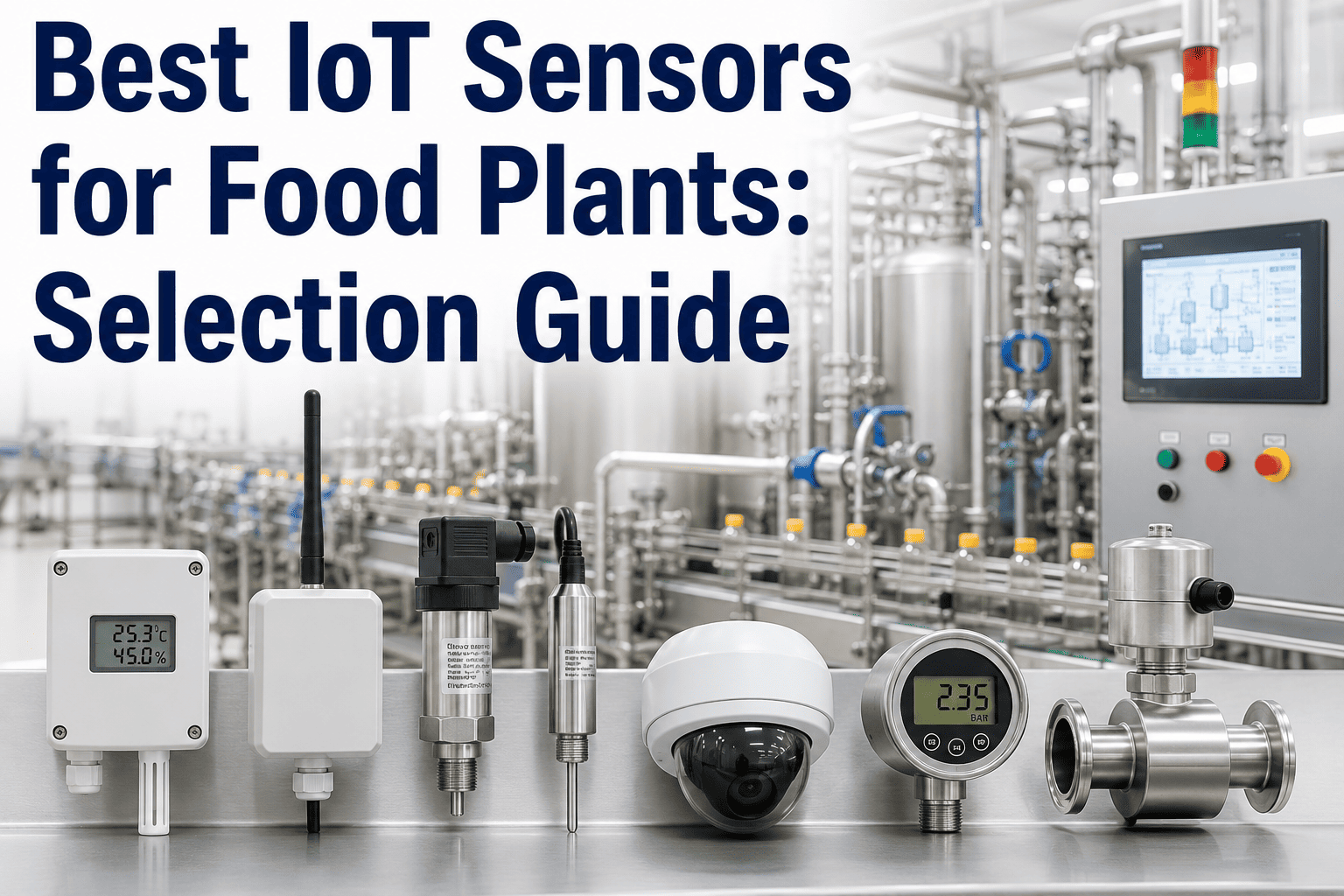
Best IoT Sensors for Food Plants in 2026
Temperature, humidity, pressure, and flow sensors rated for washdown, food-safe contact zones, and continuous production — matched to the areas of your plant where they actually need to survive.
Why Sensor Selection Is Different in a Food Plant
A sensor spec sheet built for a dry goods warehouse or a discrete-parts factory does not automatically hold up in a food plant. Wet-processing zones see daily high-pressure, high-temperature washdowns with caustic and acid cleaning chemicals. Product-contact zones carry sanitary design requirements that go beyond ingress protection alone — smooth housings, no threads or crevices where residue can collect, and materials that tolerate repeated chemical exposure without degrading. Getting this wrong does not just shorten sensor life; it creates the false-alarm fatigue that causes maintenance teams to start ignoring alerts altogether, which is the exact failure mode a monitoring program is meant to prevent.
The Four Sensor Types Every Plant Needs
Temperature
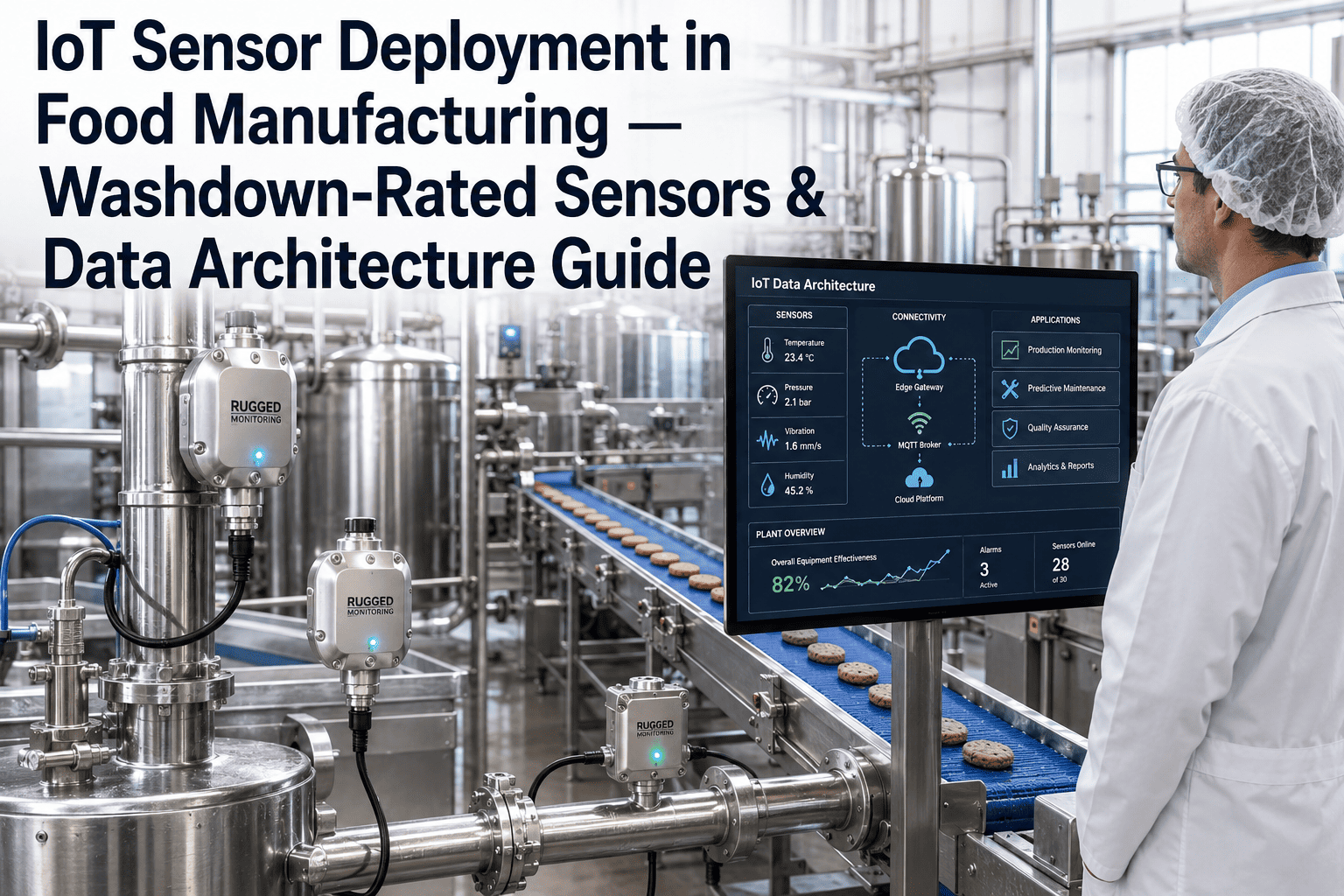
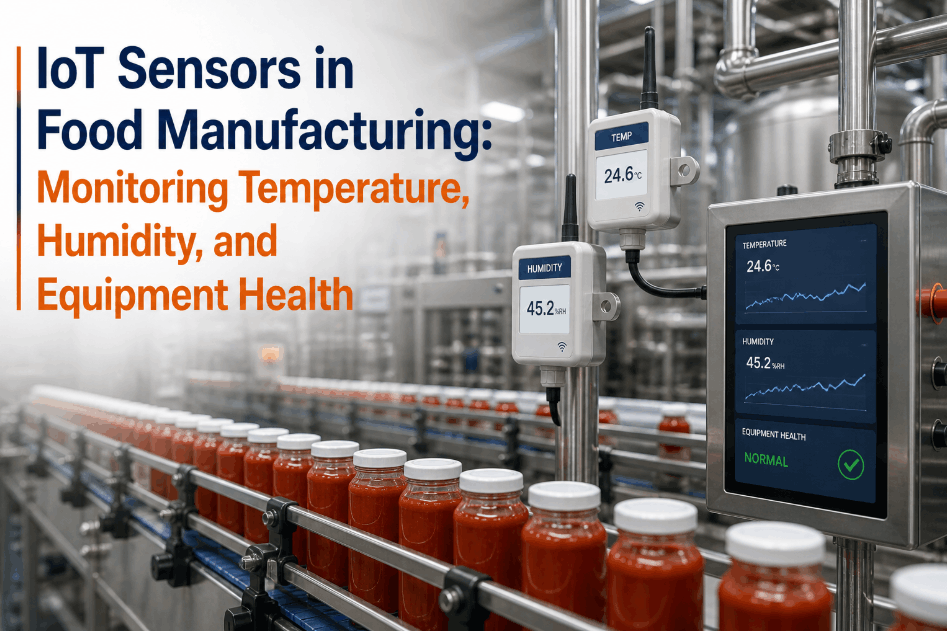
Covers cold storage, freezers, hot-hold lines, and ambient production zones. Look for a wide operating range that spans deep-freeze to hot processing, fast response time for CCP monitoring, and food-grade probes for direct product insertion.
Humidity
Protects two different risks at once: product quality in dry ingredient storage, where moisture above roughly 60% relative humidity causes caking and mold, and microbial risk in production areas where elevated humidity favors biofilm formation.
Pressure & Flow
Tracks CIP line pressure, filter differential, and product or utility flow rates. Inline and clamp-on options both exist — inline gives tighter accuracy, clamp-on avoids a break in the sanitary line for retrofit installs.
Vibration
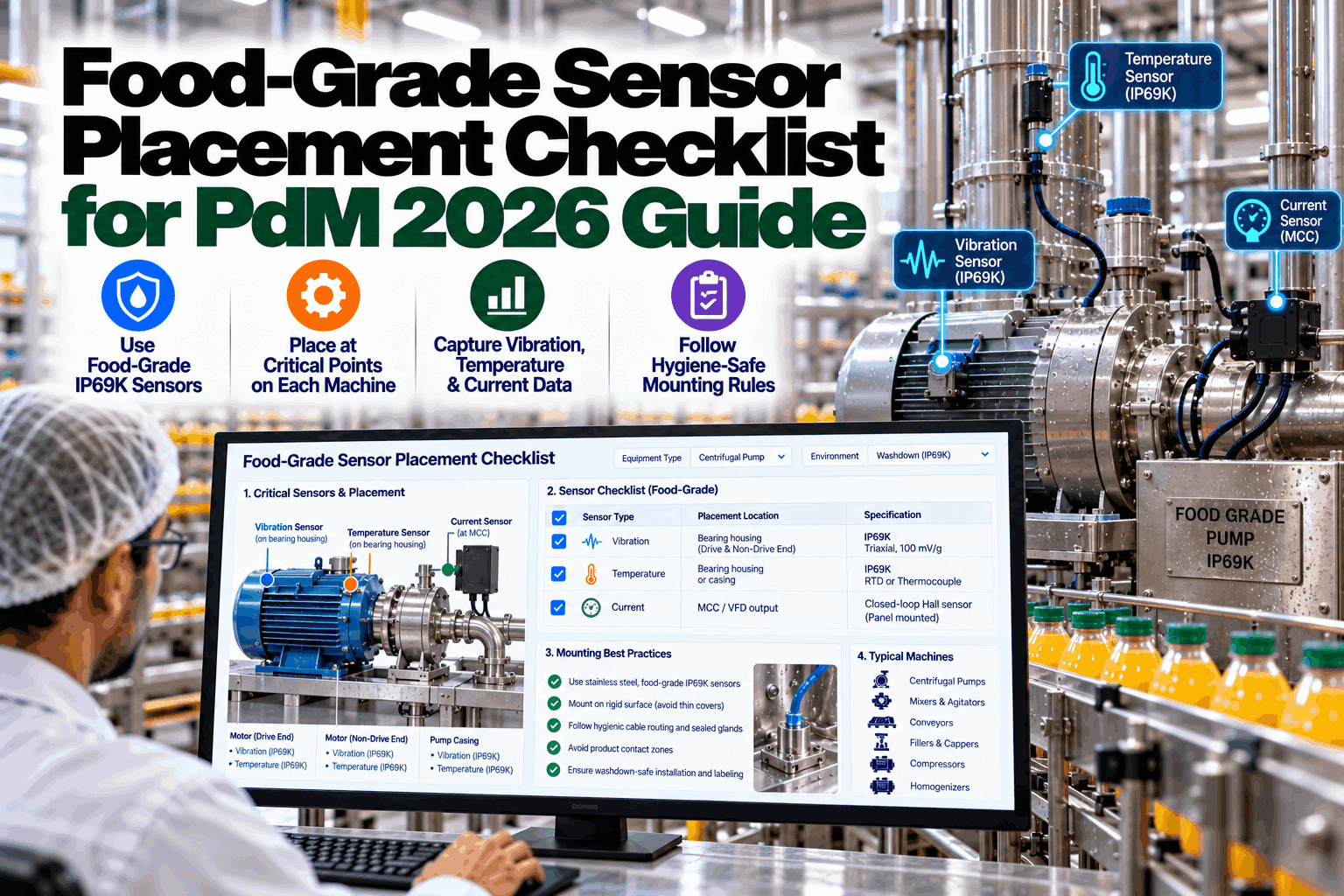
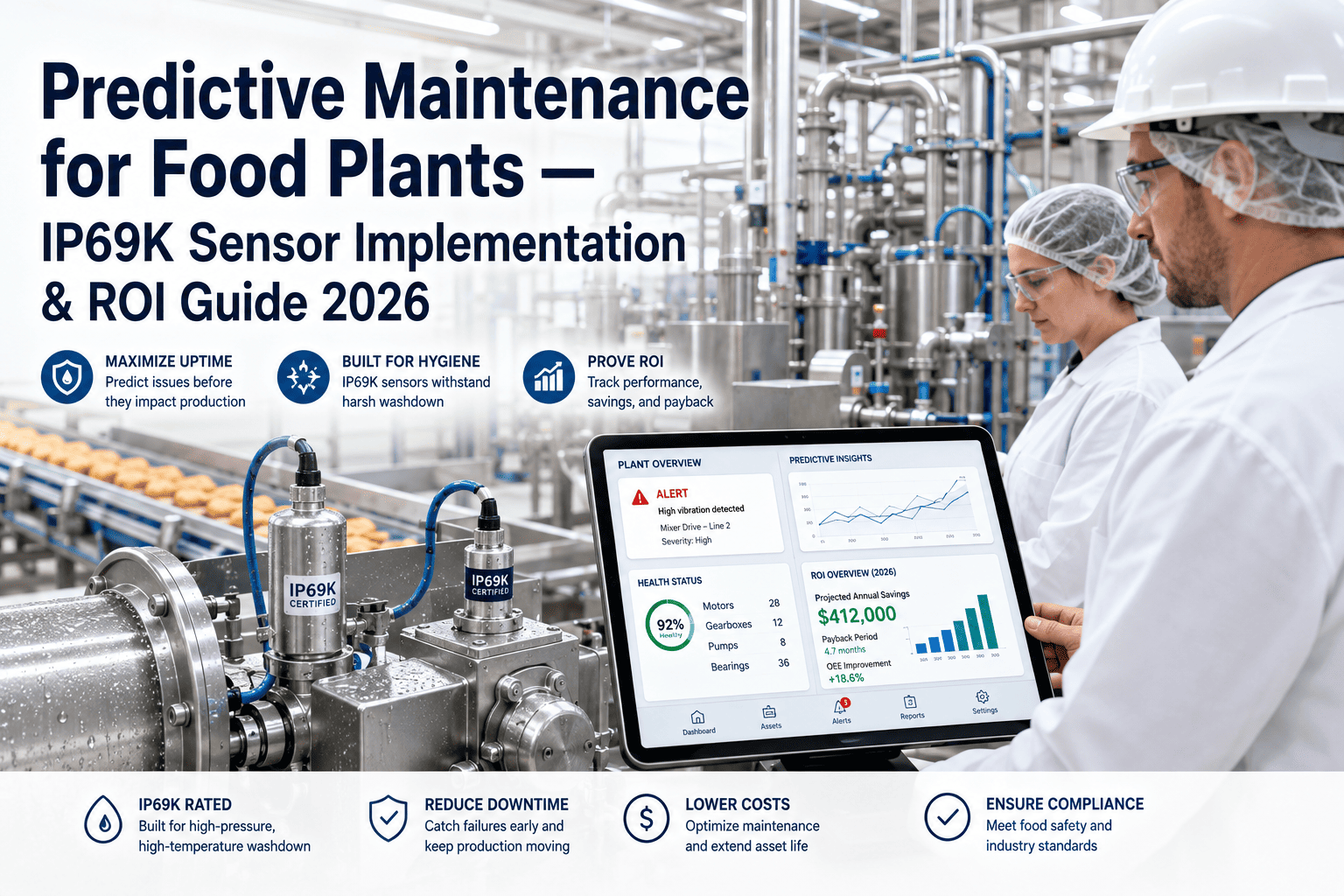
Mounted on motors, pumps, mixers, and conveyors to catch bearing wear and misalignment before a breakdown. Needs washdown-rated housings plus software that recognizes CIP cycles so cleaning does not trigger false alarms.
Ingress Protection Ratings, Decoded
The IP rating on a sensor's datasheet is the single most important spec for food plant survivability, and it is also the one most often misread. Here is how the common ratings map to real plant zones.
| Rating | Protection Level | Where It Belongs |
|---|---|---|
| IP65 | Dust-tight, low-pressure water jets | Dry ingredient handling, packaging, warehouse |
| IP67 / IP68 | Dust-tight, temporary or continuous immersion | General processing areas, moderate cleaning exposure |
| IP69K | Dust-tight, high-pressure and high-temperature jets | Wet-processing zones, CIP areas, direct washdown paths |
A Five-Step Selection Framework
See which sensors fit your lines before you buy a single unit
iFactory can walk your zone map, cleaning schedule, and current pain points on a 30-minute call and come back with a sensor and mounting recommendation built for your plant — not a generic catalog.
What Plants Report After Getting Selection Right
Frequently Asked Questions
What IP rating do I actually need for a wet-processing zone?
Any sensor sitting in the direct path of a high-pressure, high-temperature washdown or CIP cycle needs a minimum IP69K rating, which is the highest standard on the ingress protection scale. Lower ratings such as IP65 or IP67 may look adequate on paper but tend to fail early when exposed to repeated caustic cleaning, leading to false readings and unplanned sensor replacement. If you are unsure how a specific area of your plant should be classified, ask iFactory Support to review your washdown schedule and recommend the right rating zone by zone.
Do I need stainless steel housings everywhere, or just IP69K?
IP69K and food-grade stainless are related but not identical requirements. IP69K covers how well a sensor resists water and pressure intrusion, while a 316L stainless housing addresses sanitary design and chemical resistance for direct or near product-contact zones. General wet-processing areas away from product contact can often use a lower-cost IP69K polymer enclosure, reserving stainless for the points where hygienic design standards genuinely require it.
Why do wireless sensors keep triggering false alarms during sanitation?
This is one of the most common deployment mistakes: if the monitoring software is not "washdown aware," pressure changes, temperature swings, and vibration from the CIP cycle itself will trigger alarms every single shift. After enough false positives, maintenance teams predictably start ignoring the notifications, which defeats the purpose of the system. The fix is alarm logic that automatically suppresses or adjusts thresholds when a line enters CIP mode, which a properly configured platform should handle without manual intervention.
How long does a typical sensor deployment take to pay for itself?
Most food manufacturers report full payback within six to twelve months of deploying temperature, humidity, and vibration sensors on their highest-risk assets. A single prevented refrigeration failure or avoided batch loss often covers the entire initial hardware cost on its own, with ongoing savings from reduced emergency repairs continuing well beyond that window. Actual payback speed depends on your starting failure rate and the value of the product at risk on the monitored line.
Can existing sensors feed into an IATF, FSMA, or HACCP audit trail?
Yes, provided the platform generates time-stamped, tamper-evident records rather than just raising alerts. Continuous sensor logs create the monitoring records, exception reports, and corrective-action documentation that FSMA Preventive Controls and HACCP programs require for critical control points. If your current sensors are not currently feeding an audit-ready log, book a demo and the team will show how existing hardware can be connected without a full rip-and-replace.
Stop guessing which sensor fits which zone
iFactory helps food plants specify the right temperature, humidity, pressure, and vibration sensors for every zone, then connects them into a single monitoring platform built for HACCP and FSMA audit readiness.