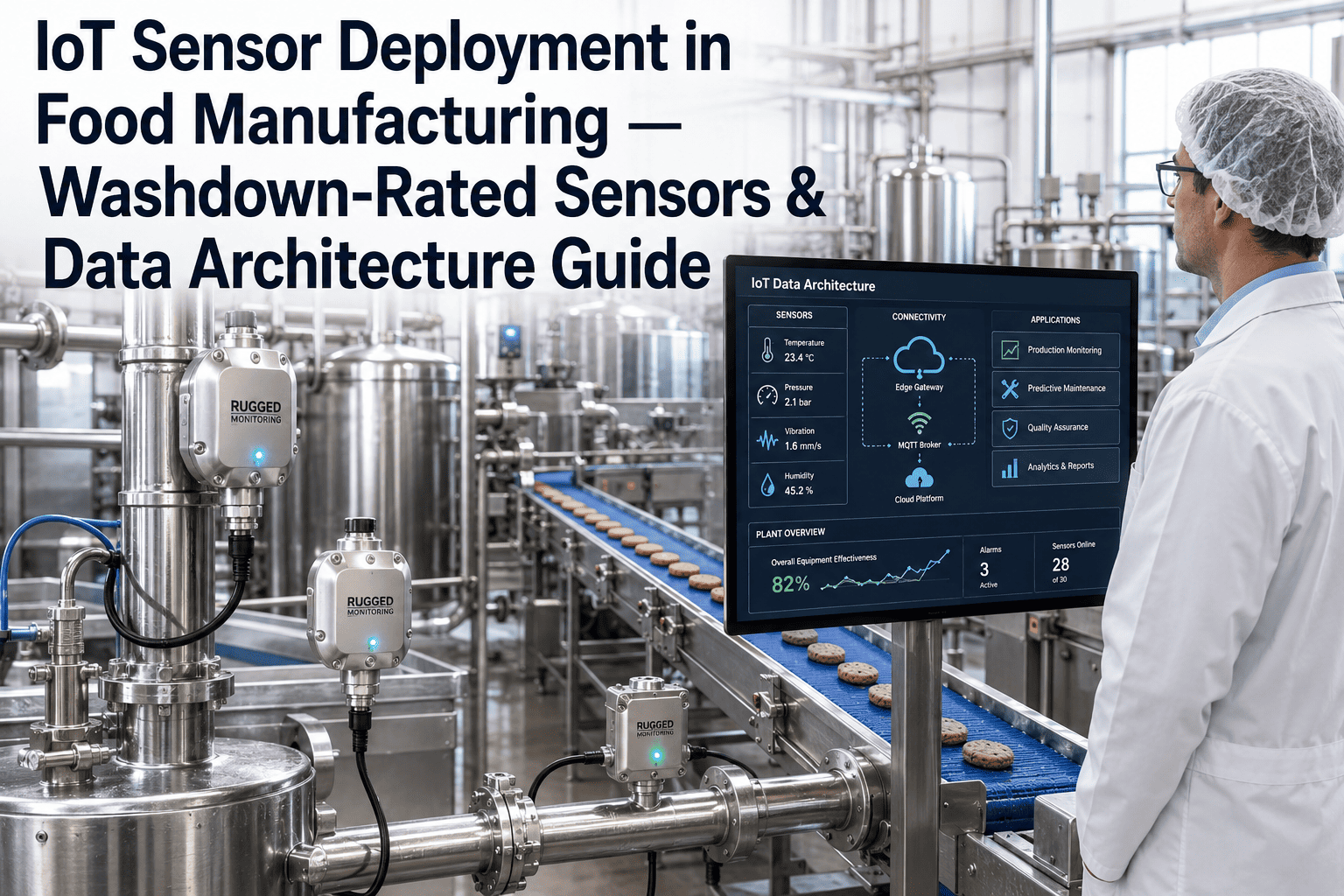
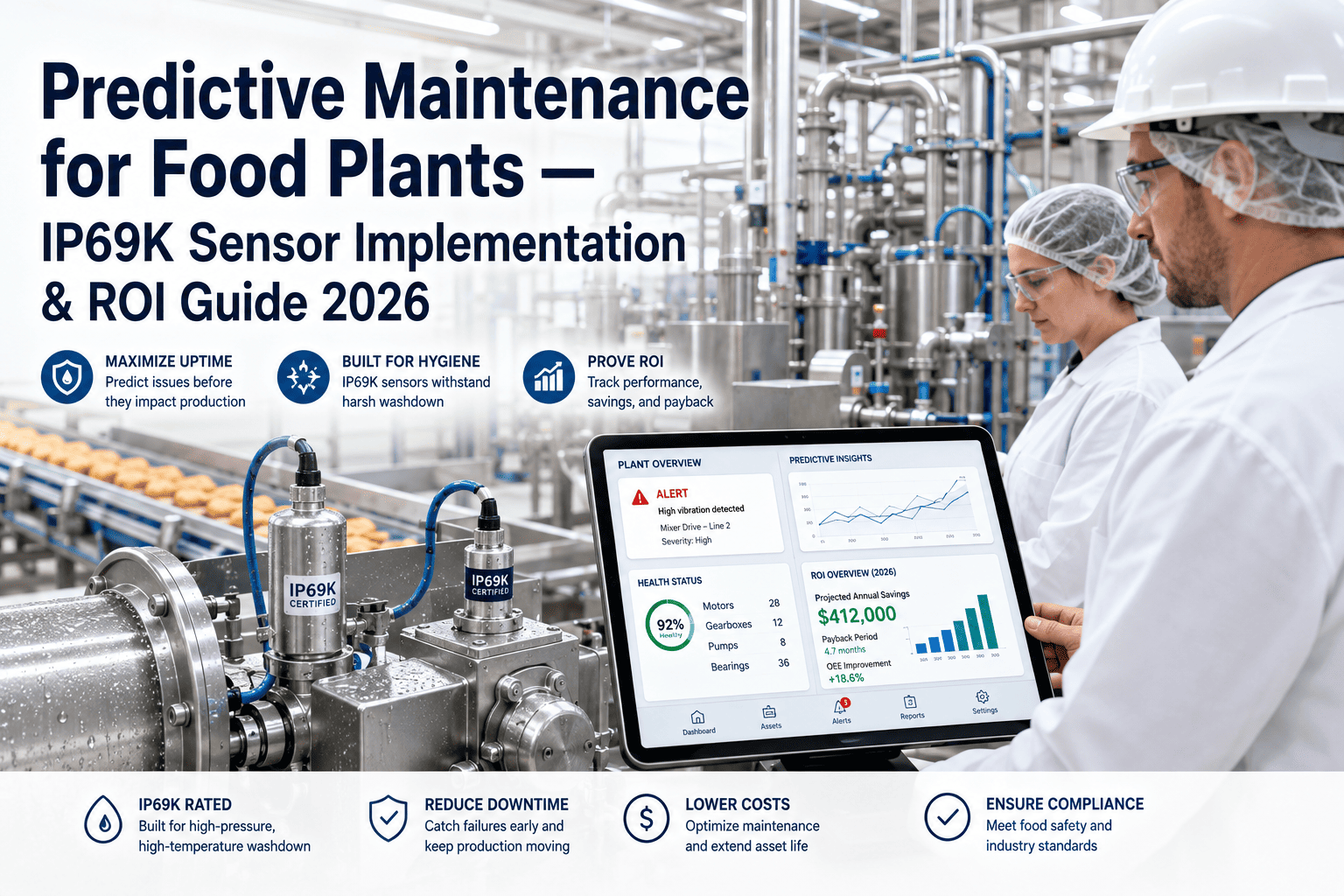
Deploying IoT sensors on a food production line looks straightforward on paper until the first washdown cycle hits a wireless gateway that was never rated for it, or a data pipeline chokes because two protocols were never designed to talk to each other cleanly. Process engineers walking into this project for the first time often underestimate how much of the work is architecture decisions rather than sensor shopping, choosing between wireless mesh and wired backbone, deciding where MQTT fits versus OPC-UA, and figuring out how much processing needs to happen at the edge before data ever reaches a server. Getting these decisions right early avoids a costly rework later, which is why engineering teams are increasingly starting with a review of their specific plant layout and data requirements before committing to hardware.
IOT DEPLOYMENT FOR FOOD MANUFACTURING
Build a Sensor Network That Survives the Wash Cycle
From IP69K hardware selection to MQTT and OPC-UA pipeline design, get a sensor architecture built specifically for washdown production environments.
Core Components of a Food Plant IoT Architecture
A reliable deployment usually breaks down into four layers, each with its own hardware and design considerations specific to a washdown environment.
Washdown-Rated Sensor Hardware
IP69K-rated sensors and sealed connectors are the starting point, since any hardware exposed to cleaning cycles needs to survive high-pressure, high-temperature washdown without data loss.
Wireless Mesh Networking
Wireless mesh reduces cabling in hard-to-reach or frequently reconfigured areas, though signal reliability near metal equipment and washdown interference needs testing on-site.
Edge Gateway Processing
Edge gateways aggregate and pre-process sensor data locally, reducing the volume of raw data that needs to travel to a central server or cloud platform.
Data Pipeline and Storage
A clear pipeline design determines how sensor data moves from protocol translation through storage, making later analytics and reporting far easier to build.
Wireless vs Wired Sensor Architecture
Neither architecture is universally better, and most plants end up using a mix depending on the specific area and equipment being monitored.
IP69K Hardware
Sensor and connector selection matched to actual washdown pressure and temperature
MQTT + OPC-UA
Protocol pairing that bridges lightweight sensor data with plant-floor equipment standards
Edge Processing
Local filtering and aggregation before data reaches central storage
A Typical Deployment Sequence
1
Map Data Requirements by Zone
Process engineers identify what needs to be measured in each area and how frequently, which shapes both sensor choice and network design.
2
Choose Protocol Strategy
MQTT is typically used for lightweight sensor telemetry, while OPC-UA handles structured data exchange with existing plant equipment and control systems.
3
Deploy Edge Gateways
Edge gateways are positioned to minimize wireless distance and washdown exposure, handling local data aggregation before onward transmission.
4
Validate End-to-End Data Flow
Data is traced from sensor through gateway to storage under real washdown and production conditions before the deployment is considered complete.
Design a Sensor Architecture for Your Plant Layout
Walk through wireless versus wired options and protocol choices specific to your production floor.
Deployment Readiness Checklist
Confirm Sensor Enclosure Ratings
Verify every sensor and connector planned for a washdown zone carries the correct IP69K rating for that specific area's cleaning intensity.
Map Existing Network Infrastructure
Document existing wired and wireless infrastructure to identify where new deployment can reuse capacity versus requiring new installation.
Define Protocol Boundaries
Decide clearly which systems communicate over MQTT and which require OPC-UA, avoiding ad hoc protocol bridging later in the project.
Plan Edge Processing Capacity
Estimate data volume per zone to size edge gateway processing and storage capacity correctly before hardware is ordered.
Frequently Asked Questions
BUILD IT RIGHT THE FIRST TIME
Design a Washdown-Ready IoT Sensor Network
Get an architecture plan covering sensor hardware, protocols, and edge processing for your production floor.