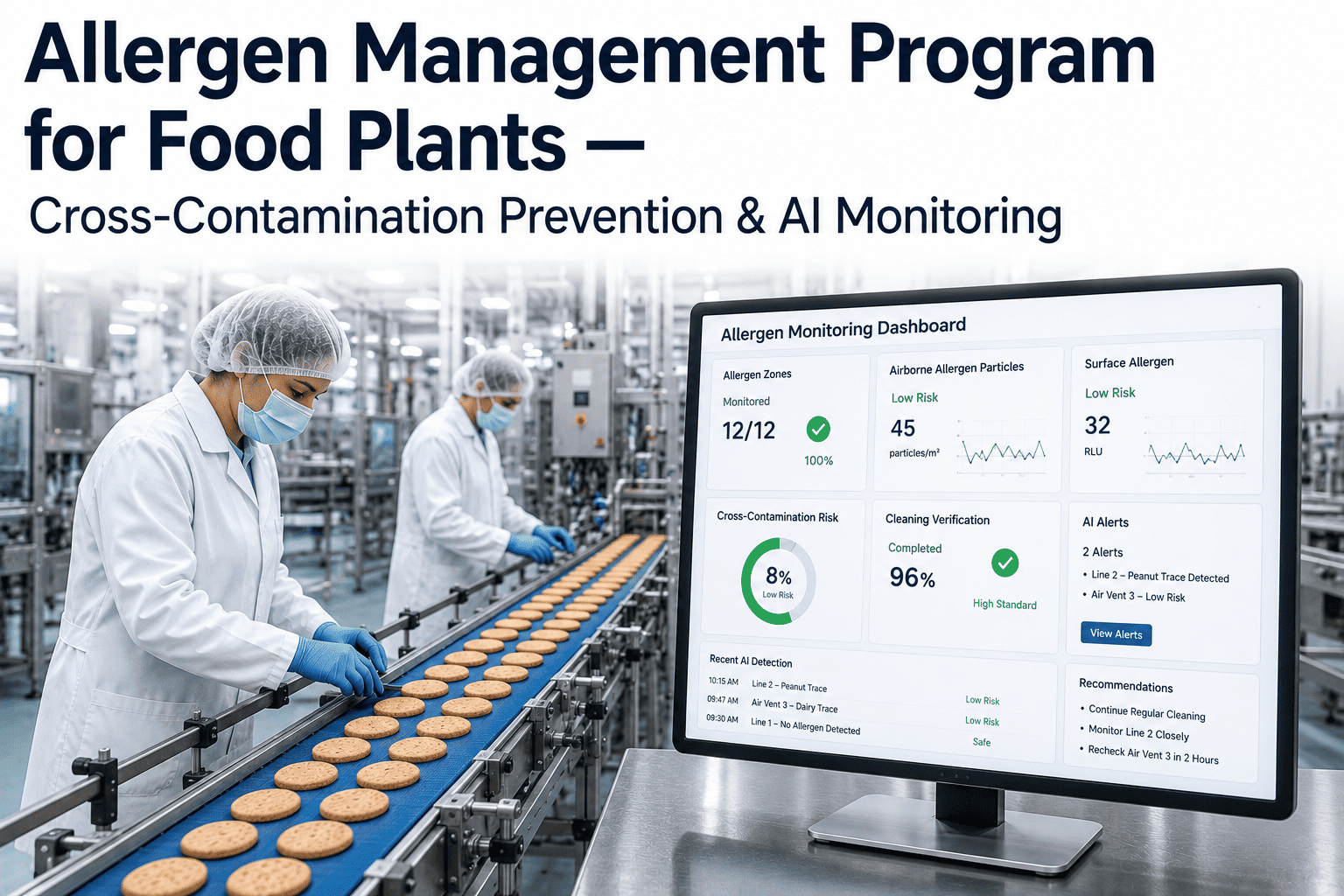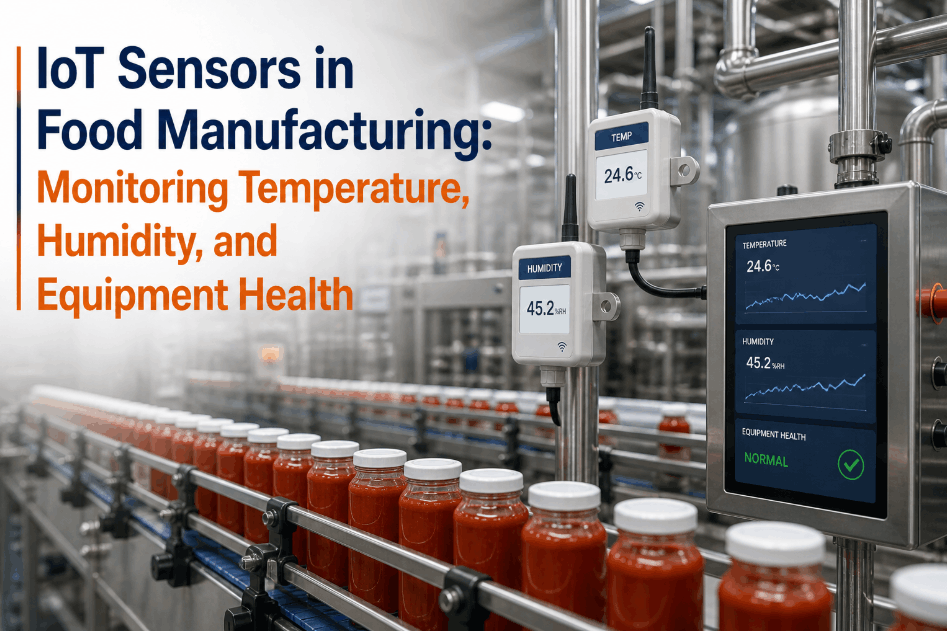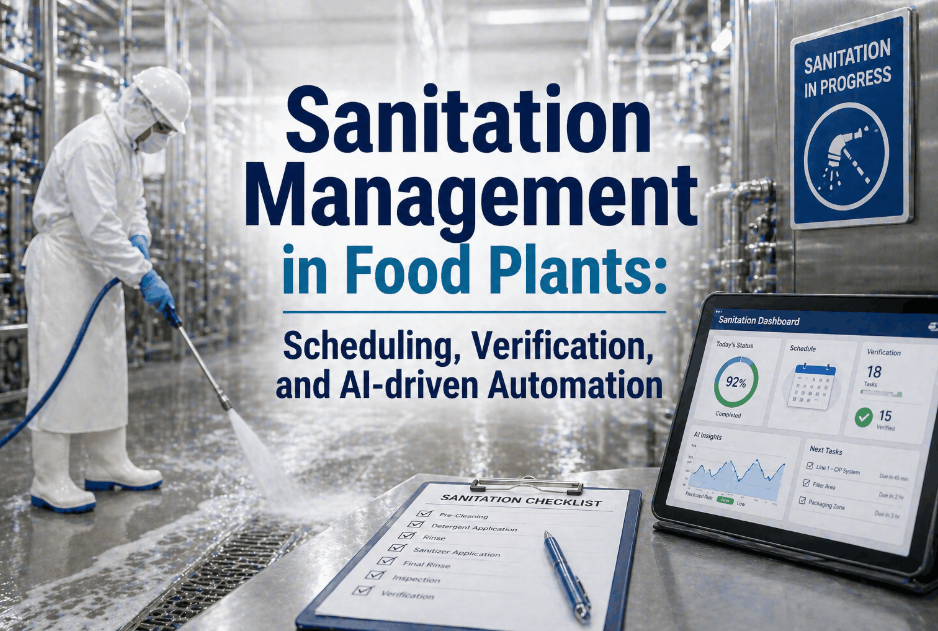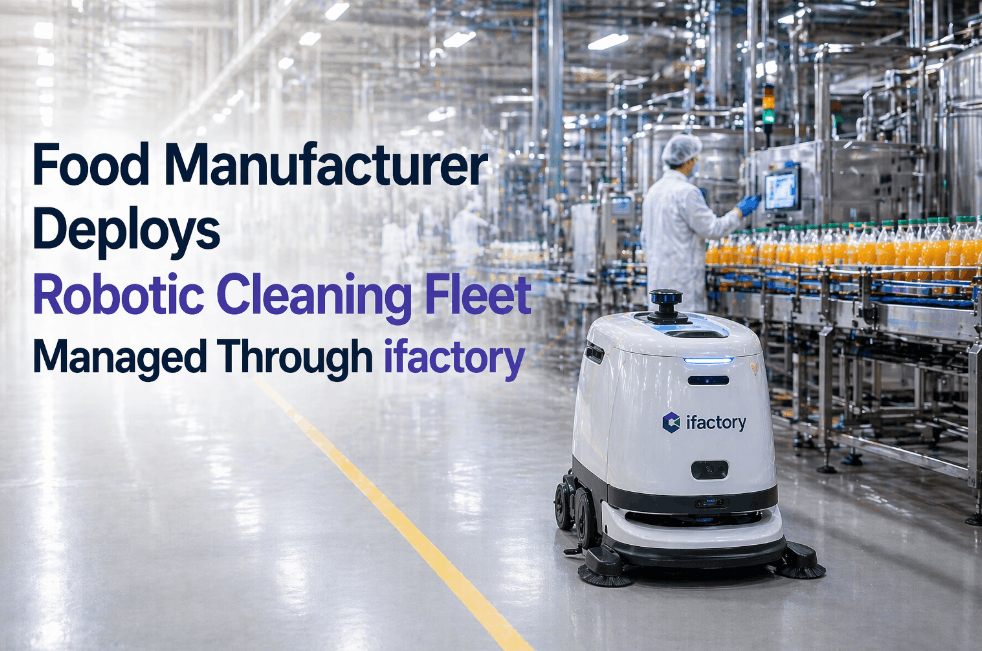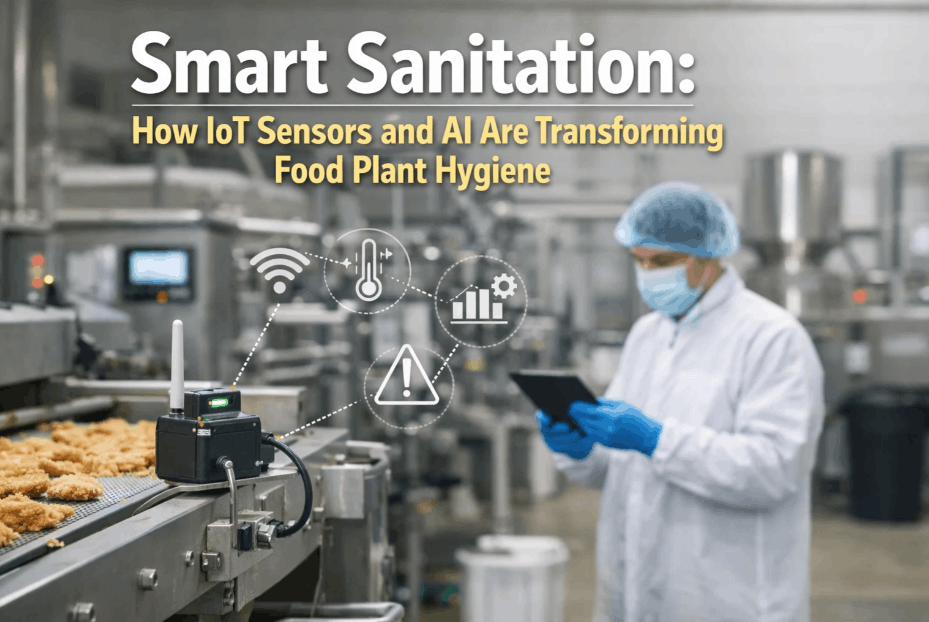
Food manufacturing facilities face relentless pressure to maintain airtight hygiene standards — one contamination event can trigger product recalls, regulatory shutdowns, and irreparable brand damage. Smart sanitation systems powered by IoT sensors and artificial intelligence are fundamentally changing how food plants manage cleanliness, compliance, and cleaning efficiency. From automated CIP validation to real-time residue detection, these technologies deliver a level of precision that manual inspection simply cannot match. Book a Demo to see how iFactory's IoT sensor integration transforms your sanitation program.
iFactory integrates IoT sensors and AI to automate CIP validation, detect residues in real time, and schedule predictive cleaning — all in one compliance-ready platform.
Why Traditional Food Plant Sanitation Is No Longer Enough
Conventional sanitation relies on fixed cleaning schedules and manual visual checks — an approach designed around routines rather than actual contamination risk. The problem: food production environments are dynamic. Temperature fluctuations, production volume spikes, ingredient changeovers, and equipment wear all affect how quickly biofilm, allergen residue, and microbial loads accumulate. A schedule-based program cannot account for these variables.
Regulatory standards including FDA 21 CFR Part 117 (FSMA PCHF), SQF Edition 9, and BRC Global Standard Issue 9 increasingly demand that food processors demonstrate verification — not just execution — of sanitation activities. Documentation gaps, missed validation records, and inconsistent cleaning outcomes are among the top citations in facility audits. Smart sanitation technology closes these gaps automatically.
What Is a Smart Sanitation System?
A smart sanitation system integrates IoT-connected sensors, AI-driven analytics, and automated workflows to monitor, execute, validate, and record cleaning activities across a food manufacturing facility. Rather than relying on a technician to confirm that a surface is clean, sensors continuously measure parameters that determine cleanliness — and AI interprets those measurements to trigger action or flag anomalies.
ATP bioluminescence sensors, pH probes, conductivity meters, temperature loggers, and flow sensors embedded across equipment, drain points, and contact surfaces — streaming data in real time.
Machine learning models trained on historical cleaning outcomes, sensor readings, and production data to predict contamination risk, validate CIP cycles, and schedule the next clean at the optimal moment.
Every sensor reading, cleaning cycle parameter, and validation result is timestamped, georeferenced to the equipment record, and stored in audit-ready format — eliminating paper-based documentation entirely.
Automated CIP Validation: Precision Cleaning at Scale
Clean-In-Place systems are the backbone of food plant sanitation for tanks, pipelines, and processing equipment. Traditional CIP validation depends on operators recording cycle completion and sampling rinse water periodically — a process prone to human error and too infrequent to catch cycle deviations in real time.
Automated CIP validation with IoT sensors continuously monitors every critical parameter throughout the cleaning cycle: flow rate, temperature, detergent concentration (via conductivity), caustic and acid concentrations, cycle duration, and final rinse quality. If any parameter deviates from the validated range — say, temperature drops below 75°C during the hot wash phase — the system flags it immediately and extends the cycle or triggers an alert before product contact surfaces are released for production.
iFactory's IoT sensor integration maps each CIP event to the specific equipment record in the CMMS, creating a validated, time-stamped cleaning history that satisfies FSMA verification requirements and pre-op inspection records automatically. Book a Demo to see automated CIP validation in action.
Real-Time Residue Detection: Catching Contamination Before It Reaches Product
The most dangerous sanitation failure is the one that passes a visual pre-op inspection but harbors allergen cross-contact or microbial residue on a food contact surface. Traditional ATP swabbing catches these failures — but only if the swab is taken in the right place at the right time, by a trained operator who correctly interprets a borderline result.
Smart sanitation sensors eliminate this dependency on sampling location luck. Inline ATP sensors and near-infrared (NIR) spectroscopy probes installed at critical control points continuously scan for organic residue, allergen markers, and biofilm indicators across conveyor belts, filling nozzles, mixing vessels, and cutting surfaces. When residue levels exceed the action threshold, the system immediately:
Book a Demo to see how iFactory's real-time residue detection integrates with your existing food safety programme.
Predictive Cleaning Schedules: Clean When Needed, Not by the Clock
Fixed-interval cleaning schedules are a compromise between food safety and production efficiency — and neither side wins optimally. Cleaning too frequently wastes water, chemicals, energy, and labour while unnecessarily reducing production uptime. Cleaning too infrequently risks contamination buildup and compliance failures.
AI-driven predictive cleaning schedules solve this by continuously analysing sensor data, production throughput, product type, ingredient changeover history, ambient temperature and humidity, and equipment condition to forecast when each zone or piece of equipment will reach the contamination risk threshold — before it gets there.
iFactory IoT Sensor Integration: Key Platform Capabilities
iFactory's smart sanitation module connects IoT sensor networks directly into the bridge between operational technology (OT) and information technology (IT) — linking sensor readings to equipment records, work orders, compliance documentation, and capital planning data in a unified platform. Book a Demo to explore the full capability set.
Compatible with Modbus, OPC-UA, MQTT, and direct API connections. Integrates with ATP luminometers, pH sensors, conductivity meters, flow meters, and thermal cameras from major manufacturers.
Every sensor reading and cleaning event is linked to the equipment asset record — providing a full sanitation history traceable from raw ingredient intake through to finished product dispatch.
AI confirms allergen changeover cleaning completeness before production restarts, with sensor-verified clearance records generated automatically for each changeover event.
Digital pre-op checklists are pre-populated with overnight sensor readings. Inspectors confirm flagged areas only — reducing pre-op inspection time by up to 65% without reducing verification rigour.
FSMA-aligned sanitation monitoring records, environmental monitoring programme (EMP) logs, and master sanitation schedule (MSS) compliance reports generated automatically for GFSI, FDA, and customer audits.
All sensor data is processed on-site — no cloud transmission of production data, sensor readings, or sanitation records. Meets food sector data sovereignty and cybersecurity requirements.
ROI of Smart Sanitation: What Food Plants Are Achieving
The business case for smart sanitation IoT integration extends well beyond compliance. Facilities running iFactory's sensor-integrated sanitation management programme report measurable operational and financial improvements within the first six months of deployment.
| Metric | Before Smart Sanitation | With iFactory IoT Integration |
|---|---|---|
| Sanitation chemical cost | Baseline | 18–24% reduction |
| Water consumption (CIP) | Baseline | 22% reduction |
| Pre-op inspection time | 45–90 min/day | 15–30 min/day |
| Environmental monitoring failures | 3–8% of tests | Under 0.5% |
| Audit documentation preparation | 8–16 hours per audit | Under 1 hour (automated) |
| CIP cycle efficiency | Fixed duration regardless of load | Optimised per cycle conditions |
Compliance Standards Supported by Smart Sanitation IoT
iFactory's smart sanitation platform is designed to produce verification-ready records aligned with the major food safety regulatory frameworks used by global food manufacturers.
Frequently Asked Questions
iFactory manages smart sanitation end-to-end: real-time residue detection, automated CIP validation, predictive cleaning schedules, and FSMA-aligned compliance records — all from a single on-premise platform.