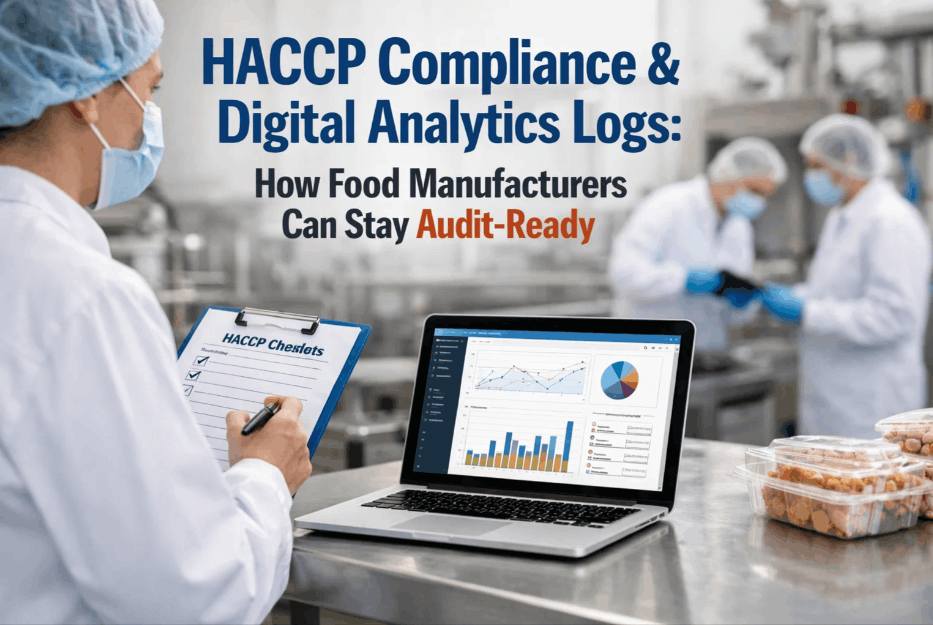
HACCP compliance in 2026 is no longer a documentation exercise — it is a real-time operational discipline that separates food manufacturers who survive FDA inspections and GFSI audits from those who don't. With FSMA Section 204 traceability mandates fully active, BRCGS and SQF auditors demanding tighter deviation-to-corrective-action linkage, and recall liability costs reaching record levels, the question is not whether your plant needs digital HACCP analytics logs — it's whether your current platform can actually generate audit-ready documentation on demand. This guide breaks down what modern digital HACCP documentation systems must deliver, how food manufacturers are using AI-powered platforms to eliminate audit findings, and what truly separates a compliant food-grade analytics platform from a generic work order system with a "food safety module" bolted on.
Is Your Food Plant Truly Audit-Ready? See iFactory in Action
iFactory's Cloud AI-driven Platform delivers native HACCP workflows, automated CCP monitoring, and one-click audit documentation — purpose-built for food and beverage manufacturers.
Why HACCP Documentation Failures Are Still the #1 FDA Audit Finding in 2026
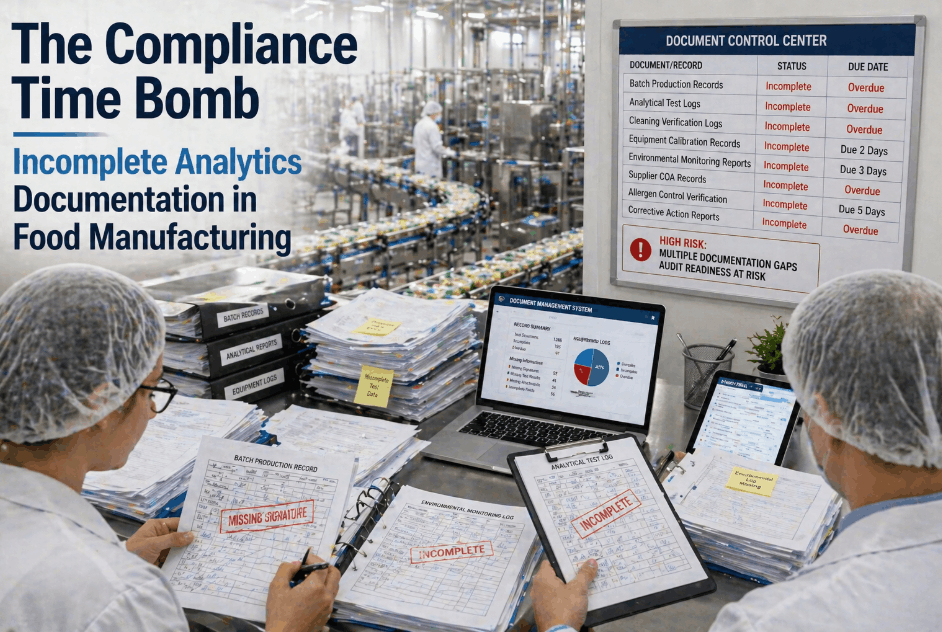
Despite decades of HACCP regulation and widespread industry adoption, FDA Form 483 observation data from 2024–2026 consistently identifies HACCP documentation failures as the most frequently cited deficiency category in food manufacturing inspections. The root cause is not ignorance of HACCP principles — food quality teams understand CCPs, critical limits, and corrective actions. The problem is that documentation systems cannot keep pace with the speed and complexity of modern food plant operations. Paper log sheets get missed during busy production runs. Corrective action records are handwritten after the fact. CCP deviation timestamps don't match production records. Pre-operational sanitation sign-offs are filed in binders that no auditor can quickly navigate.
The 2026 regulatory environment has made these gaps exponentially more costly. With FDA's FSMA Section 204 traceability rule requiring 24-hour record production for foods on the Food Traceability List, and GFSI scheme auditors (BRCGS, SQF, FSSC 22000) tightening evidence requirements for CCP monitoring records, the tolerance for documentation gaps has effectively reached zero. Plants relying on hybrid paper-digital systems — where electronic records are supplements to paper rather than the system of record — face the worst of both worlds. Food manufacturers who want to assess their current documentation posture can schedule a compliance gap review with iFactory's food safety team.
HACCP documentation deficiencies account for 41% of all FDA 483 food plant observations. Plants using purpose-built digital HACCP platforms report 73% fewer audit findings than plants using paper-based or generic digital systems — and complete pre-audit documentation preparation 5x faster.
Six Requirements Every HACCP Digital Analytics System Must Meet in 2026
Not every platform marketed as a "digital HACCP system" or "food safety analytics software" actually meets the documentation architecture that FDA inspectors and GFSI auditors expect to see. The distinction between a compliant food-grade HACCP platform and a generic compliance module is most visible under audit conditions — precisely when the stakes are highest. Here are the six non-negotiable requirements your digital HACCP documentation system must satisfy.
Real-Time CCP Monitoring Records
Every CCP measurement — temperature, pH, water activity, metal detection threshold — must be captured with an automatically generated timestamp, operator ID, device reference, and measured value at the moment of observation. After-the-fact entry is not compliant. The system must enforce contemporaneous recording.
Automatic Deviation & Corrective Action Linkage
When a CCP deviation occurs, the system must automatically initiate the corrective action workflow, hold the affected production lot, record the deviation, and link the corrective action record to the original monitoring record — creating an unbroken audit chain without manual documentation steps.
Lot-Level Traceability to Raw Materials
HACCP records must be linkable to specific production lots and trace back to raw material lots from every supplier. FSMA 204 extends this requirement to cover all Key Data Elements at each Critical Tracking Event — a linkage that cannot be achieved without a purpose-built traceability architecture.
Verification & Validation Record Generation
HACCP verification activities — calibration records, supervisory review of monitoring records, corrective action effectiveness checks — must be documented with the same rigor as monitoring records themselves. The system must generate complete verification packages that include all required evidence for a defined production period.
Immutable Audit Trail with User Authentication
Every record creation, modification, and deletion event must generate an immutable, system-level audit trail entry capturing the user identity, timestamp, action taken, and before/after values. Records must be locked against retroactive alteration. This is a 21 CFR Part 11 requirement, not optional.
On-Demand Audit Package Generation
When an FDA investigator or GFSI auditor requests HACCP records, the system must generate a complete, organized audit package — monitoring records, corrective actions, verification records, and calibration documentation — within minutes, covering any requested production date range or lot number.
HACCP Digital Analytics Platform Comparison: Purpose-Built vs. Generic Tools
The food manufacturing analytics software market in 2026 includes platforms that range from purpose-built food safety systems to generic maintenance platforms with food safety modules added on as afterthought features. Understanding which category a platform falls into requires looking beyond marketing claims at the underlying data model, workflow engine, and audit documentation architecture. Plants in active vendor evaluation must evaluate these capabilities directly to ensure long-term compliance success.
| Capability | iFactory Cloud AI-driven | Generic CMMS + Module | Spreadsheet / Paper | Audit Impact |
|---|---|---|---|---|
| CCP Monitoring Records | Native, real-time | Manual form entry | Paper / CSV | FDA 483 observation risk |
| Deviation Auto-Trigger | Automatic + lot hold | Notification only | None | Recall exposure |
| Corrective Action Linkage | Auto-linked, timestamped | Manual cross-reference | None / paper | BRCGS / SQF finding |
| FSMA 204 Traceability | Pre-configured KDE/CTE | Custom dev required | Not compliant | Regulatory violation |
| Immutable Audit Trail | System-level, locked | Partial / configurable | None | 21 CFR Part 11 violation |
| One-Click Audit Package | Minutes, any date range | Hours of manual export | Days of manual work | Audit unpreparedness |
| Allergen Changeover Docs | Allergen-aware scheduling | Generic PM intervals | Manual checklist | Allergen recall risk |
| EMP Integration | Integrated, auto-escalate | Manual data entry | Spreadsheet / paper | Listeria / Salmonella risk |
How iFactory's Digital HACCP Analytics System Works in Practice
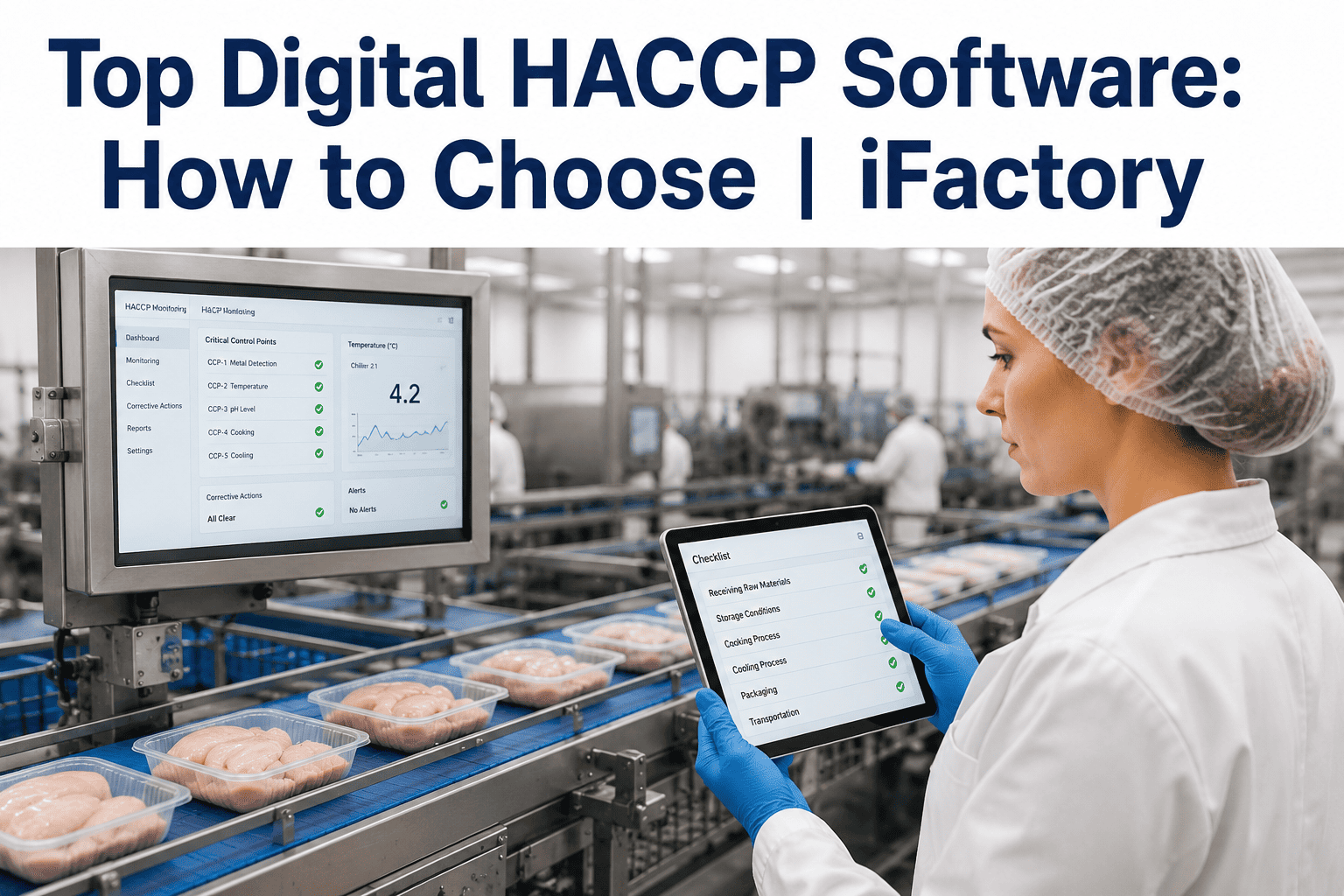
iFactory's Cloud AI-driven Platform was architected from inception around food safety compliance workflows — not adapted from a generic work order system. The HACCP data model treats every Critical Control Point as a first-class system object with its own monitoring record schema, critical limit configuration, deviation detection logic, and corrective action playbook. This architecture eliminates documentation gaps because there are no manual steps between CCP measurement and compliant record generation. Plants who want to see this in action can schedule a live product demo with our specialists.
CCP Configuration & Digital HACCP Plan Setup
Every CCP in your HACCP plan is mapped as a dedicated system object during implementation. Critical limits (upper and lower), monitoring frequency, responsible operator roles, and corrective action playbooks are configured once — then enforced automatically on every production run. When a new product or process is added, the HACCP plan is updated in the system and immediately active across all relevant production lines. iFactory's food manufacturing team handles this configuration work during the implementation phase, eliminating the custom development delays that plague generic CMMS platforms.
Real-Time CCP Monitoring with Automatic Record Generation
Operators record CCP measurements directly in the iFactory mobile app at the point of monitoring — no paper form, no after-the-fact entry. The system captures the operator's identity, device ID, timestamp, and measured value simultaneously. For automated CCPs, sensor data feeds directly into the CCP record without operator involvement, eliminating the possibility of missed monitoring events. Every record is immediately stored in the immutable audit trail for full transparency.
Automatic Deviation Detection, Lot Hold & Corrective Action
When a CCP measurement breaches its critical limit, iFactory's deviation engine triggers simultaneously: the affected production lot is placed on hold in the system; a corrective action work order is dispatched to the appropriate supervisor or food safety manager; a deviation record is created and linked to the monitoring record with a real-time timestamp; and notifications are sent to relevant team members. No manual decision is required to initiate the documentation chain — eliminating the documentation gaps that auditors identify when deviations are recorded after the fact or when corrective action records cannot be traced back to the specific deviation event.
Verification, Validation & Pre-Audit Package Generation
HACCP verification workflows — supervisory record review, CCP calibration confirmation, corrective action effectiveness evaluation — are built into the system as scheduled tasks with their own record-generation logic. Validation activities (annual HACCP plan review, challenge testing documentation) are tracked and stored in the same audit trail. When a BRCGS, SQF, or FDA audit is scheduled, the compliance team generates a complete HACCP documentation package — monitoring records, deviation log, corrective actions, verification records, calibration documentation — for the requested time period with a single export command. Pre-audit preparation that previously required days of manual binder assembly is completed in minutes.
FSMA 204 Lot Traceability Linked to HACCP Records
Every HACCP monitoring record in iFactory is linked to the production lot it covers, and every production lot is linked to its raw material inputs with full FSMA 204 Key Data Element capture at each Critical Tracking Event. When FDA requests a trace-back for a specific lot, the system generates the complete chain-of-custody report in minutes, satisfying the 24-hour record production requirement without emergency manual cross-referencing. Schedule a FSMA 204 readiness assessment to close your compliance gap.
Replace Paper HACCP Logs with a System Built for Food Manufacturers
iFactory delivers native CCP monitoring, automatic deviation management, and complete BRCGS, SQF, FSSC 22000, and FSMA audit documentation — out of the box, no custom development required.
Top HACCP Documentation Failures That Cause FDA 483 Observations
Understanding the most common HACCP documentation failures — and how digital analytics platforms eliminate them — is essential for food safety directors and quality managers building or upgrading their compliance infrastructure. These failure patterns appear consistently in FDA inspection records and GFSI audit findings across food processing categories, from meat and poultry to beverages to bakery and snack foods.
Paper logbooks show gaps during shift changes, busy production periods, or equipment changeovers. FDA inspectors require continuous monitoring evidence for every production batch — gaps constitute a monitoring failure, not a paperwork error.
Operators filling in paper CCP logs at end-of-shift rather than at time of measurement. The resulting timestamps don't match production records, alerting auditors to the documentation practice. Digital systems enforce contemporaneous entry.
Corrective action documentation exists in a separate binder or system from the CCP monitoring records that triggered it. Auditors cannot verify the complete deviation-to-resolution chain without cross-referencing multiple filing systems — a red flag for documentation integrity.
HACCP verification activities documented inconsistently — some supervisory reviews recorded, others not; some calibration records filed with HACCP documents, others in maintenance files. GFSI auditors require complete verification evidence for the audit period.
Sanitation records for allergen changeovers are incomplete, lack ATP test results linked to the specific run, or pre-op sign-off cannot be traced to the production run it authorized. A leading cause of allergen-related audit findings and recall events.
HACCP monitoring records are filed by date rather than by production lot, making it impossible to quickly produce all records relevant to a specific lot during an FDA trace-back request. Non-compliance with FSMA 204 24-hour production requirement.
Food safety managers who recognize one or more of these failure patterns in their current documentation infrastructure can initiate a structured gap remediation. Leading F&B plants book a demo with iFactory specifically to work through their existing HACCP documentation gaps against a platform designed from inception to eliminate each of these failure modes.
Digitizing Your HACCP Documentation System: A Realistic Implementation Timeline
Transitioning from paper-based or hybrid HACCP documentation to a fully digital, audit-ready analytics platform is a structured project — not a software installation. The data migration, HACCP plan digitization, CCP configuration, and operator training require food manufacturing domain expertise alongside technology deployment. Here is a realistic implementation timeline for a mid-size food or beverage plant deploying iFactory's Cloud AI-driven Platform for HACCP compliance.
Phase 1 (Weeks 1–3): HACCP Plan Digitization & CCP Configuration
iFactory's food manufacturing implementation team works directly with your food safety director to digitize your HACCP plan — mapping every CCP as a system object with its monitoring record schema, critical limits, monitoring frequency, operator role assignments, and corrective action playbooks. Allergen matrix configuration, production line mapping, and lot-level traceability architecture are established during this phase. FSMA 204 KDE field mapping and CTE workflow configuration are completed without custom development work, eliminating the delay that plagues generic CMMS implementations.
Phase 2 (Weeks 4–7): Sanitation, EMP & Preventive Maintenance Go-Live
Sanitation procedures are digitized and linked to the production schedule with allergen-aware scope escalation for changeovers. Environmental monitoring zones are mapped and EMP sampling schedules activated. PM plans for food-grade equipment — including lubrication type tracking, seal replacement schedules, and sanitary design compliance fields — are activated. Operator and sanitation team training is completed with digital records captured in the system. Book a demo to see how the allergen-aware sanitation scheduling engine works in practice.
Phase 3 (Weeks 8–12): Live CCP Monitoring & First Audit Package Test
CCP monitoring workflows go live with real-time deviation detection and automatic corrective action triggering. HACCP verification and validation records are activated. The first full audit report generation test is conducted with the food safety team — producing a complete HACCP documentation package for a defined production period and validating it against existing paper records for data integrity confirmation. This phase ends with the plant fully capable of generating an on-demand HACCP audit package for any production date range.
Phase 4 (Month 4+): Analytics, Predictive Compliance & FSMA Verification
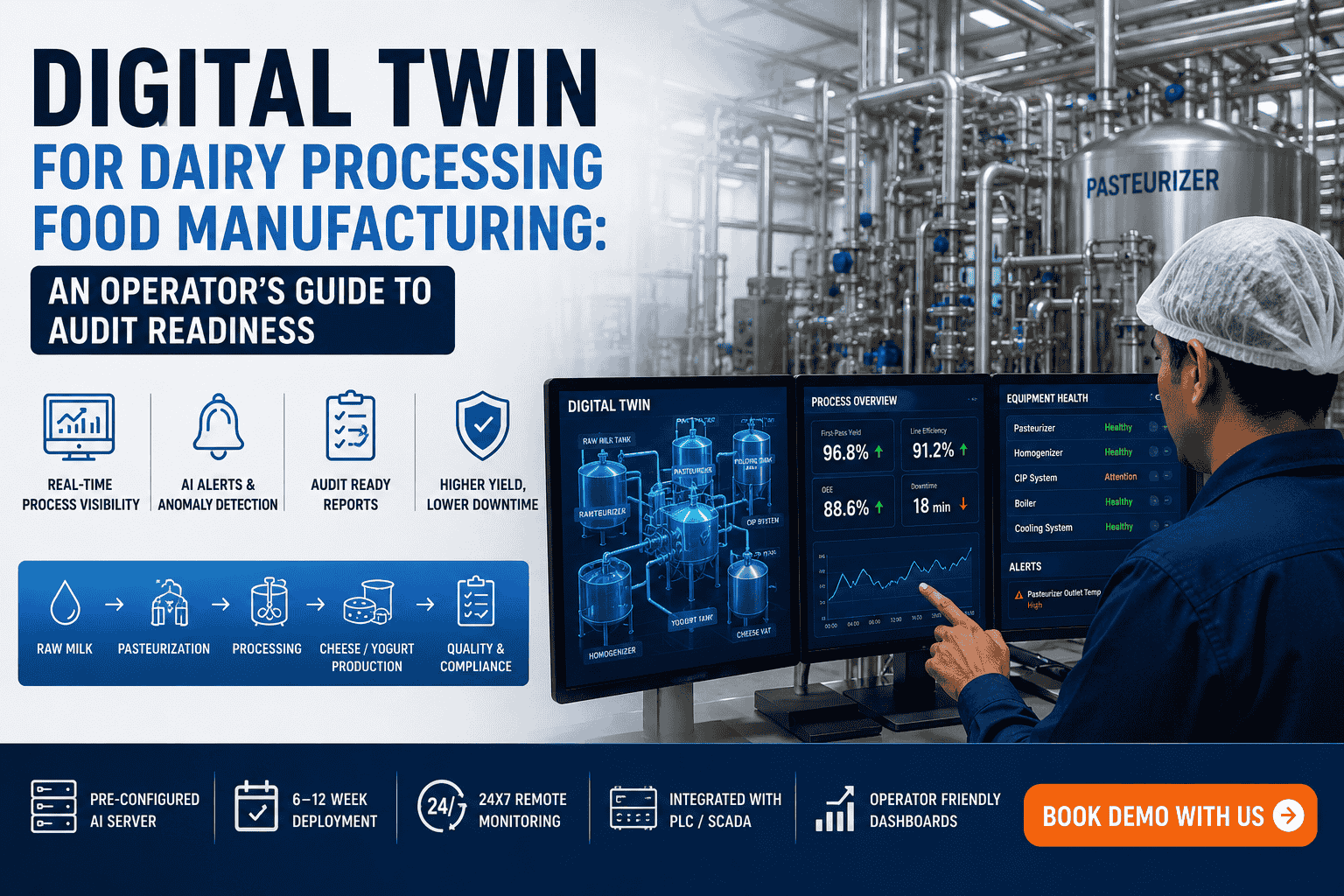
AI-powered predictive analytics are activated — flagging CCP deviation risk based on equipment condition trends before deviations actually occur. FSMA 204 traceability reporting is verified with a mock FDA trace-back exercise covering the full ingredient-to-shipment chain. Plant leadership dashboards display real-time compliance KPIs: CCP deviation rates by line and shift, sanitation completion vs. schedule, open corrective actions by age and severity, and EMP zone trend data.
The Business Case for Digital HACCP Analytics: ROI Beyond Compliance
The cost of inadequate HACCP documentation isn't just an audit finding — it's recall liability, retail delistings, and hours of staff time lost to manual record-keeping every single week. For food plant managers building the financial case for digital analytics investment, the math is straightforward: the cost of one recall far exceeds years of platform licensing. Book a demo to walk through the ROI model for your specific plant size.
A single food recall averages $10M in direct costs. iFactory's real-time monitoring identifies deviations instantly, preventing contaminated product from ever leaving the facility — saving your brand from catastrophic financial and reputation loss.
Paper-based HACCP logs consume up to 25 hours per week in manual filing and retrieval. Our digital platform reduces this time by 80%, allowing your food safety experts to focus on quality assurance instead of administrative paperwork.
Protect your BRCGS and SQF scores with organized, one-click audit packages. Eliminating documentation findings ensures your customer relationships remain strong and your products stay on retail shelves without interruption.
Unplanned downtime can cost $50,000 per hour. AI-powered predictive maintenance tracks equipment health trends alongside HACCP data, reducing unplanned stoppages by 35-50% and maximizing your production line capacity.
HACCP Digital Analytics Software — Frequently Asked Questions
What is the difference between CMMS and HACCP compliance software?
CMMS handles maintenance work orders and PM scheduling. HACCP compliance software adds native CCP monitoring, automatic deviation-to-corrective-action linkage, allergen-aware sanitation scheduling, and FSMA 204 traceability in a single food-grade platform.
Can iFactory fully replace our paper-based HACCP records?
Yes. iFactory captures every CCP measurement with user authentication, device ID, and timestamp — creating a tamper-evident digital audit trail that satisfies BRCGS, SQF, and FSMA requirements out of the box.
How does iFactory manage HACCP records across multiple lines and shifts?
CCP monitoring records are tracked separately by line, shift, and production lot — then aggregated into a single compliance dashboard. Deviation rates and corrective action status are visible in real time across all lines.
How long does implementation take for a food or beverage plant?
Most plants go fully live within 10–14 weeks. iFactory's food manufacturing team handles HACCP plan digitization, allergen matrix setup, and equipment classification — no custom development needed from your IT staff.
Does iFactory support BRCGS, SQF, and FSSC 22000 audits?
Yes. iFactory generates pre-formatted audit packages aligned with major GFSI schemes — covering monitoring records, corrective actions, and calibration docs in one export. Plants report 5x faster audit prep compared to manual assembly.
What happens to our existing paper HACCP records during the transition?
Our team guides the paper-to-digital transition, managing the hybrid period and validating digital records against paper logs for the same production runs to ensure data integrity before the paper system is retired.
Achieve Full HACCP Audit Readiness Across Every Shift
iFactory's Cloud AI-driven Platform delivers native HACCP workflows, FSMA 204 traceability, allergen-aware sanitation scheduling, and one-click audit documentation — out of the box, no custom development required. Live in 10–14 weeks.