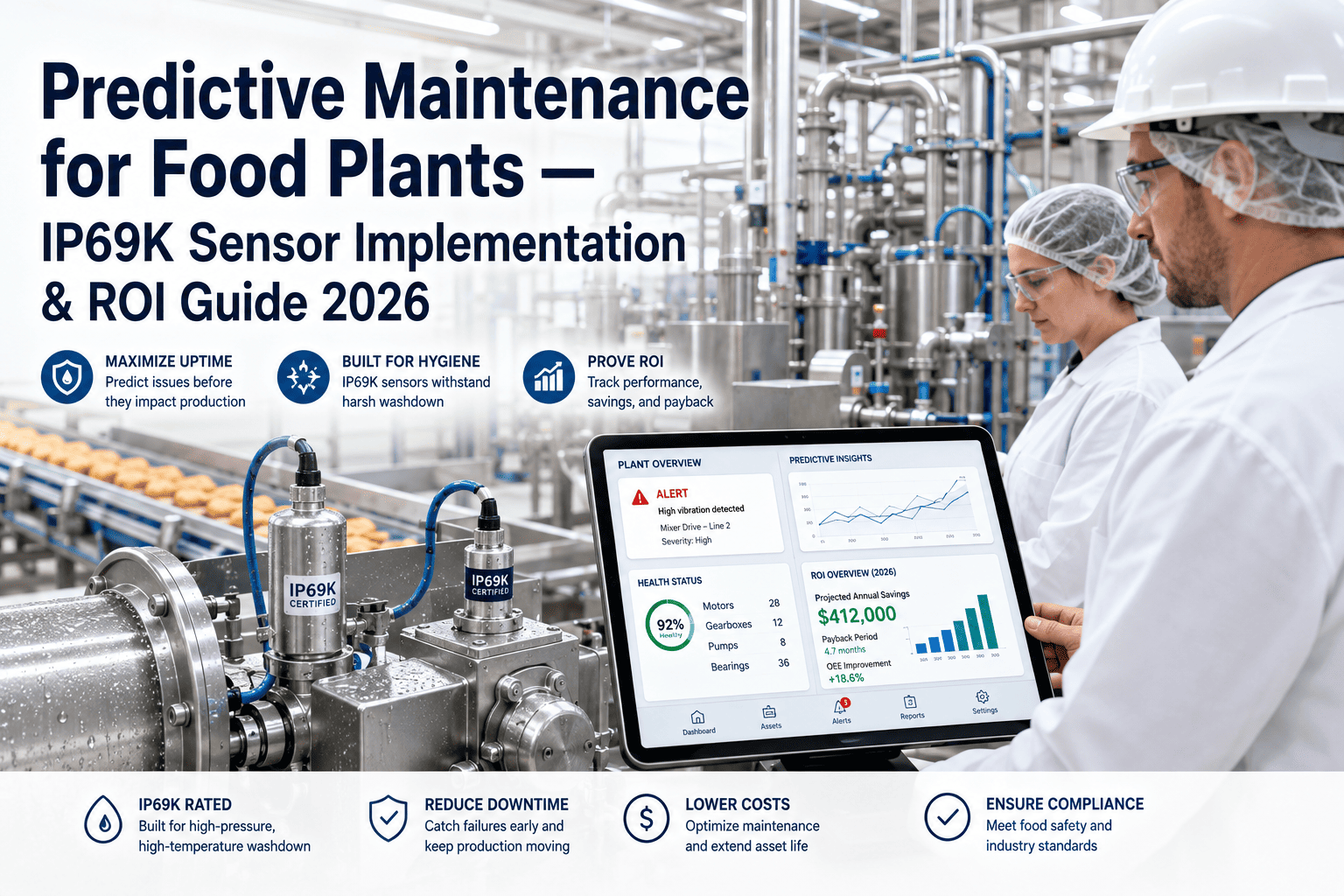
Food processing equipment fails differently than machinery in a typical factory, mostly because it lives through daily washdowns, chlorinated water, and temperature swings that regular sensors were never built to survive. A gearbox that would last years in a dry assembly plant can corrode from the inside within months once caustic cleaning chemicals find their way past a poorly sealed housing. That is exactly why predictive maintenance programs in food plants depend on IP69K-rated sensors, hardware built to withstand high-pressure, high-temperature washdown cycles without losing accuracy or failing early. Plants that get this sensor selection right typically see fewer unplanned stoppages during the exact shifts when a line running behind schedule costs the most, which is why more maintenance teams are choosing to walk through a live sensor deployment plan before their next capital budget cycle.
PREDICTIVE MAINTENANCE FOR FOOD PLANTS
Washdown-Rated Sensors Built for Food-Grade Reliability
IP69K vibration monitors, thermal imaging, and oil analysis give maintenance teams early warning on equipment failure without compromising hygiene compliance.
IP69K Rated
Sensor housings tested against high-pressure, high-temperature washdown cycles
Condition-Based
Maintenance triggered by actual equipment health instead of a fixed calendar date
Fewer Surprises
Early vibration and thermal signals flag developing faults before breakdown
Sensor Types Built for Washdown Environments
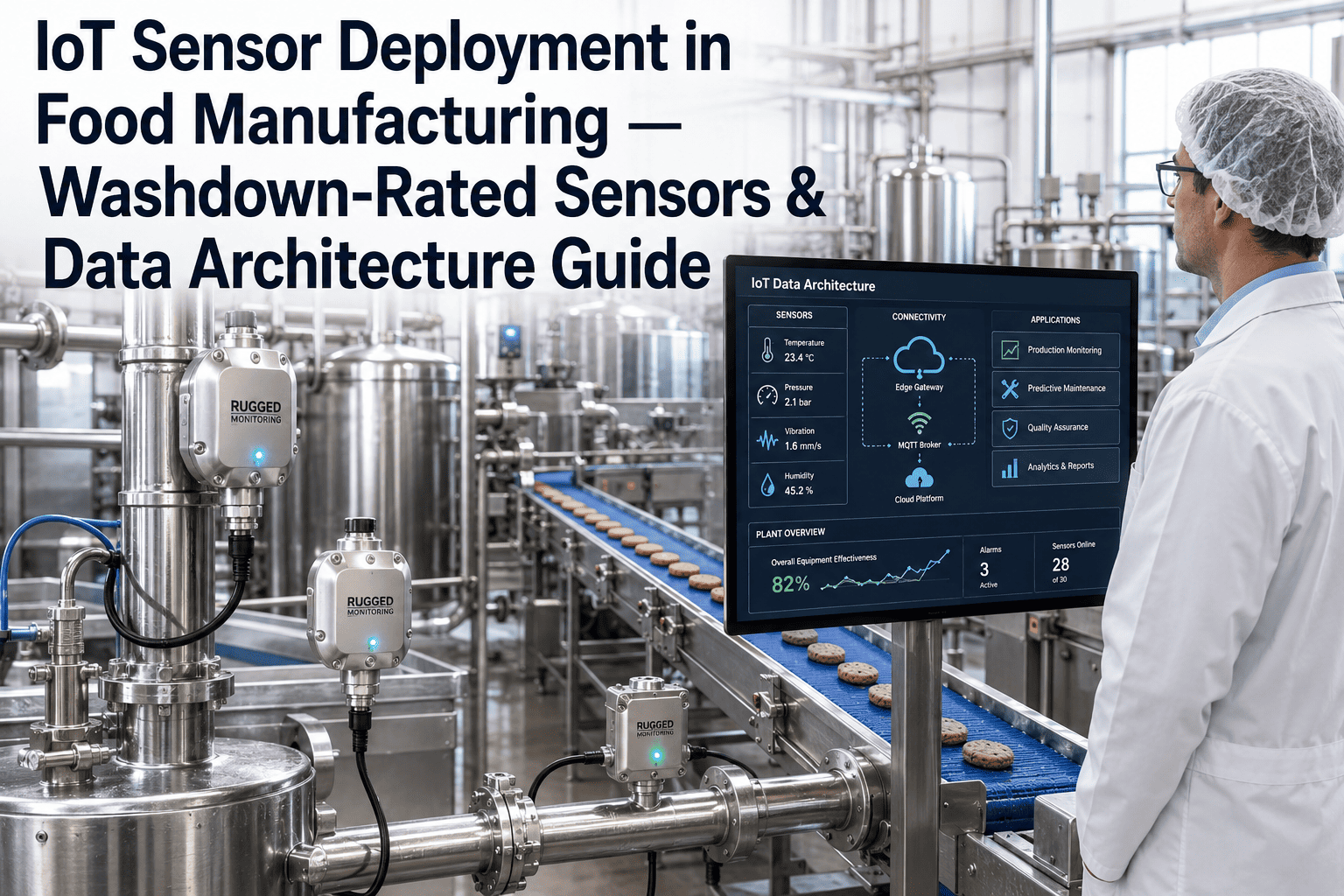
Every sensor placed on food-grade equipment needs to survive the same cleaning chemicals and water pressure as the machine itself, which is why hardware selection matters as much as the analytics behind it.
IP69K Vibration Sensors
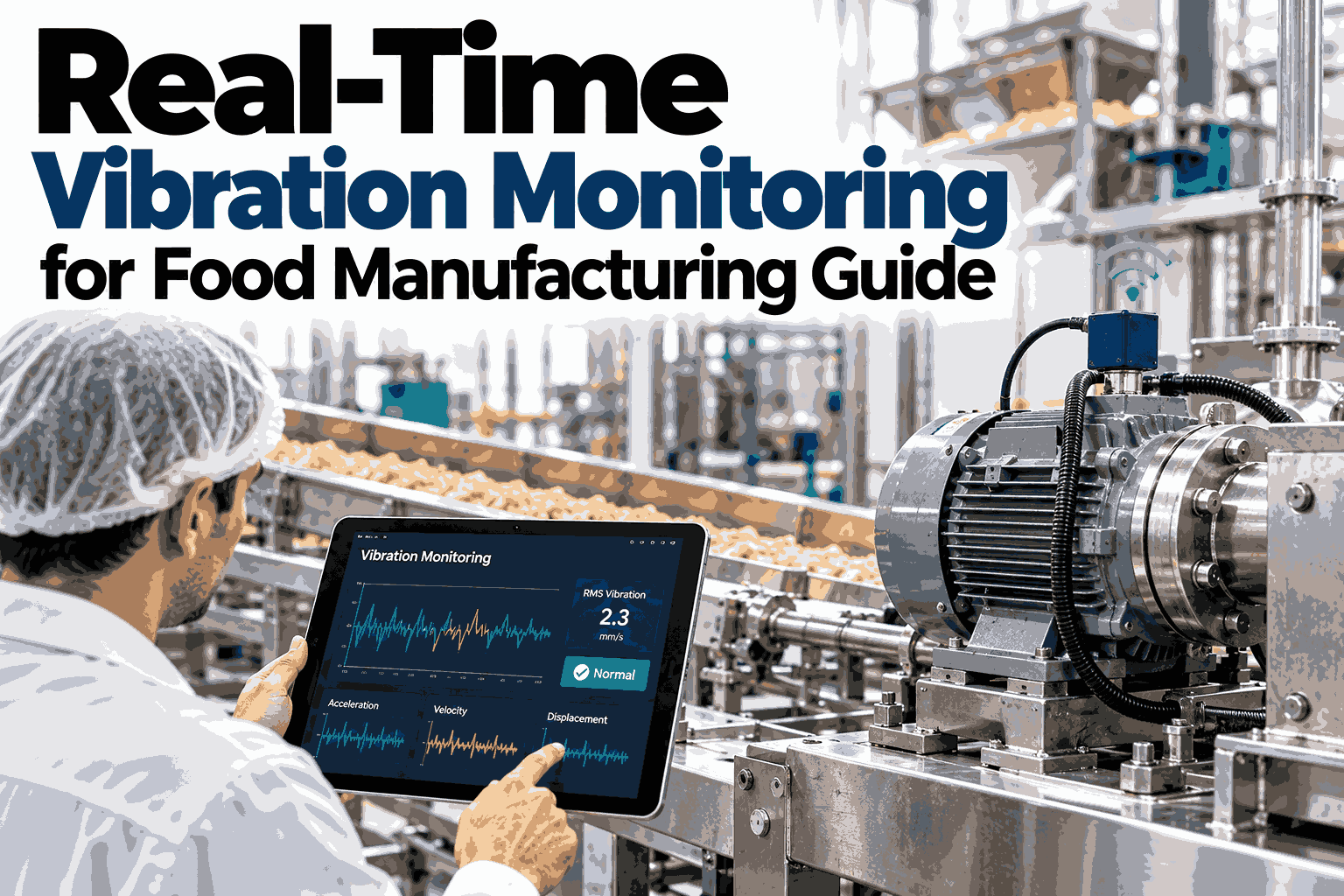
Sealed against high-pressure steam and chemical washdown, these sensors track bearing wear and misalignment on motors, pumps, and mixers without needing removal before cleaning.
Thermal Imaging Cameras
Fixed and handheld thermal units spot overheating bearings, electrical connections, and motor windings well before the heat becomes visible to the naked eye.
Oil Analysis Sampling
Regular sampling of gearbox and hydraulic oil reveals metal particulates and contamination trends that point to wear long before a component actually fails.
Washdown-Compatible Wiring
Sealed connectors and food-grade cable jacketing keep signal integrity intact even after thousands of daily washdown and sanitation cycles.
Maintenance Approach Comparison
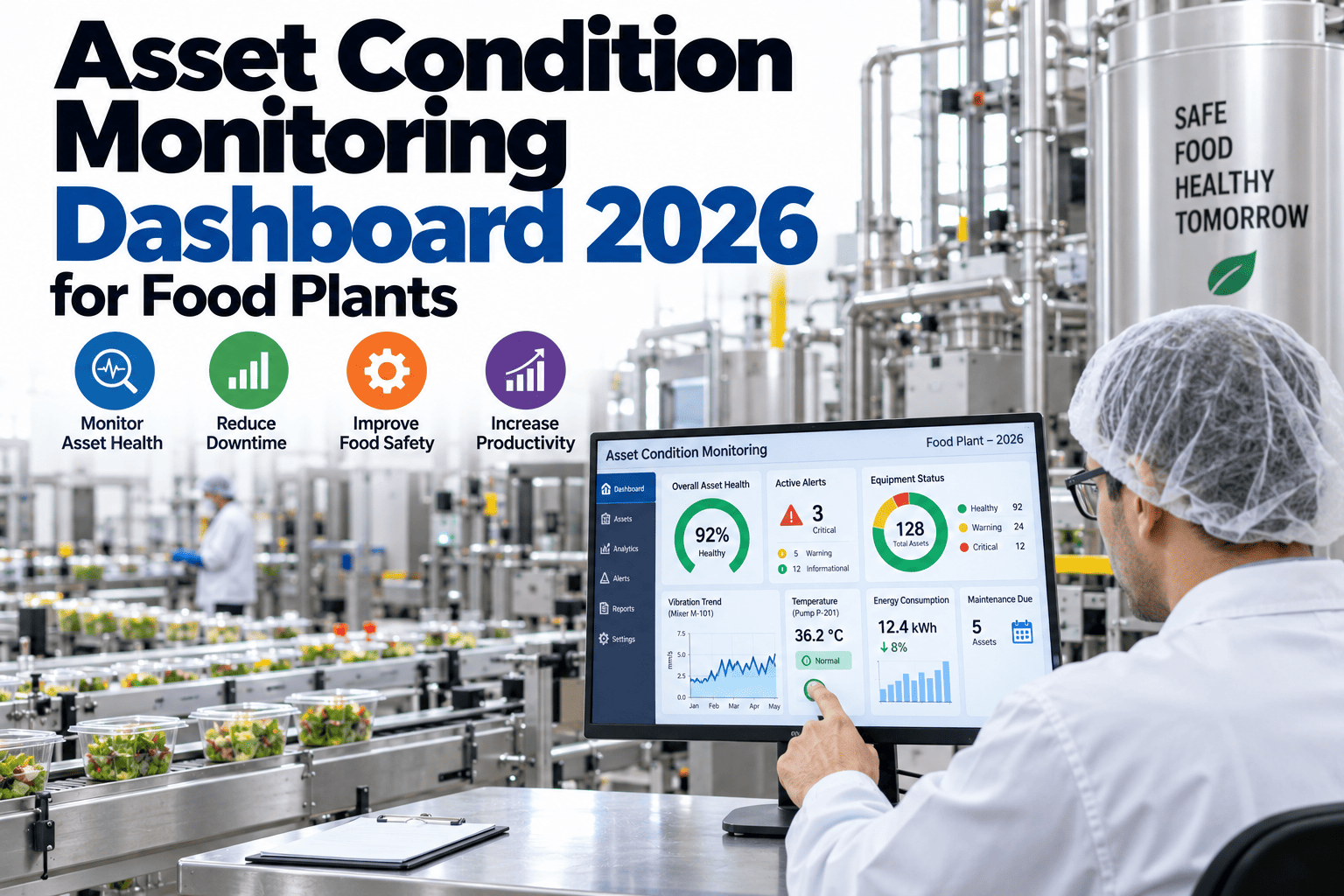
Moving from scheduled inspections to condition-based monitoring changes both how often equipment is checked and how much unplanned downtime a plant absorbs each year.
How a Sensor Rollout Typically Happens
1
Critical Asset Mapping
Maintenance teams identify which motors, pumps, and gearboxes cause the most downtime when they fail, prioritizing sensor placement accordingly.
2
Washdown-Rated Sensor Installation
IP69K sensors are mounted in positions that survive daily cleaning cycles while still capturing accurate vibration and temperature data.
3
Baseline and Threshold Setting
A few weeks of normal operating data establishes healthy baselines, so alerts trigger only when readings drift meaningfully from normal.
4
Ongoing Trend Review
Maintenance planners review developing trends weekly, scheduling repairs during planned downtime instead of reacting to sudden failures.
See Which Sensors Fit Your Equipment List
Walk through a sensor and coverage plan mapped to your plant's actual motors, pumps, and gearboxes.
Readiness Checklist Before You Start
Confirm Washdown Frequency
Document how often each area is washed down and at what pressure and temperature so sensor housings are rated correctly for that zone.
List High-Downtime-Impact Assets
Rank equipment by how much a failure would cost in lost production time, starting sensor deployment with the highest-impact assets first.
Review Existing Wiring Paths
Check whether existing conduit and cable routes can support new sensor wiring without disrupting sanitation zoning requirements.
Align With Sanitation Schedules
Plan installation windows around cleaning schedules so sensors are calibrated and tested without interrupting daily production.
Frequently Asked Questions
FEWER SURPRISES, MORE UPTIME
Build a Washdown-Ready Predictive Maintenance Plan
Get a sensor and monitoring plan mapped specifically to your plant's washdown schedule and highest-impact equipment.