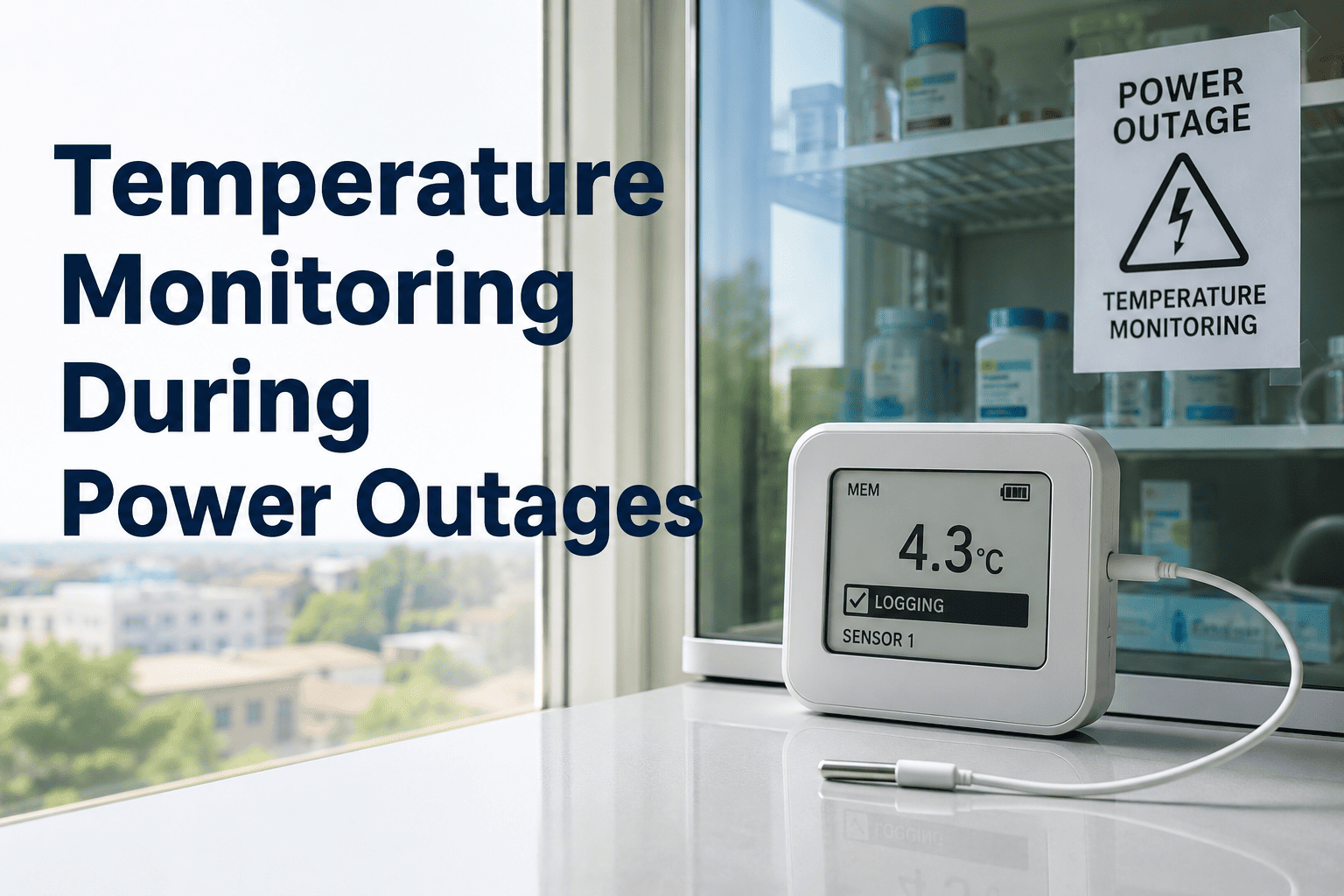
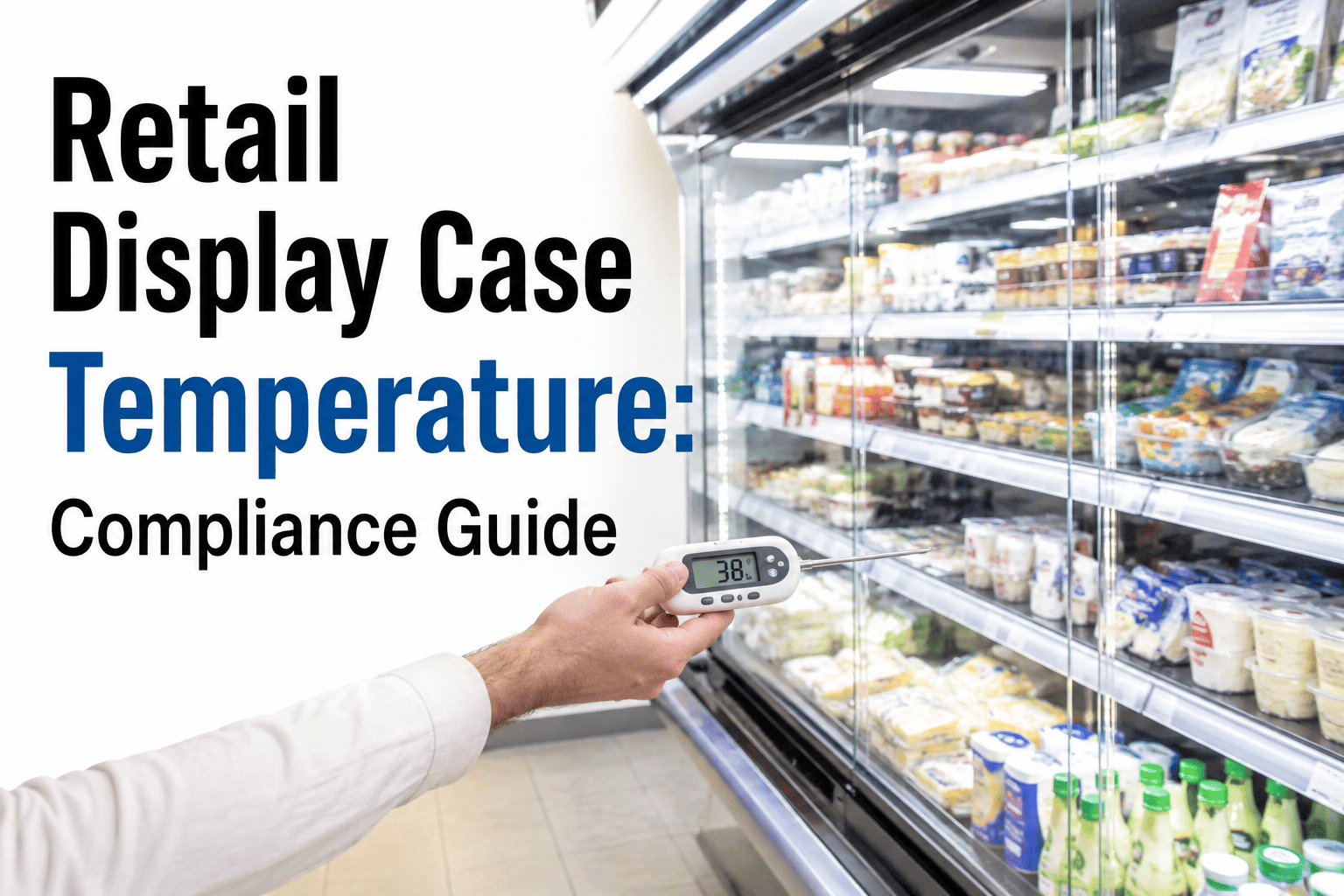
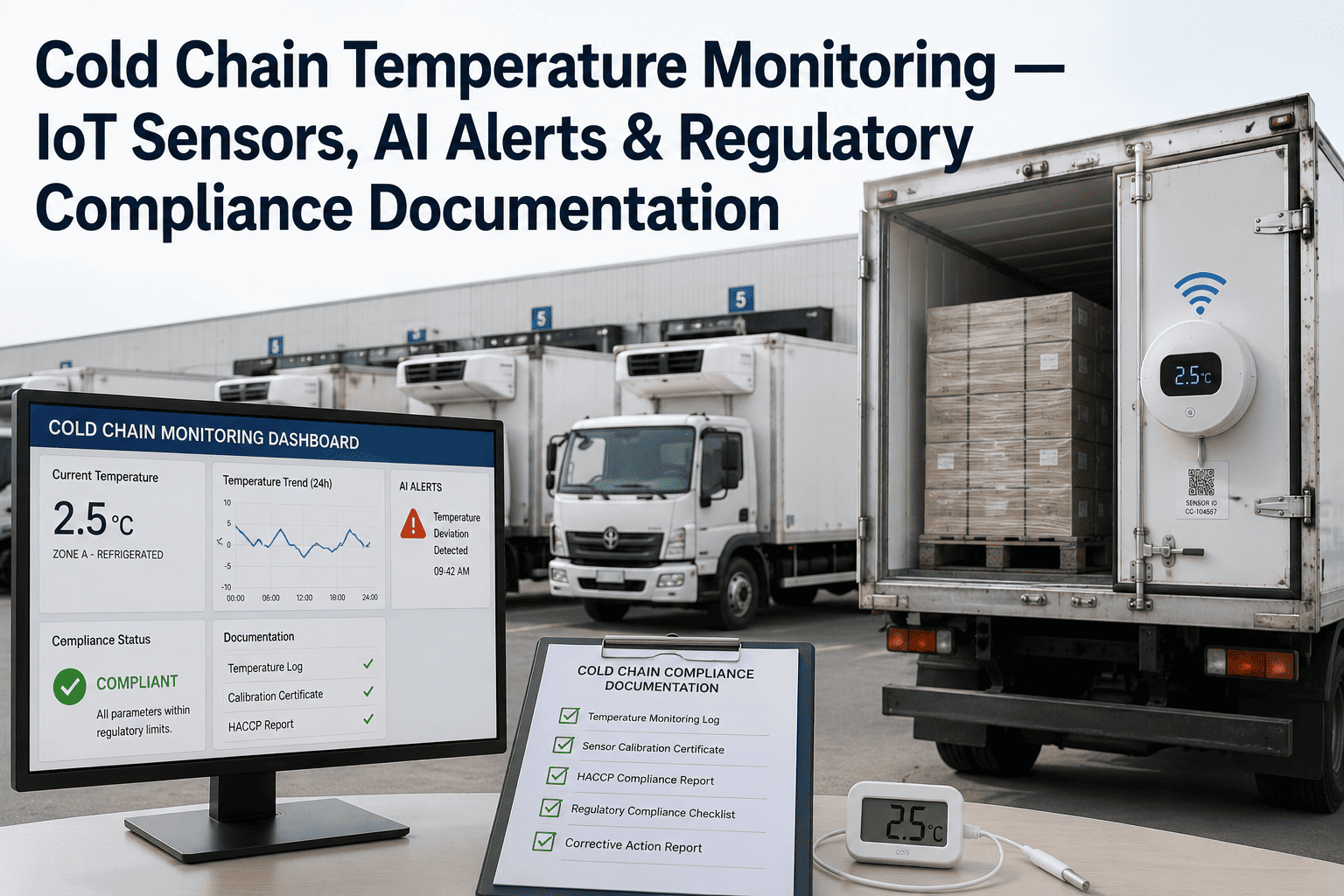
A regional food operations manager running 47 sites across three states used to start each morning with a round of phone calls — site managers reading back paper log temperatures from the previous shift, the director trying to build a regional picture from a spreadsheet nobody fully trusted, and the compliance officer chasing the three sites that had not submitted their HACCP records yet. Forty-seven sites, three states, one fragmented picture assembled manually before 9 AM. Cloud-based multi-site temperature monitoring replaces that entire workflow with a single dashboard that shows every sensor, every site, every alert status, in real time — with the compliance documentation generating itself. Book a demo to see a multi-site cloud monitoring dashboard configured for your facility network.
TEMPERATURE MONITORING · MULTI-SITE · CLOUD DASHBOARD
Multi-Site Temperature Monitoring on a Cloud Dashboard — One View Across Every Facility, Every Sensor, Every Alert
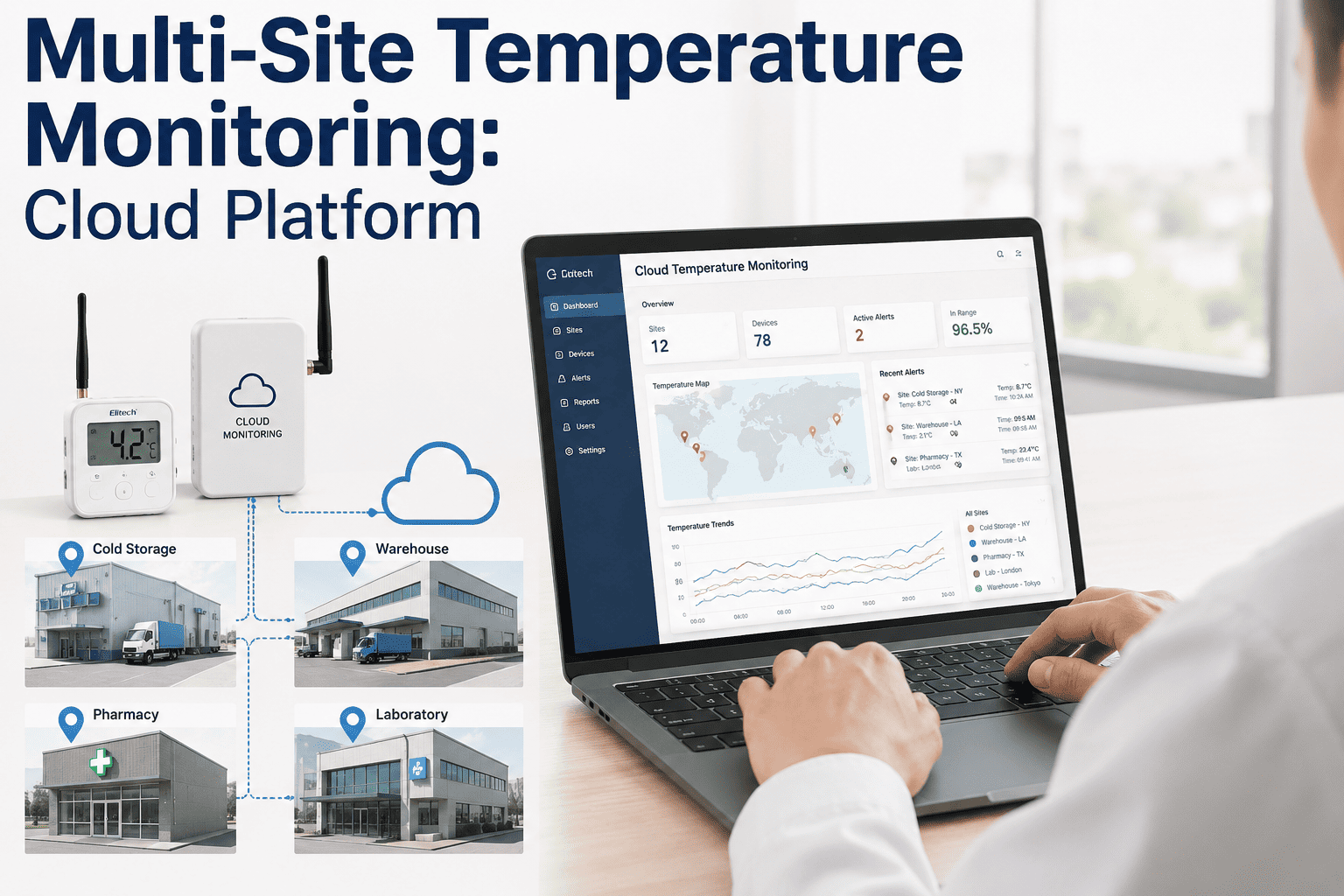
A cloud temperature monitoring platform aggregates live sensor data from every facility in the network into a single dashboard — so a regional director at a desk and a compliance officer preparing for an audit are looking at the same real-time data, with standardised alerts, automated HACCP records, and site-level drill-down from one login.
500+
Sites Manageable From a Single Cloud Dashboard Login
15 Min
Alert-to-Response Time With Automated Escalation vs 8–12 Hr Manual Discovery
24 Mo
Minimum Temperature History Retained for Audit-Ready Compliance Records
THE MULTI-SITE PROBLEM
What Single-Site Monitoring Cannot Do for a Multi-Facility Food Operation
A food operator running more than three sites hits the same structural limitation regardless of which single-site monitoring tool is deployed at each location: there is no consolidated view. A site manager sees their site. A regional manager sees nothing. A compliance officer preparing for a regulatory audit is reconciling printouts from every site, verifying that each one uses consistent alert thresholds, and confirming that any excursion during the audit period has a documented corrective action — all manually, because the sites are not reporting to any central platform.
The cost of that fragmentation shows up in three ways. First, a temperature excursion at a poorly-monitored site may go undetected for 8 to 12 hours — compared to a 15 to 30 minute response when automated alerts reach the duty manager directly. Second, compliance documentation is inconsistent across sites because each site controls its own records. Third, the pattern that would reveal which site — or which piece of equipment — is generating disproportionate excursions is invisible until someone manually aggregates months of site-level reports. A cloud multi-site platform solves all three.
HOW IT WORKS
The Four-Layer Architecture of a Cloud Multi-Site Temperature Monitoring Platform
A cloud temperature monitoring platform is not a sensor system. It is four distinct technology layers, each serving a different function in the monitoring chain. Understanding which layer does what is how food operations teams evaluate platforms and identify where a current deployment is falling short.
L1
Sensor Hardware — The Measurement Layer
Wireless temperature and humidity sensors at every monitored zone — walk-in coolers, freezers, display cases, hot holding, receiving docks. Battery life should exceed three years. Accuracy target is ±0.5°C. IP65 minimum rating for splash resistance in commercial kitchen environments.
L2
Connectivity — The Transmission Layer
Gateway devices at each facility collect sensor readings and transmit to the cloud via cellular or mesh network — independent of the facility's own WiFi. Cellular connectivity ensures alerts transmit even during a network outage at the site, which is exactly when alerts matter most.
L3
Cloud Platform — The Intelligence Layer
All sensor data streams to the cloud platform, which applies alert thresholds, runs trend analysis, detects equipment degradation signatures, and generates HACCP-compliant records. This is where the multi-site aggregation lives — every site visible in a single data model.
L4
Dashboard & Alerts — The Action Layer
The dashboard surfaces the consolidated view — site-level status cards, excursion heat maps, compliance rates, equipment health trends — and routes alerts to the right recipient at the right level of the organisation the moment a threshold is breached.
DASHBOARD VIEWS
What Each Dashboard View Shows — and Which Role Uses It
A multi-site cloud dashboard is not one view. It is a hierarchy of views — regional portfolio, single-site, single-zone — navigated by role. A regional director needs the summary. A site manager needs the detail. A compliance officer needs the export. The dashboard delivers all three from the same data without anyone building a separate report.
Regional Director
All sites — green / amber / red status at a glance
Active excursions with time-since-alert and response status
Compliance rate by site — 7-day rolling average
Equipment health flags across the portfolio
Site Manager
Zone-by-zone live temperature for this site
Last 24 hours trend with excursion markers
Open alerts with corrective action logging
Sensor battery status and next calibration due
Compliance Officer
HACCP record completeness by site and date range
Excursion log with corrective action evidence
Sensor calibration audit trail
Multi-site compliance summary export for inspection
Franchise / Chain Leadership
Network-wide compliance rate — month-on-month
Worst-performing sites by excursion frequency
Equipment replacement pipeline by site
FSMA 204 traceability readiness by location
A Multi-Site Dashboard That Runs Reports For You Is Worth More Than One That Just Shows You the Data
Compliance documentation that generates automatically, audit exports that take one click, and corrective action evidence attached to every excursion — the dashboard that earns its cost every week, not just during inspection month.
STANDARDISED ALERTS
Why Standardised Alert Configuration Across Sites Is the Highest-Value Feature in Multi-Site Monitoring
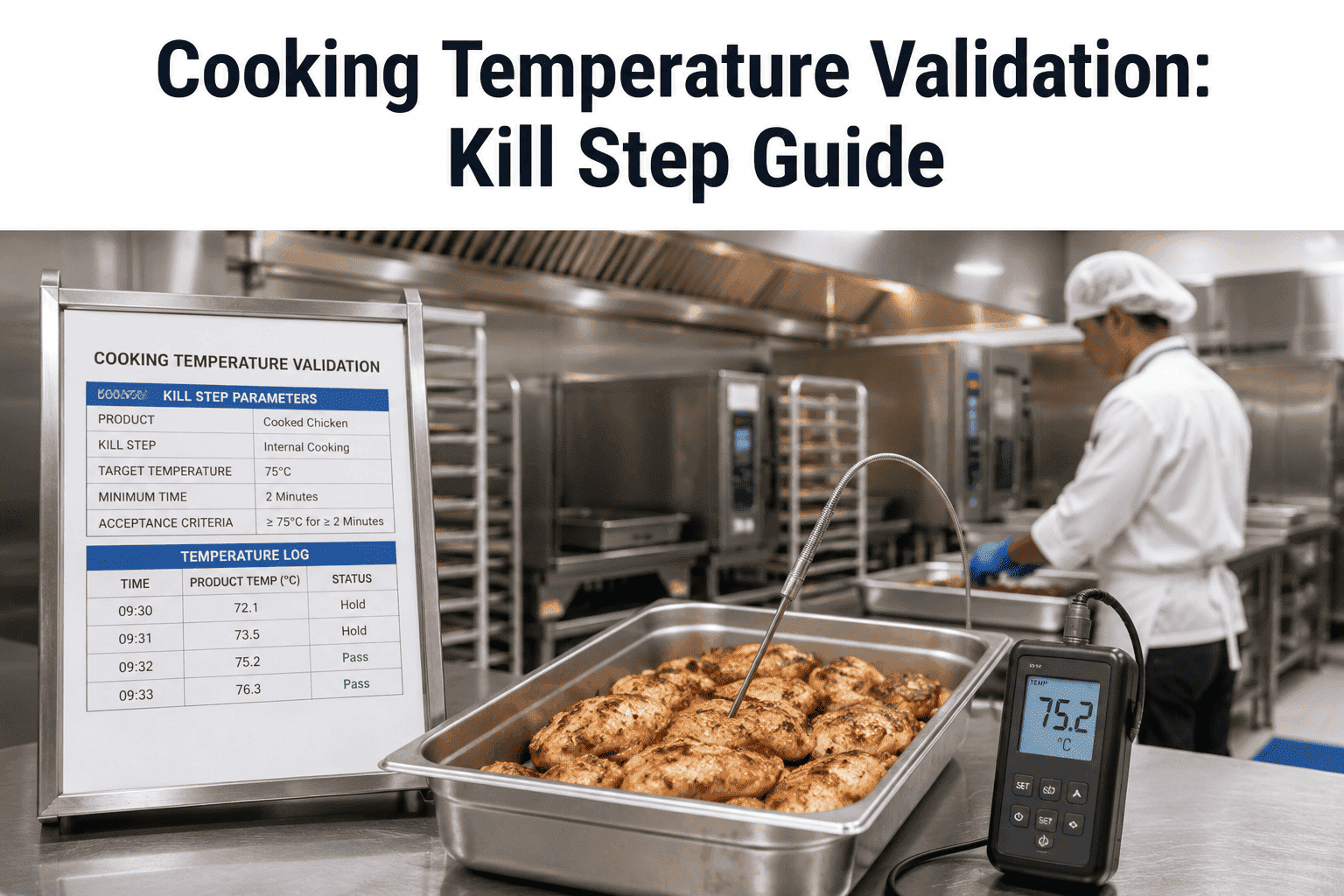
When each site sets its own alert thresholds independently, the multi-site compliance picture is meaningless — a site generating zero alerts may simply have looser thresholds than a site generating thirty. Standardised alert configuration enforced from the cloud platform means every site in the network monitors against the same HACCP-aligned thresholds: 8°C maximum for chilled food zones, -18°C target for frozen, 75°C minimum for hot holding, with alert latency under five minutes of first out-of-spec reading.
Standard Threshold Enforcement
Alert thresholds are set at the platform level and propagate to all sites in the network — site managers can view thresholds but cannot override them without compliance officer approval. Every site in the franchise runs identical CCP limits.
Tiered Escalation by Role
Alert routing goes to the site-level duty manager first, then escalates to the regional manager if unclosed after 30 minutes, then to the compliance officer if unclosed after 60 minutes. No alert falls through because the responsible person was off shift.
Multi-Channel Delivery
Alerts route by SMS, email, and push notification simultaneously to the escalation list — with cellular backup independent of facility WiFi so the alert still fires during the power event that caused the temperature excursion in the first place.
Corrective Action Closure
Every alert requires a logged corrective action before it closes — what was done, who did it, and when. The closed loop becomes the HACCP corrective action evidence the auditor asks for. No alert closes silently.
COMPLIANCE & REPORTING
How Multi-Site Cloud Monitoring Generates HACCP and FSMA Compliance Evidence Without Manual Record-Keeping
HACCP compliance requires continuous temperature records demonstrating product remained within safe zones throughout receiving, storage, preparation, and service. FSMA 204 adds Key Data Element requirements for Food Traceability List products with a 24-hour retrieval window. Manual paper logs cannot satisfy either requirement reliably at scale across multiple sites — which is why the FDA and GFSI-aligned certification schemes increasingly expect automated, timestamped, tamper-evident digital records that match the production data they claim to represent.
01
Continuous Digital Temperature Logs
Sensor readings recorded every 5 minutes with timestamps, stored in the cloud for a minimum of 24 months. Every reading is tamper-evident and audit-accessible with 24-hour retrieval — no manual log assembly before the inspector arrives.
02
Site-Level HACCP Export
One-click export per site for any date range — CCP names, threshold values, all readings, all excursions, all corrective actions. The format is pre-structured to match the HACCP monitoring record template most certification schemes require.
03
Multi-Site Compliance Summary
A single report covering every site in the network — compliance rate per site, excursion count, corrective action closure rate, and calibration currency — across a specified date range. The document a regional food safety director presents at a franchise or board review.
04
Calibration Audit Trail
Every sensor calibration event — date, technician, reference standard, result — logged against the specific device ID and zone. Auditors receive a complete sensor calibration history for the facility without the compliance team searching through paper certificates.
FREQUENTLY ASKED QUESTIONS
Multi-Site Food Operations Teams' Questions About Cloud Temperature Monitoring
How many sites can a single cloud temperature monitoring platform handle?
Production-grade cloud platforms routinely manage 50 to 500 sites from a single dashboard login, with enterprise deployments at food chains and contract catering companies running 1,000 or more locations on the same platform. The practical limit is usually the organisation's ability to onboard and train site staff, not the platform's sensor capacity. Scalability within the platform itself — adding a new site, adding sensors within a site, or adding a new zone to monitoring — should take hours, not weeks.
Book a demo to see a multi-site dashboard scaled to your network size.
What happens to monitoring and alerts if a site loses its internet connection?
A properly architected cloud monitoring deployment uses cellular connectivity for gateway-to-cloud transmission — independent of the facility's own WiFi or broadband. This means the gateway continues transmitting sensor readings and firing alerts even when the facility's network is down. Local sensor data is also buffered on the gateway and uploaded once connectivity is restored, so the cloud record is continuous and complete even after a connectivity interruption.
Contact cloud monitoring support to review connectivity specifications for your sites.
How do we standardise alert thresholds across sites with different product types and equipment?
The platform applies threshold templates by zone type — chilled, frozen, hot holding, ambient — across all sites in the network, while still allowing zone-specific adjustments for sites with product or process requirements that differ from the standard. The key is that threshold changes require compliance officer approval at the platform level, so a site manager cannot quietly adjust a threshold to suppress alerts from under-performing equipment.
Book a session to design a threshold structure that covers your product and zone mix.
Can third-party auditors and regulatory inspectors access the cloud records directly?
Yes. Cloud platforms support read-only access credentials for third-party auditors, regulatory inspectors, or corporate quality teams who need to review records without accessing operational controls. Access is logged, time-limited, and scoped to the sites and date ranges the organisation specifies. This eliminates the document assembly burden on the site team before every inspection and gives auditors the ability to query the data themselves rather than waiting for prepared printouts.
Talk to cloud monitoring support to set up an auditor access model.
How long does a multi-site cloud monitoring deployment take from contract to live monitoring?
A phased rollout across a medium-sized network — 20 to 50 sites — typically runs over 8 to 12 weeks: sensor installation and commissioning at the first pilot sites in weeks 1 to 3, platform configuration and alert structure in weeks 2 to 4, staff training and go-live at pilot sites in weeks 4 to 6, then a rolling wave deployment across remaining sites through week 12. A pilot site is live and generating real compliance data in under four weeks.
Book a deployment planning session to map a rollout timeline for your network.
ONE DASHBOARD · EVERY SITE · REAL TIME
Give Your Multi-Site Food Operation the Cloud Dashboard That Replaces the Morning Phone Round — With Live Data From Every Facility
Standardised alerts, automated HACCP records, site-level drill-down, and compliance exports in one login. Book a working session to see a cloud monitoring deployment configured for your facility network.